Unlock instant, AI-driven research and patent intelligence for your innovation.

Geometrically enhanced resistive random access memory (RRAM) cell and method of forming same

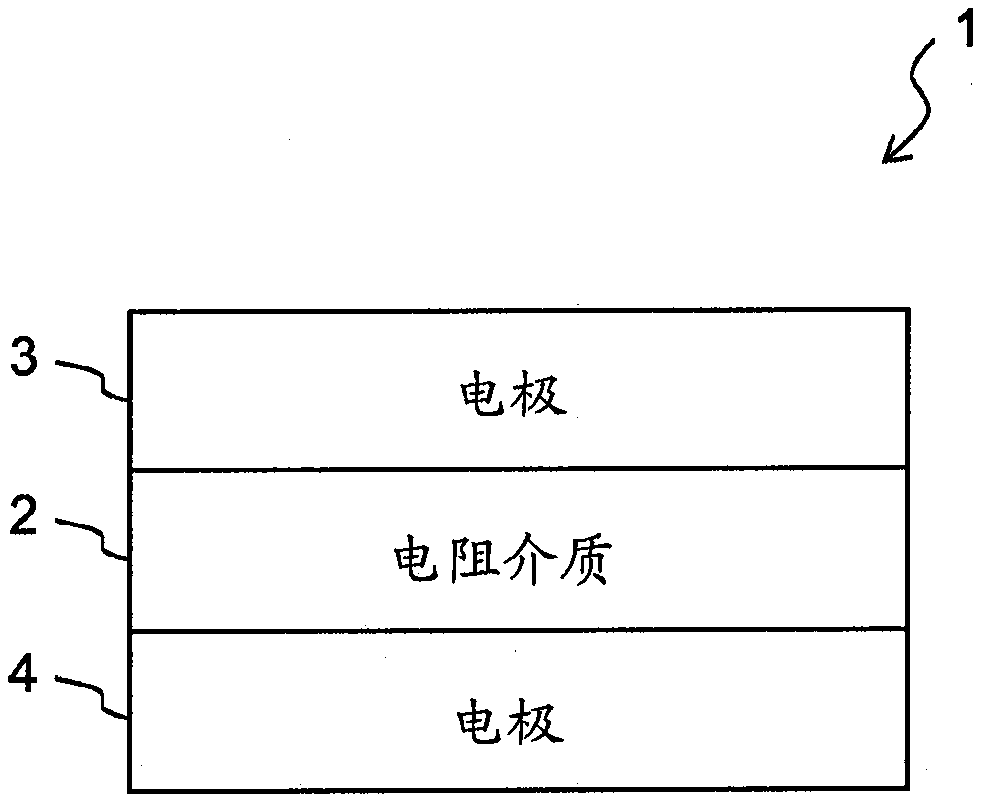
A memory and electrode technology, applied in the field of resistive random access memory, can solve the problem of high voltage and current of RRAM memory cells

Active Publication Date: 2017-10-20
SILICON STORAGE TECHNOLOGY
View PDF10 Cites 0 Cited by
  • Summary
  • Abstract
  • Description
  • Claims
  • Application Information

AI Technical Summary

Problems solved by technology

[0005] One of the disadvantages of RRAM memory cells is that the voltage and current required to form the filaments are relatively high (and can be significantly higher than those required to set and reset memory cells)

Method used

the structure of the environmentally friendly knitted fabric provided by the present invention; figure 2 Flow chart of the yarn wrapping machine for environmentally friendly knitted fabrics and storage devices; image 3 Is the parameter map of the yarn covering machine
View more

Image

Smart Image Click on the blue labels to locate them in the text.
Viewing Examples
Smart Image
  • Geometrically enhanced resistive random access memory (RRAM) cell and method of forming same
  • Geometrically enhanced resistive random access memory (RRAM) cell and method of forming same
  • Geometrically enhanced resistive random access memory (RRAM) cell and method of forming same

Examples

Experimental program
Comparison scheme
Effect test

Embodiment Construction

[0022] The present invention is a geometrically enhanced RRAM cell having electrodes and a resistive dielectric layer configured in a manner that reduces the voltage required to form the cell's conductive filaments. It has been found that by providing an acute angle at the point between the two electrodes in the resistive dielectric layer, the voltage and current required to efficiently form the filaments is significantly reduced.

[0023] image 3 The general structure of the RRAM memory cell 10 of the present invention is shown, comprising a resistive dielectric layer 12 having elongated first and second portions 12a and 12b respectively intersecting at right angles. Specifically, the first portion 12a is elongated and extends horizontally, and the second portion 12b is elongated and extends vertically such that the two portions 12a and 12b meet at an acute angle 12c (i.e., the resistive dielectric layer 12 has a “ L” shape). The first electrode 14 is disposed above the hor...

the structure of the environmentally friendly knitted fabric provided by the present invention; figure 2 Flow chart of the yarn wrapping machine for environmentally friendly knitted fabrics and storage devices; image 3 Is the parameter map of the yarn covering machine
Login to View More

PUM

No PUM Login to View More

Abstract

A memory device (and method of making and using the memory device) includes a first electrode of conductive material, a second electrode of conductive material, and a layer transition metal oxide material that includes first and second elongated portions meeting each other at a sharp corner. Each of the first and second elongated portions is disposed between and in electrical contact with the first and second electrodes.

Description

technical field [0001] The present invention relates to non-volatile memory, and more particularly to resistive random access memory. Background technique [0002] Resistive Random Access Memory (RRAM) is a type of non-volatile memory. Typically, RRAM memory cells each include a layer of resistive dielectric material sandwiched between two conductive electrodes. Dielectric materials are generally insulating. However, by applying a suitable voltage across the dielectric layer, conductive paths (often referred to as filaments) can be formed through the layer of dielectric material. Once formed, the filaments can be "reset" (i.e., break or rupture, resulting in a high-resistance state on the RRAM cell) and set (i.e., re-form, resulting in lower resistance state on the RRAM cell). The low and high resistance states can be used to indicate a digital signal of "1" or "0" depending on the resistance state, thereby providing a programmable non-volatile memory cell that can store...

Claims

the structure of the environmentally friendly knitted fabric provided by the present invention; figure 2 Flow chart of the yarn wrapping machine for environmentally friendly knitted fabrics and storage devices; image 3 Is the parameter map of the yarn covering machine
Login to View More

Application Information

Patent Timeline
no application Login to View More
Patent Type & Authority Applications(China)
IPC IPC(8): G11C13/00H01L27/24H01L45/00
CPCG11C13/0007G11C13/0069G11C13/0097G11C2213/50G11C2213/52G11C2213/32G11C2213/79G11C2013/009H10B63/30H10N70/20H10N70/821H10N70/8418H10N70/8833H10N70/011H10N70/841
Inventor F·周X·刘N·杜H·V·陈H·Q·阮
Owner SILICON STORAGE TECHNOLOGY