
Multi-cylinder Miller cycle engine synergetic gas intake energy-saving device and control method thereof
An energy-saving device and engine technology, applied in the direction of engine control, combustion engine, engine components, etc., can solve problems such as variable compression difficulties, and achieve the effects of avoiding fuel wall loss, reducing intake air backflow, and reducing energy consumption
- Summary
- Abstract
- Description
- Claims
- Application Information
AI Technical Summary
Problems solved by technology
Method used
Image

Examples
Embodiment Construction
[0027] The present invention will be further described in detail below in conjunction with the accompanying drawings, so that those skilled in the art can implement it with reference to the description.
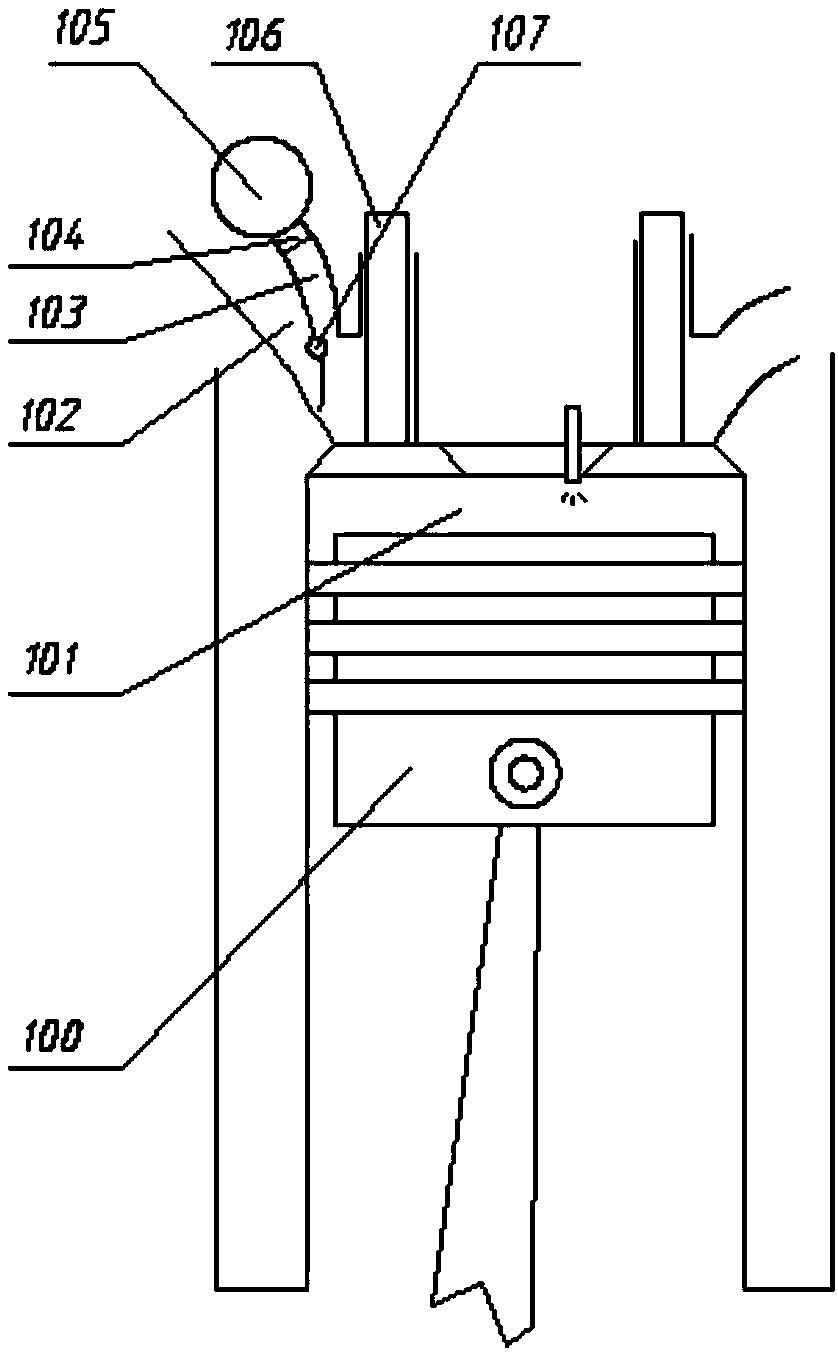
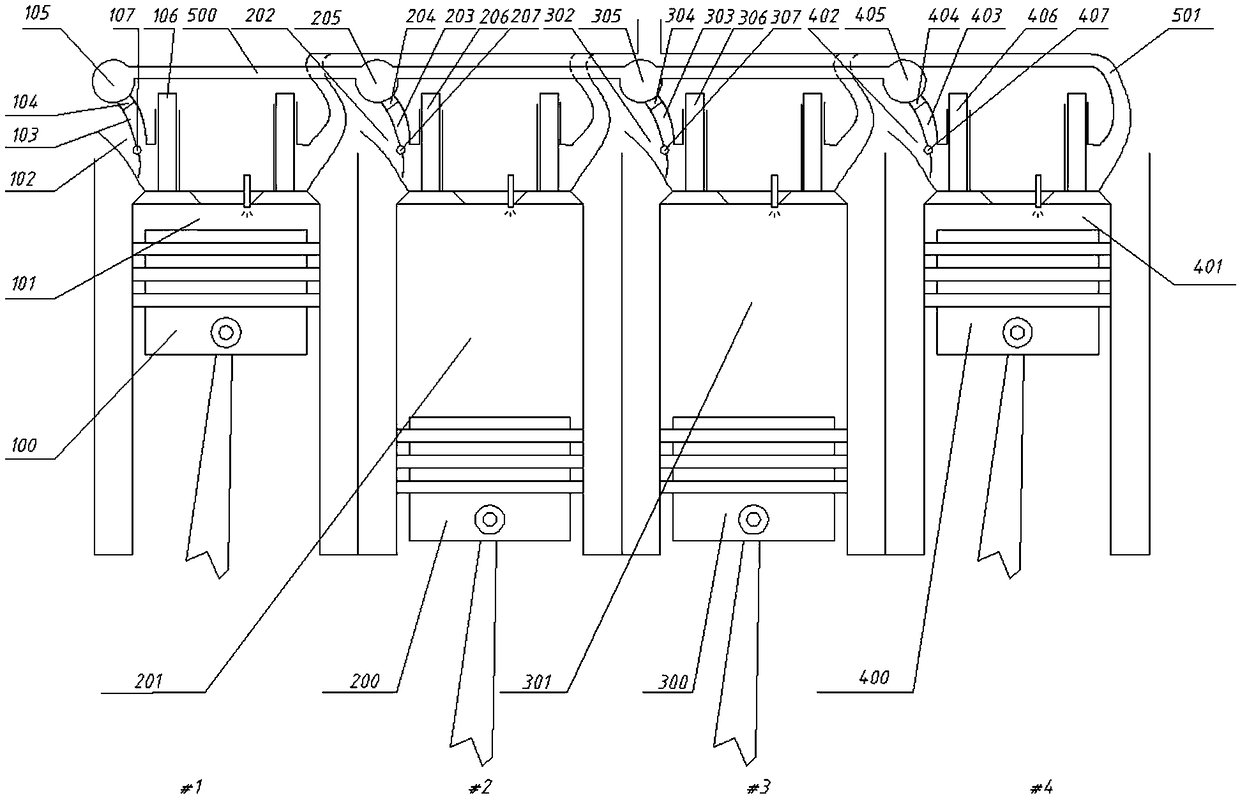
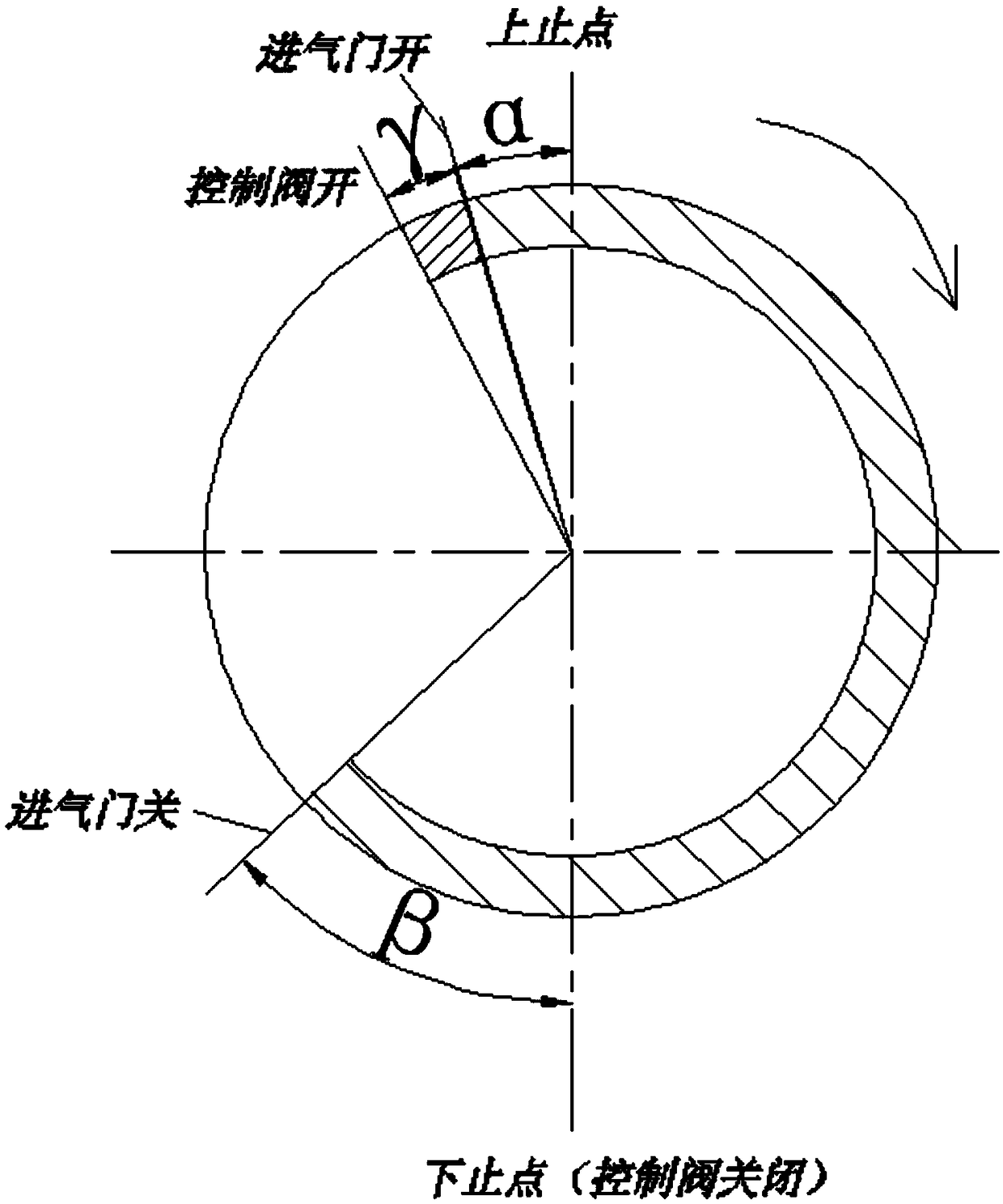
[0028] like figure 1 As shown, the control valve 104 communicates with the combustion chamber 101 and the gas storage chamber 105 in the branch passage 103 of the intake pipe, and is used to control the two-way flow of the high-pressure and low-temperature combustible mixture. The mechanical movable valve 107 has a one-way conduction capability, and the gas can enter during the intake, but when the gas discharged from the compression stroke enters the intake pipe and flows back, the gas closes the main intake pipe by pressing the mechanical movable valve 107, and most of the gas passes through The control valve 104 enters an air reservoir 105 . When the next intake stroke starts, the control valve 104 is opened, and the high-pressure, low-temperature combustible mixture in ...
PUM
 Login to View More
 Abstract
Description
Claims
Application Information
 Login to View More