Check patentability & draft patents in minutes with Patsnap Eureka AI!

Method for modeling at least one light source

a technology of light source and model, applied in the field of modeling at least one light source, can solve the problems of not allowing the light returning to the source to be taken into account, the volume of data to be processed is very high, and the overlap between images is not clear

Active Publication Date: 2021-11-30
OPTIS
View PDF5 Cites 0 Cited by
  • Summary
  • Abstract
  • Description
  • Claims
  • Application Information

AI Technical Summary

Benefits of technology

The invention proposes a method for modeling different types of light sources while accounting for the light returning to the source, while reducing the amount of data needed to be processed without creating problems. This allows for a more accurate model of the light source.

Problems solved by technology

However, inserting this type of model into another model with 3D geometry presents problems of overlap between the images from the source model and the geometry of the 3D model, along with problems of positioning and orientation of the model from the source relative to the geometry.
Moreover, in a computer simulation of the visual rendering of the light source in a virtual system, such a modeling method does not allow the light returning to the source to be taken into account, particularly the light returning due to optical reflection onto the auxiliary elements of the system.
However, in such modeling methods the volume of data to be processed is very high, and the modeling dynamics are reduced.
Moreover, such modeling methods only allow the light returning to the light source to be taken into account as a secondary light source composed of a lighted opaque object.
However, in such modeling methods problems of interpolation and overlap appear between the viewpoints of the set of images.

Method used

the structure of the environmentally friendly knitted fabric provided by the present invention; figure 2 Flow chart of the yarn wrapping machine for environmentally friendly knitted fabrics and storage devices; image 3 Is the parameter map of the yarn covering machine
View more

Image

Smart Image Click on the blue labels to locate them in the text.
Viewing Examples
Smart Image
  • Method for modeling at least one light source
  • Method for modeling at least one light source
  • Method for modeling at least one light source

Examples

Experimental program
Comparison scheme
Effect test

embodiments

[0060]Notably disclosed in the following is a method of modeling at least one light source 2.

[0061]The light source 2 is advantageously a primary light source, i.e. an incandescent or compact fluorescent light source; a source of light emitting diodes, notably those comprising diffusing and fluorescent materials; a light guide, or a liquid crystal screen (LCD).

[0062]However, the modeling method according to the invention can be extended to other types of light sources such as secondary light sources.

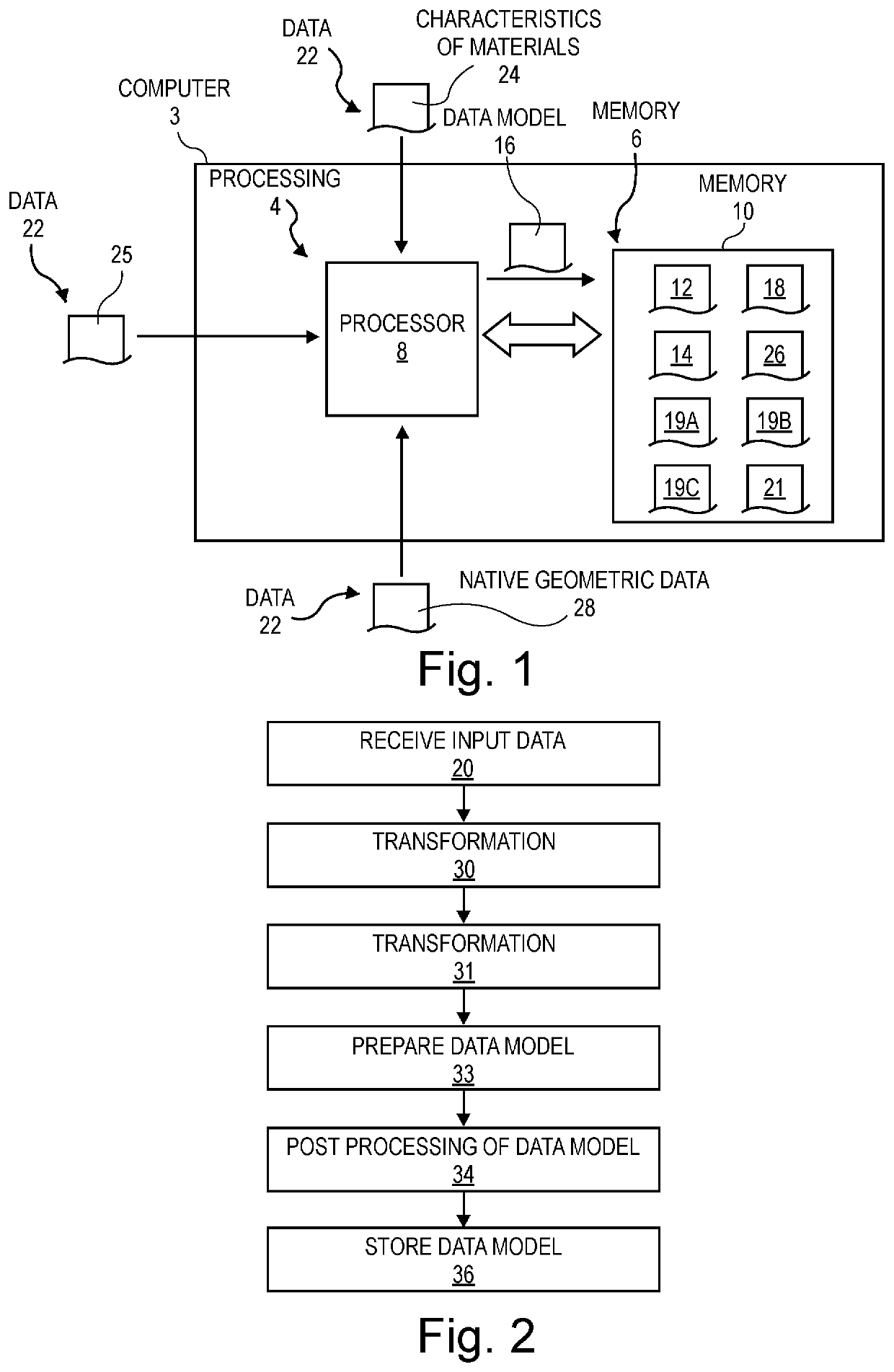
[0063]A computer 3 is represented schematically and functionally in FIG. 1.

[0064]The computer 3 comprises processing means 4 and memory storage means 6 connected to the processing means 4. The processing means 4 comprises at least one processor 8, and the memory storage means 6 comprises at least one memory 10, for example non-transient memory. In the embodiment of FIG. 1, the processing means 4 comprises a single processor 8, and the memory storage means 6 comprises a single memory 10 o...

the structure of the environmentally friendly knitted fabric provided by the present invention; figure 2 Flow chart of the yarn wrapping machine for environmentally friendly knitted fabrics and storage devices; image 3 Is the parameter map of the yarn covering machine
Login to View More

PUM

No PUM Login to View More

Abstract

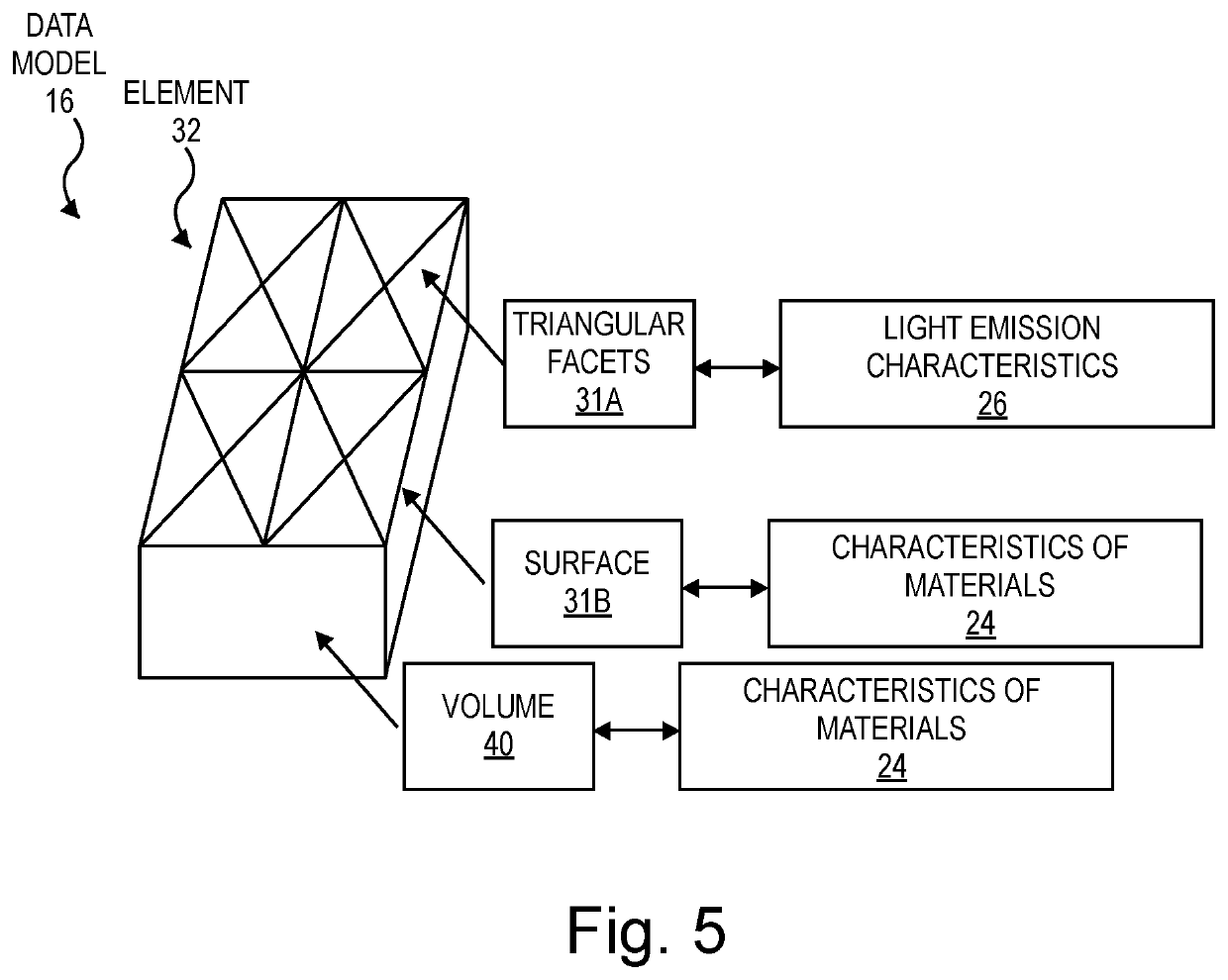
The invention relates to a computer-implemented (3) method for modeling at least one light source, comprising: a step of receiving input data (22) comprising data (24) of characteristics of materials forming the light source; and a step of creating, from data (24) of characteristics of the received materials, as well as geometric data (14) and data (26) of characteristics of light emission from the light source, a data model (16) representing the light source, said geometric data (14) describing the light source, and defining a plurality of volumes and surfaces; wherein, during the creation of the data model: the data (24) of characteristics of the materials is linked to the volumes and surfaces of the geometric data (14), and the data (26) of characteristics of light emission from the light source is linked to the surfaces of the geometric data (14); and a step of storing the data model (16) in the computer (3).

Description

CROSS-REFERENCE TO RELATED APPLICATIONS[0001]This application is a U.S. National Phase entry under 35 U.S.C. § 371 of International Application No. PCT / EP2016 / 074788, filed Oct. 14, 2016, entitled “METHOD FOR MODELING AT LEAST ONE LIGHT SOURCE”, and this application claims the benefit of priority to this international application.TECHNICAL DOMAIN OF THE INVENTION[0002]The present invention concerns the domain of modeling light sources. More particularly, but not exclusively, the present invention concerns the domain of design and simulation of primary light sources for use in three-dimensional (3D) environments, for example to obtain photometric or colorimetric data, or restoration of synthesized images from complex virtual systems modeled in 3D and comprising such light sources.[0003]More particularly, the invention concerns a computer-implemented method for modeling at least one light source. The present invention also concerns a computer program comprising instructions for the ex...

Claims

the structure of the environmentally friendly knitted fabric provided by the present invention; figure 2 Flow chart of the yarn wrapping machine for environmentally friendly knitted fabrics and storage devices; image 3 Is the parameter map of the yarn covering machine
Login to View More

Application Information

Patent Timeline
no application Login to View More
Patent Type & Authority Patents(United States)
IPC IPC(8): G06F30/20G06F30/12G06F119/18G06F111/20
CPCG06F30/20G06F30/12G06F2111/20G06F2119/18
Inventor CHABAUD, DOMINIQUE
Owner OPTIS
Features
  • R&D
  • Intellectual Property
  • Life Sciences
  • Materials
  • Tech Scout
Why Patsnap Eureka
  • Unparalleled Data Quality
  • Higher Quality Content
  • 60% Fewer Hallucinations
Social media
Patsnap Eureka Blog
Learn More