Check patentability & draft patents in minutes with Patsnap Eureka AI!

Transseptal guide wire puncture system

a technology puncture system, which is applied in the field of transseptal guide wire puncture system, can solve the problems of difficulty in needle advancement, cardiac perforation and tamponade, etc., and achieve the effects of less traumatic interaction, less susceptible to perforation of la 208 structure, and intermediate stiffness

Active Publication Date: 2022-01-18
BOSTON SCI MEDICAL DEVICE LTD
View PDF51 Cites 1 Cited by
  • Summary
  • Abstract
  • Description
  • Claims
  • Application Information

AI Technical Summary

Benefits of technology

The system enables improved ease of use, precise control, increased safety, reduced procedural time, and decreased costs by allowing intuitive manipulation and precise device positioning across a range of anatomical configurations, minimizing the risk of cardiac perforation and improving device delivery to left heart targets.

Problems solved by technology

Inadvertently, puncturing structures such as the aorta, left or right atrial free wall or pulmonary vein can result in cardiac perforation and tamponade.
Current transseptal procedures have specific challenges, including: (1) difficulty engaging with precision and stability on specific locations of the FO resulting from, for example, severe kyphosis, altered cardiac orientation in relation to external landmarks, abnormal cardiac rotation (secondary to multiple cardiac pathologies) and highly variable FO positions and configurations on the intra-atrial septum; (2) difficulty with needle advancement, often due to thickened or scarred septum; (3) redundant or aneurysmal septum leaving the apex of the tented needle on the FO, adjacent to the LA free wall and thus at risk for perforation and pericardial tamponade; and (4) prior septal occluder placement necessitating alternative puncture locations on the native septum or direct occluder puncture.

Method used

the structure of the environmentally friendly knitted fabric provided by the present invention; figure 2 Flow chart of the yarn wrapping machine for environmentally friendly knitted fabrics and storage devices; image 3 Is the parameter map of the yarn covering machine
View more

Image

Smart Image Click on the blue labels to locate them in the text.
Viewing Examples
Smart Image
  • Transseptal guide wire puncture system
  • Transseptal guide wire puncture system
  • Transseptal guide wire puncture system

Examples

Experimental program
Comparison scheme
Effect test

Embodiment Construction

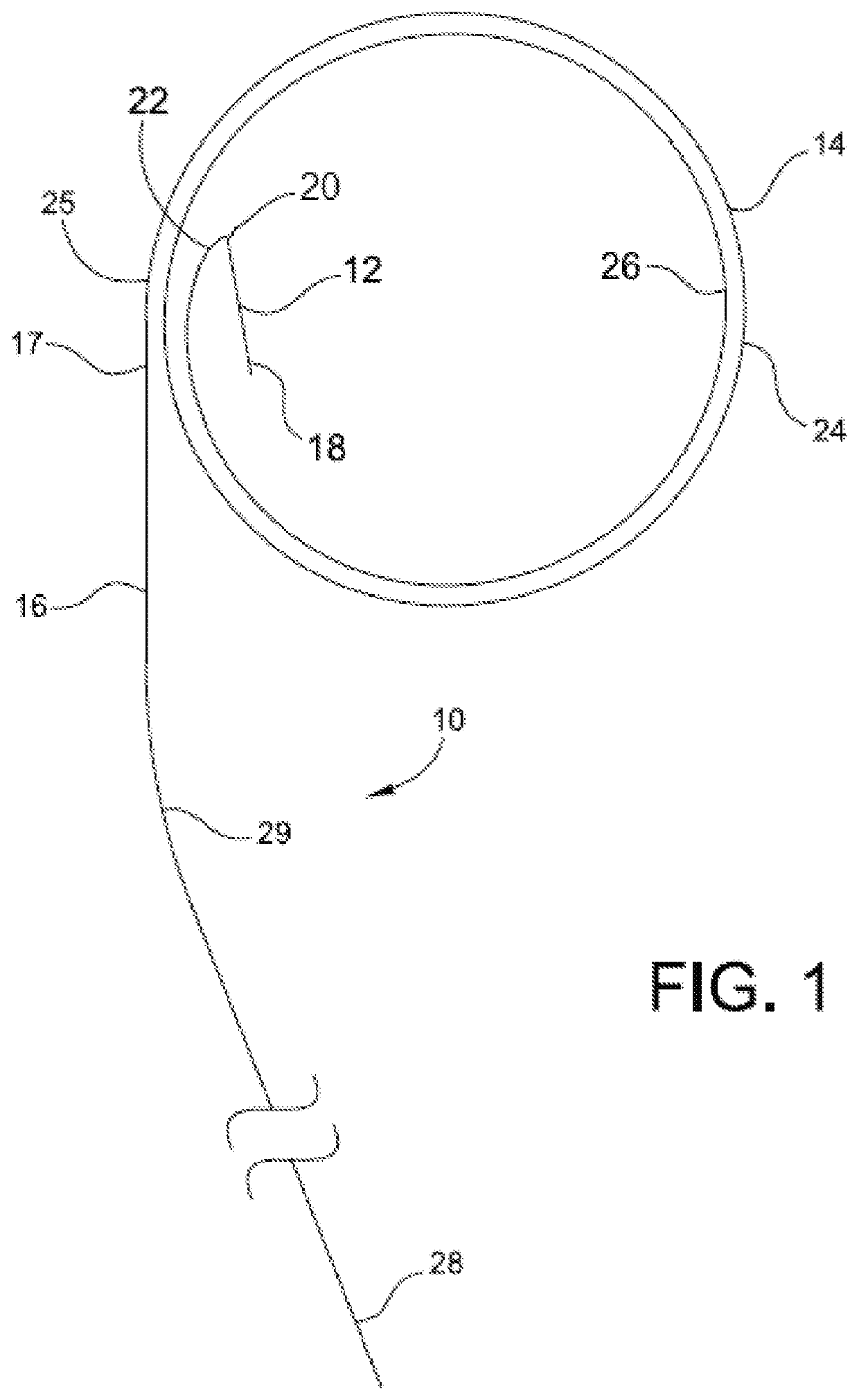
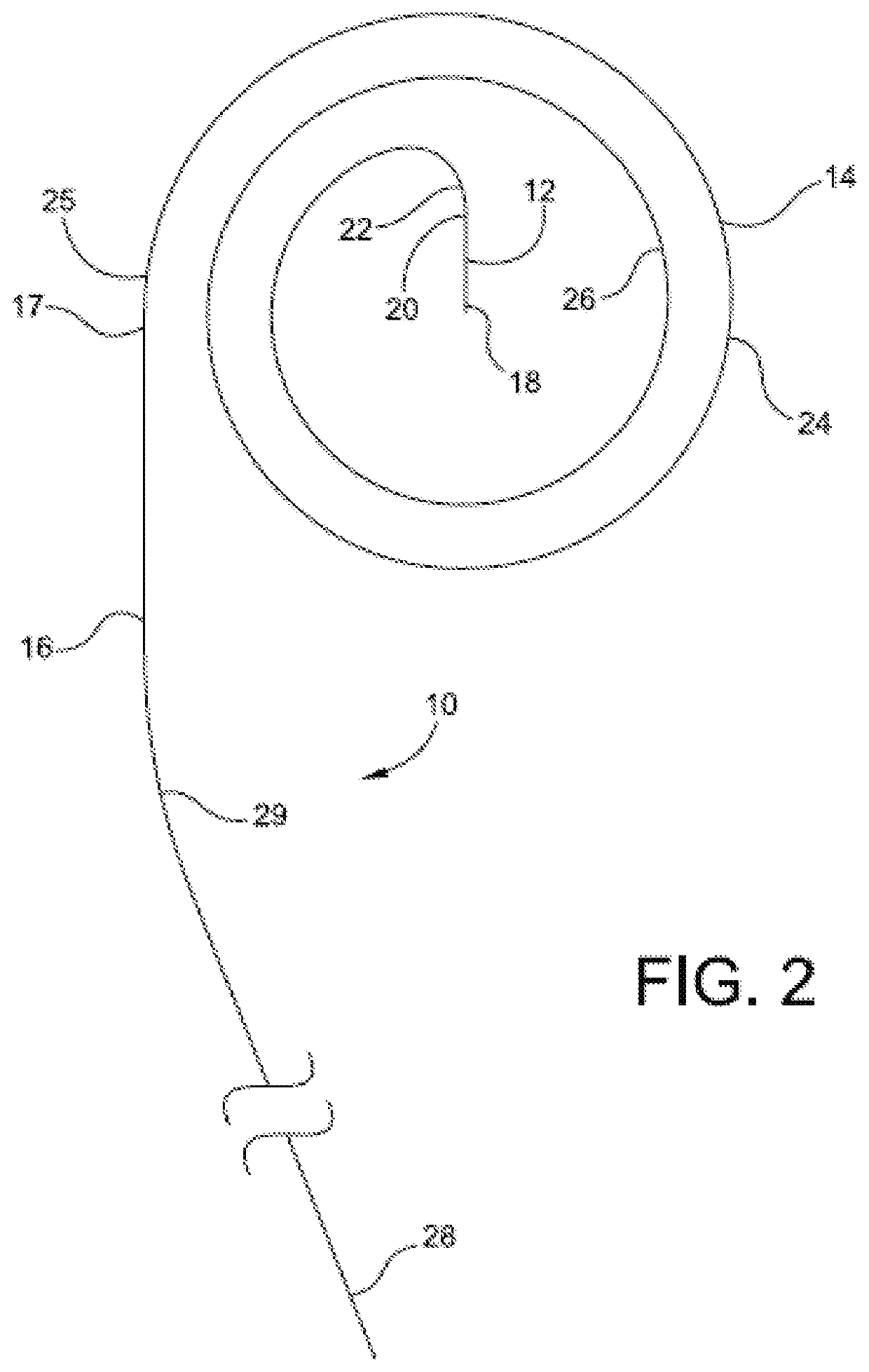
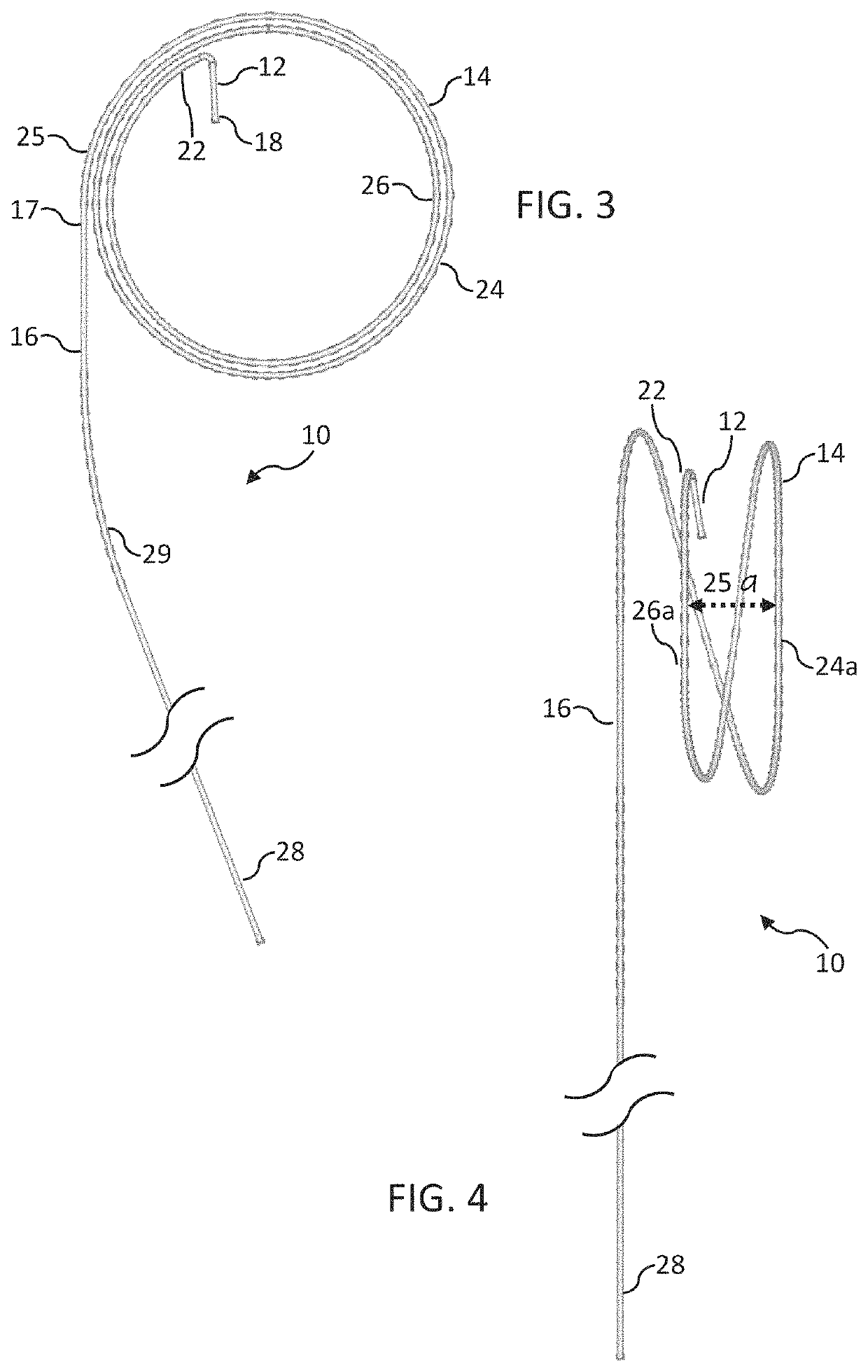
[0035]With reference to the guide number in the drawings, the transseptal puncture system of the present invention is preferably a “one size fits all” system whereby a single-sized system may be used in a variety of anatomical configurations and atrial sizes. An exception to this new standard is directed to the use of multiple wire diameters on the order of about 0.021 inches to greater that 0.035 inches. The system includes specialized components, including an exchange GW with a distal transseptal needle and adjacent coils or loops for GW securement in the LA 206. In addition, the catheter components may include a novel dilator which interacts with an actuator on the proximal sheath handle for controlled positioning on the FO aided by the steerable sheath.

The Needle-Guide Wire

[0036]Reference is made to FIGS. 1-4 illustrating a needle-guide wire 10. The transseptal needle-GW 10 should be a single component and avoid the need for a separate transseptal needle, multiple exchanges and ...

the structure of the environmentally friendly knitted fabric provided by the present invention; figure 2 Flow chart of the yarn wrapping machine for environmentally friendly knitted fabrics and storage devices; image 3 Is the parameter map of the yarn covering machine
Login to View More

PUM

No PUM Login to View More

Abstract

A trans-atrial septal catheter system for delivery of a steerable sheath into the left atrium contains three components. The first component is a three-segmented needle-guide wire composed of a distal needle designed to flex sharply in relation to the conjoined looped guide wire segment after fossa ovalis puncture and needle advancement. The distal guide wire loops are advanced into the left atrium maintaining the angled needle in a central location relevant to the loops for preserving an atraumatic position while stabilizing the loops in the left atrium. The elongated proximal extra stiff guide wire segment is conjoined to the looped segment which crosses the fossa ovalis and extends proximally to become externalized to the femoral vein. This segment is extra stiff and significantly elongated to permit catheter and device exchanges. The guide wire serves as a support rail over which the dilator and sheath can be advanced into the left atrium. This transseptal system is uniquely forward looking and permits cautious and iterative delivery of the dilator into the fossa ovalis for “tenting” by way of a proximal sheath activator that interacts with the dilator. The proximal externalized GW is then advanced to permit puncture of the fossa ovalis. After puncturing a precise location of the fossa ovalis, the needle and coiled guide wire loops are further advanced into the left atrium. With the proximal activator, the dilator is advanced across the fossa ovalis into the left atrium using single-handed maneuvering for separate dilator advancement and steering of the sheath by way of turning or actuating the sheath handle.

Description

FIELD OF THE INVENTION[0001]The present invention is directed to a system for performing intracardiac transseptal puncture and guide wire access to left heart structures. More specifically, the present invention is directed to achieving transseptal puncture in a highly efficient and safe manner both to gain access to the left atrium by way of a distal needle segment, and mid-looped or coiled left-atrial segment and linear elongated proximal segments. It serves as a platform for structural or other device delivery to the left atrium in the heart. A uniquely configured steerable sheath and dilator may be incorporated with this needle-guide wire. Alternatively, it can be used with most commercially available dilator-sheath transseptal catheter systems.BACKGROUND[0002]Transseptal punctures are generally used to access the left atrium (LA) of the heart by way of the right atrium (RA). Access to the LA is commonly required for atrial fibrillation ablation and, more recently, treatment of ...

Claims

the structure of the environmentally friendly knitted fabric provided by the present invention; figure 2 Flow chart of the yarn wrapping machine for environmentally friendly knitted fabrics and storage devices; image 3 Is the parameter map of the yarn covering machine
Login to View More

Application Information

Patent Timeline
no application Login to View More
Patent Type & Authority Patents(United States)
IPC IPC(8): A61M25/09A61B17/34A61B17/00A61B17/22
CPCA61M25/09A61B17/3468A61B17/3478A61M25/09041A61B2017/00247A61B2017/00278A61B2017/00853A61B2017/00867A61B2017/22042A61M2025/09141A61M2025/09175A61M2210/122
Inventor PEDERSEN, WESLEY ROBERTSORAJJA, PAUL
Owner BOSTON SCI MEDICAL DEVICE LTD
Features
  • R&D
  • Intellectual Property
  • Life Sciences
  • Materials
  • Tech Scout
Why Patsnap Eureka
  • Unparalleled Data Quality
  • Higher Quality Content
  • 60% Fewer Hallucinations
Social media
Patsnap Eureka Blog
Learn More