Thus, while
gene therapy approaches to inhibit VEGF activity and
tumor angiogenesis have assumed diverse forms, from intratumoral administration of retroviruses to the local and
systemic administration of adenoviruses, these prior studies have not shown effective systemic
angiogenesis inhibition using any of the presently available methods.
Side effects typically result from cytotoxic effects upon normal cells and can limit the use of cytoreductive therapies.
A frequent
side effect is
anemia, a deficiency in the production of red blood cells and result in reduction of
oxygen transported by blood cells to the tissues of the body.
Side effects, such as
anemia, increase morbidity, mortality, and often lead to under-dosing in
cancer treatment.
Unfortunately, non-EPO factors capable of stimulating RBC production have not yet been well described in the literature.
The reduction in RBC
mass defined by
anemia, often necessitates therapy because of potential physiologic compromise.
Levels of erythrocytes that become too low, for example, hematocrit of less than 25, are likely to produce considerable morbidity and in certain circumstances these levels are life-threatening.
In addition, the anemic patients experience significant reduction of the
quality of life due to lowered energy levels.
Currently, however, severe acute anemia can only be treated by stimulation of
erythropoiesis using EPO or transfusion of red blood cells.
Unfortunately, the over 10 million RBC units annually transfused in the United States engender not-insignificant risks of transfusion reactions, as well as infections including
hepatitis viruses and HIV [Goodnough et al., N Engl J Med 340:438-47 1999].
However, while EPO treatment is considered fairly safe and has relatively few side effects, the treatment often requires several additional weekly injections and adds to patient discomfort.
Furthermore, determining the
efficacy or endpoint of a
treatment schedule including VEGF or VEGF inhibitors is currently cumbersome.
However, this requires taking a
biopsy sample which adds to patient discomfort and is not always even possible.
However, this methodology is not generally applicable.
One of the limitations in doing antiangiogenic trials is that there are no good surrogate markers for efficacy besides the ultimate clinical response, and there are no well-developed, standardized assays, which is a major limitation of the animal studies of new treatments associated with VEGF, clinical trials as well as the actual treatment methods.
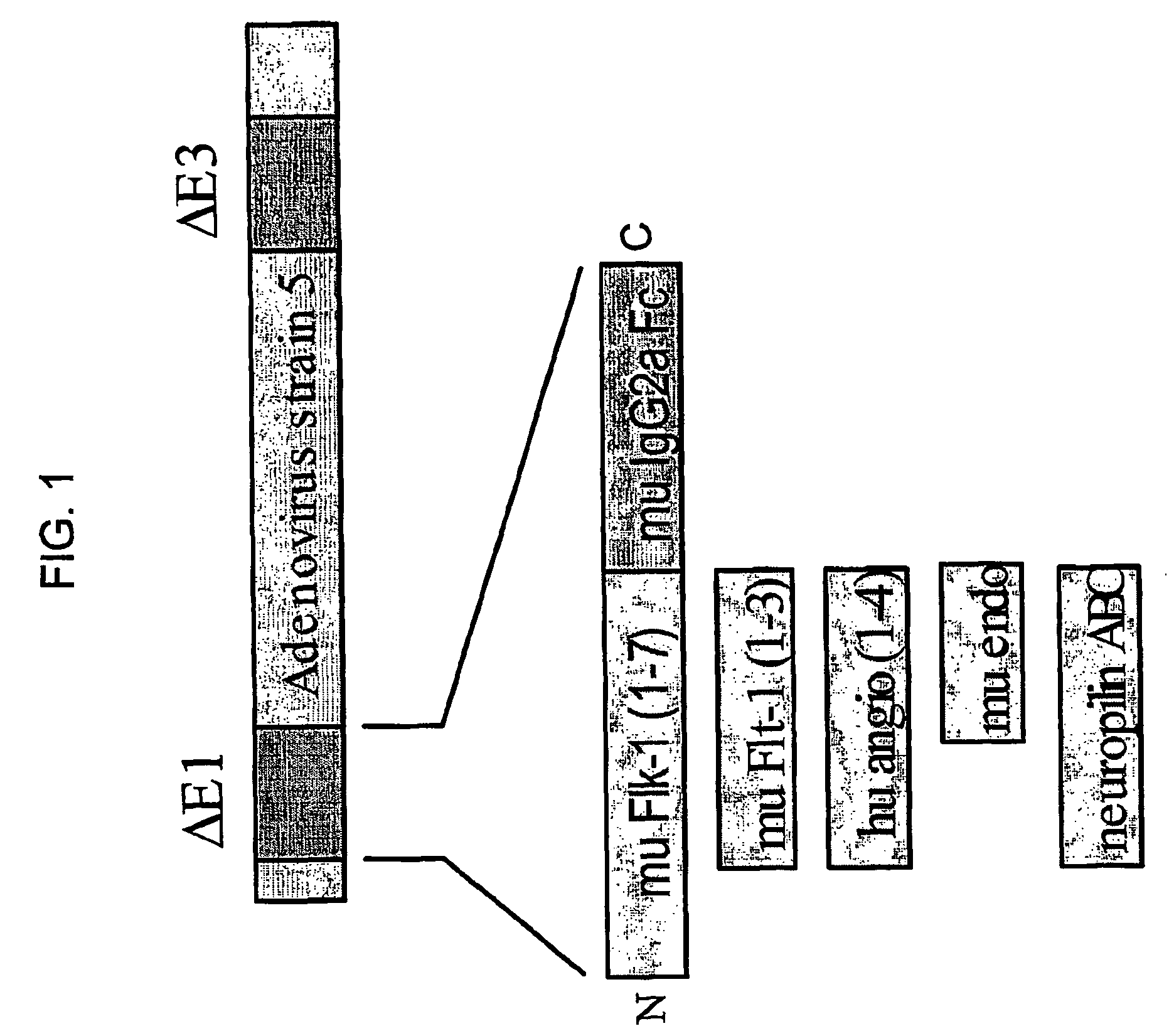
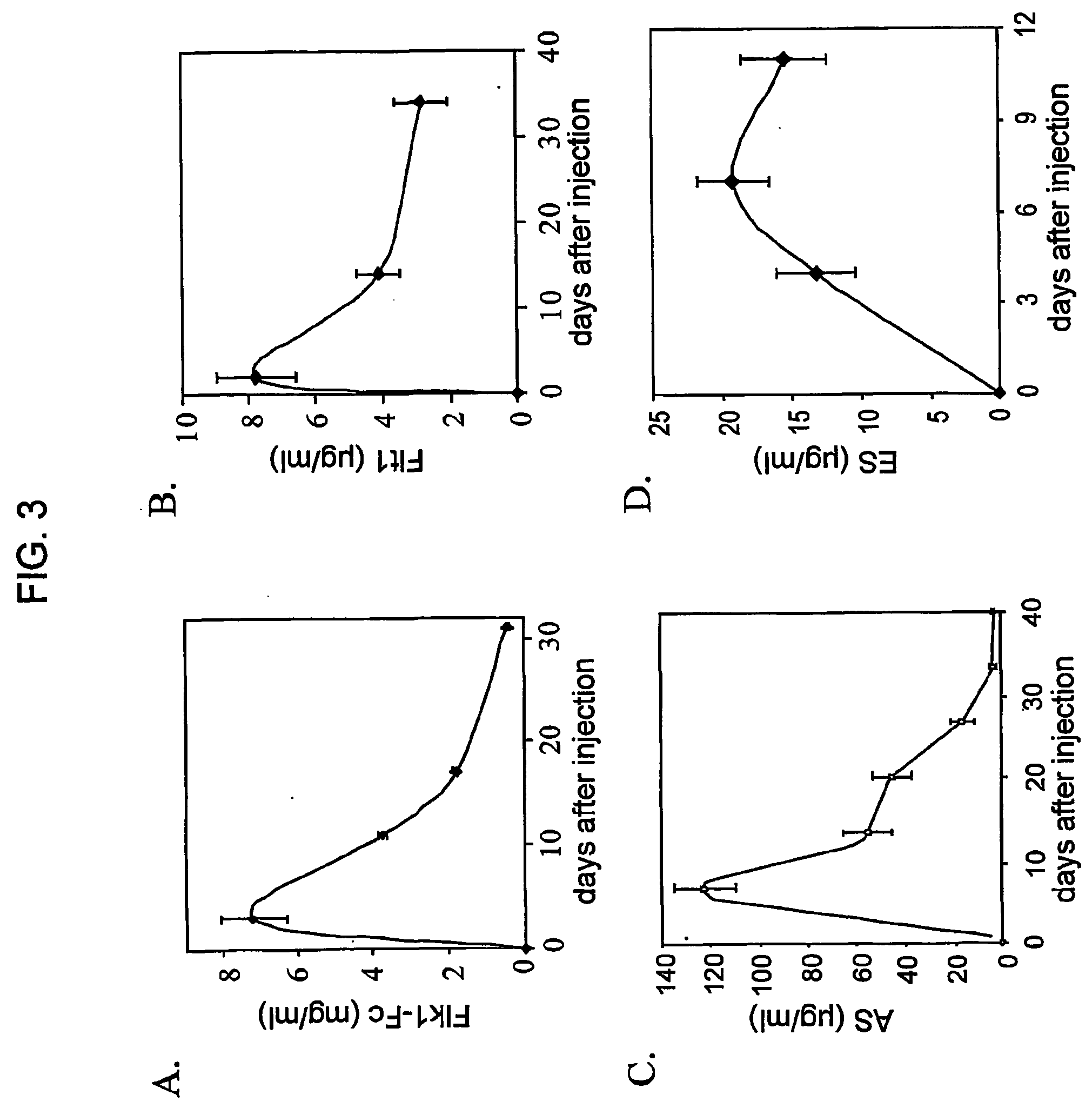
In this latter case, the inability to observe significant activity against pre-existing tumors may have resulted from insufficient production of Flt ectodomains, as our preliminary dosing studies suggest that high levels of
gene product (>2 .mu.l / ml) may be necessary for activity against preexisting tumors of >100 mm.sup.3.



 Login to View More