
Negative active material for rechargeable lithium battery, method of preparing same and rechargeable lithium battery using same
a technology of negative active material and rechargeable lithium battery, which is applied in the direction of electrode manufacturing process, cell components, coatings, etc., can solve the problems of dramatic deterioration of cycle characteristics, and achieve the effect of excellent cycle characteristics and less volume change upon charge-discharg
- Summary
- Abstract
- Description
- Claims
- Application Information
AI Technical Summary
Benefits of technology
Problems solved by technology
Method used
Image

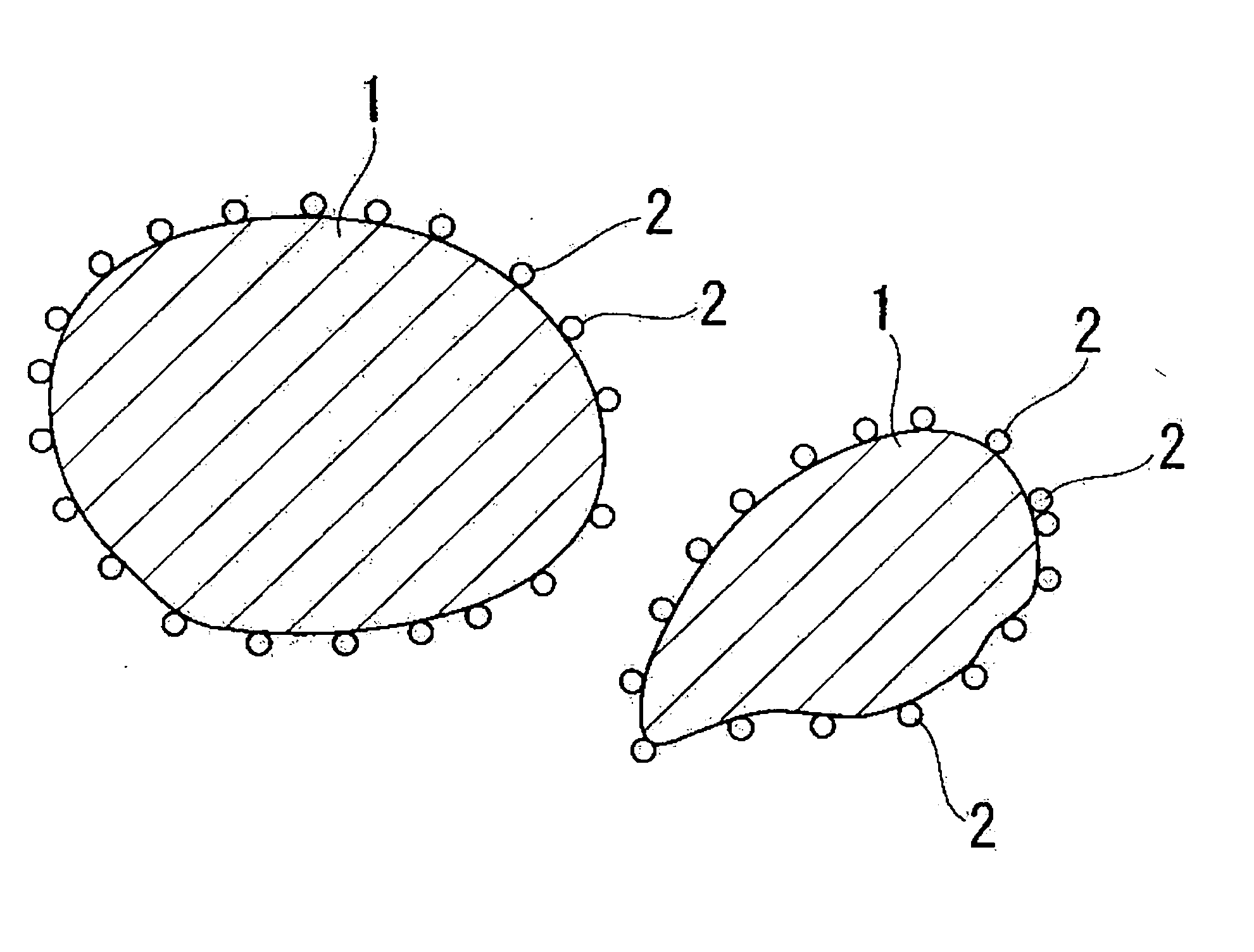
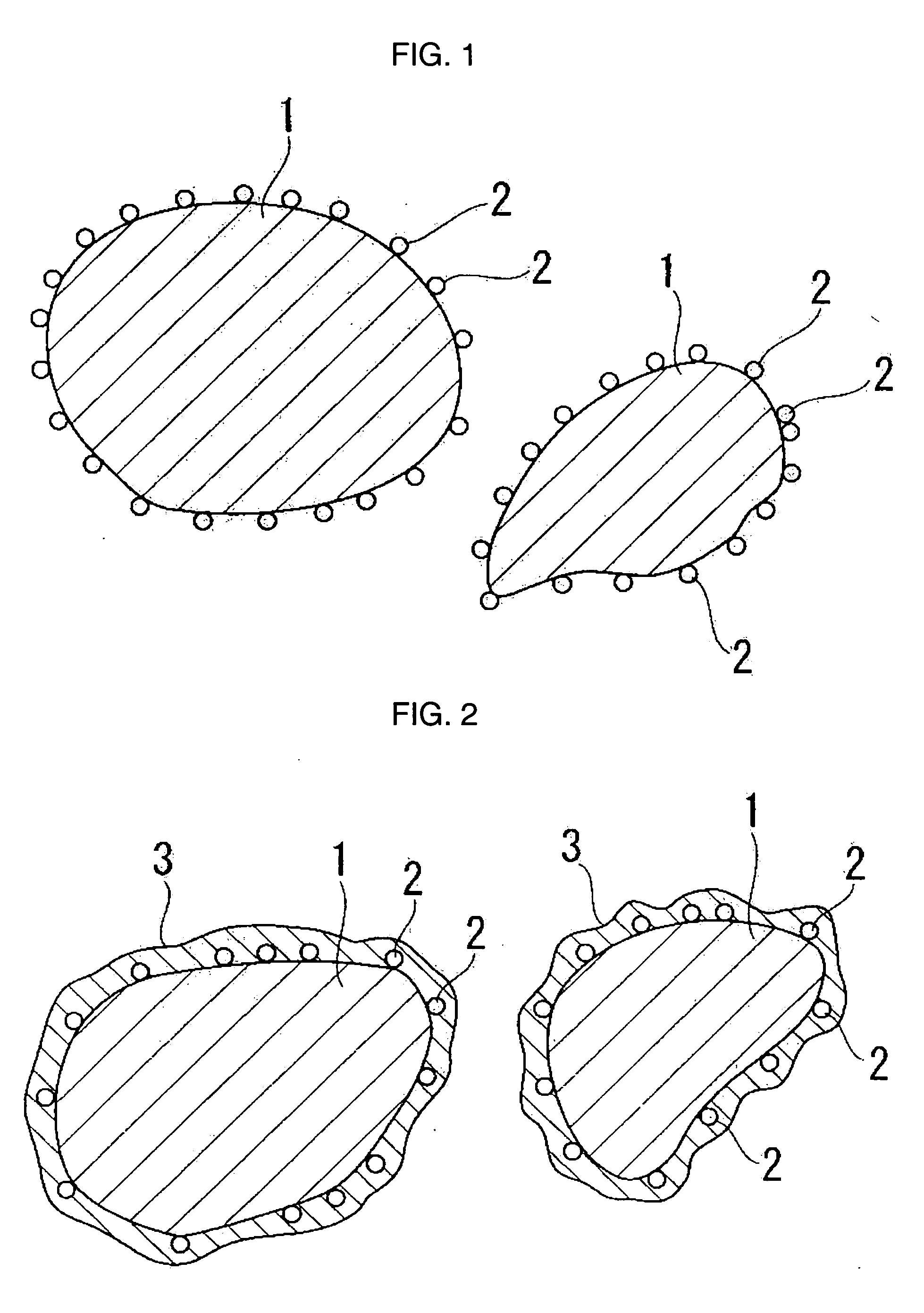
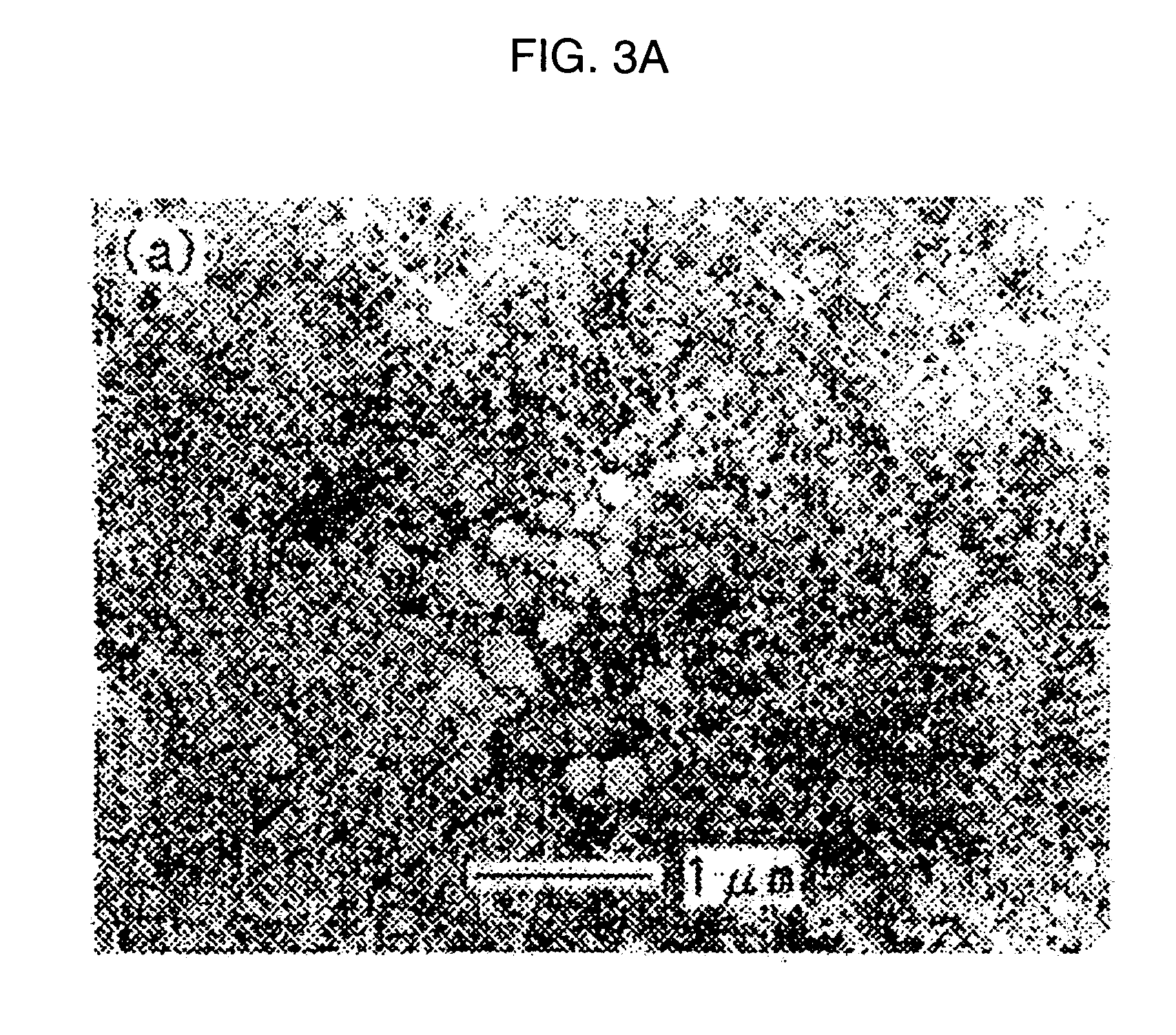
Examples
example 1
[0087] The pressure inside a vacuum vessel containing silicon powder was set to 1.5×10⁵ Pa under a helium atmosphere and heated to 1700° C. using arc heating to generate silicon vapors. The resulting silicon vapors were cooled under a helium atmosphere. According to this process, the silicon vapors were aggregated and finally adhered as supermicroparticles onto the inner side of the vacuum vessel. This procedure was repeatedly carried out for 4 hours to produce powders made of Si supermicroparticles to be used for a negative active material.
example 2
[0088] Si was prepared by the same procedure as in Example 1, the Si supermicroparticles were mixed with graphite powders having a diameter from 3 μm to 50 μm and, using a hybridizer under an argon gas atmosphere, and they were immobilized onto the surface of the graphite particles. The mixing ratio of the supermicroparticles and the graphite particles on a mass basis was 5:95. This procedure was used to produce composite particles.
[0089] Subsequently, after 10 parts by weight of oil mesophase pitch were mixed with 90 parts by weight of the composite particles, using a spray dryer, the oil mesophase pitch was coated onto the composite particles and dried, and then heated to 1000° C. under an argon atmosphere to fire the oil mesophase pitch so as to form carbonized films. According to this procedure, a negative active material was prepared.
example 3
[0090] A negative active material was prepared by the same method as in Example 1, except that the supermicroparticles were produced from a mixed powder of Si, Ni, and Ag powders provided in a mass ratio of Si:Ni:Ag=55:35:10, instead of using the silicon powders.
PUM
| Property | Measurement | Unit |
|---|---|---|
| diameters | aaaaa | aaaaa |
| diameters | aaaaa | aaaaa |
| Raman shift | aaaaa | aaaaa |
Abstract
Description
Claims
Application Information
 Login to View More