Device comprising a communications stack with a scheduler

US20050223191A1Inactive Publication Date: 2005-10-06RADIOSCAPE

Patent Information

Authority / Receiving Office
US · United States
Current Assignee / Owner
RADIOSCAPE
Publication Date
2005-10-06
Estimated Expiration
Not applicable · inactive patent

Smart Images

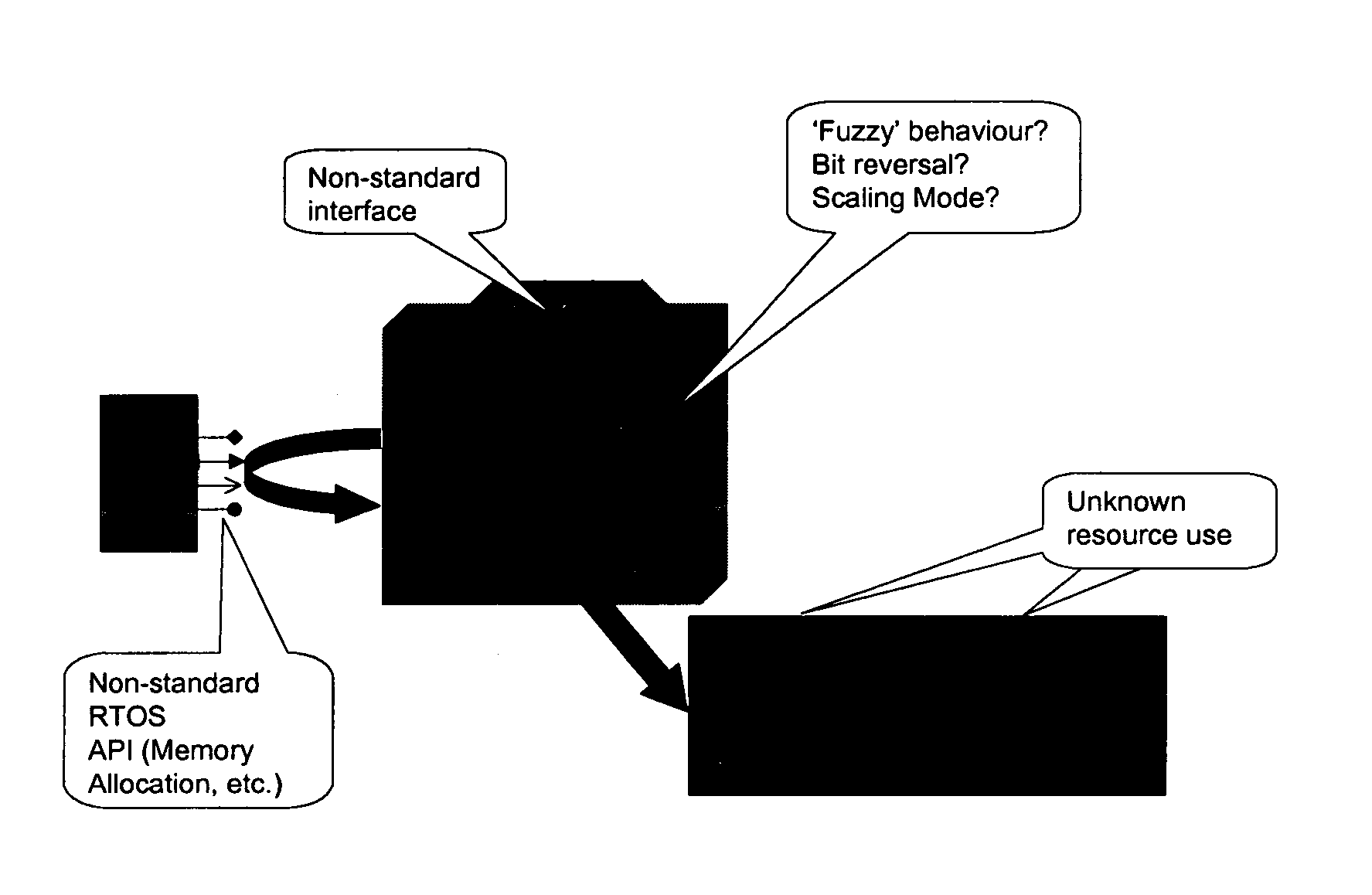
  • Figure 1
    Figure 1
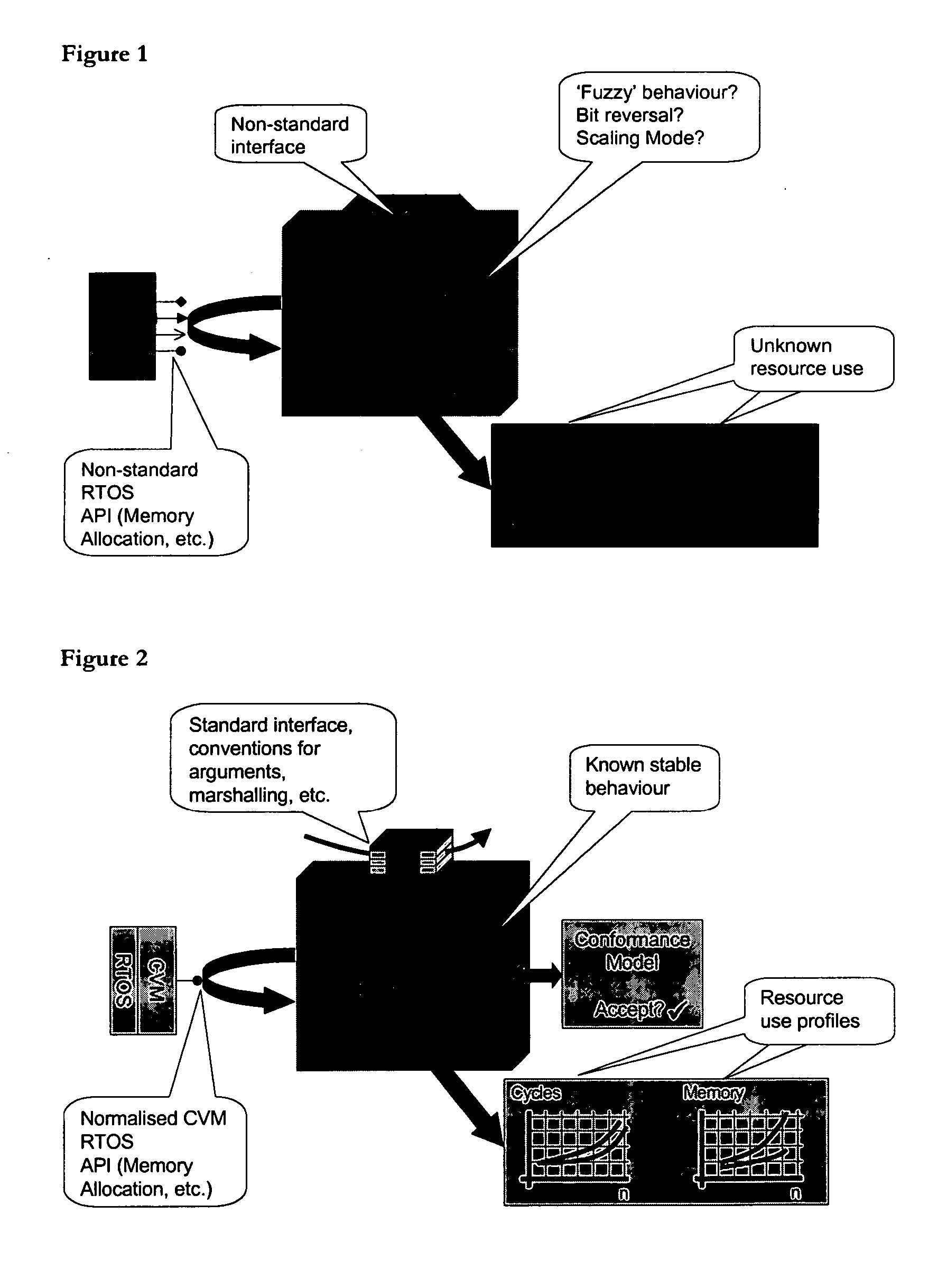
  • Figure 2
    Figure 2
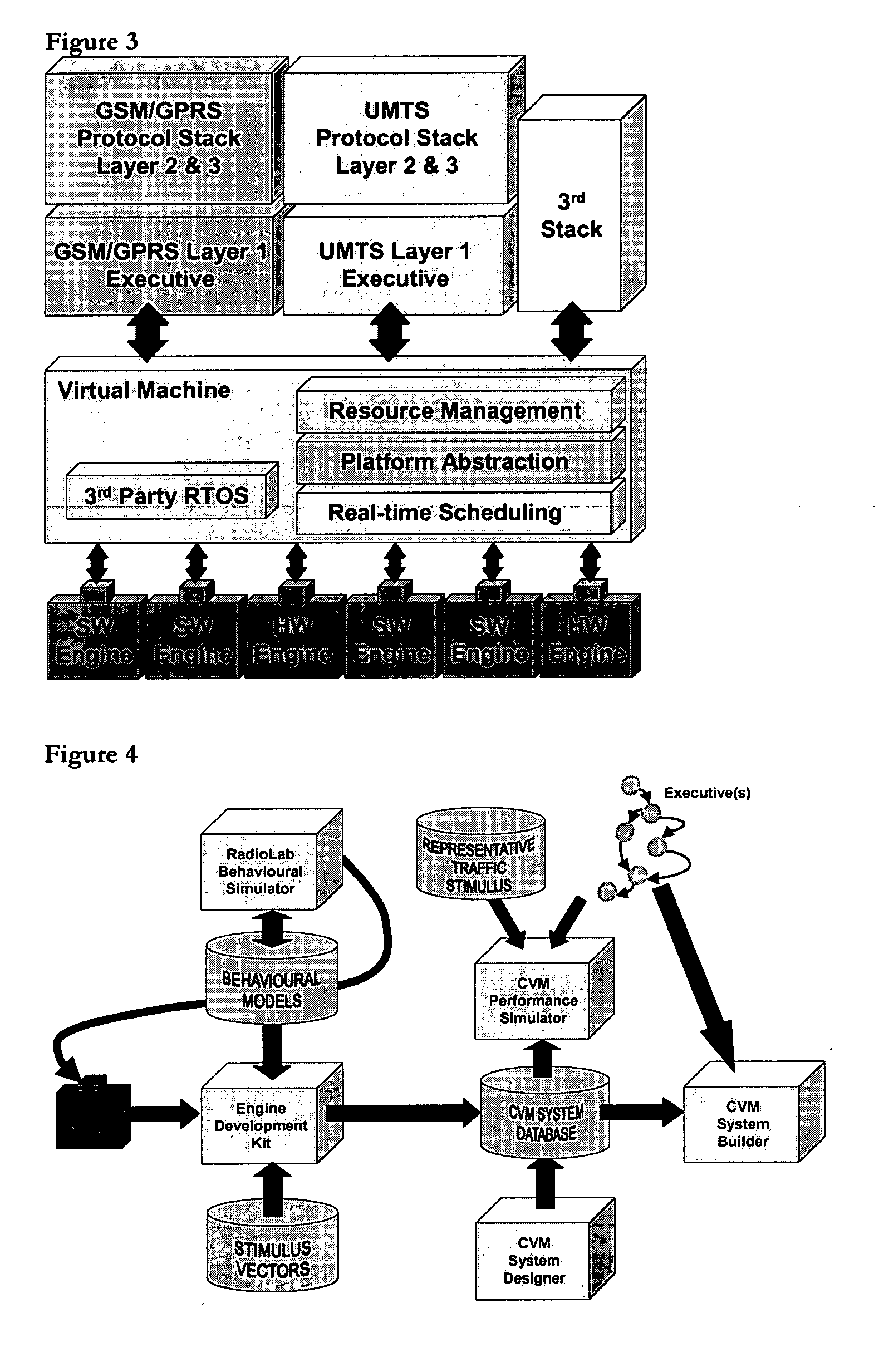
  • Figure 3
    Figure 3
Patent Text Reader

Abstract

A scheduler is used to schedule execution of tasks by ‘engines’ that perform high resource functions as requested by ‘executive’ control code, the scheduler using its knowledge of the likelihood of engine request state transitions. The likelihood of engine request state transitions describes the likely sequence of engines which executives will impose: the scheduler can at run-time in effect, as the start of a time slice, look-forward in time to discern a number of possible schedules (i.e. sequence of future engines), assess the merits of each possible schedule using pre-defined parameters (e.g. memory and power utilisation), then apply the schedule which is most appropriate given those parameters. The process repeats at the start of the next time slice. The scheduler therefore operates as a predictive scheduler. The present invention is particularly effective in addressing the “multi-mode problem”: dynamically balancing the requirements of multiple communications stacks operating concurrently.
Need to check novelty before this filing date? Find Prior Art

Description

BACKGROUND OF THE INVENTION

[0001] 1. Field of the Invention

[0002] This invention relates to a device comprising a communications stack, the stack including a scheduler. The device performs real-time DSP or communications activities.

[0003] 2. Description of the Prior Art

[0004] Modern communications systems are increasingly complex, and this fact is threatening the ability of companies to bring such products to market at all. The pressure has been felt particularly by the manufacturers of user equipment terminals (colloquially, ‘UEs’) in the wireless telecommunications space. These OEMs now find that they must integrate multiple, packet-based standards (coming, in all likelihood, from a number of independent development houses) together on an underlying hardware platform, within an ever-shortening time-to-market window, without violating a relatively constrained resource profile (memory, cycles, power etc.). We refer to this unenviable predicament as the ‘multimode problem’. [0005...

Claims

the structure of the environmentally friendly knitted fabric provided by the present invention; figure 2 Flow chart of the yarn wrapping machine for environmentally friendly knitted fabrics and storage devices; image 3 Is the parameter map of the yarn covering machine
Login to View More