Production and removal of free-flowing coke from delayed coker drum

a coke drum and free-flowing technology, which is applied in the direction of coke oven doors/closures, discharging devices, and thermal non-catalytic cracking, etc., can solve the problems of controlling the removal of coke from the drum, dangerous work, and associated risks, and achieve the effect of increasing the percentage of free-flowing cok

a coke drum and free-flowing technology, which is applied in the direction of coke oven doors/closures, discharging devices, and thermal non-catalytic cracking, etc., can solve the problems of controlling the removal of coke from the drum, dangerous work, and associated risks, and achieve the effect of increasing the percentage of free-flowing cok

US20050269247A1Inactive Publication Date: 2005-12-08EXXON RES & ENG CO

Image

Smart Image Click on the blue labels to locate them in the text.
Viewing Examples
Smart Image
  • Production and removal of free-flowing coke from delayed coker drum
  • Production and removal of free-flowing coke from delayed coker drum

Examples

Experimental program
Comparison scheme
Effect test

Embodiment Construction

[0033] Petroleum residua (“resid”) feedstocks are suitable for delayed coking. Such petroleum residua are frequently obtained after removal of distillates from crude feedstocks under vacuum and are characterized as being comprised of components of large molecular size and weight, generally containing: (a) asphaltenes and other high molecular weight aromatic structures that would inhibit the rate of hydrotreating / hydrocracking and cause catalyst deactivation; (b) metal contaminants occurring naturally in the crude or resulting from prior treatment of the crude, which contaminants would tend to deactivate hydrotreating / hydrocracking catalysts and interfere with catalyst regeneration; and (c) a relatively high content of sulfur and nitrogen compounds that give rise to objectionable quantities of SO2, SO3, and NOx upon combustion of the petroleum residuum. Nitrogen compounds present in the resid also have a tendency to deactivate catalytic cracking catalysts.

[0034] In an embodiment, re...

the structure of the environmentally friendly knitted fabric provided by the present invention; figure 2 Flow chart of the yarn wrapping machine for environmentally friendly knitted fabrics and storage devices; image 3 Is the parameter map of the yarn covering machine
Login to View More

PUM

No PUM Login to View More

Abstract

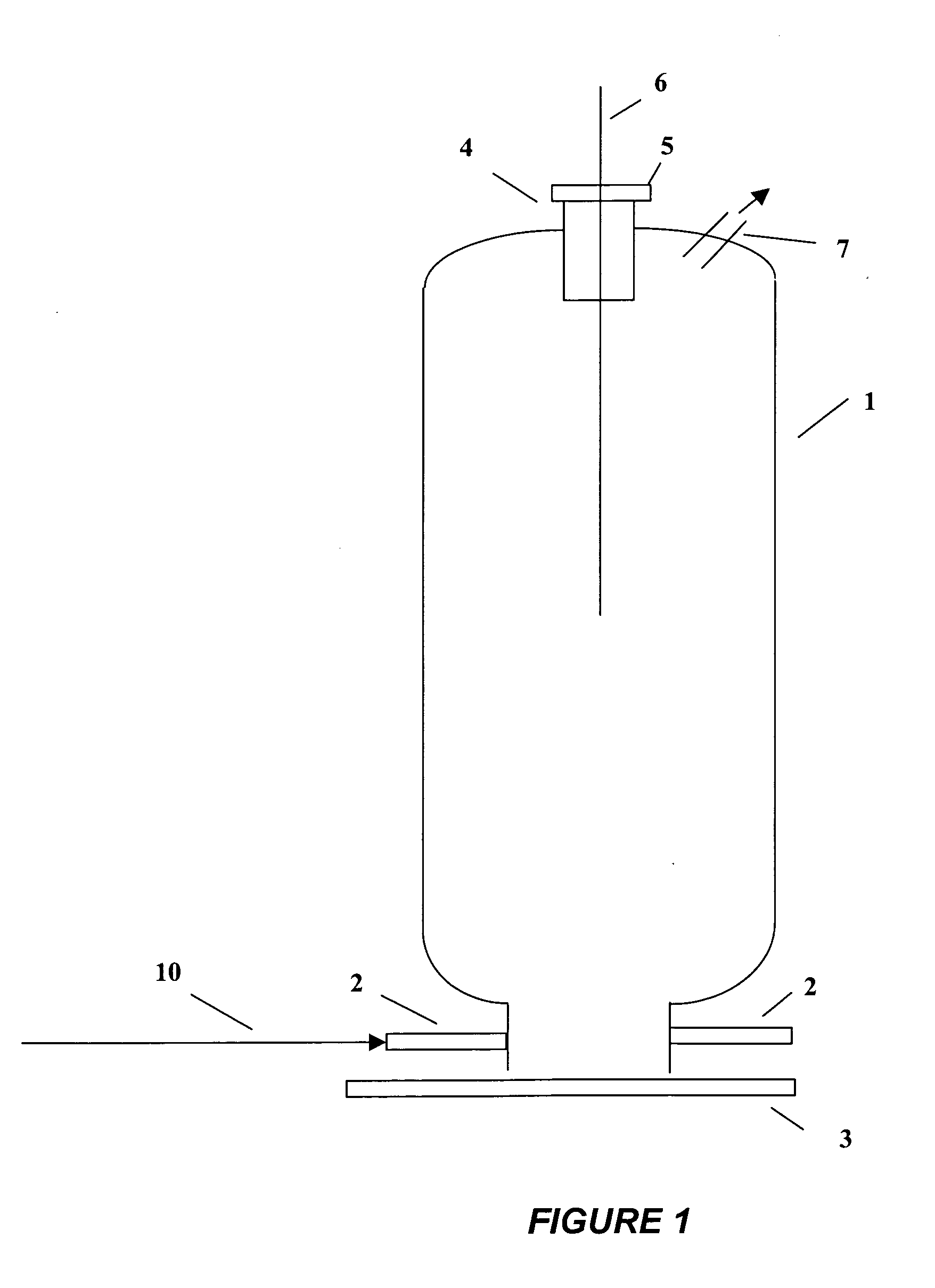
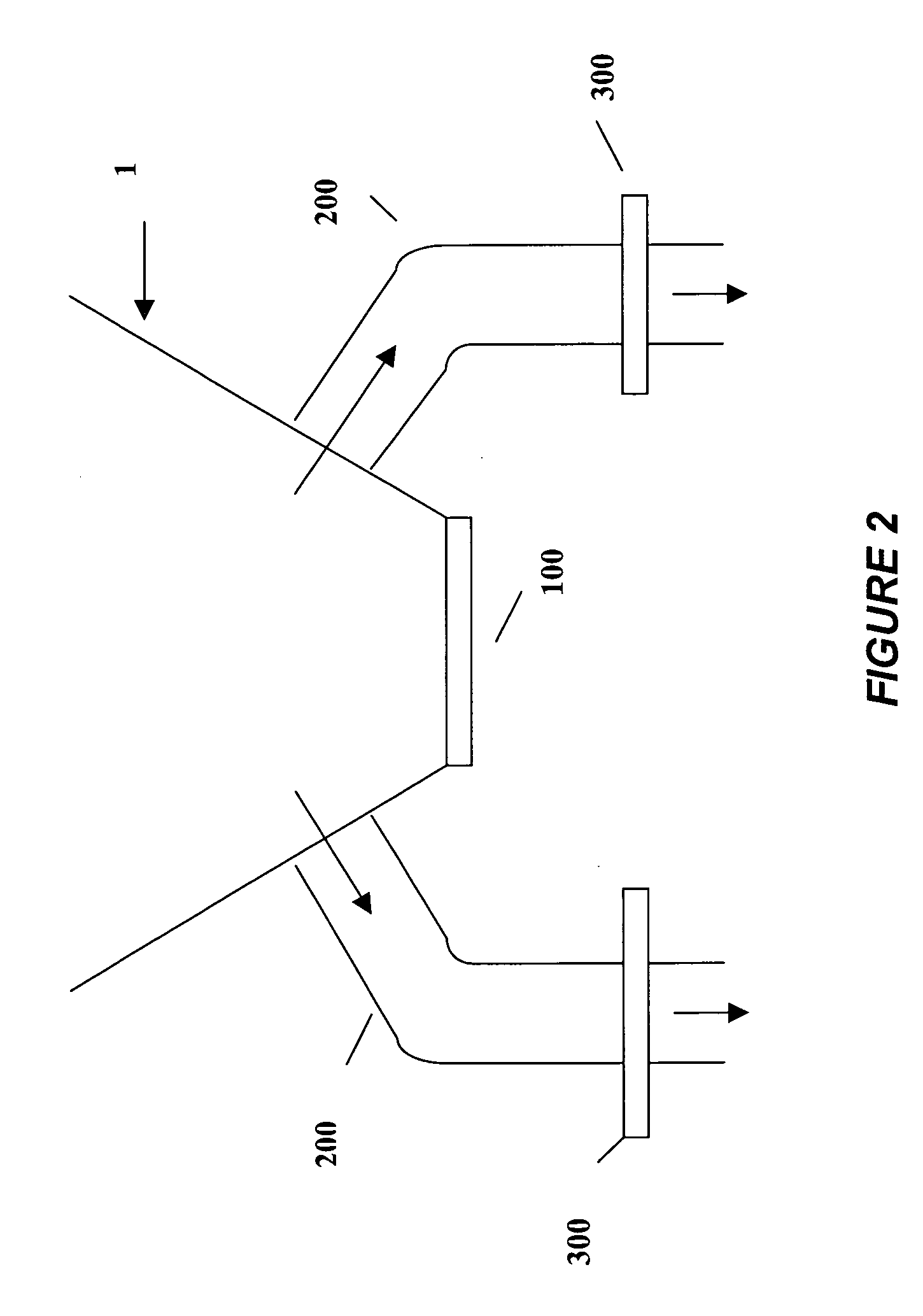
A method for producing and removing coke which has bulk morphology such that at least about 30 volume percent is free-flowing under the force of gravity or hydrostatic forces from a delayed coker drum. At the completion of the fill cycle, the coker drum, filled with hot coke, is cooled by steaming and then flooding it with water, thereby producing a coke / water mixture. The coke / water mixture is released from the coke drum through one or more drum closure / discharge throttling systems near the bottom of the coker drum.

Description

CROSS-REFERENCE TO RELATED APPLICATION [0001] This application claims benefit of U.S. Provisional Patent Application Ser. No. 60 / 571,345 filed May 14, 2004. FIELD OF THE INVENTION [0002] The present invention relates to a method for producing and removing coke which has bulk morphology such that at least about 30 volume percent is free-flowing under the force of gravity or hydrostatic forces from a delayed coker drum. At the completion of the fill cycle, the coker drum, filled with hot coke, is cooled by steaming and then flooding it with water, thereby producing a coke / water mixture. The coke / water mixture is released from the coke drum through one or more drum closure / discharge throttling systems near the bottom of the coker drum. BACKGROUND OF THE INVENTION [0003] Delayed coking involves thermal decomposition of petroleum residua (resids) to produce gas, liquid streams of various boiling ranges, and coke. Delayed coking of resids from heavy and heavy sour (high sulfur) crude oils...

Claims

the structure of the environmentally friendly knitted fabric provided by the present invention; figure 2 Flow chart of the yarn wrapping machine for environmentally friendly knitted fabrics and storage devices; image 3 Is the parameter map of the yarn covering machine
Login to View More

Application Information

Patent Timeline
08 Dec 2005
Publication
US20050269247A1
IPC
C10B25/10; C10B57/06; C10G9/00; C10G9/14
CPC
C10B25/10; C10B33/12; C10B55/00; C10B57/06; C10G9/00; C10G2300/807; C10G2300/205; C10G2300/301
Inventors
SPARKS, STEVEN W.; CHEN, TE-HUNG