
High-speed RFID circuit placement method and device
a circuit placement and high-speed technology, applied in the field of electronic devices, can solve the problems of increasing complexity, thickness and inflexibility of the structure of the rfid device, and still being larger than many desired rfid device form factors, and affecting the operation of the machin
- Summary
- Abstract
- Description
- Claims
- Application Information
AI Technical Summary
Benefits of technology
Problems solved by technology
Method used
Image

Examples
Embodiment Construction
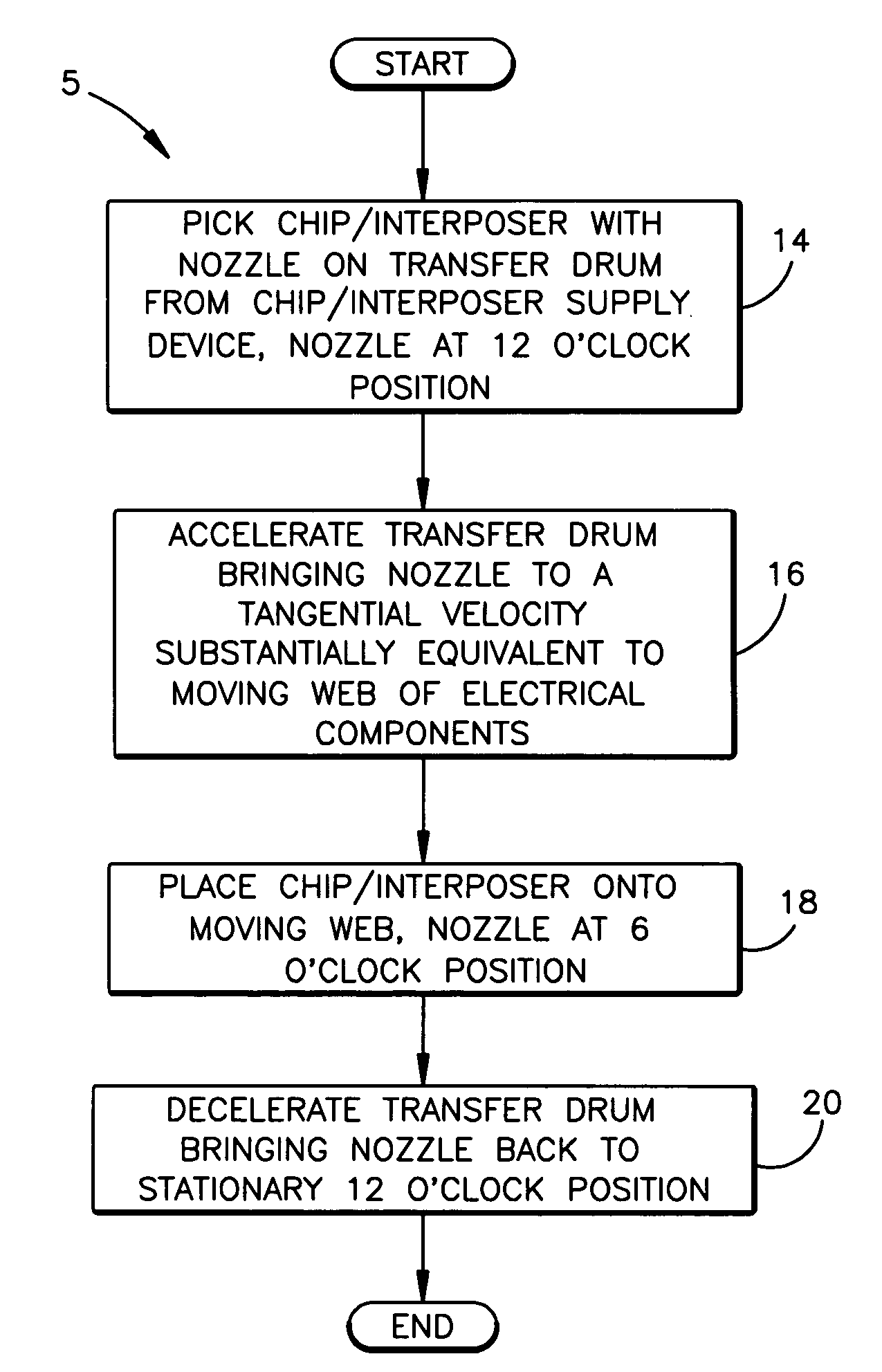
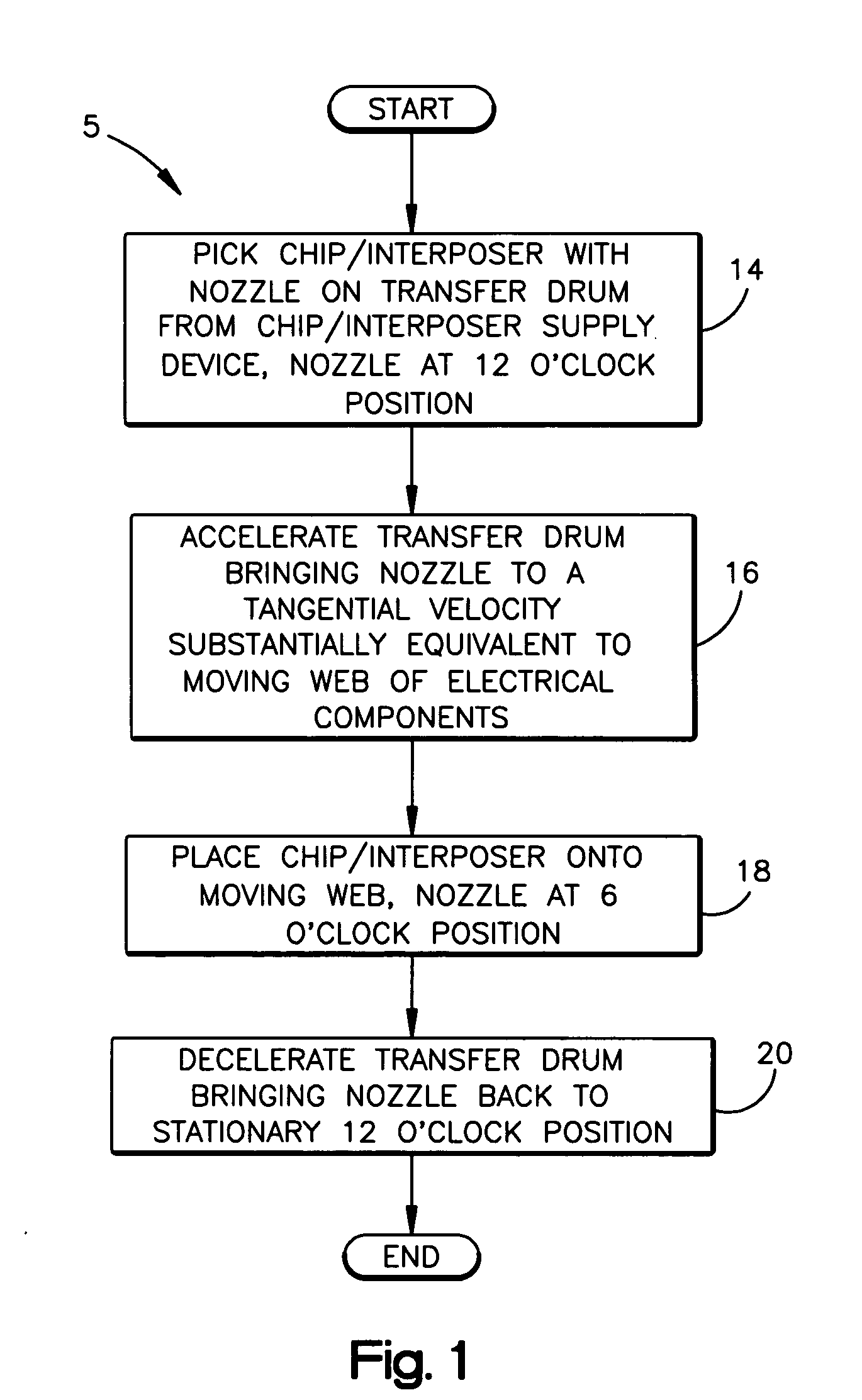
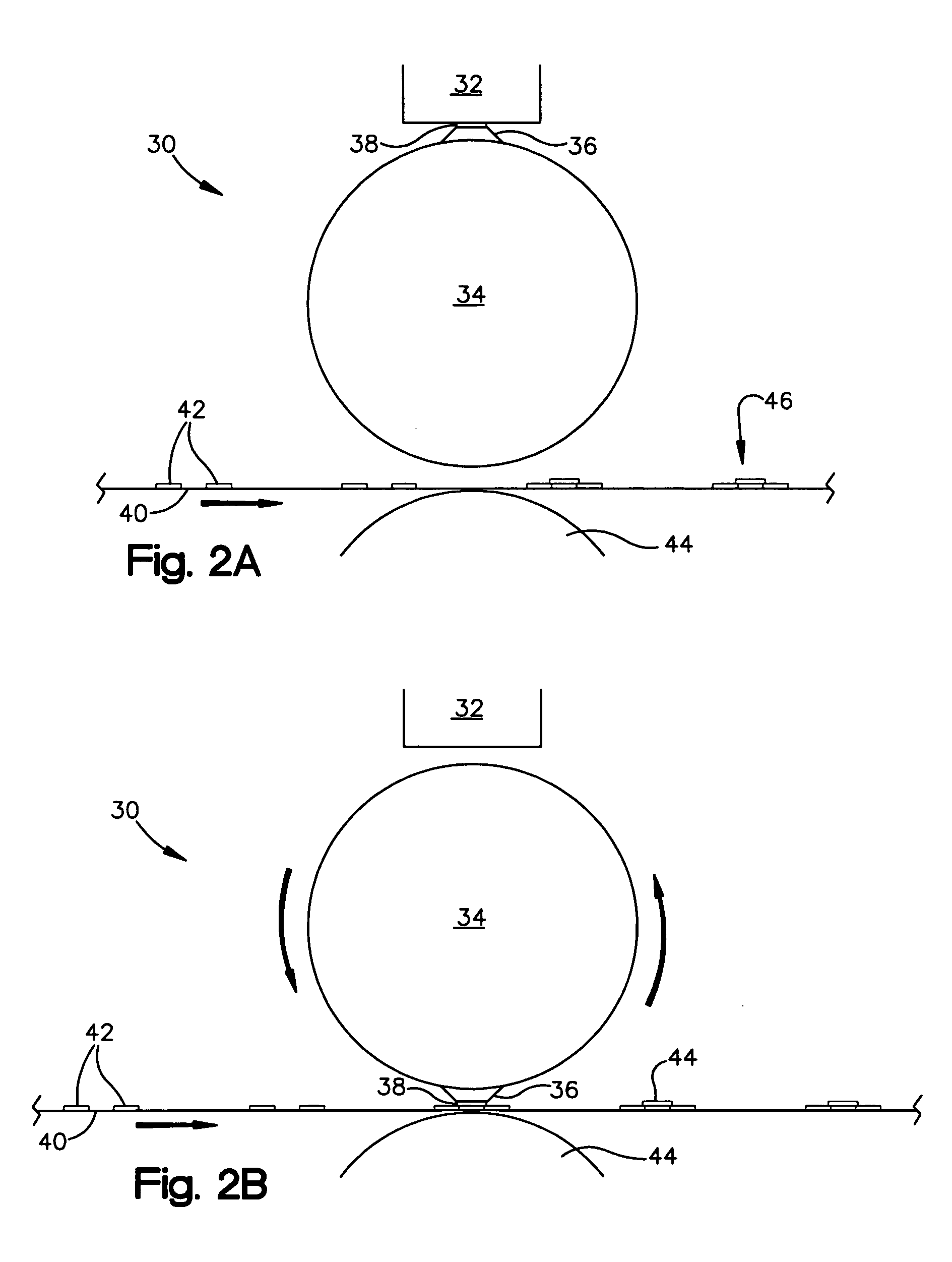
[0041] A high-speed process includes removing RFID circuits from a carrier web having a first pitch and transferring the RFID circuits to electrical components, such as RFID antenna structures, on a moving web having a second pitch. Typically, the second pitch is greater than the first pitch. According to one method, a transfer drum transfers RFID circuits to a moving web of electrical components, such as antennas, by picking up a chip when the transfer drum is stationary, and transferring the chip to the moving web when the transfer drum is rotating such that a tangential velocity of the transfer drum is substantially equal to the linear velocity of the moving web. According to another method, a primary drum removes the RFID circuits from a carrier web having a first pitch, and transfers the RFID circuits to an intermittently or variably rotating secondary drum, which then places the RFID circuits onto an electrical component on a moving web having a second pitch.
[0042] In FIG. 1,...
PUM
| Property | Measurement | Unit |
|---|---|---|
| Angle | aaaaa | aaaaa |
| Speed | aaaaa | aaaaa |
| Vacuum | aaaaa | aaaaa |
Abstract
Description
Claims
Application Information
 Login to View More