
Saturation control of electric machine
a technology of saturation control and electric machines, applied in the field of electric machines, can solve problems such as the inability to control the speed of the rotor independently
- Summary
- Abstract
- Description
- Claims
- Application Information
AI Technical Summary
Benefits of technology
Problems solved by technology
Method used
Image

Examples
Embodiment Construction
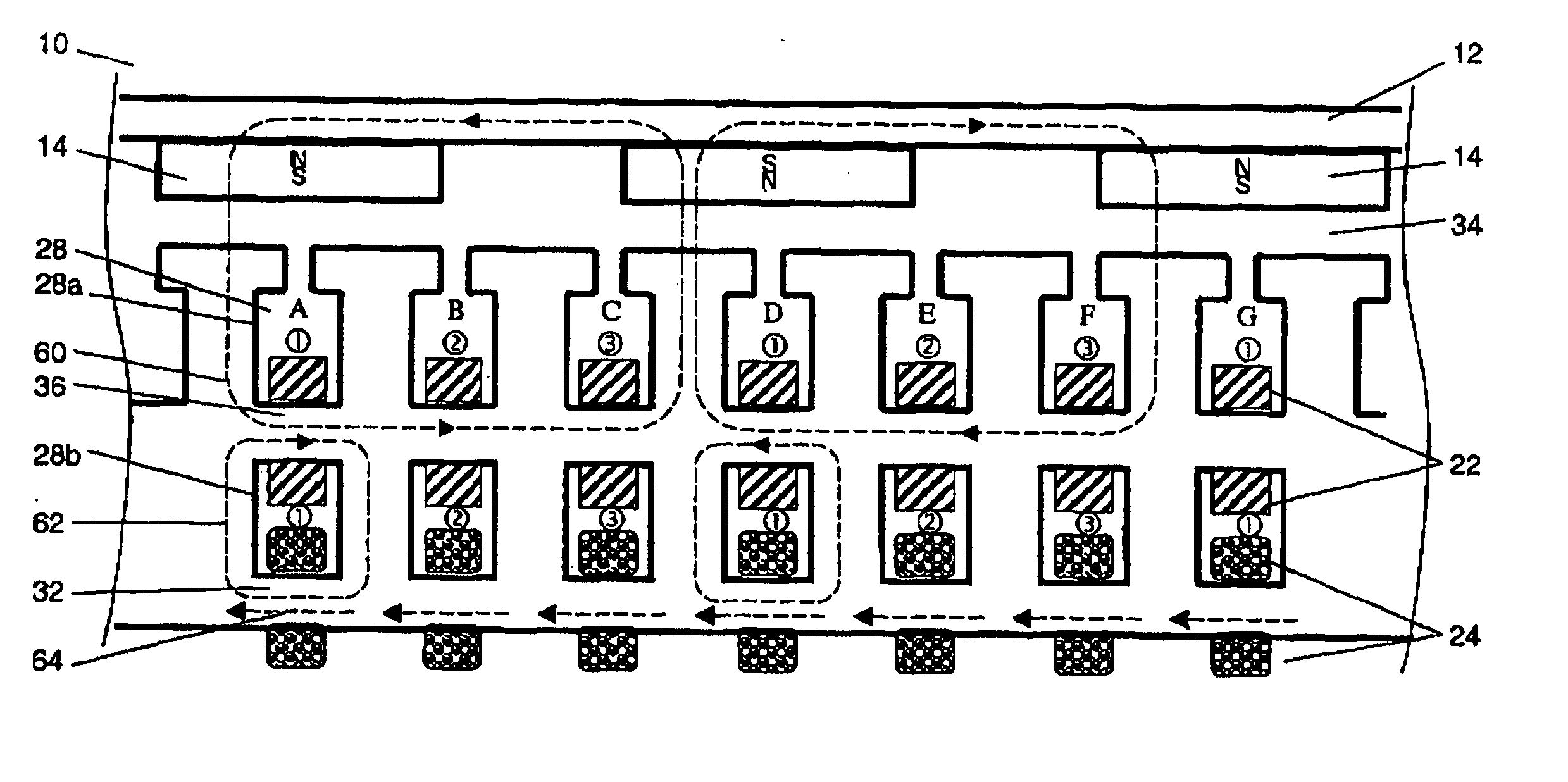
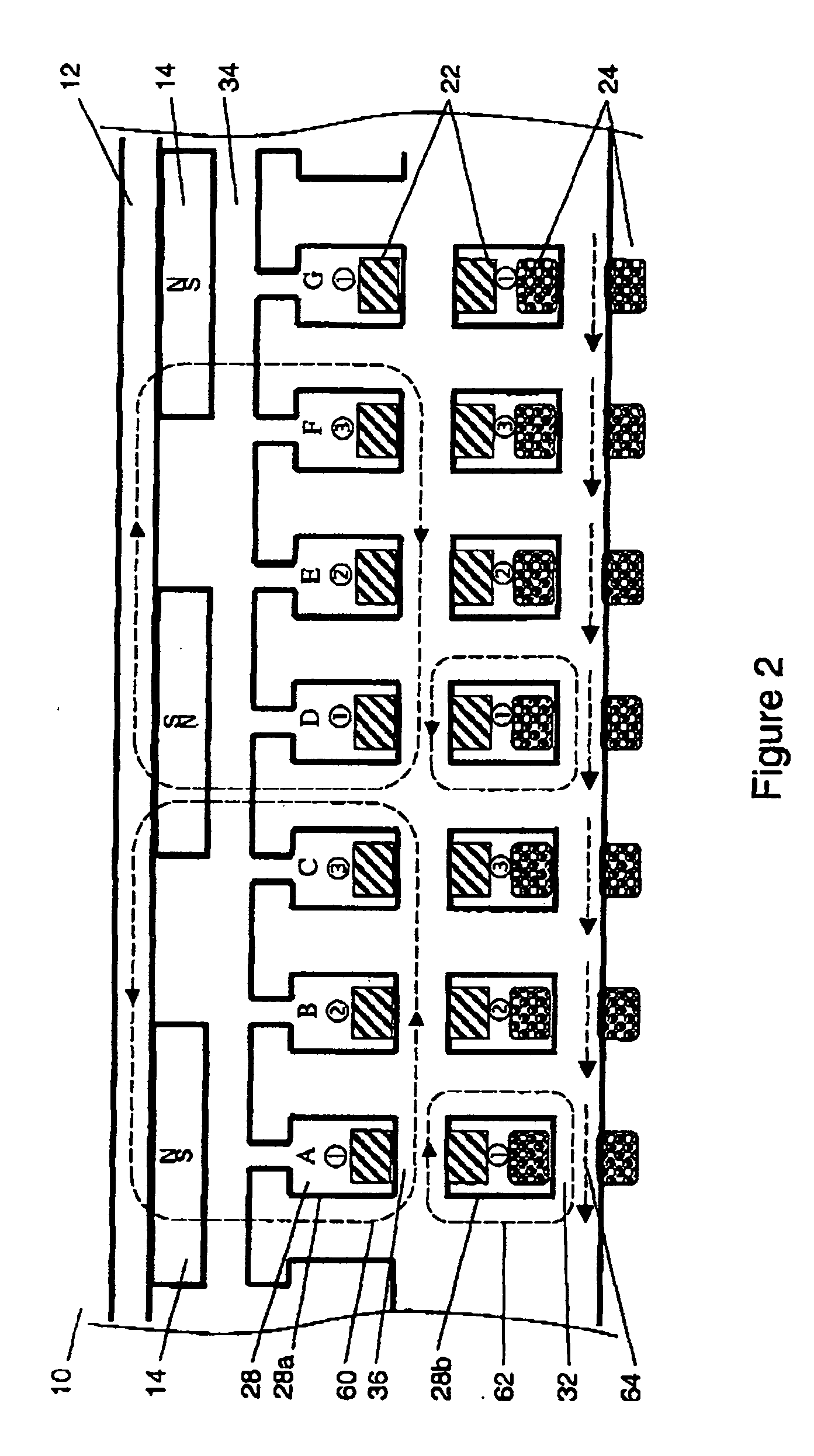
[0018] Referring to FIG. 2, a portion of a permanent magnet (PM) electric machine according to the present invention is depicted in at 10. For ease of illustration and description, FIG. 2 shows a linear arrangement of the electric machine 10, however it is to be understood that the machine is generally preferred to have a circular architecture, with an inside or outside rotor. It will also be understood by the skilled reader that FIG. 2 and the accompanying description are schematic in nature, and that many routine details of the design have been omitted for clarity. The machine 10 may be configured as an alternator to generate electrical power, or motor to convert electrical power into mechanical torque, or both. The description below is directed to an electric machine operable as both and alternator and motor.
[0019] Alternator / motor 10 has a rotor 12 with permanent magnets 14 which is mounted for rotation relative to a stator 20. Stator 20 has at least one power winding 22 and pr...
PUM
 Login to View More
 Abstract
Description
Claims
Application Information
 Login to View More