[0005] In one embodiment, the
authentication device is used in connection with an authentication process to provide multi-level access controls and
authorization controls. In one embodiment, inherent in the design of the device is the generation of secret / public key pairs. These key pairs, in combination with a trusted remote host and protected
key management, prevent the device from being cloned or the key pairs from being replicated by others. Via the trusted remote host and
key management, the public key is combined into independently-verifiable public key certificates, which generally only “fail securely” if altered after they are released to the public
directory service. In addition, the device capabilities are instantly revocable by removing the
directory service
public key certificate. In one embodiment, the authentication device provides modular
encryption. In one embodiment, a portable audit file provides audit and forensic capabilities. In one embodiment, the authentication device is used in connection with an evaluatable infrastructure. This creates a
trusted computing base with one-way communication and a
trusted path between the
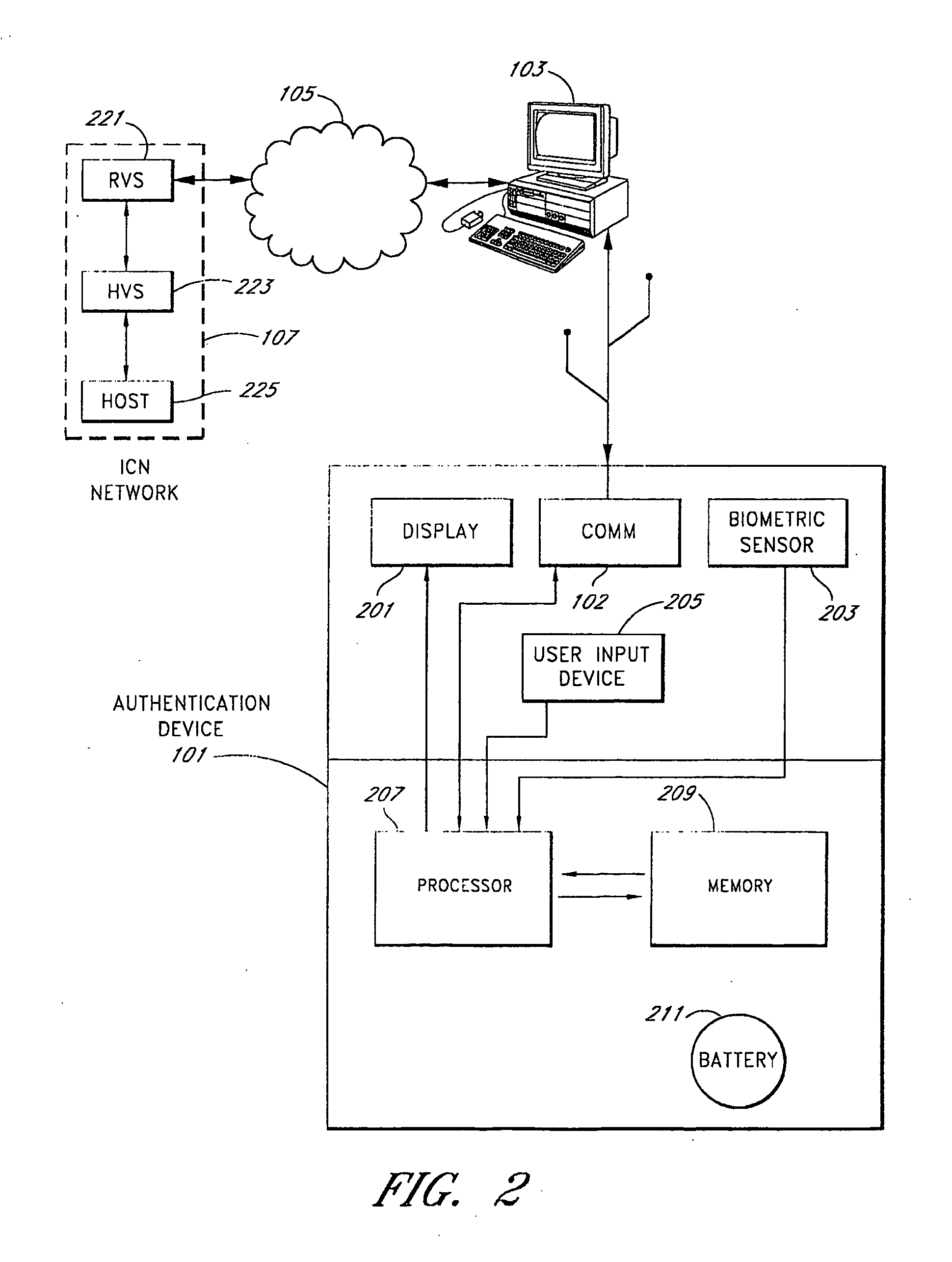
trusted computing base and the one or more authentication servers (also referred to herein as an ICN
server).
[0006] In one embodiment, the authentication device is configured as a computer
peripheral device that can be connected to a user's computer and used to establish both a
Trusted Computing Base and a
Trusted Path between a non-secure user computer and the authentication servers. The authentication servers provide a relatively high level of security to ensure that transactions are secure and insurable. Using the authentication device along with the authentication servers and following established security procedures provides relatively
high assurance to the user that communication between the user's computer and the authentication servers is authenticated and secure. In one embodiment, the
system provides a three factor authentication including: a unique biometric identification, such as for example a thumbprint,
fingerprint, or
retinal scanner, etc.; a unique device identification; and a
secret code (such as a
password, pass code, etc.). In one embodiment, the device can capture an
electronic signature either from the display or from an
electronic signature pad.
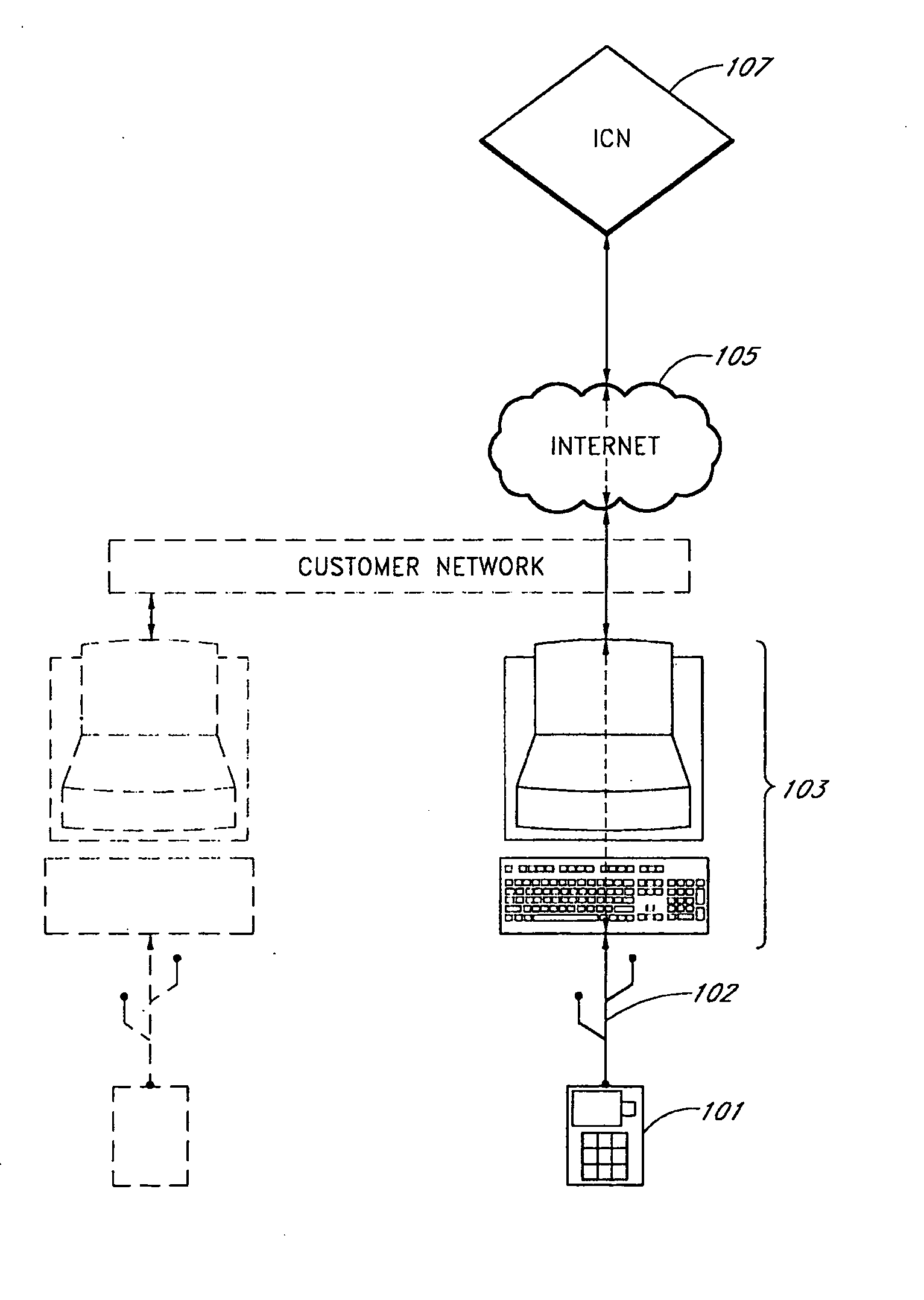
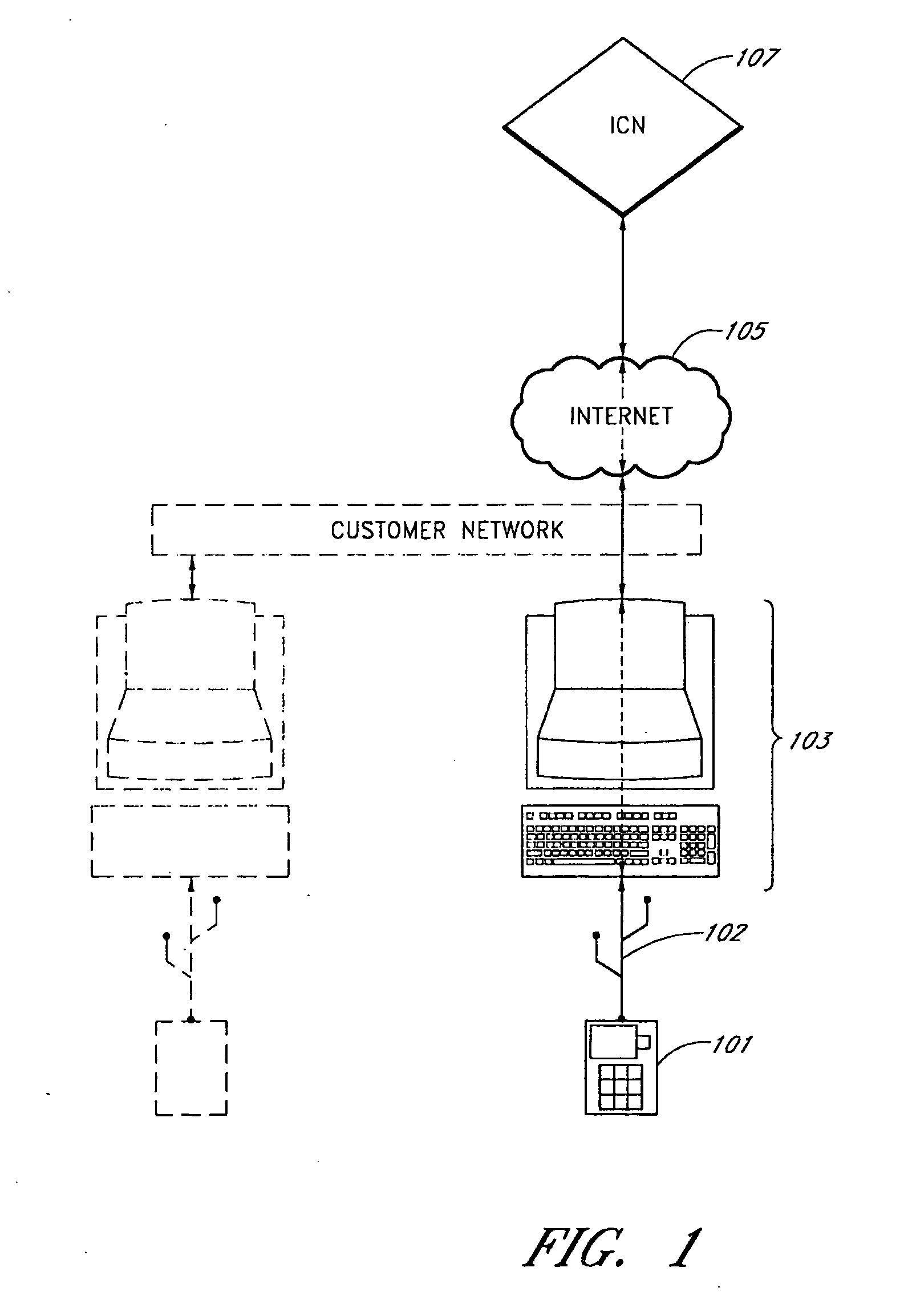
[0007] In one embodiment, the authentication device is provided to the user's computer (e.g., a
personal computer,
data terminal, etc.) using computer
peripheral connection such as, for example, a
USB connection, an IEEE 1394 firewire connection,
Bluetooth, or the like. The user's computer passes encrypted communication between the authentication device and the authentication servers. The contents of the pass-through data cannot be decrypted or seen by the user's computer. The authentication device provides a desired level of security and authentication by using one or more of: authentication capabilities, monitoring capabilities, data confirmation, auditing capabilities, out-of-band communication, forensics, ability to track data tampering, and / or detect abuse.
[0008] In the
secure communication environment, the authentication device receives incoming secure (e.g., encrypted) messages before they are routed to a
software client on the user's computer. This creates a
secure communication path between the authentication servers and the authentication device. This
secure communication facilitates the establishment of a
trusted path between the authentication servers and the authentication device.
[0011] In one embodiment, the authentication device allows the user or security personnel to inspect in parallel the transaction information on the user's computer screen with the information on the authentication device screen in real-time.
[0016] In one embodiment, when coupled with the authentication servers, the authentication device can be activated, deactivated and cancelled (taken out of commission) remotely by using the authentication
key management infrastructure. In one embodiment, the authentication device facilitates abuse detection in the
system by verifying what is displayed on the user's computer screen, validating certain parts of the user's credentials, and having a point of comparison of audit files.


 Login to View More
  Login to View More