

Backup BGP paths for non-multipath BGP fast convergence
a technology of bgp paths and fast convergence, applied in the field of computer networks, can solve the problems of resetting a network, affecting the speed of bgp convergence, and burdensome management of interconnected computer networks, and achieve the effect of fast bgp convergen
- Summary
- Abstract
- Description
- Claims
- Application Information
AI Technical Summary
Benefits of technology
Problems solved by technology
Method used
Image

Examples
Embodiment Construction
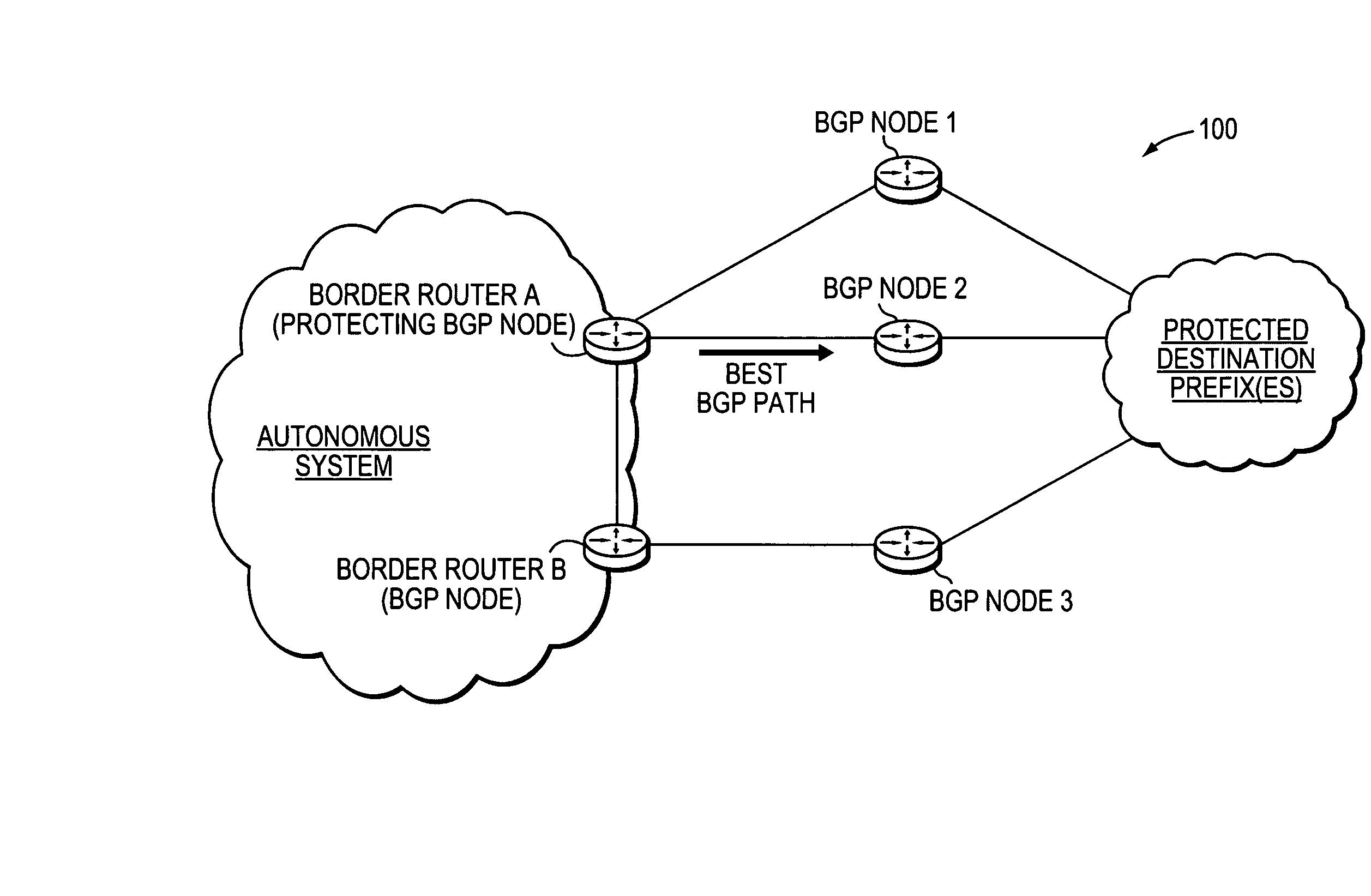
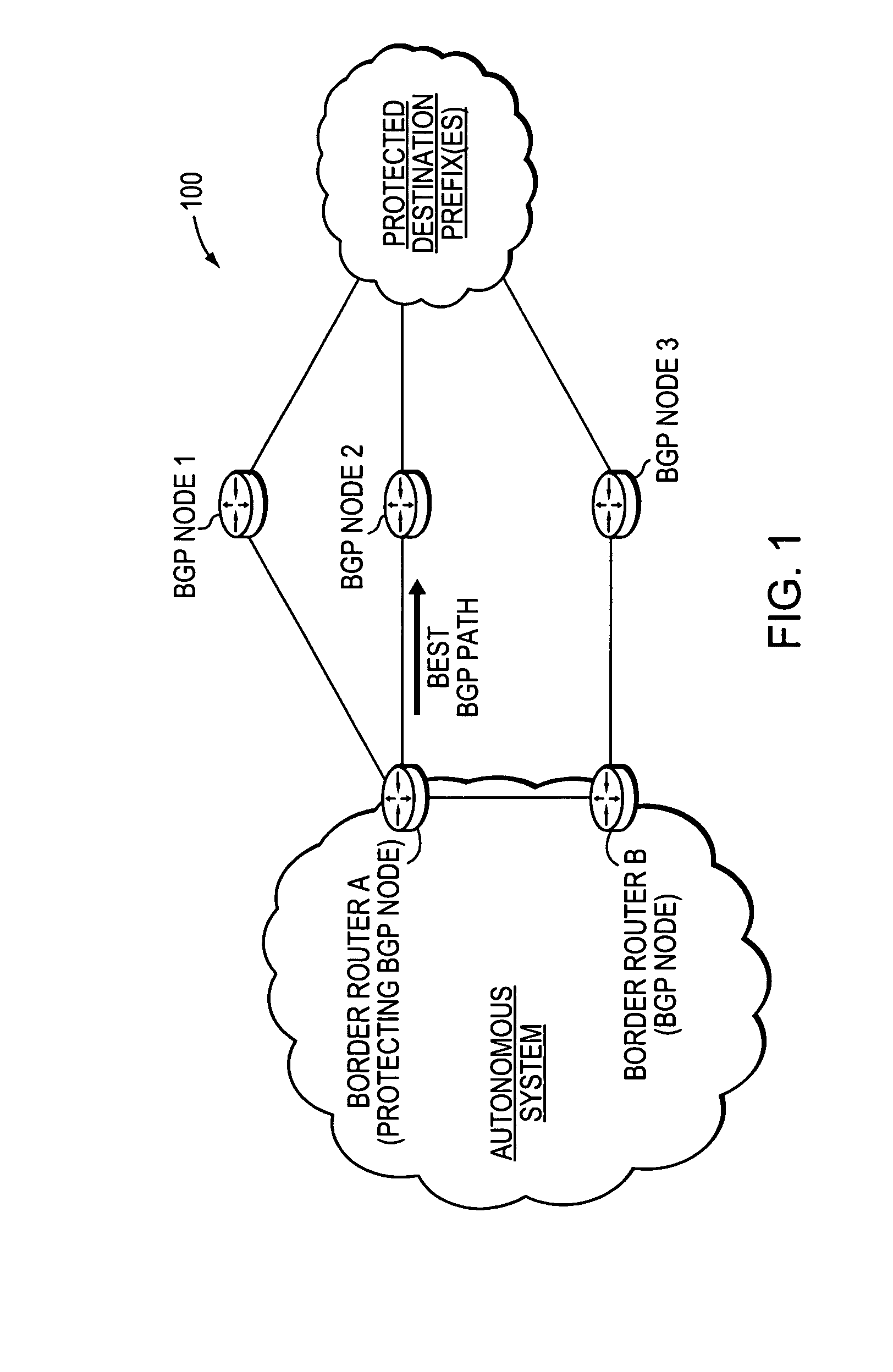
[0029]FIG. 1 is a schematic block diagram of an exemplary computer network 100 comprising border routers A and B of an autonomous system (e.g., a customer or provider network) interconnected to a plurality of BGP nodes 1-3 over links as shown. Those skilled in the art will understand that the BGP nodes may be configured as border routers within one or more other autonomous systems (not shown), and that the view shown herein is for simplicity. Notably, border routers A and B may also be configured as BGP nodes in accordance with the present invention described herein. Also, in the case of customer / provider networks, the border routers and BGP nodes may be configured as customer edge (CE) devices and / or provider edge (PE) devices. Illustratively, each of the BGP nodes 1-3 may be interconnected to one or more reachable destination prefixes (networks), such as through a Wide Area Network (WAN) or other networks, as will be understood by those skilled in the art. These examples are merel...
PUM
 Login to View More
 Abstract
Description
Claims
Application Information
 Login to View More