
Prosthetic glenoid component
a technology of glenoid and component, applied in the field of prosthetic glenoid components, can solve the problems of glenohumeral joint radial mismatch requirements, unable to complete total shoulder arthroplasty, and inability to meet the requirements of radial mismatch, etc., and achieve the effect of increasing the thickness
- Summary
- Abstract
- Description
- Claims
- Application Information
AI Technical Summary
Benefits of technology
Problems solved by technology
Method used
Image

Examples
Embodiment Construction
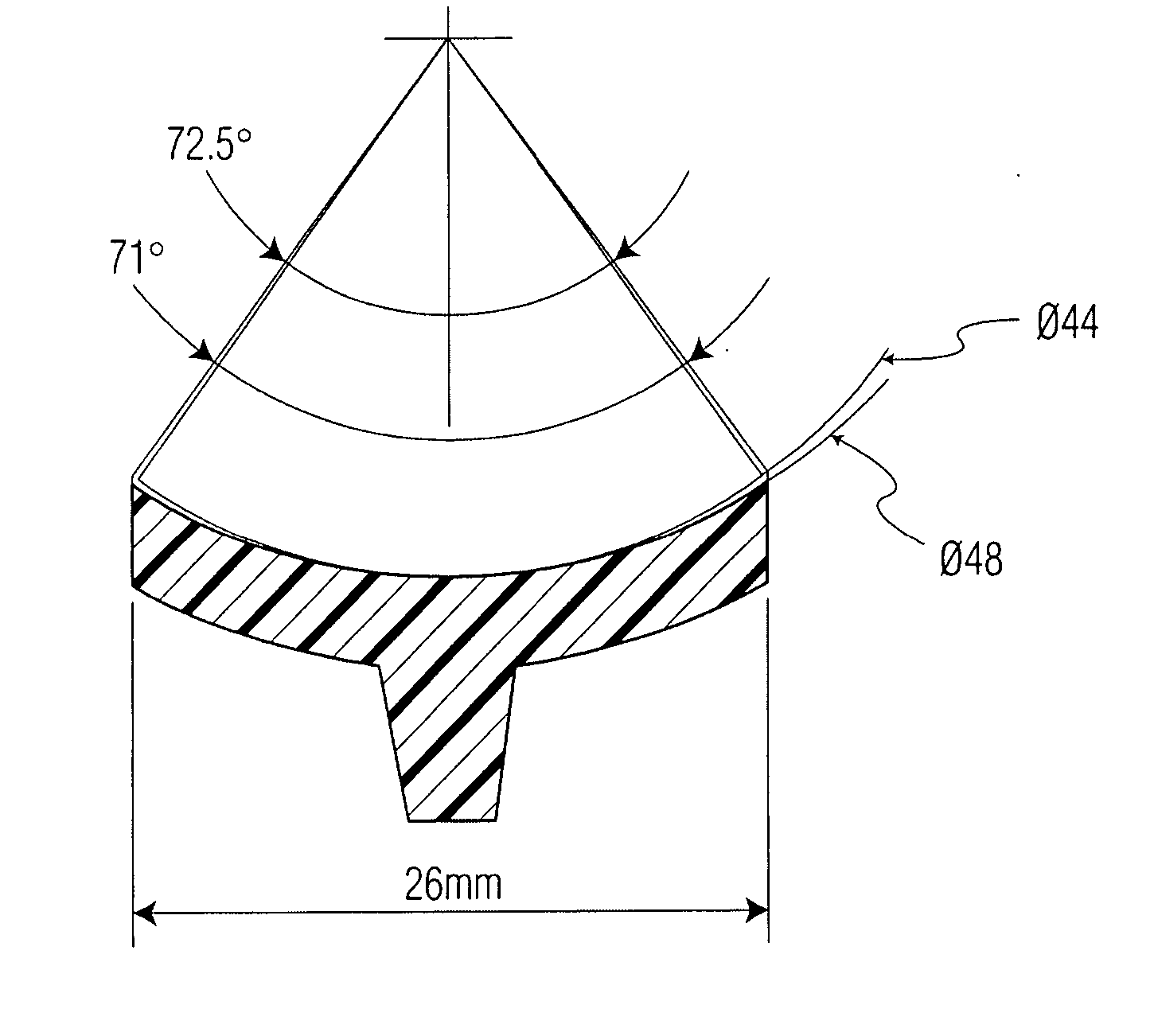
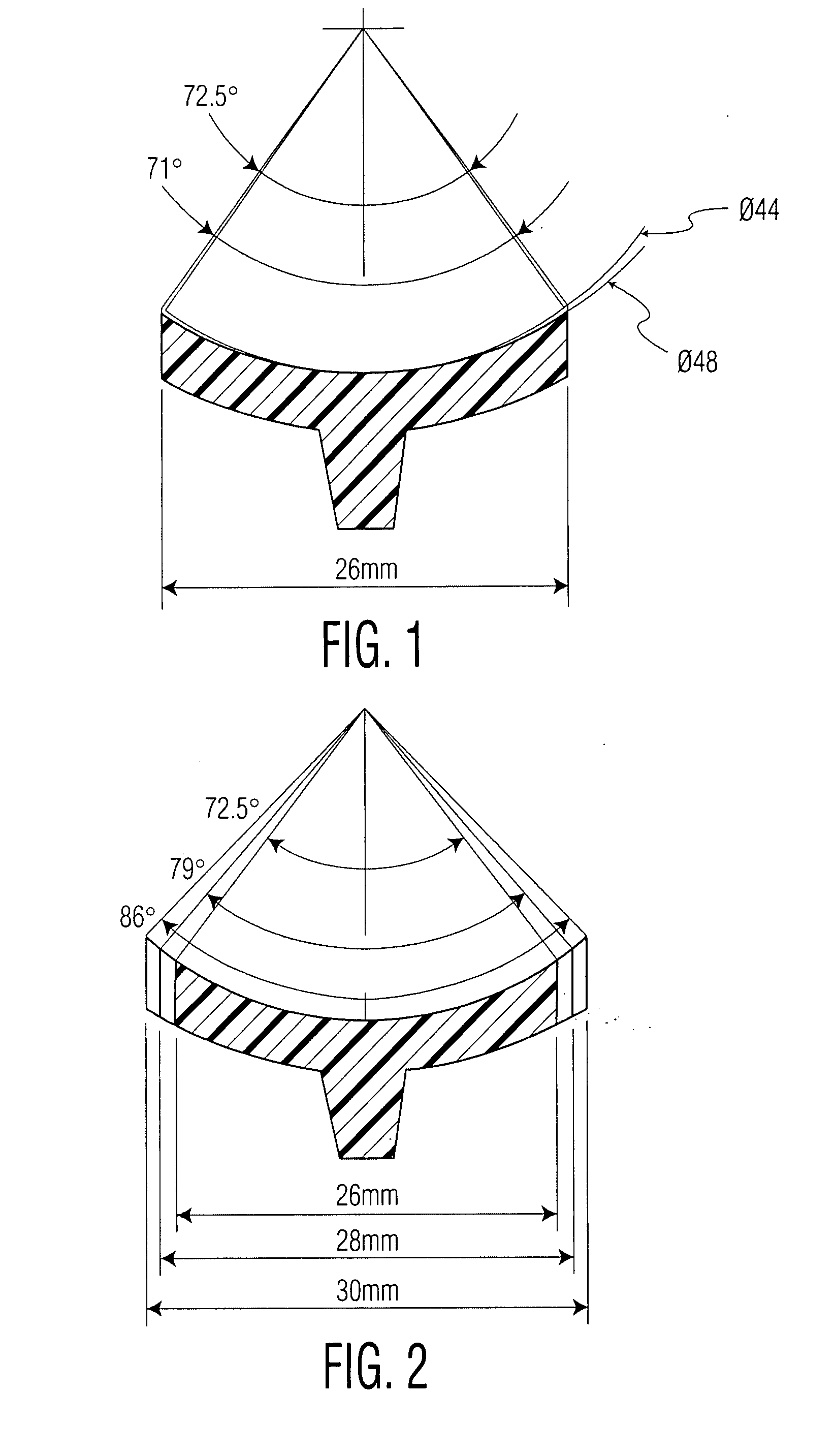
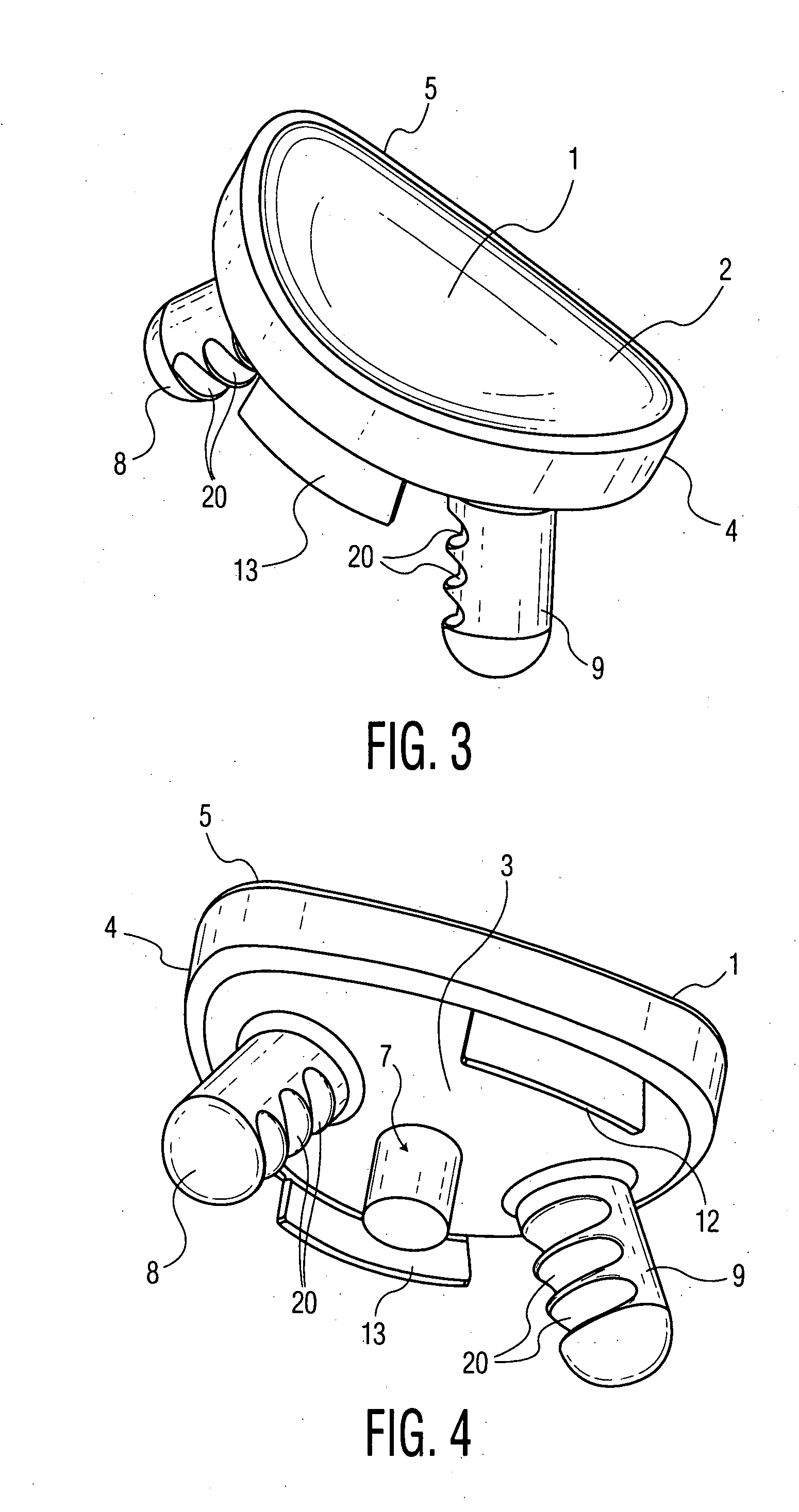
[0061] As shown in the drawings a prosthetic glenoid component according to the present invention for attachment to a scapula to provide a bearing for the humeral head in a shoulder prosthesis comprises a substantially oval shaped one-piece bearing element 1 having a soft low modulus concave lateral bearing surface 2 for contact with the humeral head with which it is to be used and an opposing medial surface 3 which is substantially harder for attachment to a scapula.
[0062] The soft low modulus concave lateral bearing surface 2 is provided by a soft polyurethane layer which is bonded to a harder polyurethane (PU) backing material which provides the surface 3. The invention provides superior lubrication by using the soft PU as a bearing surface with the humeral head. This design feature resolves the contradictory requirements of radial mismatch common to other glenoid designs.
[0063] The soft bearing surface 2 extends around the periphery 4 of the bearing element 1 and increases its...
PUM
| Property | Measurement | Unit |
|---|---|---|
| Pressure | aaaaa | aaaaa |
| Pressure | aaaaa | aaaaa |
| Angle | aaaaa | aaaaa |
Abstract
Description
Claims
Application Information
 Login to View More