
Enriched infant formulas
a technology for infant formula and enriched formula, which is applied in the field of infant formula, can solve the problems of not being identical in composition or function, and commercial infant formulas, and achieve the effects of reducing the risk of diarrhea, reducing the duration of diarrhea, and different gut microflora profiles
- Summary
- Abstract
- Description
- Claims
- Application Information
AI Technical Summary
Benefits of technology
Problems solved by technology
Method used
Image

Examples
experiment i
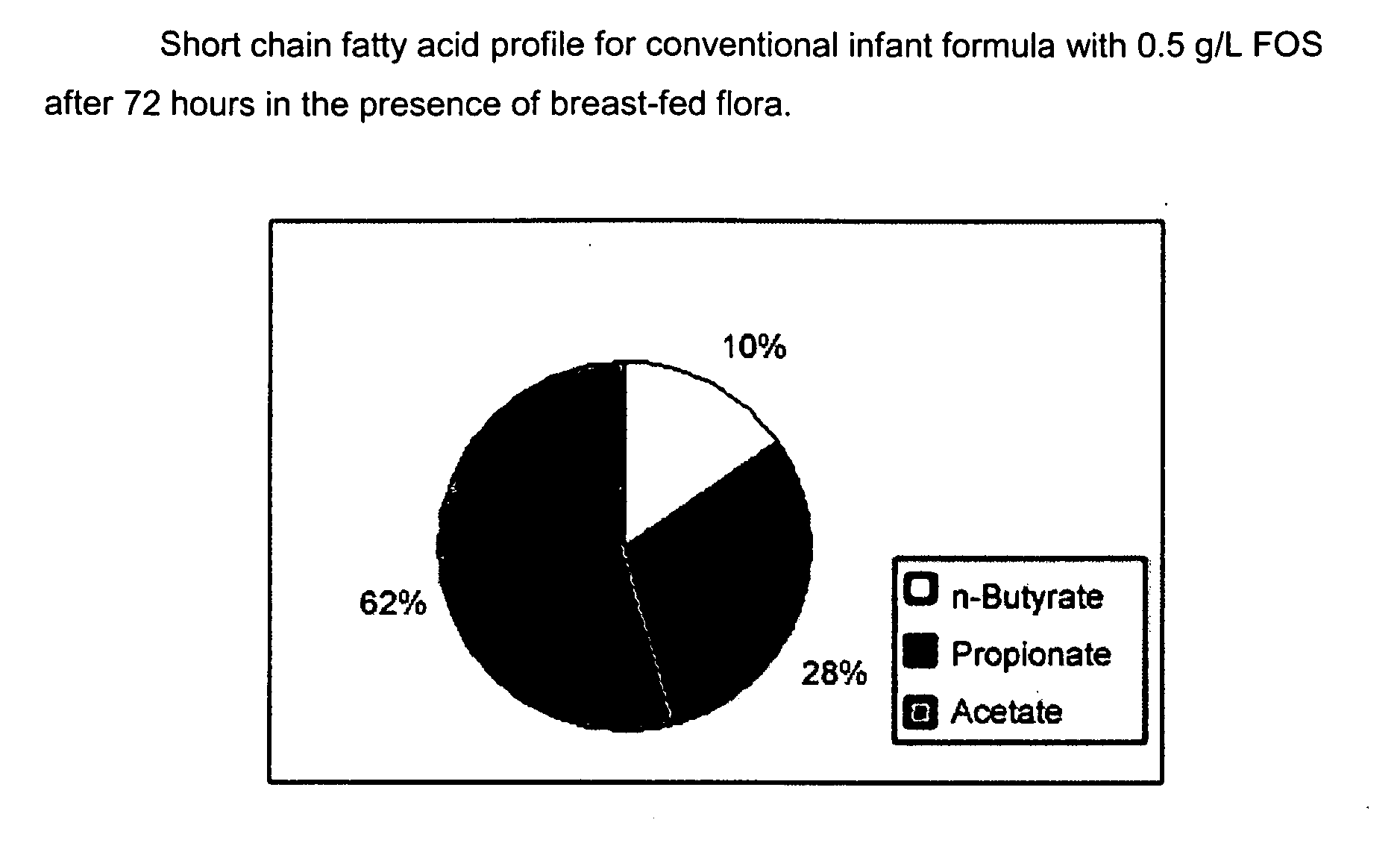
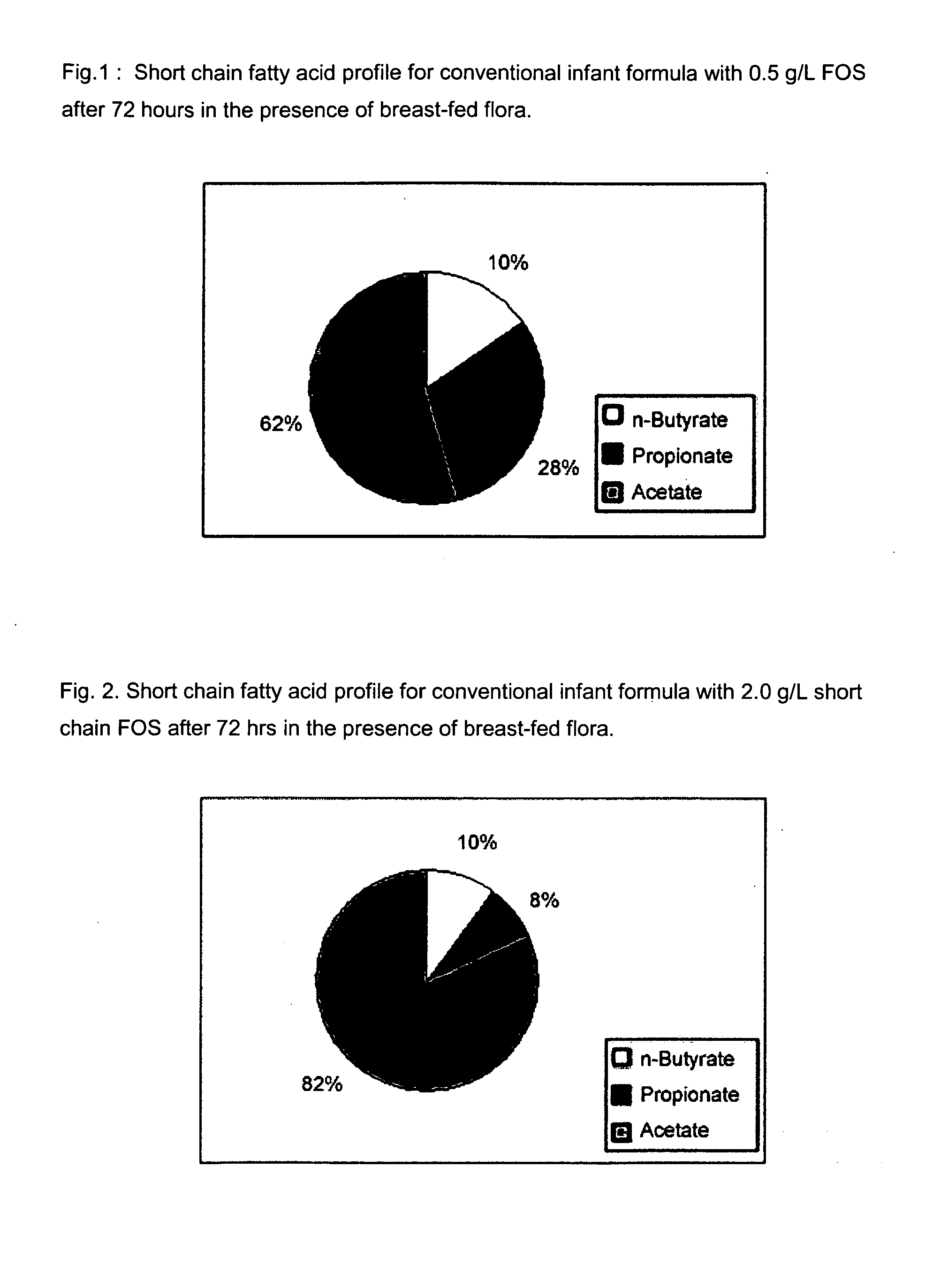
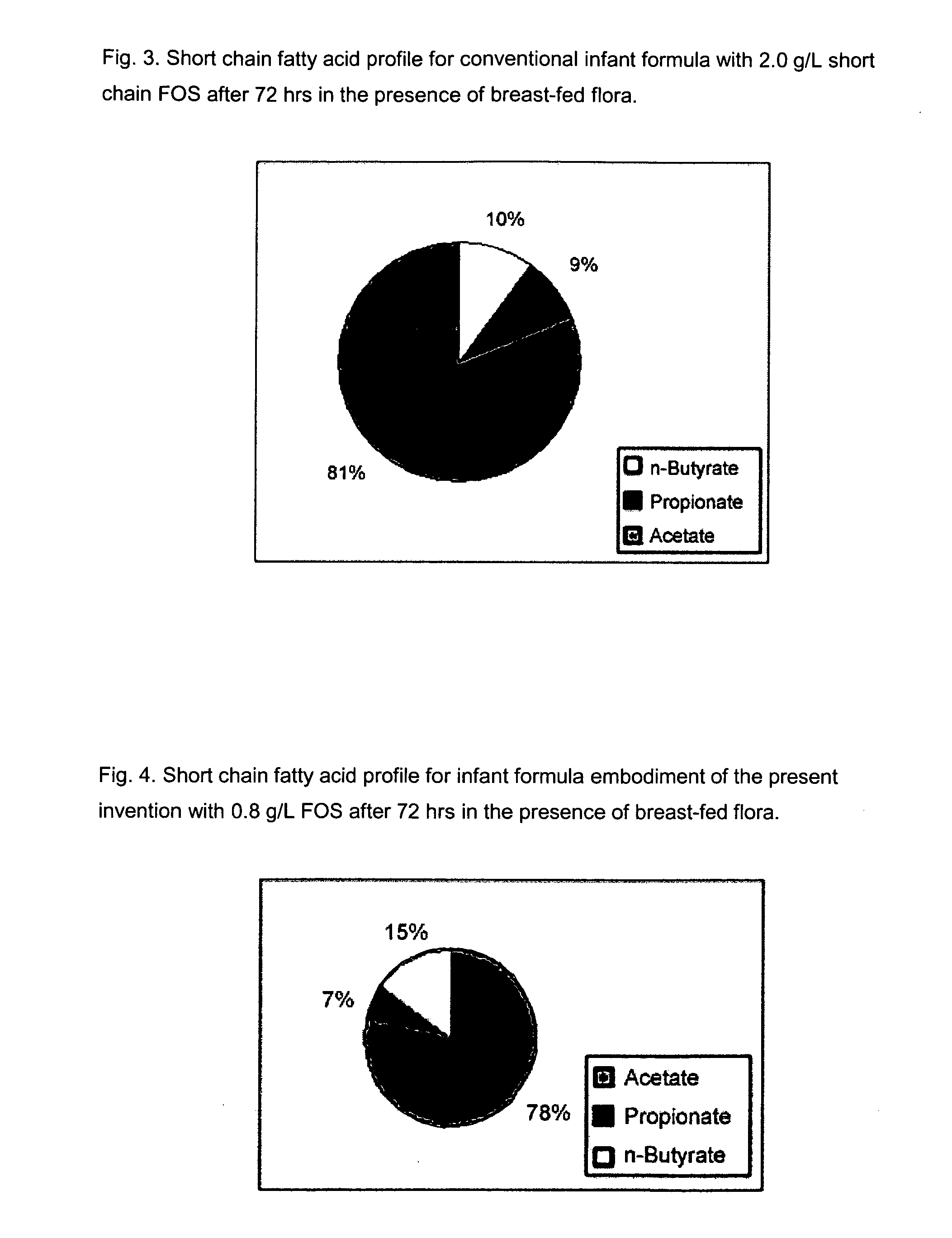
[0111]The purpose of this experiment is to assess the effects of the infant formulas of the present invention on gut microflora, and compare those effects to that produced from human milk. This is accomplished by measuring short chain fatty acid concentrations resulting from human milk and infant formulas using a validated large intestine model system.
[0112]It is well known that the gut microflora profile of breasffed infants is different from that of formula-fed infants. And since gut microflora are responsible for affecting the production of short chain fatty acids in the gut, the difference between the gut microflora profile of breast fed and formula fed infants can be assessed by measuring their respective concentrations of short chain fatty acids in the colon. Breastfed infants typically produce higher amounts of acetate and lower amounts of propionate and butyrate, as compared to formula fed infants.
[0113]A validated large intestine model system is used to conduct the evaluati...
experiment ii
[0120]The purpose of this study is to compare the performance benefits in neonatal pigs fed either a control formula or one of two different formulas embodiments of the present invention with enriched concentrations of gangliosides, phospholipids, lactoferrin, and sialic acid.
1. Background
[0121]The neonatal piglet constitutes an appropriate model to evaluate nutritional intervention prior to the design and implementation of human clinical trials. Its suitability resides in the similarities of the gastrointestinal physiology of the piglet to that of the human neonate. The model is a useful tool to predict tolerance of infant formulas (Miller, E. R., Ullrey, The pig as model for human nutrition, Annu Rev Nutr 1987; 7; 361-82).The present study is designed to provide a biological assessment of the effects of two formula embodiments of the present invention.
[0122]Significant are noted in the area of diarrhea risk reduction, i.e., reduced duration of diarrhea.
2. Experimental Design
[0123]...
examples
[0144]The following examples represent specific embodiments within the scope of the present invention, each of which is given solely for the purpose of illustration and is not to be construed as limitations of the present invention, as many variations thereof are possible without departing from the spirit and scope of the invention. All exemplified amounts are weight percentages based upon the total weight of the composition, unless otherwise specified.
Powder Infant Formulas
[0145]The following are powder formula embodiments of the present invention, including methods of using the formula in infants. Ingredients for each formula are listed in the table below.
TABLE 5Examples 1–4EXAMPLEEXAMPLEEXAMPLEEXAMPLE1234IngredientsAMOUNT PER 1000 kg OF FORMULALACTOSE428.76kg428.76kg428.76kg525.02kgNON FAT DRY MILK LOW HEAT197.62kg197.62kg197.62kgN / AkgHIGH OLEIC SUNFLOWER OIL106.53kg106.53kg106.53kg102.97kgCOCONUT OIL90.74kg91.09kg92.87kg87.57kgSOY OIL86.37kg86.37kg86.37kg83.49kgLACPRODAN MFGM-10...
PUM
 Login to View More
 Abstract
Description
Claims
Application Information
 Login to View More