
Rod-loaded radiofrequency cavities and couplers
a technology which is applied in the field of radiofrequency cavity and coupler, can solve the problems of limited application and restrictive original form of pbg cavity
- Summary
- Abstract
- Description
- Claims
- Application Information
AI Technical Summary
Benefits of technology
Problems solved by technology
Method used
Image

Examples
Embodiment Construction
[0042]The electromagnetic field distribution in free space is modified in the presence of metallic or dielectric materials. In this invention we exploit this property by placing metallic and / or dielectric rods inside a cavity with metallic walls, in order to provide field patterns for achieving specific goals. The metal cavity may be lined with an absorptive material, or be loaded with external waveguide to decrease the Q factor for the operating mode or higher order modes.
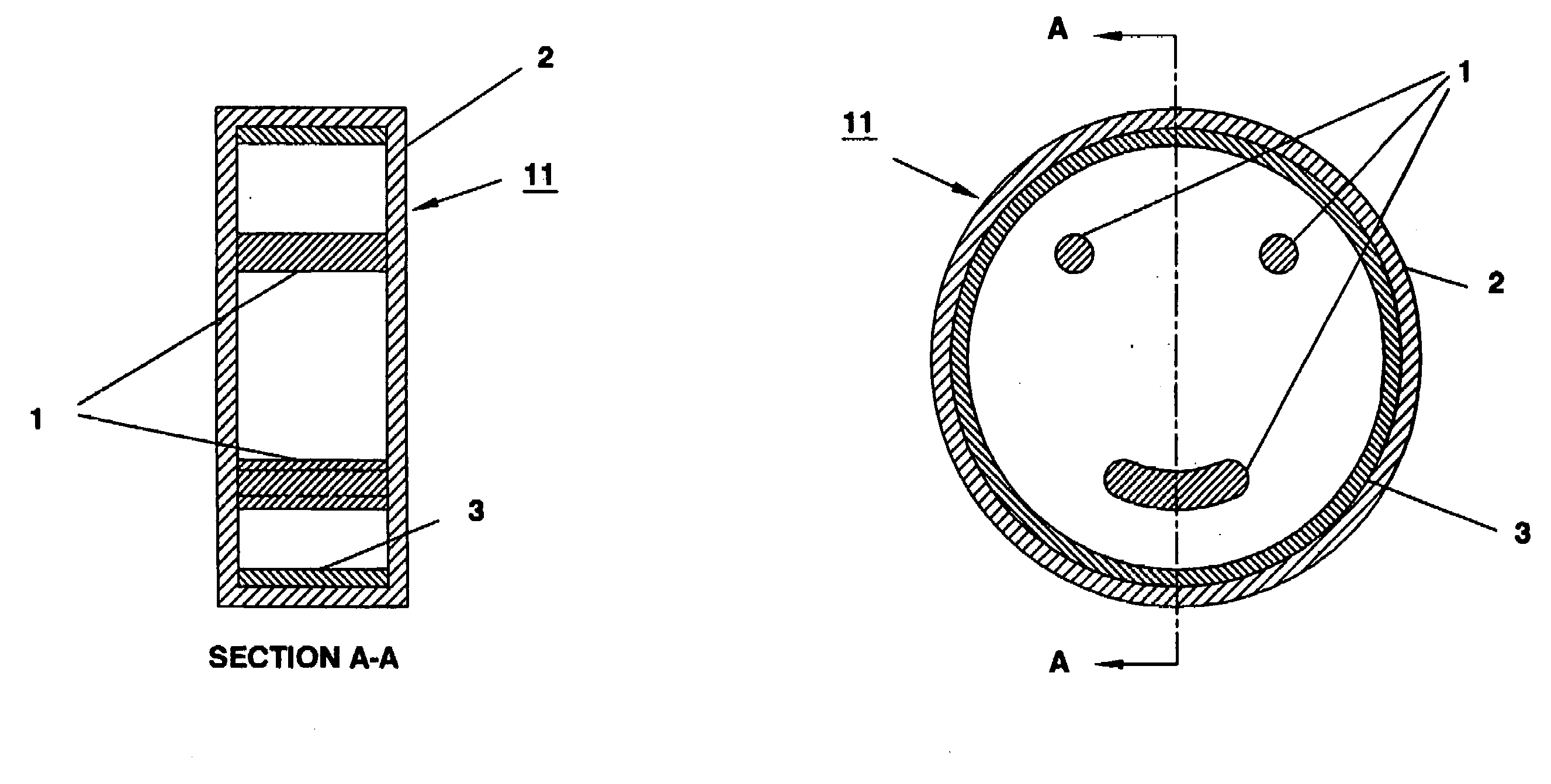
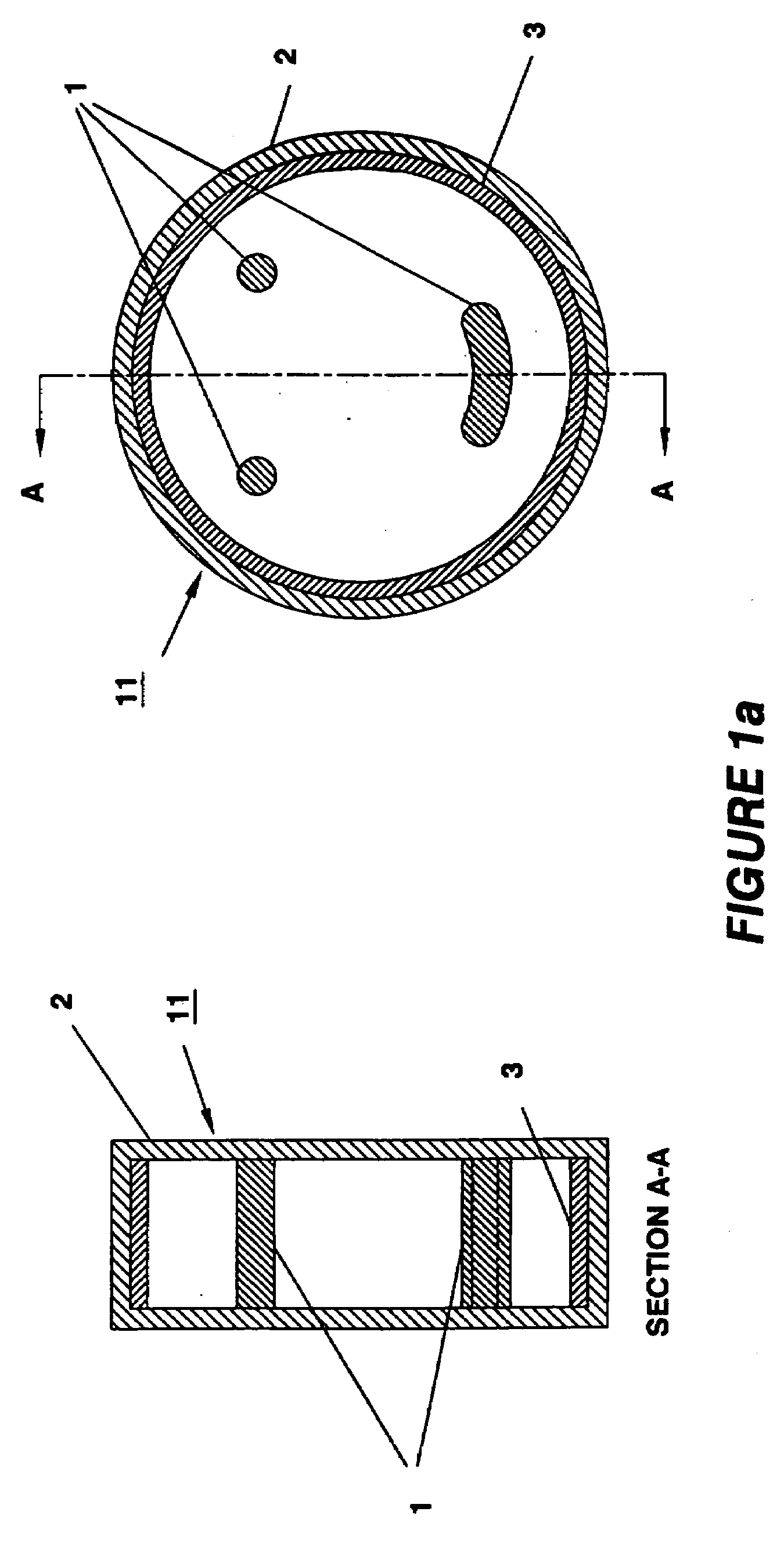
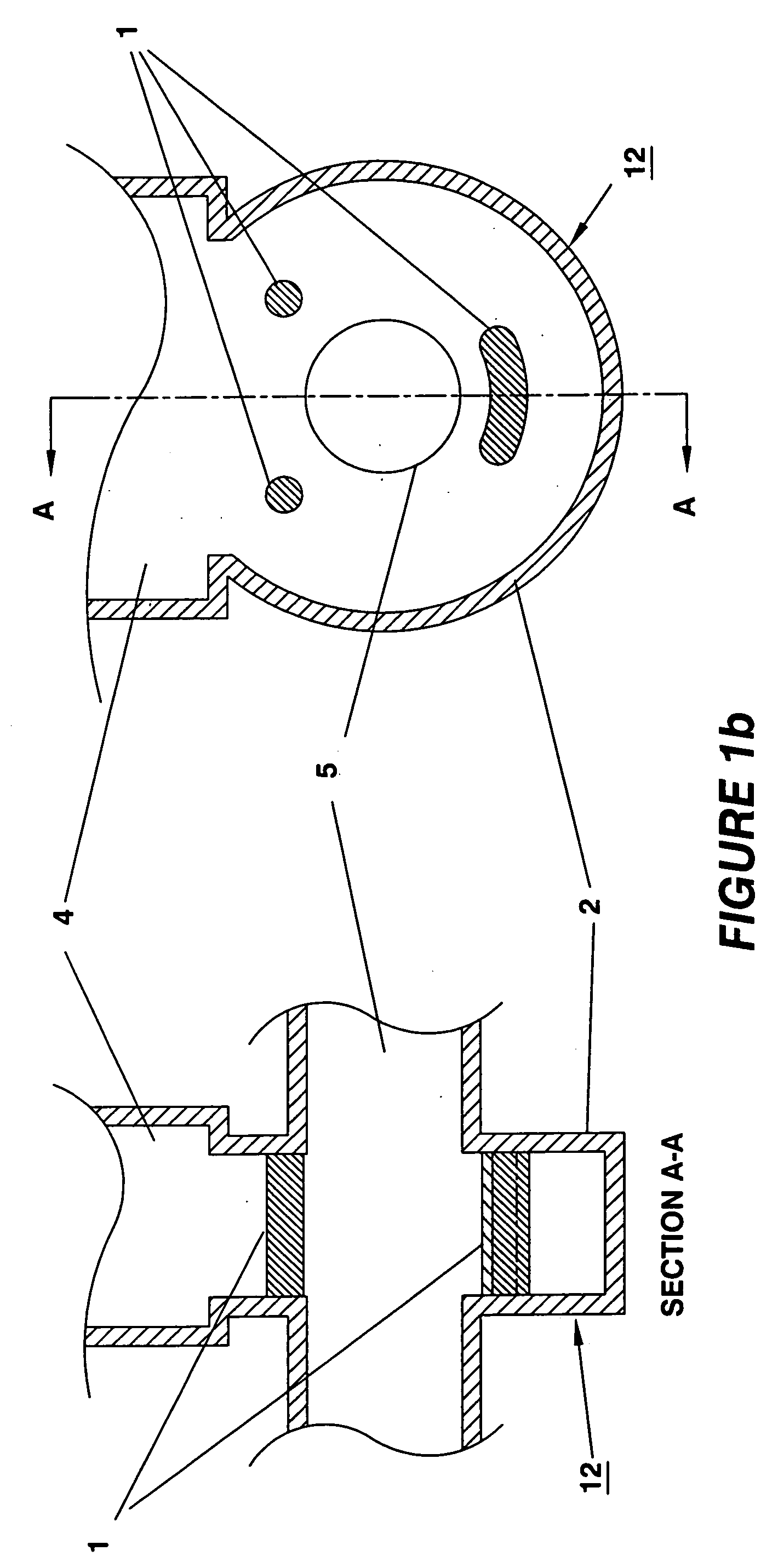
[0043]FIGS. 1a and 1b illustrate the general principles of this invention. FIG. 1a shows two views of a rod-loaded cavity 11 wherein three rods 1 of arbitrary shapes are placed inside a closed copper cylindrical shell 2. The presence of the rods 1 causes the magnetic field around the rods 1 to be modified from that without the rods 1. The resonance frequency of a cavity without rods is also changed when metallic rods are placed inside the cavity. The materials, shapes, locations and the number of rods 1, as well a...
PUM
 Login to View More
 Abstract
Description
Claims
Application Information
 Login to View More