
Compositions for Cancer Prevention, Treatment, or Amelioration Comprising Papaya Extract
a technology of papaya and papaya oil, applied in the direction of biocide, drug composition, plant/algae/fungi/lichens ingredients, etc., can solve the problems of problematic side effects of these drugs, and achieve the effects of preventing or treating cancer, and preventing or ameliorating cancer
- Summary
- Abstract
- Description
- Claims
- Application Information
AI Technical Summary
Benefits of technology
Problems solved by technology
Method used
Image

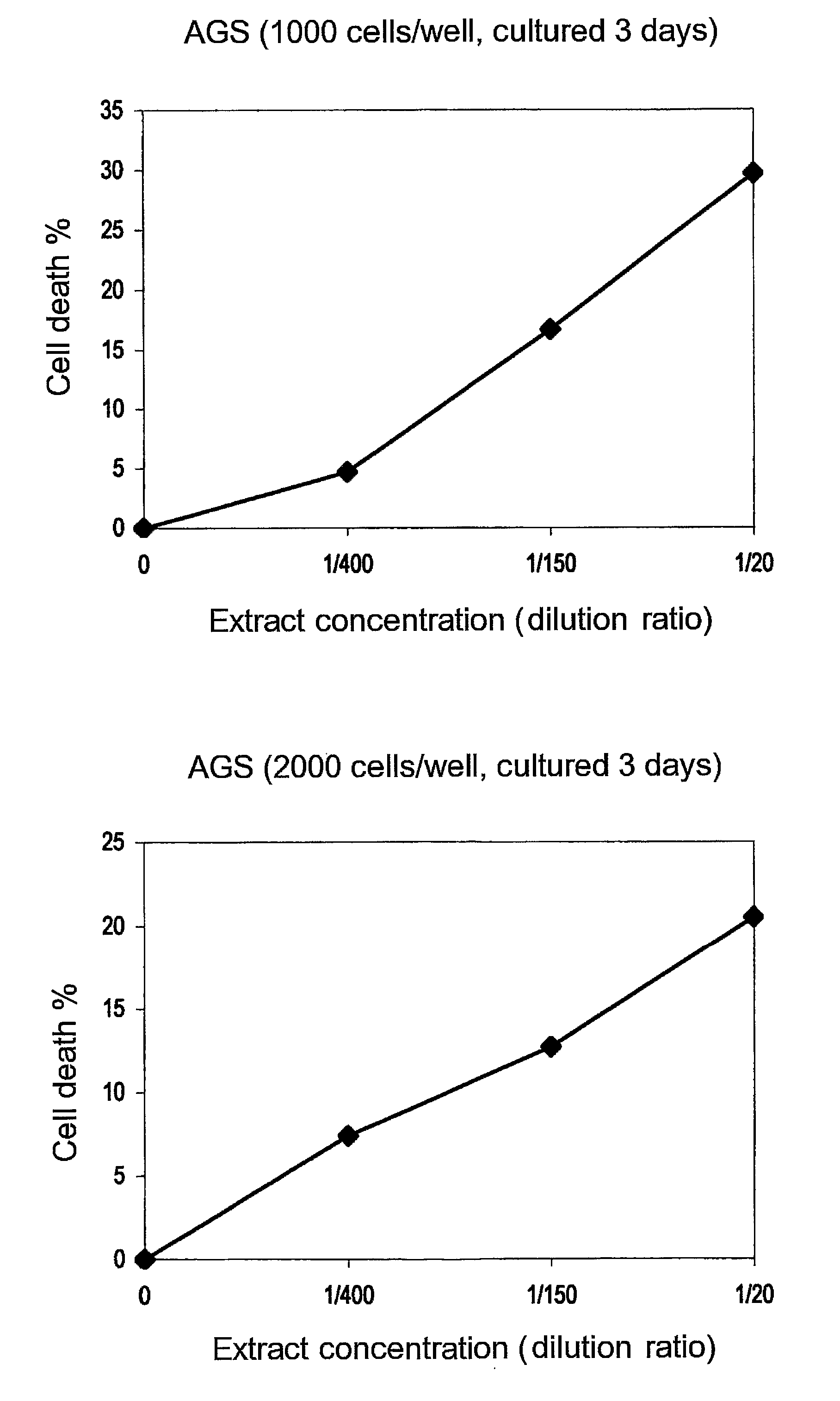
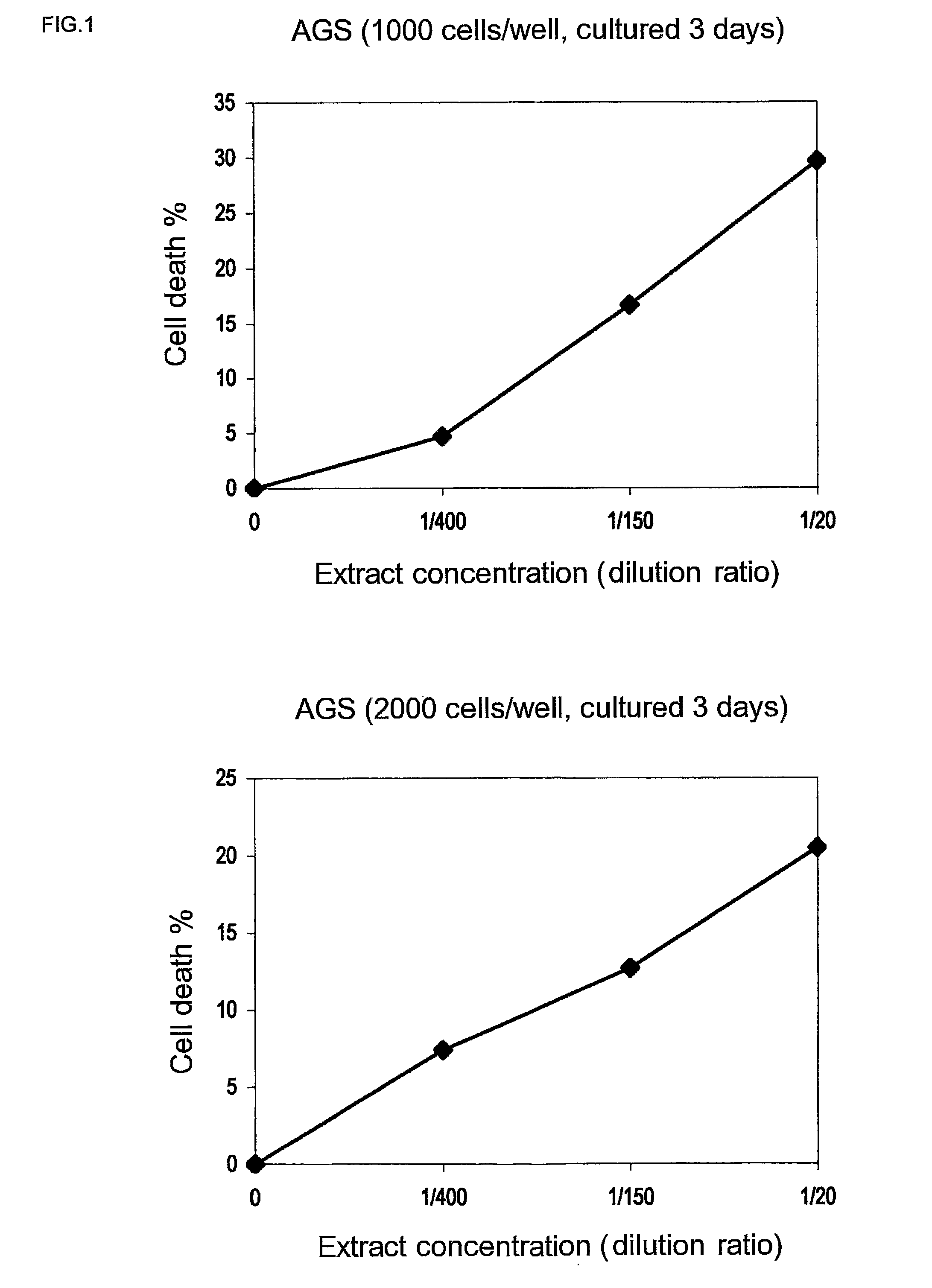
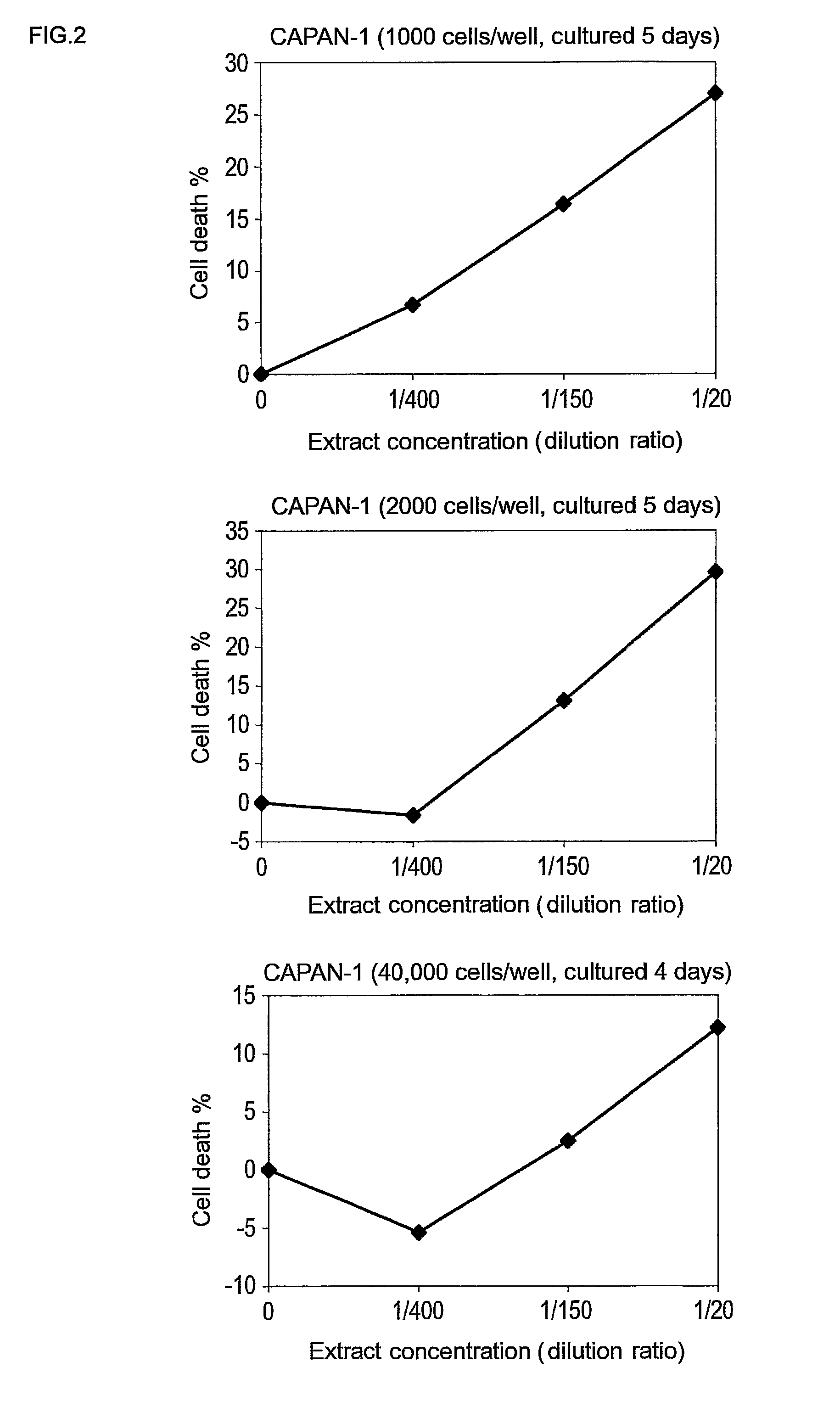
Examples
working example 1
Preparation of an Extract From Papaya Leaves
[0026] Papaya leaves were left in the air for approximately one to two days under the sun and thus dried, and approximately 27 g, that is, about one dried papaya leaf, was added to 500 ml of water in a glass vessel, brewed for twelve hours, until the total quantity was 50 ml. The brew thus obtained was filter-sterilized to obtain the papaya extract according to the present invention.
experimental example 1
Test of the Anti-Cancer Effects of Papaya Leaf Extract by the MMT Assay Method
[0027] Various types of cancer cells were used to examine the anti-cancer effects of the papaya leaf extract, prepared according to Working Example 1, by means of the MMT assay method (Hansen et al., J. Immunol. Methods 119:203-210, 1989).
(1) Method
[0028] Cancer cells from the AGS (stomach cancer cell line), Capan-1 (pancreatic cancer cell line), DLD-1 (colon cancer cell line), Dov-13 (ovarian cancer cell line), Karpas (lymphoma cell line), MCF-7 (breast cancer cell line) and T98G (neuroblastoma cell line) were dispensed into a 96-well microtiter plate and cultured in a RPMI-1640 solution medium containing 10% fetal calf serum, and cultured until confluent. Next, the papaya leaf extract prepared according to Working Example 1 was diluted with culture medium by 20 times (1:20), 150 times (1:150) and 400 times (1:400) respectively, and a volume of 100 μl of the dilute solution was added to the cancer cel...
experimental example 2
Test of the Anti-Cancer Effects of Papaya Leaf Extract by 3H-Thymidine Incorporation
(1) Method
[0030] Cancer cells from the Hela (uterine cancer cell line), Karpas (lymphoma cell line), CD26 negative Jurkat (T cell leukemia cell line) and CD26 positive Jurkat (CD26 transfectant T cell leukemia cell line) were dispensed at 5×10³ / 100 μl into a 96-well microtiter plate. Next, the papaya leaf extract prepared according to Working Example 1 was diluted with culture medium (RPMI-1640 solution containing 10% fetal calf serum) to various dilution ratios, and 10 μl of each was added to the cancer cell lines in each well, which were cultured at 37° C. in a 5% CO2 incubator. After 24 and 48 hours of culturing, 3H-thymidine was added in the amount of 1 μCi (1 microcurie) / 10 μl. After four hours, the amount of 3H-thymidine (cpm) incorporated into the cancer cells for the purpose of DNA synthesis was measured with a scintillation counter to examine the effect of suppressing the proliferation of...
PUM
 Login to View More
 Abstract
Description
Claims
Application Information
 Login to View More