
System Stability and Performance Improvement with Anode Heat Exchanger Plumbing and Re-Circulation Rate
Patent Information
- Authority / Receiving Office
- US · United States
- Current Assignee / Owner
- Publication Date
- 2008-08-21
Smart Images
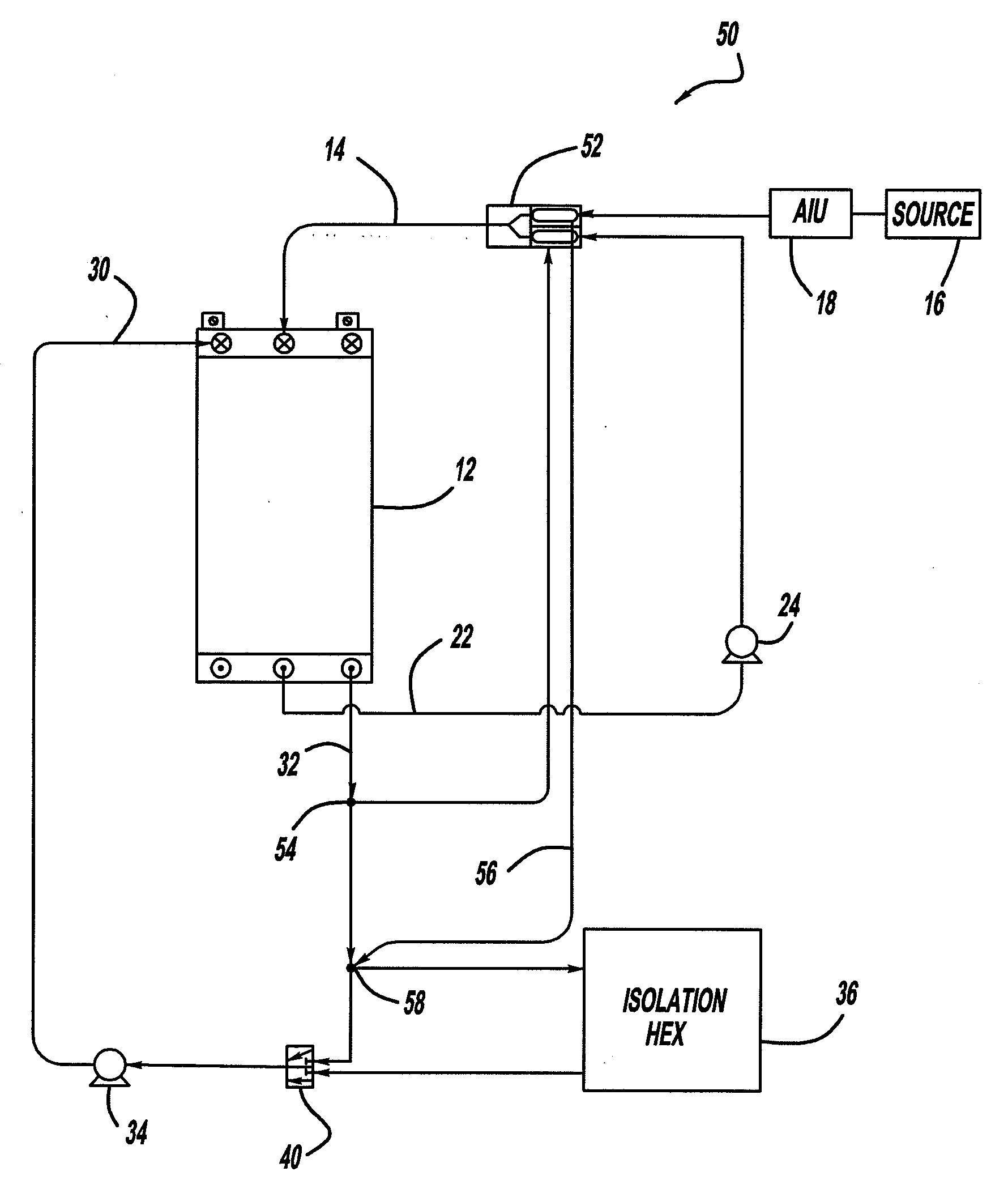
Figure 1 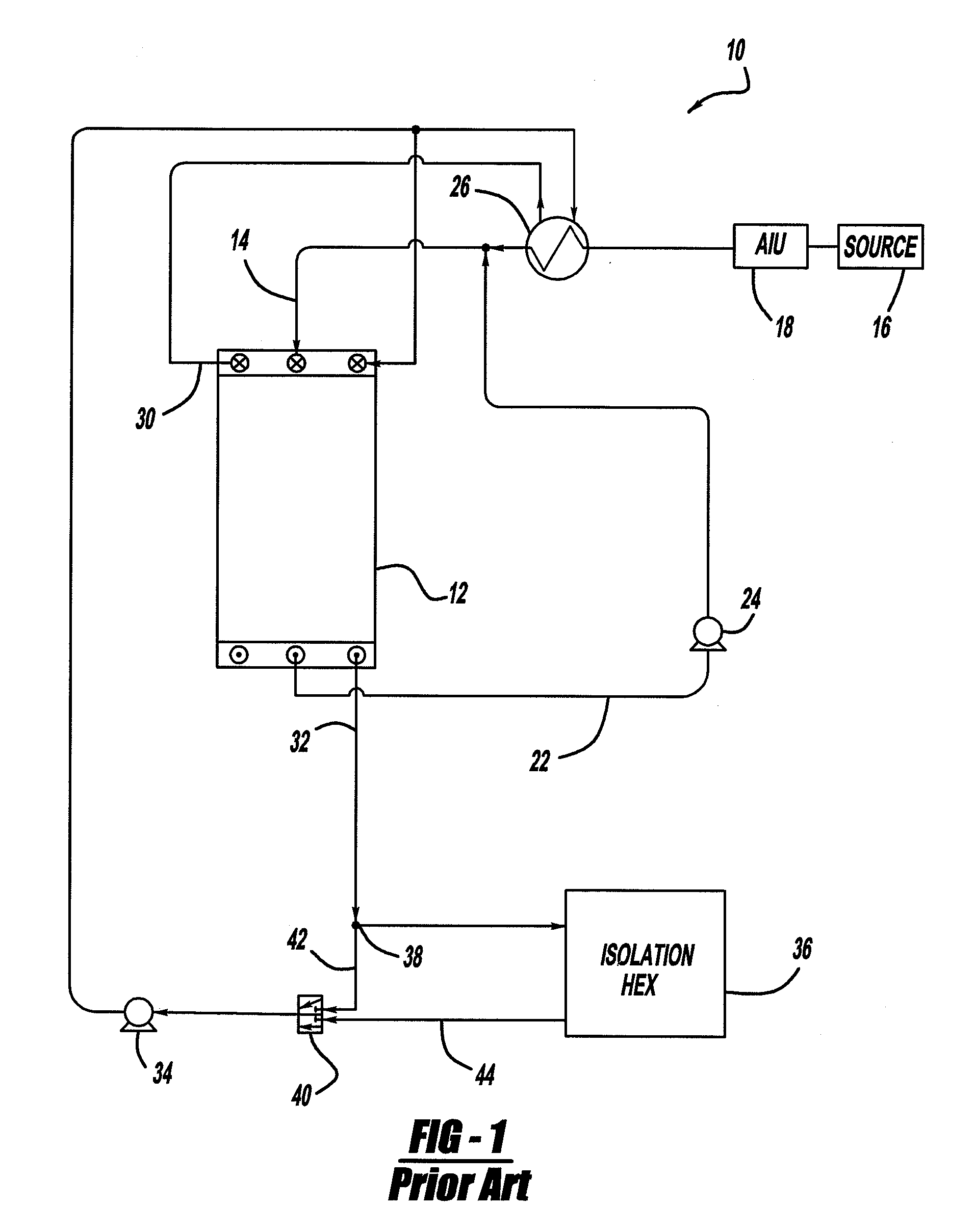
Figure 2 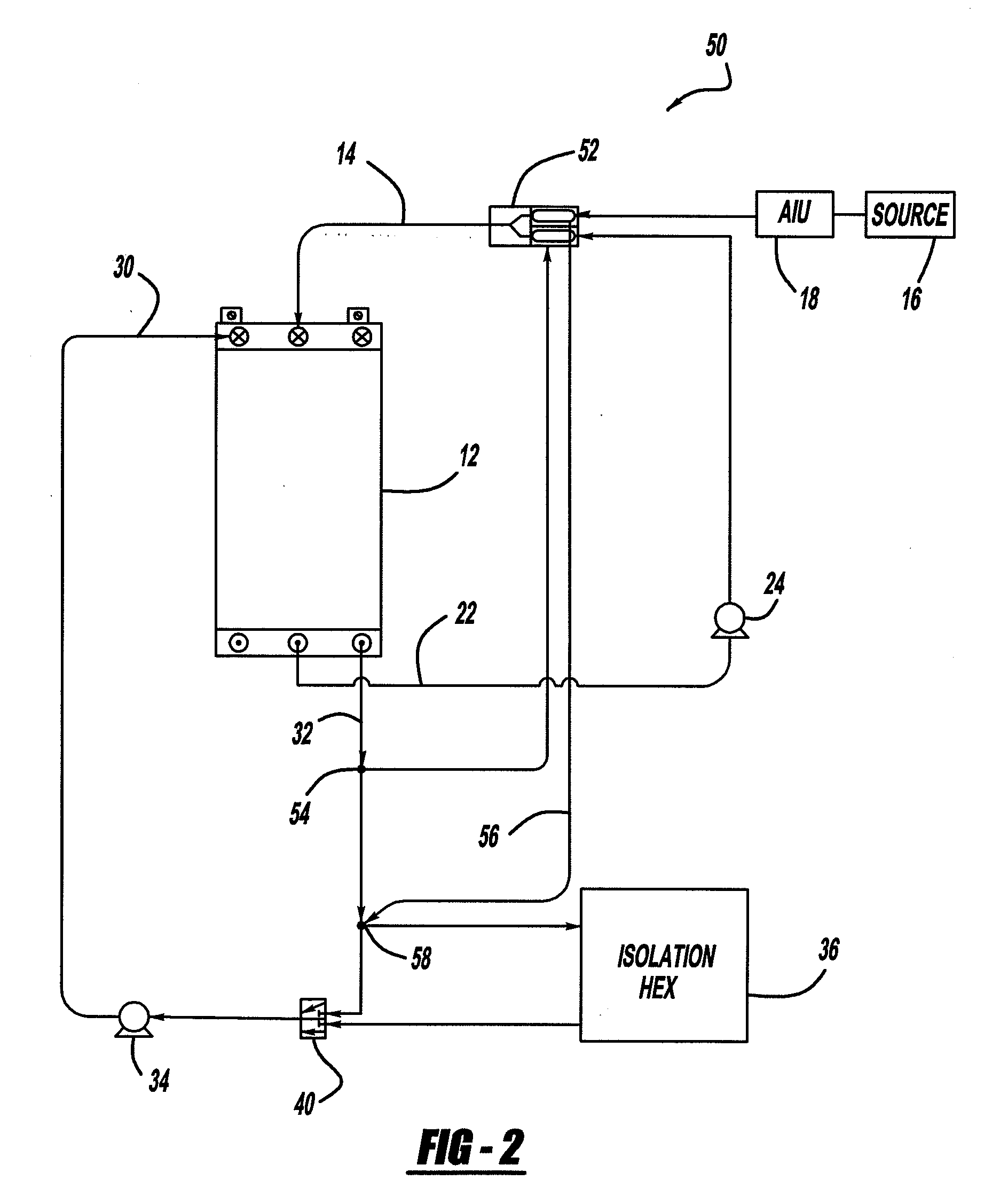
Figure 3
Abstract
Description
BACKGROUND OF THE INVENTION
[0001] 1. Field of the Invention
[0002] This invention relates generally to a fuel cell system that heats an anode re-circulation gas for preventing water droplets from forming to improve system stability and, more particularly, to a fuel cell system that uses a heated cooling fluid directly from the stack to heat an anode re-circulation gas for preventing water droplets from forming to improve system stability.
[0003] 2. Discussion of the Related Art
[0004] Hydrogen is a very attractive fuel because it is clean and can be used to efficiently produce electricity in a fuel cell. A hydrogen fuel cell is an electro-chemical device that includes an anode and a cathode with an electrolyte therebetween. The anode receives hydrogen gas and the cathode receives oxygen or air. The hydrogen gas is dissociated in the anode to generate free protons and electrons. The protons pass through the electrolyte to the cathode. The protons react with the oxygen and the electrons in t...
Examples
Embodiment Construction
[0014]The following discussion of the embodiments of the invention directed to a fuel cell system that uses heated cooling fluid to heat the anode input gas is merely exemplary in nature, and is in no way intended to limit the invention or its applications or uses.
[0015]FIG. 1 is a schematic diagram of a known fuel cell system 10 of the type discussed above. The cathode side of the system 10 is not shown for clarity purposes. The fuel cell system 10 includes a fuel cell stack 12 that receives a hydrogen reactant gas flow on line 14 from a hydrogen source 16, such as a compressed gas tank. The hydrogen gas from the source 16 is sent to an anode inlet unit (AIU) 18 that injects the hydrogen gas into the fuel cell stack 12 at the desired flow rate and pressure. In this design, anode exhaust gas is output from the stack 12 on line 22 and is re-circulated back to the input line 14 by a pump 24 to reclaim the un-reacted hydrogen. The anode exhaust gas from the fuel cell stack 12 is heated...