
Compact Super Wide-Angle Imaging System
a super wide-angle imaging and compact technology, applied in the field of wide-angle optical imaging systems, can solve the problems of long total track length, severe distortion of illumination, etc., and achieve the effect of short lens design
- Summary
- Abstract
- Description
- Claims
- Application Information
AI Technical Summary
Benefits of technology
Problems solved by technology
Method used
Image

Examples
example one
[0029 Design.
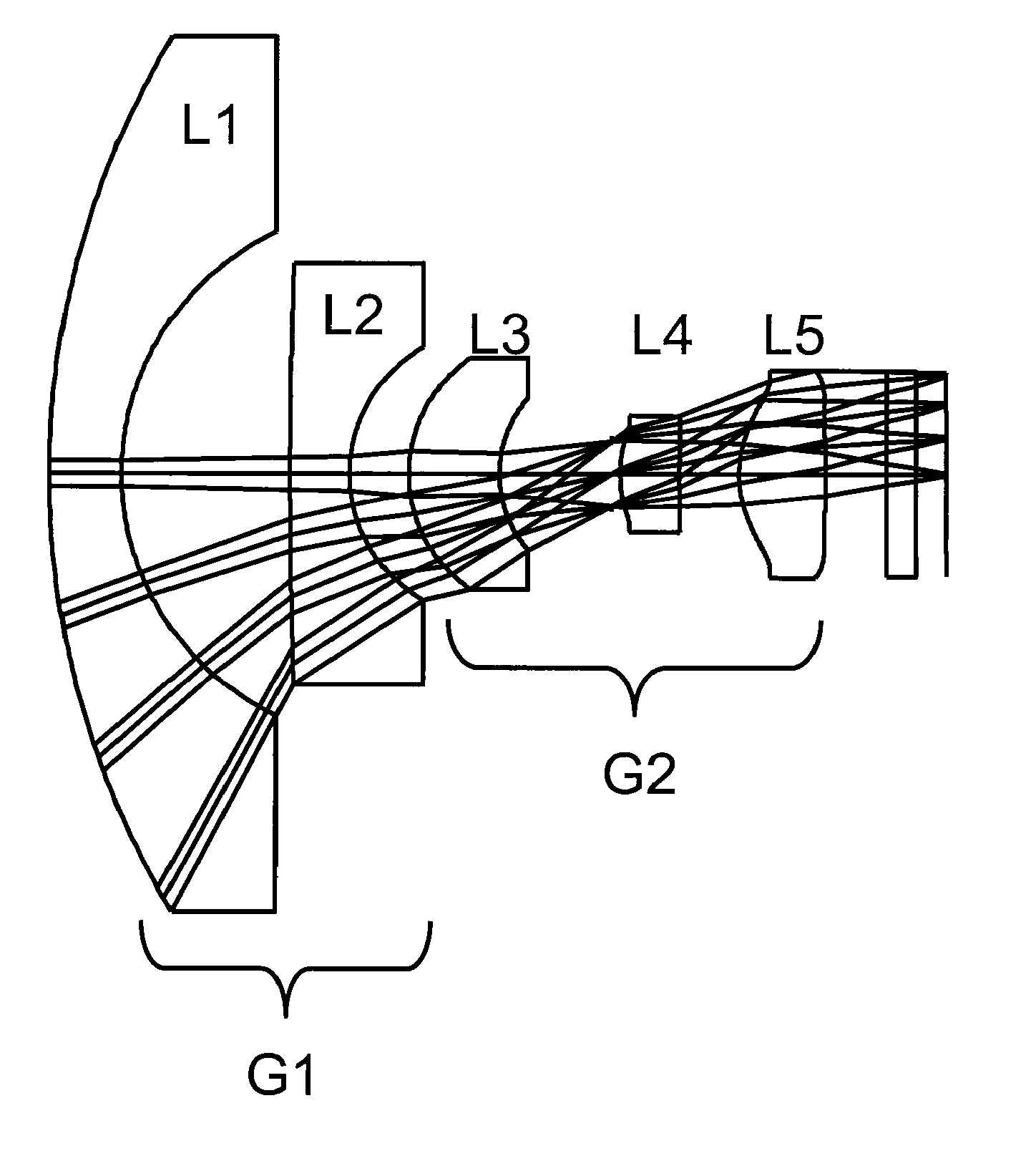
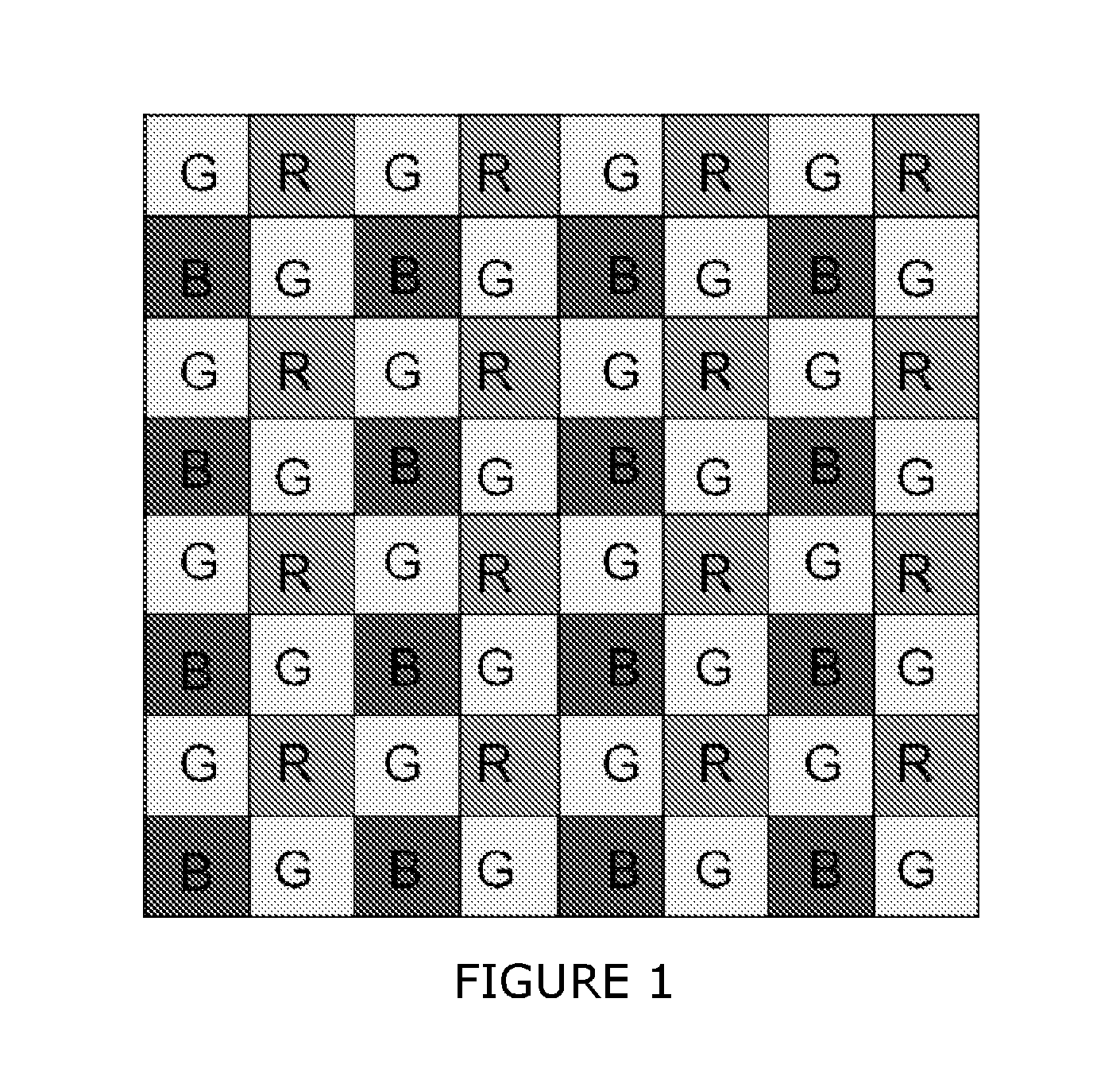
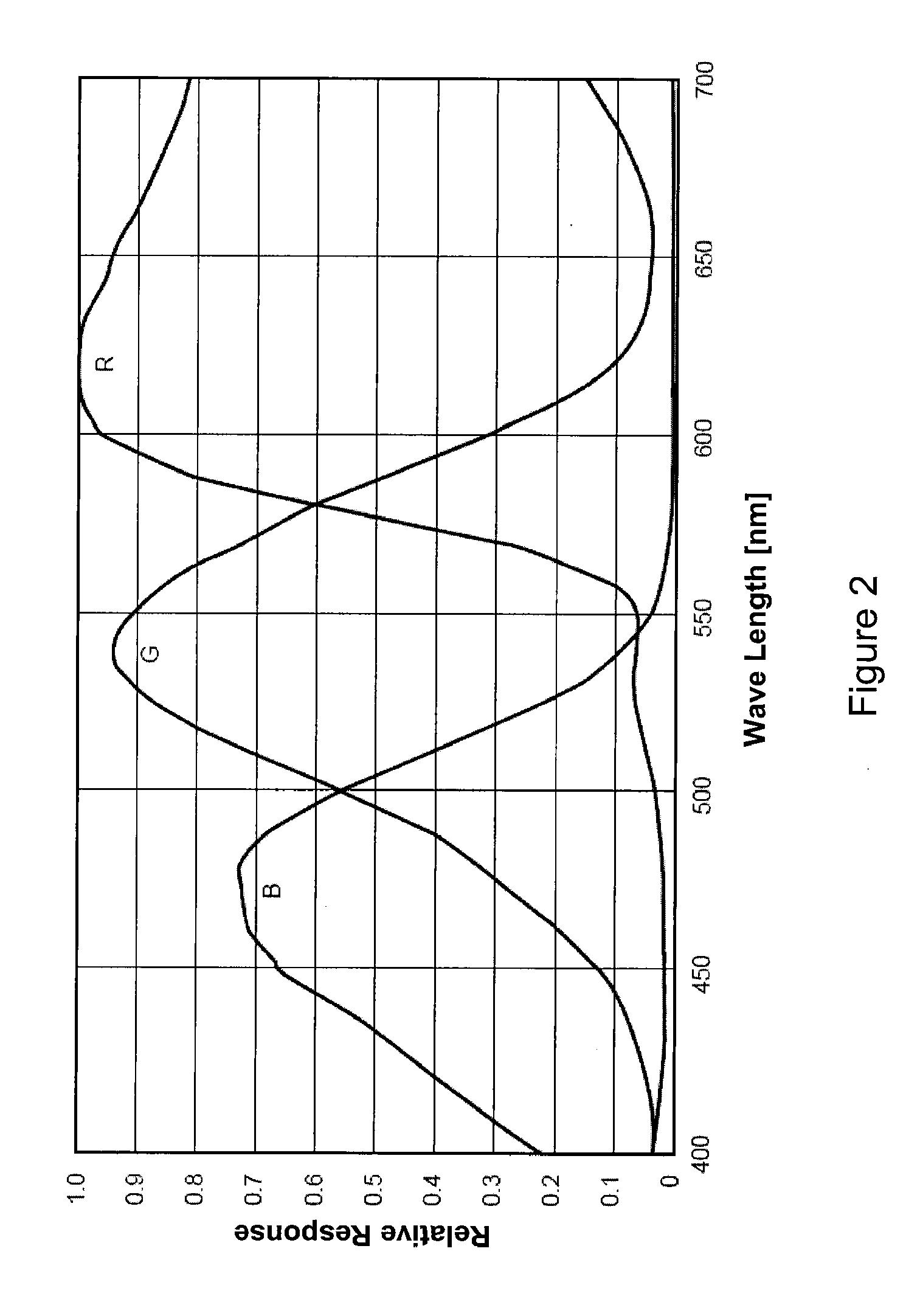
[0030]FIG. 3 shows a compact five-lens optical system according to the invention. The lens design has a focal length of f=0.8 mm with a 190 degree field-of-view. The lens is an F / 2.8 lens with a maximum field height of 1.71 mm, corresponding to a 1 / 7 inch VGA resolution image sensor having 4.25 μm pixels. The system is designed for three-color operation over the spectral range of 425-700 nm, using a standard Bayer pattern for the color filters.
[0031]The optical prescription for the lens design is shown in Table 1. The fourth and fifth lenses are aspheres. The aspheric terms are defined by the conic constant k and the rotationally symmetric higher order even polynomial terms. The aspheric surface is defined by the rotationally symmetric surface with surface sag S(ρ) as a function of radial distance ρ defined by
S(ρ)=ρ2R1+1-(1+k)p2R2+c4p4+c6p6+c8p8+c10p10(1)
where R is the radius of curvature of the surface. Table 1 also gives the values for the aspheric terms.
TABLE 1Exampl...
example two
[0049 Design.
[0050]FIG. 9 shows a compact four-lens optical system according to the invention. The lens design has a focal length of f=1.12 mm with a 190 degree field-of-view. The lens is an F / 2.6 lens with a maximum field height of 1.71 mm corresponding to a 1 / 7 inch VGA resolution image sensor having 4.25 μm pixels. The system is designed for three-color operation over the spectral range of 425-700 nm, using a standard Bayer pattern for the color filters.
[0051]The optical prescription for the lens design is shown in Table 3. This design is a more extreme version of the axial and lateral chromatic aberration relaxation described in the previous example. The lens system includes a first negatively powered lens group G1 and a second positively powered lens group G2. The third and fourth lenses are aspheric elements. The aspheric terms are defined by the conic constant k, the rotationally symmetric higher order even polynomial terms and some non-rotationally symmetric polynomial terms...
PUM
 Login to View More
 Abstract
Description
Claims
Application Information
 Login to View More