
Spindle motor having a fluid dynamic bearing system and a stationary shaft
a technology of fluid dynamic bearing and spindle motor, which is applied in the direction of sliding contact bearings, instruments, record information storage, etc., can solve the problems of complex construction, especially the sealing of a spindle motor having a stationary shaft and a fluid dynamic bearing system open at both ends, and achieves low cost, easy construction, and easy machineability.
- Summary
- Abstract
- Description
- Claims
- Application Information
AI Technical Summary
Benefits of technology
Problems solved by technology
Method used
Image

Examples
Embodiment Construction
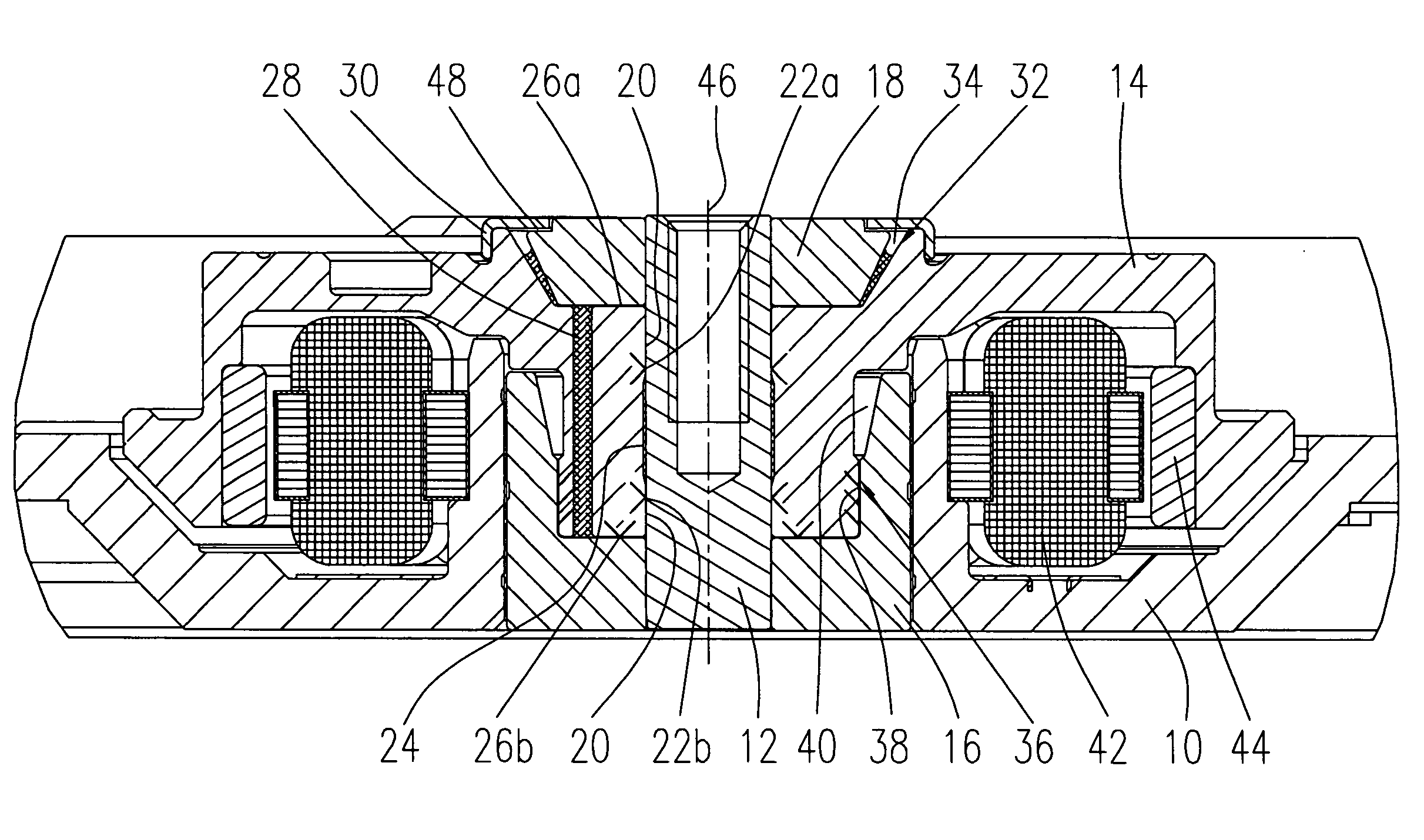
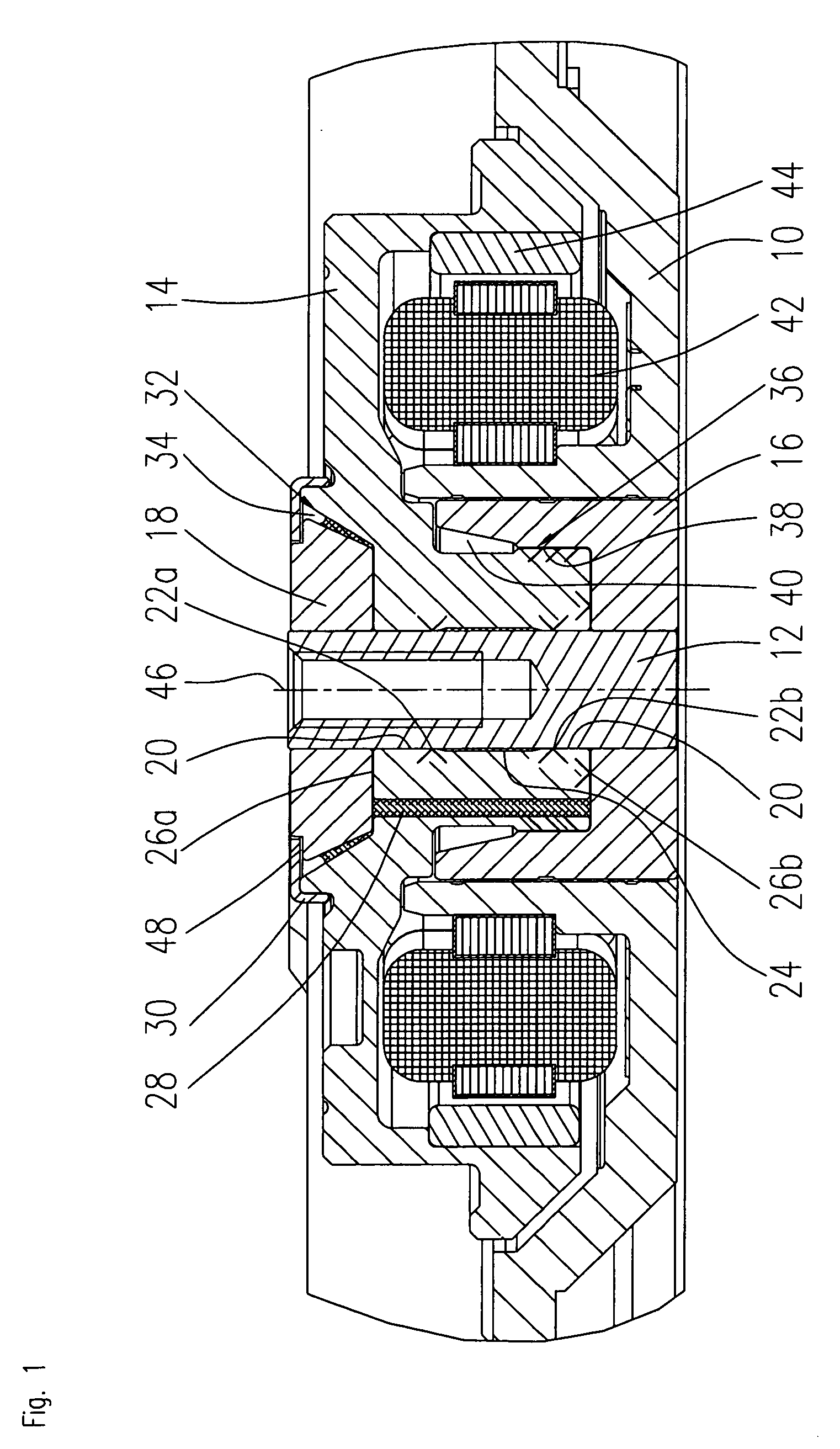
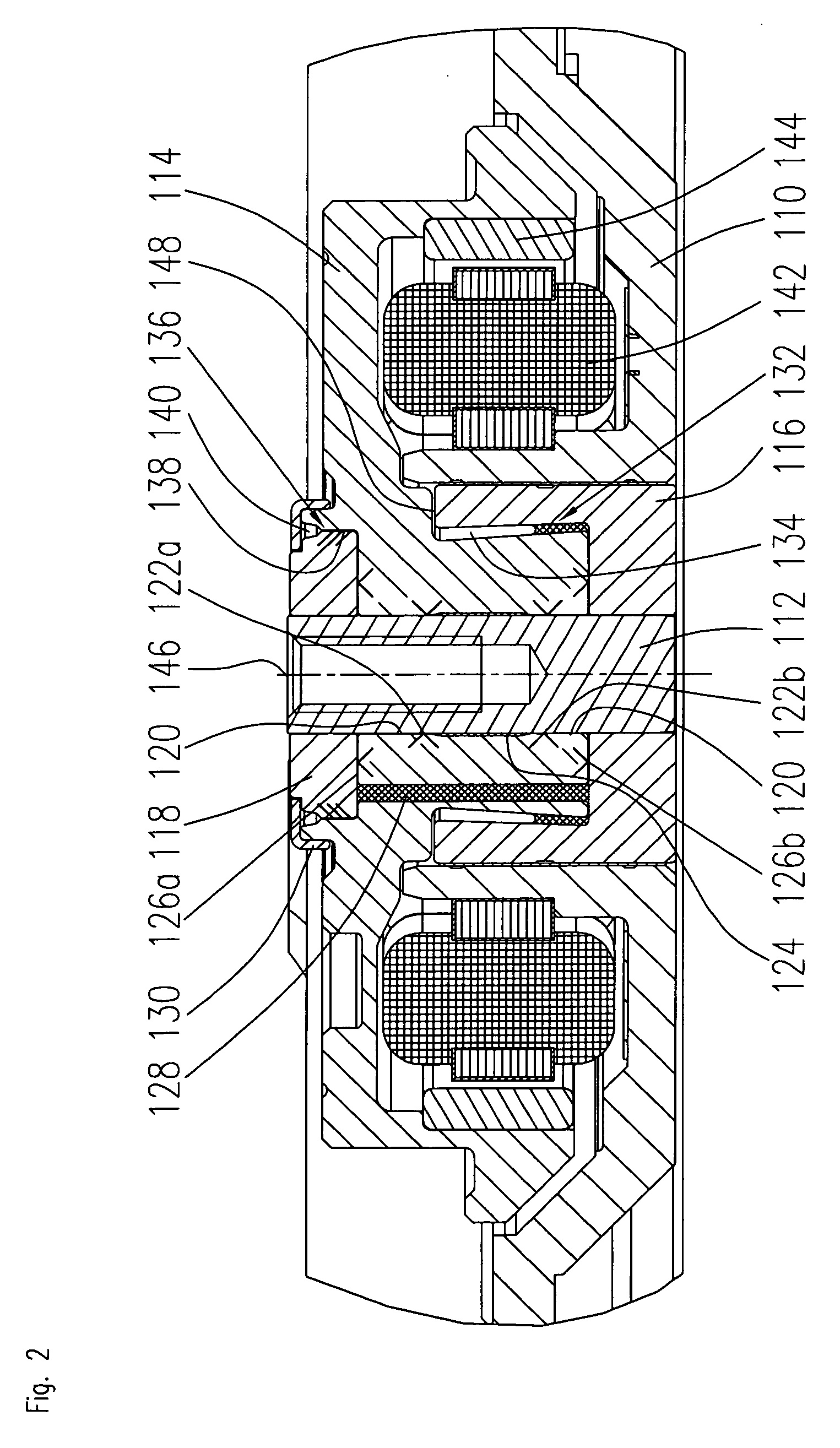
[0024]FIGS. 1 to 7 show various embodiments of spindle motors according to the invention, all the illustrated spindle motors essentially having the same basic construction. The spindle motors could be used for driving the storage disks of a hard disk drive.
[0025]The spindle motor according to FIG. 1 comprises a baseplate 10 that has a substantially central cylindrical opening in which a first bearing component 16 is accommodated. The first bearing component 16 is approximately cup-shaped in form and comprises a central opening in which the shaft 12 is fixed. A second bearing component 18 is disposed at an upper end of the stationary shaft 12, the second bearing component 18 being preferably annular in shape. The above-mentioned components form the stationary components of the spindle motor. At its upper end, the shaft 12 may additionally be fixed to the housing of the spindle motor. The spindle motor comprises a single-piece rotor component 14 that is disposed in a space formed by t...
PUM
 Login to View More
 Abstract
Description
Claims
Application Information
 Login to View More