

Superalloy compositions with improved oxidation performance and gas turbine components made therefrom
a technology of superalloy and oxidation performance, which is applied in the field of superalloy compositions with improved oxidation performance and gas turbine engine components made therefrom, which can solve the problems of exposed superalloy substrate oxidation, hpt blade oxidation, chemical degradation,
Inactive Publication Date: 2009-07-23
HONEYWELL INT INC
View PDF6 Cites 29 Cited by
- Summary
- Abstract
- Description
- Claims
- Application Information
AI Technical Summary
Benefits of technology
[0007]In accordance with an exemplary embodiment of the present invention, a single crystal nickel-based superalloy composition is provided. The single crystal nickel-based superalloy composition consists essentially of, in weight percent, from about 4 to about 7 percent chromium; from about 8 to about 12 percent cobalt; from about 1 to about 2.5 percent molybdenum; from about 3 to about 6 percent tungsten; from about 2 to about 4 percent rhenium; from about 5 to about 7 percent aluminum; from about 0 to about 1.5 percent titanium; from about 6 to about 10 percent tantalum; from about 0.08 to about 1.2 percent hafnium; no more than about 0.0002 percent sulfur; no more than about 0.007 percent zirconium; and the balance nickel.
[0008]In accordance with an exemplary embodiment of the present invention, a single crystal nickel-based superalloy component is provided. The single crystal nickel-based superalloy component is fabricated of a single crystal composition consisting essentially of (in weight percent) from about 4 to about 7 percent chromium; from about 8 to about 12 percent cobalt; from about 1 to about 2.5 percent molybdenum; from about 3 to about 6 percent tungsten; from about 2 to about 4 percent rhenium; from about 5 to about 7 percent aluminum; from about 0 to about 1.5 percent titanium; from about 6 to about 10 percent tantalum; from about 0.08 to about 1.2 percent hafnium; no more than about 0.0002 percent sulfur; no more than about 0.007 percent zirconium; and the balance nickel.
[0009]In accordance with an exemplary embodiment of the present invention, a process for preparing a single crystal nickel-based superalloy component is provided. The method comprises the steps of providing an alloy comprising (in weight percent) from about 4 to about 7 percent chromium; from about 8 to about 12 percent cobalt; from about 1 to about 2.5 percent molybdenum; from about 3 to about 6 percent tungsten; from about 2 to about 4 percent rhenium; from about 5 to about 7 percent aluminum; from about 0 to about 1.5 percent titanium; from about 6 to about 10 percent tantalum; from about 0.08 to about 1.2 percent hafnium; no more than about 0.0002 percent sulfur; no more than about 0.007 percent zirconium; and the balance nickel; and fabricating a single crystal component from the alloy.
Problems solved by technology
However, while the superalloys exhibit superior mechanical properties under high temperature and pressure conditions, they are subject to oxidation and corrosion attack by chemical degradation.
The gases at high temperature and pressure in the turbine engine can lead to oxidation of the exposed superalloy substrates.
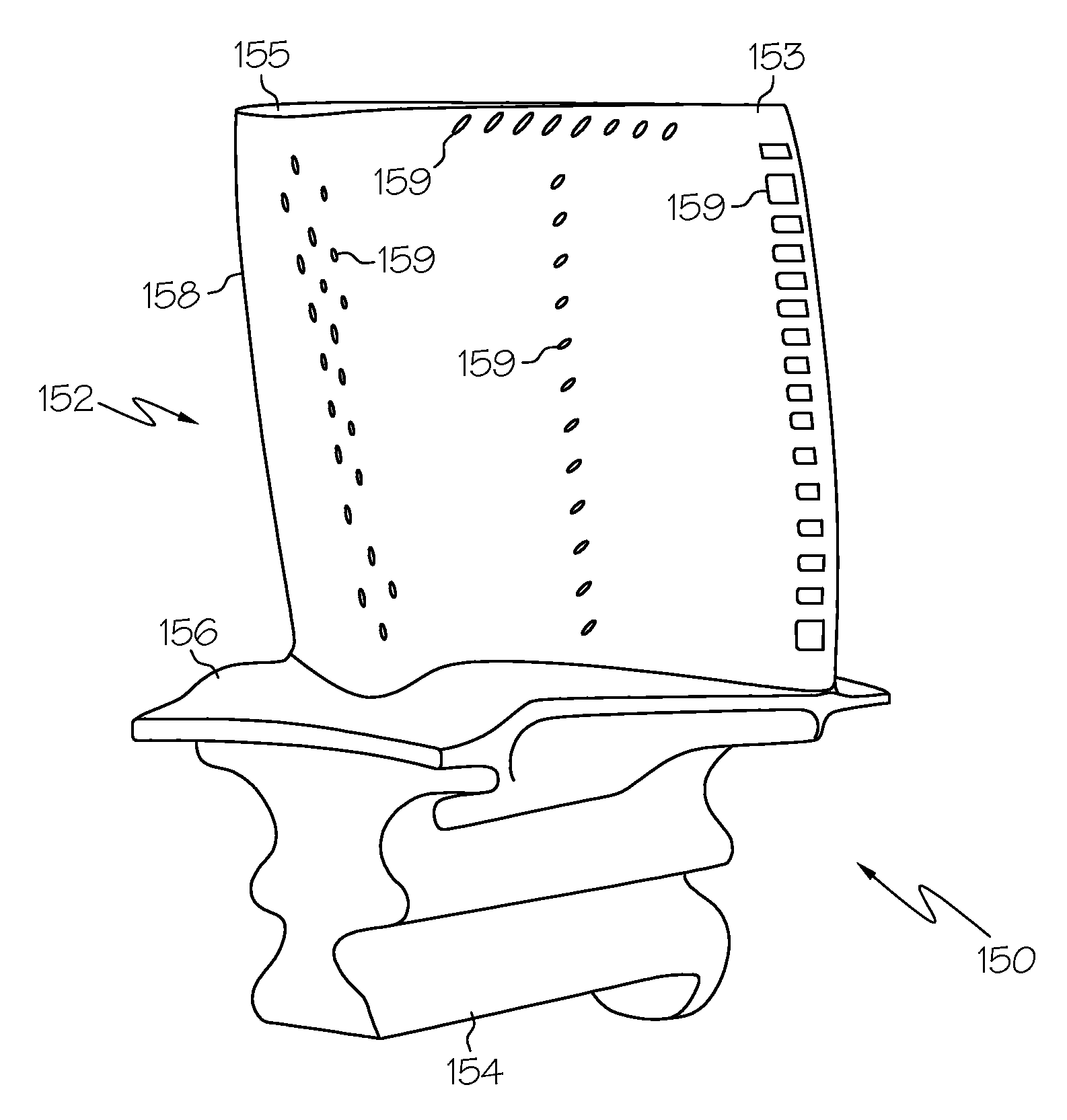
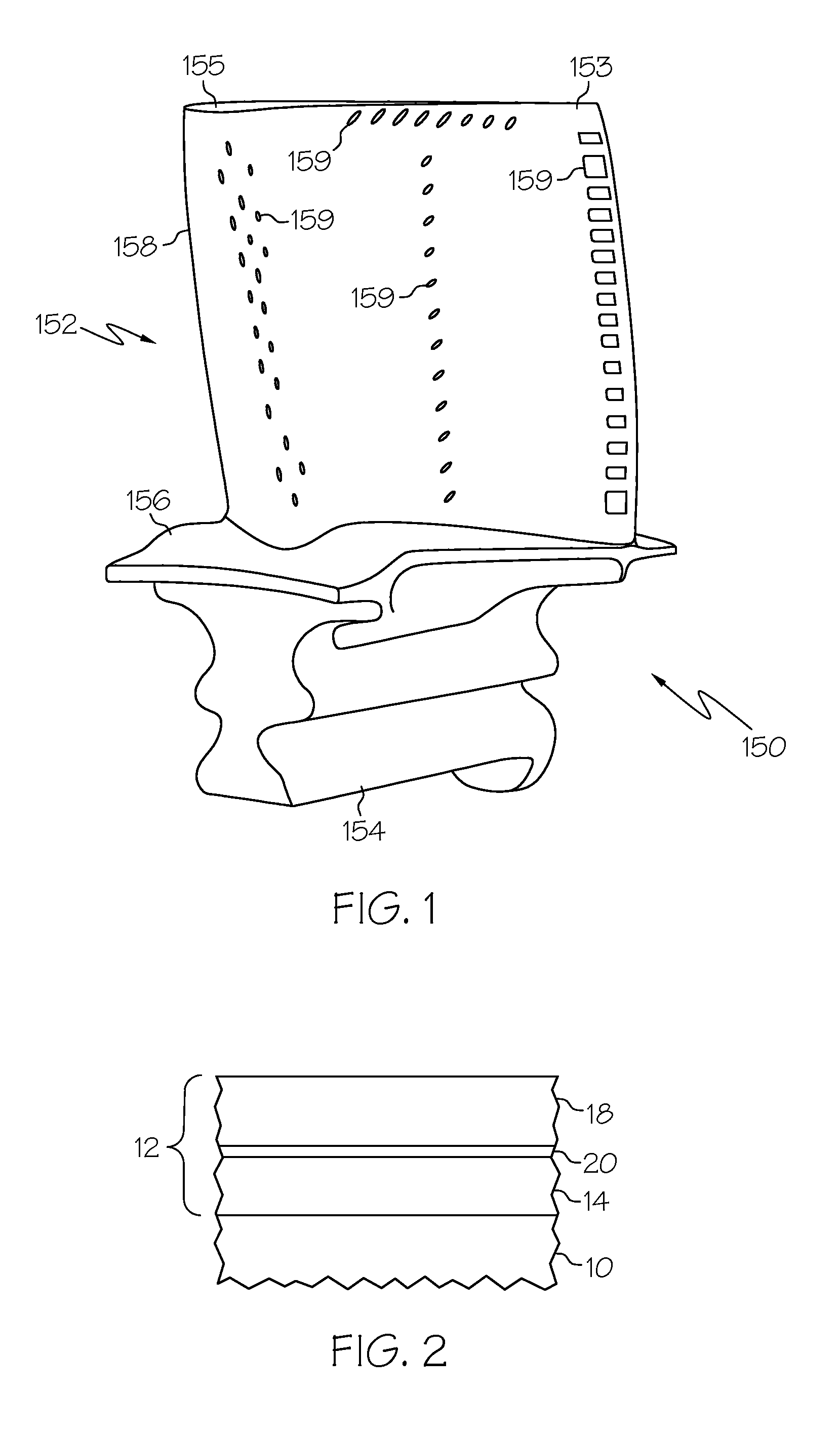
High-pressure turbine (HPT) blades, that is, those turbine blades at the high pressure stages following the combustion stage of a gas turbine engine, are particularly subject to this kind of oxidation attack and erosion, particularly at the blade tip areas.
Blade tips are also potential wear points.
Oxidation is undesirable because it can lead to the gradual erosion of blade tip material, which affects the dimensional characteristic of the blade and its physical integrity.
In general, eroded blade tips negatively affect engine performance.
However, if the TGO layer grows too quickly and / or too thickly, adherence of the TBC to the bond coating can be compromised, and cracks between the TBC and the TGO as well as between the TGO and the bond coating form.
This causes the TBC to prematurally spall off, thus decreasing the service life of the superalloy component.
Method used
the structure of the environmentally friendly knitted fabric provided by the present invention; figure 2 Flow chart of the yarn wrapping machine for environmentally friendly knitted fabrics and storage devices; image 3 Is the parameter map of the yarn covering machine
View moreImage
Smart Image Click on the blue labels to locate them in the text.
Smart ImageViewing Examples

Examples
Experimental program
Comparison scheme
Effect test
example 1
In Weight Percent
[0041]
Co 9.8-10.2Cr5.2-5.4Mo1.6-1.8W4.8-5.2Re2.8-3.2Ta8.0-9.0Al5.0-5.4Ti0.9-1.1Hf0.08-0.12S≦0.0002Zr≦0.007 OthersLa: 0.001-0.013NiBalance
example 2
In Weight Percent
[0042]
Co 9.8-10.2Cr5.2-5.4Mo1.6-1.8W4.8-5.2Re2.8-3.2Ta8.0-9.0Al5.0-5.4Ti0.9-1.1Hf0.08-0.12S≦0.0002Zr≦0.007 OthersY: 0.001-0.013NiBalance
example 3
In Weight Percent
[0043]
Co 9.8-10.2Cr5.2-5.4Mo1.6-1.8W4.8-5.2Re2.8-3.2Ta8.0-9.0Al5.0-5.4Ti0.9-1.1Hf0.08-0.12S≦0.0002Zr≦0.007 OthersLa and Y (combined weight percent): 0.001-0.013;C: 0.03-0.06;B: 0.004-0.006NiBalance
the structure of the environmentally friendly knitted fabric provided by the present invention; figure 2 Flow chart of the yarn wrapping machine for environmentally friendly knitted fabrics and storage devices; image 3 Is the parameter map of the yarn covering machine
Login to View More PUM
| Property | Measurement | Unit |
|---|---|---|
| weight percent | aaaaa | aaaaa |
| weight percent | aaaaa | aaaaa |
| weight percent | aaaaa | aaaaa |
Login to View More
Abstract
Single crystal superalloy compositions and components made from such compositions are provided. One composition consists essentially of, in weight percent, from about 4 to about 7 percent chromium; from about 8 to about 12 percent cobalt; from about 1 to about 2.5 percent molybdenum; from about 3 to about 6 percent tungsten; from about 2 to about 4 percent rhenium; from about 5 to about 7 percent aluminum; from about 0 to about 1.5 percent titanium; from about 6 to about 10 percent tantalum; from about 0.08 to about 1.2 percent hafnium; no more than about 0.0002 percent sulfur; no more than about 0.007 percent zirconium; and the balance nickel.
Description
FIELD OF THE INVENTION[0001]The present invention generally relates to metallic materials for gas turbine engine applications, and more particularly relates to superalloy compositions with improved oxidation performance and components of gas turbine engines made therefrom.BACKGROUND OF THE INVENTION[0002]In an attempt to increase the efficiencies and performance of contemporary gas turbine engines generally, engineers have progressively pushed the engine environment to more extreme operating conditions. The harsh operating conditions of high temperature and pressure that are now frequently specified place increased demands on engine component-manufacturing technologies and new materials. Indeed the gradual improvement in engine design has come about in part due to the increased strength and durability of new materials that can withstand the operating conditions present in the modern gas turbine engine.[0003]Turbine airfoils are key engine components that directly experience severe e...
Claims
the structure of the environmentally friendly knitted fabric provided by the present invention; figure 2 Flow chart of the yarn wrapping machine for environmentally friendly knitted fabrics and storage devices; image 3 Is the parameter map of the yarn covering machine
Login to View More Application Information
Patent Timeline
 Login to View More
 Patent Type & AuthorityApplications(United States)
IPC IPC(8): C22C19/05
CPCC22C19/057
InventorHU, YIPING
OwnerHONEYWELL INT INC