[0003]The systems and methods described herein include more particularly, an easy-to-use, automated sleep coaching
system that can provide a personalized sleep coaching plan for a particular user. The systems and methods described herein provide data-driven sleep coaching to a user. In one embodiment, the
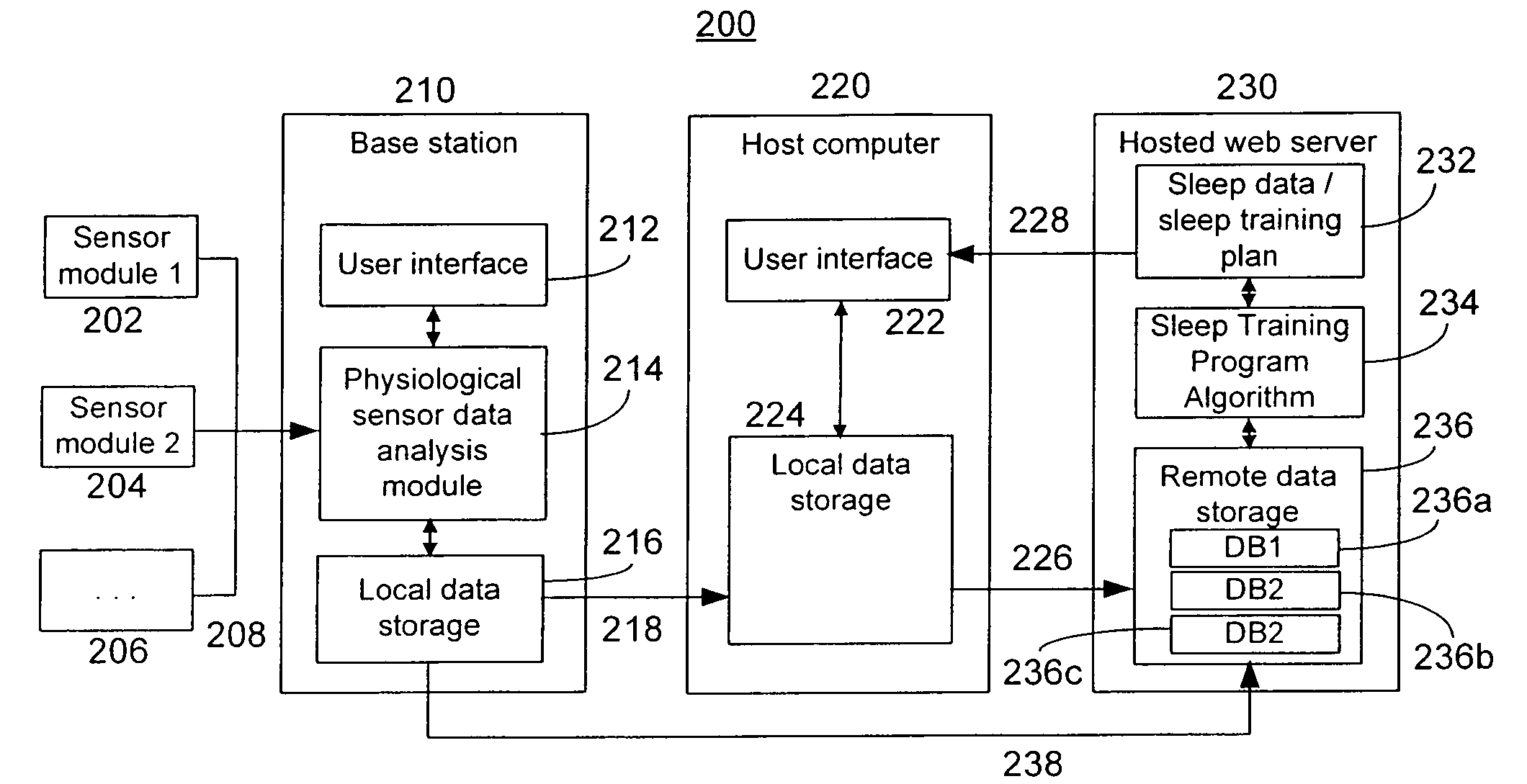
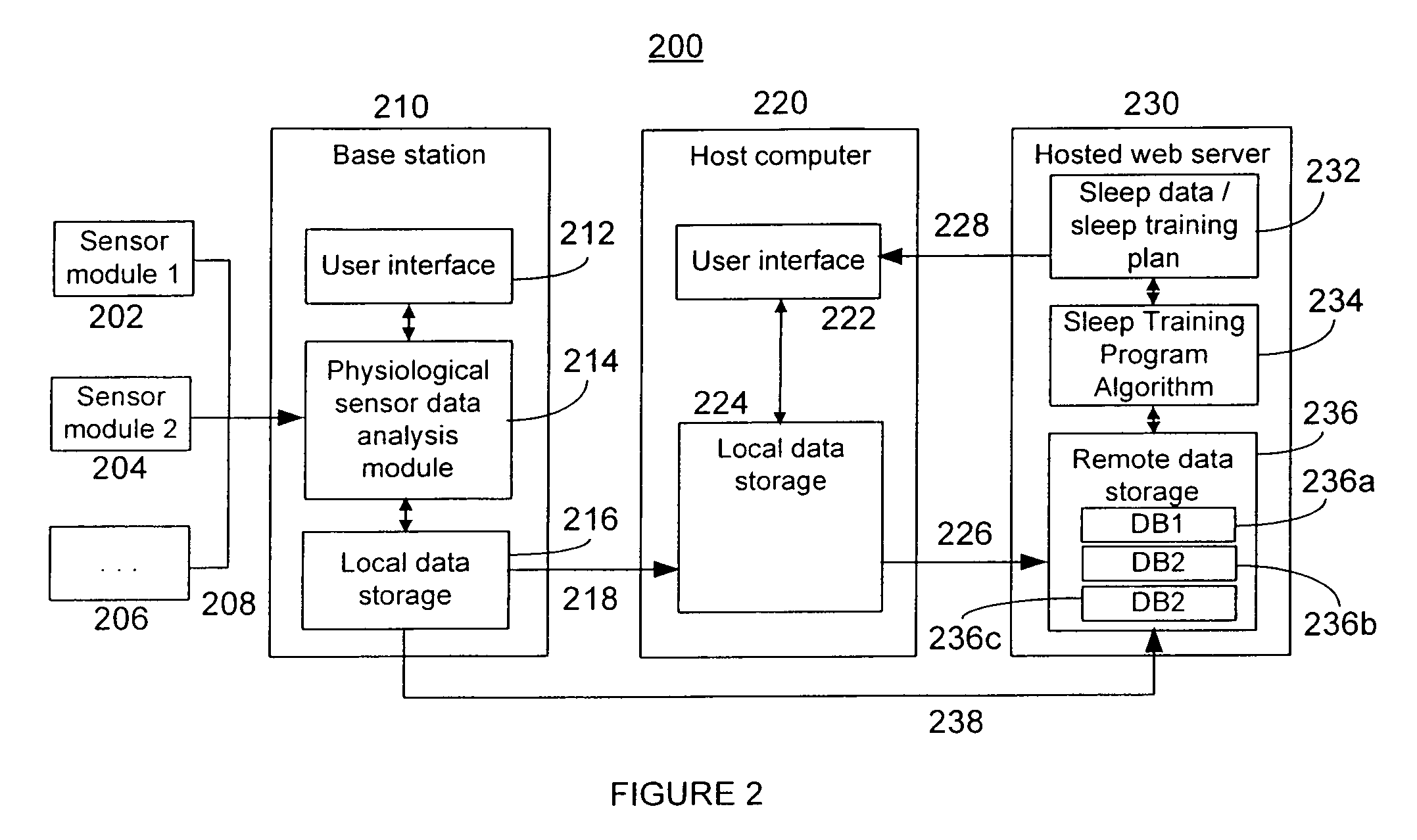
system comprises a headband-mounted first sensor that senses a first physiological
signal associated with a sleeping user, such as an electroencephalogram (EEG). The first sensor may be dry, require no preparation, and be easy to apply with a lightweight headband. The first sensor may transmit the sensed first physiological
signal to a first processor such as a
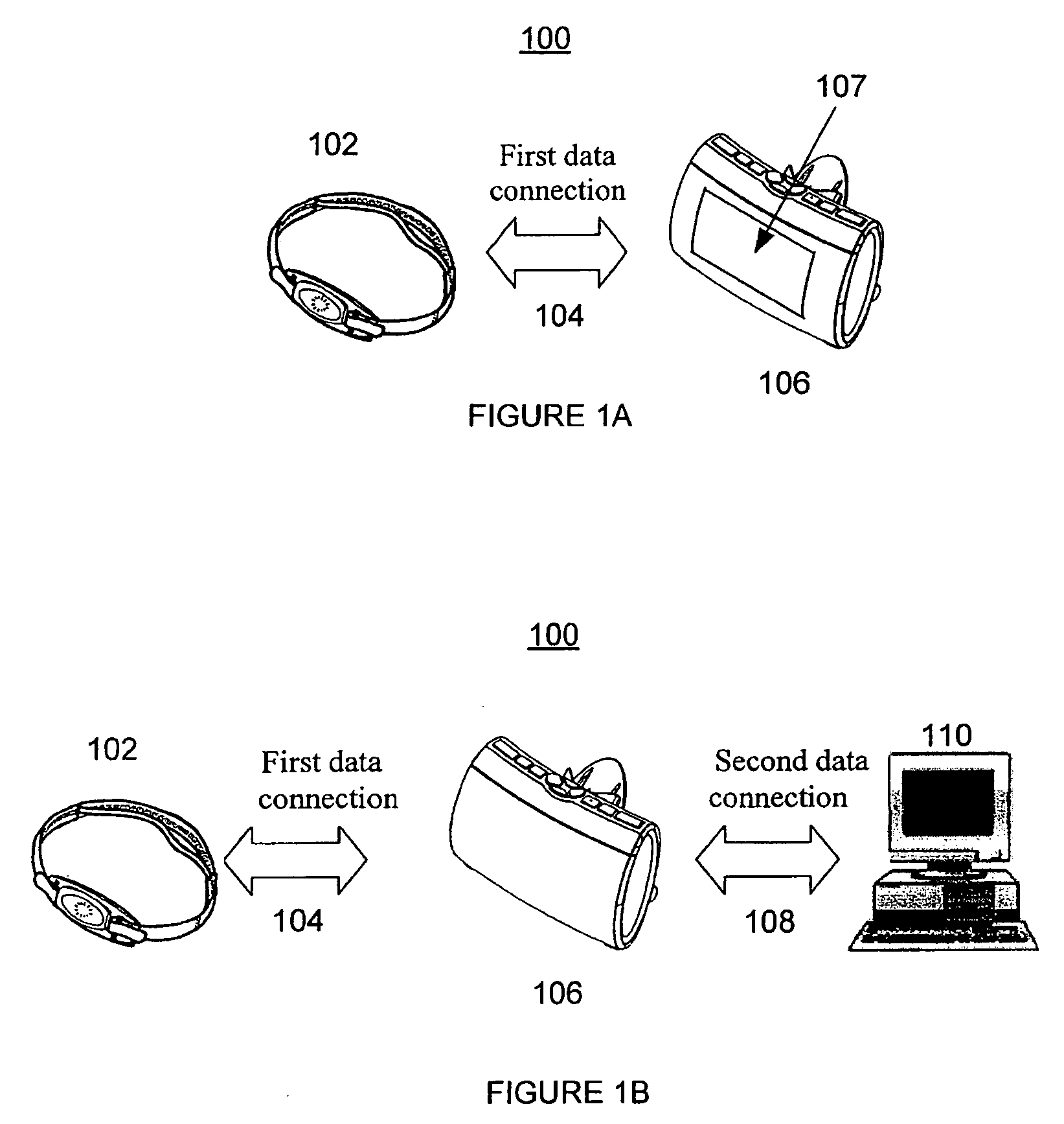
base station. The
base station may process the received first signal or not, for example by using a
Fast Fourier Transform (FFT) to convert the received signal into its constituent frequency bands, but in either case, it transmits the resulting second
data set to a second processor such as a host computer. In addition to receiving the second
data set from the
base station, the host computer may receive one or more indications of user behavior or user characteristics, such as user bedtime, user risetime, or other user sleeping or
eating habits. This may be done in the form of a computer-based questionnaire. The host computer may then generate advice for improving user sleep satisfaction such as a sleep coaching plan based at least in part on at least one of the second sleep
data set, the one or more indications of user behavior or characteristics, and a
database containing sleep-related data and advice. This sleep coaching plan may comprise one or more sleep coaching workshops, which the user may undertake. In one embodiment, the system may also comprise a third processor located remotely from the user, such as a remote
server. The third processor mentioned here could be an expert
human operator or an automated
expert system. The host computer may transmit a third data set based on the second data set to the remote
server.
[0011]In one aspect, the invention provides a kit for an interactive sleep coaching program. The kit comprises a sleep sensor of the type that measures a physiological signal and generates and displays sleep data that characterizes a user's sleep. The kit further comprises a sleep coaching program for collecting information about the user's sleeping conditions and for selecting as a function of an
algorithm that considers the collected information, a targeted set of advice stored within a data base of stored advice, for improving the sleep satisfaction of the user, whereby the user may collect advice from the sleep coaching program and employ the sleep sensor to determine interactively whether the advice and sleep coaching program are improving their sleep satisfaction.



 Login to View More
  Login to View More