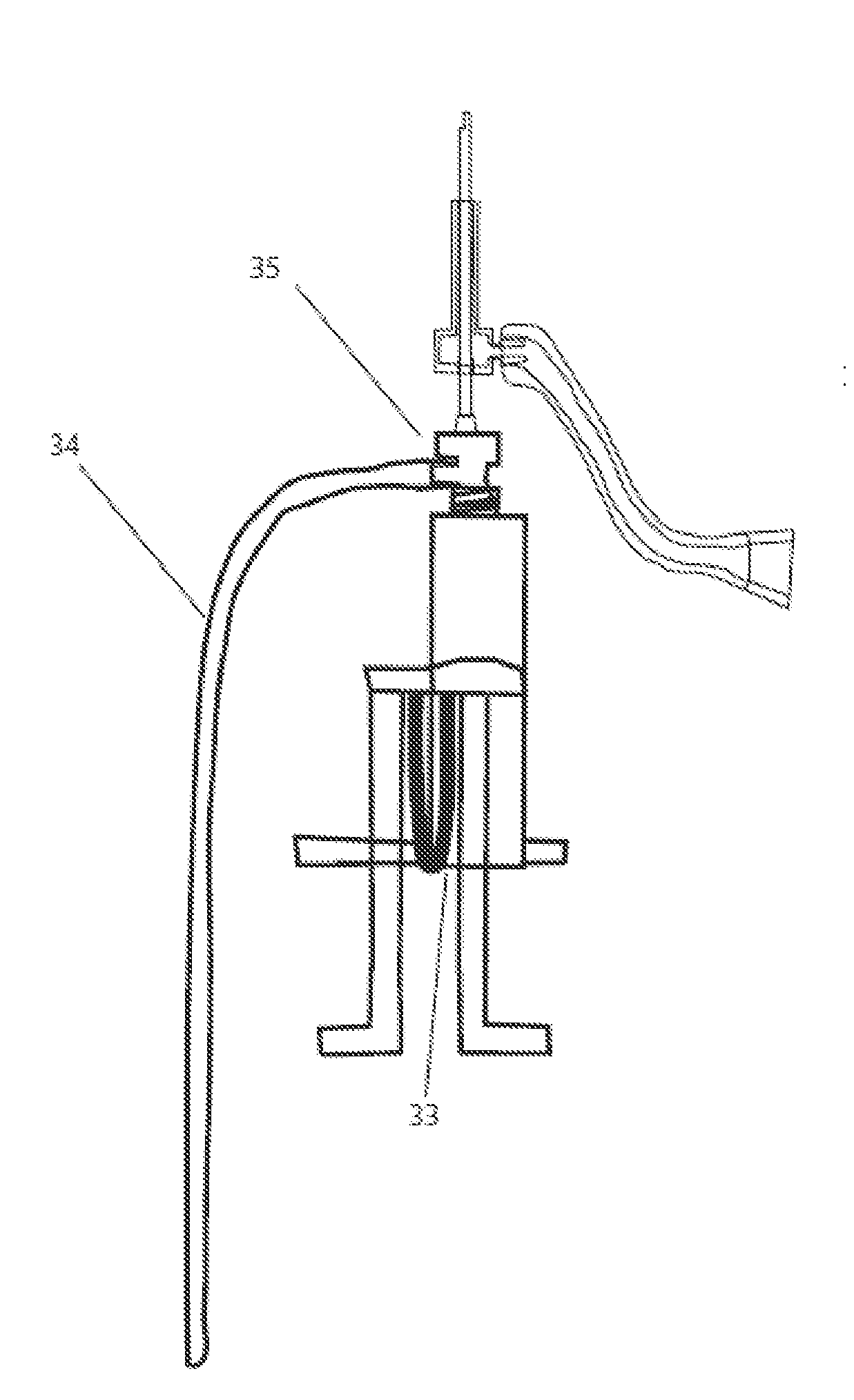
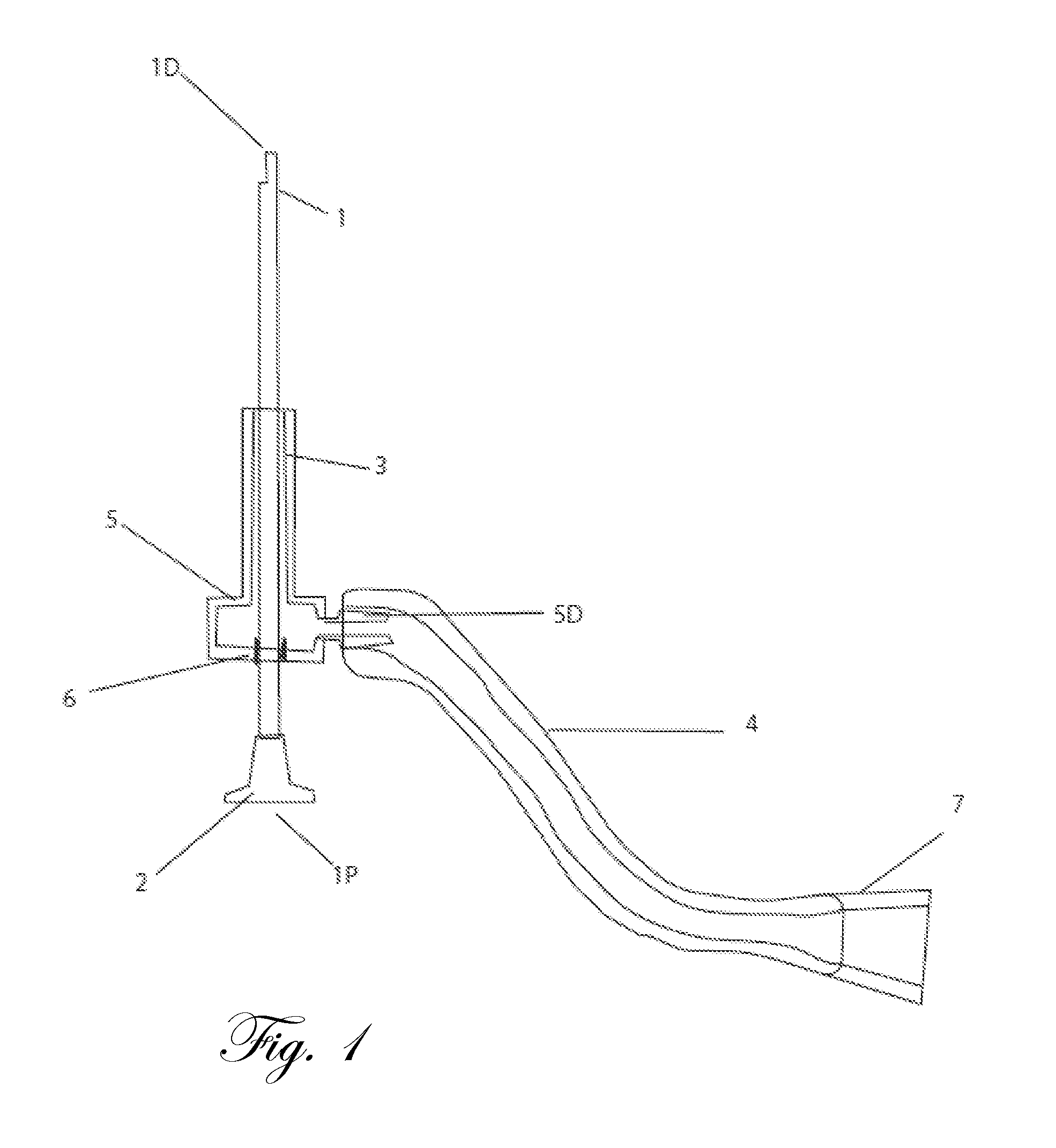
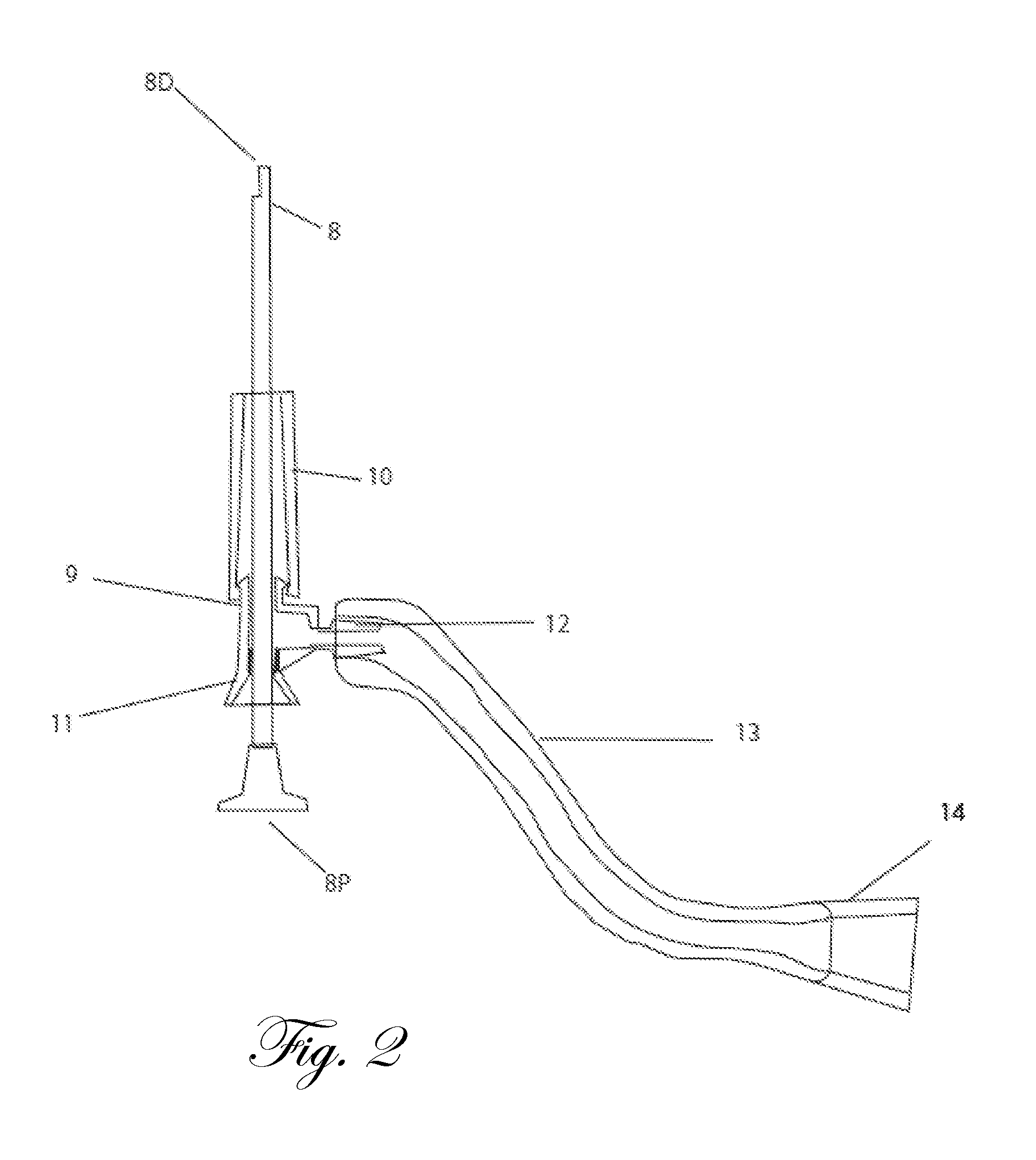
[0025]An endodontic or periodontic irrigation and aspiration device comprises a conventional or non-conventional
syringe, an irrigation probe of various designs and manufacturers, and a movable aspirating sleeve in which the irrigation probe resides. The aspirating sleeve is adjustable on the length of the irrigation probe so that different depths of root canals or periodontal recesses can be irrigated with the sleeve aspirating on or within the crown of the tooth or the mucosal surface of the periodontal tissues, respectively. The aspirating sleeve can be a one piece device comprising a body and a fitting that permits a vacuum source in the form of vacuum tubing to be attached, a portion that permits an needle to be inserted into the sleeve along a substantially straight line, and an aspirating portion comprising an elongated portion in which the irrigation probe or needle resides. Alternatively, the aspirating sleeve can comprise several components which are then assembled to the same effect. The vacuum tubing can have a proximal fitting, similar to a surgical vacuum
handle, to permit access to conventional dental suction vacuum equipment so that the device can be immediately applicable to all dental, periodontal, and endodontic offices and practices. Because the device can be
mass produced without extensive or dangerous hand
assembly, the cost of the device is low and the device is completely disposable. The cost of the device is also low because conventional irrigation probes and syringes can be used if desired. The irrigation and aspiration device permits effective
root canal irrigation and can prevent caustic irrigation solution from damaging the mucosa of the mouth.
[0026]A penetration or tract
wound irrigation and aspiration device comprises a conventional or non-conventional
syringe, wound irrigation probe of various designs and manufacturers, and an aspirating sleeve in which the irrigating probe resides. The aspirating sleeve can be adjustable on the length of the irrigation probe so that different depths of penetrating or tract wounds can be irrigated with the sleeve aspirating on the
skin surface to prevent splash-back on the operator. The aspirating sleeve can be plastic vacuum tubing that is penetrated by the irrigation probe and movable on the shaft of the probe or can be a dedicated movable sleeve with a proximal fitting to permit attachment of vacuum tubing. A splash shield can be integrated into the
vacuum aspiration sleeve. The vacuum tubing can have a proximal fitting, similar to a surgical vacuum
handle or medical vacuum tubing, to permit access to conventional medical suction vacuum equipment so that the device can be immediately applicable to all medical and hospital offices and practices.
[0027]An open or superficial wound irrigation and aspiration device comprises a conventional or non-conventional
syringe, wound irrigation probe of various designs and manufacturers, and an aspirating sleeve in which the irrigating probe resides. The aspirating sleeve can be fixed on the length of the irrigation probe and comprises a rigid or flexible splash shield with the sleeve aspirating on the
wound surface to prevent splash-back. A flexible vacuum splash shield permits suction to be applied across the
wound surface permitting better debridement and greater splash protection. The aspirating sleeve can be plastic vacuum tubing that can be penetrated by the irrigation probe and movable on the shaft of the probe or can be a dedicated movable sleeve with a fitting to permit attachment of vacuum tubing. A splash shield can be integrated into the
vacuum aspiration sleeve. The vacuum tubing can have a proximal fitting, similar to a surgical vacuum
handle or medical vacuum tubing, to permit access to conventional medical suction vacuum equipment so that the device can be immediately applicable to all medical and hospital offices and practices.
[0028]Kits featuring different irrigation probes, such as probes having cannulae with a variety of different working lengths and diameters and designs with an adjustable aspirating sleeves and various sizes and types of syringes and irrigation sources can be provided, thereby enabling the practitioner to treat root canals and wounds of varying sizes and depths and irrigant volume requirements.



 Login to View More
  Login to View More