Broadband Wireless Communication Resource Assigning Method, Base Station Apparatus and Terminal Apparatus

a wireless communication and base station technology, applied in the field of broadband wireless communication resource assigning method, base station apparatus and terminal apparatus, can solve the problem that does not always guarantee a high downlink throughput, and achieve the effect of increasing the throughput of useful user data, reducing the need for feedback information, and high average and dispersion of communication capacity

US20100220607A1Active Publication Date: 2010-09-02HITACHI LTD
8 Cites 17 Cited by

Patent Information

Authority / Receiving Office
US · United States
Patent Type
Applications(United States)
Current Assignee / Owner
Publication Date
2010-09-02

Smart Images

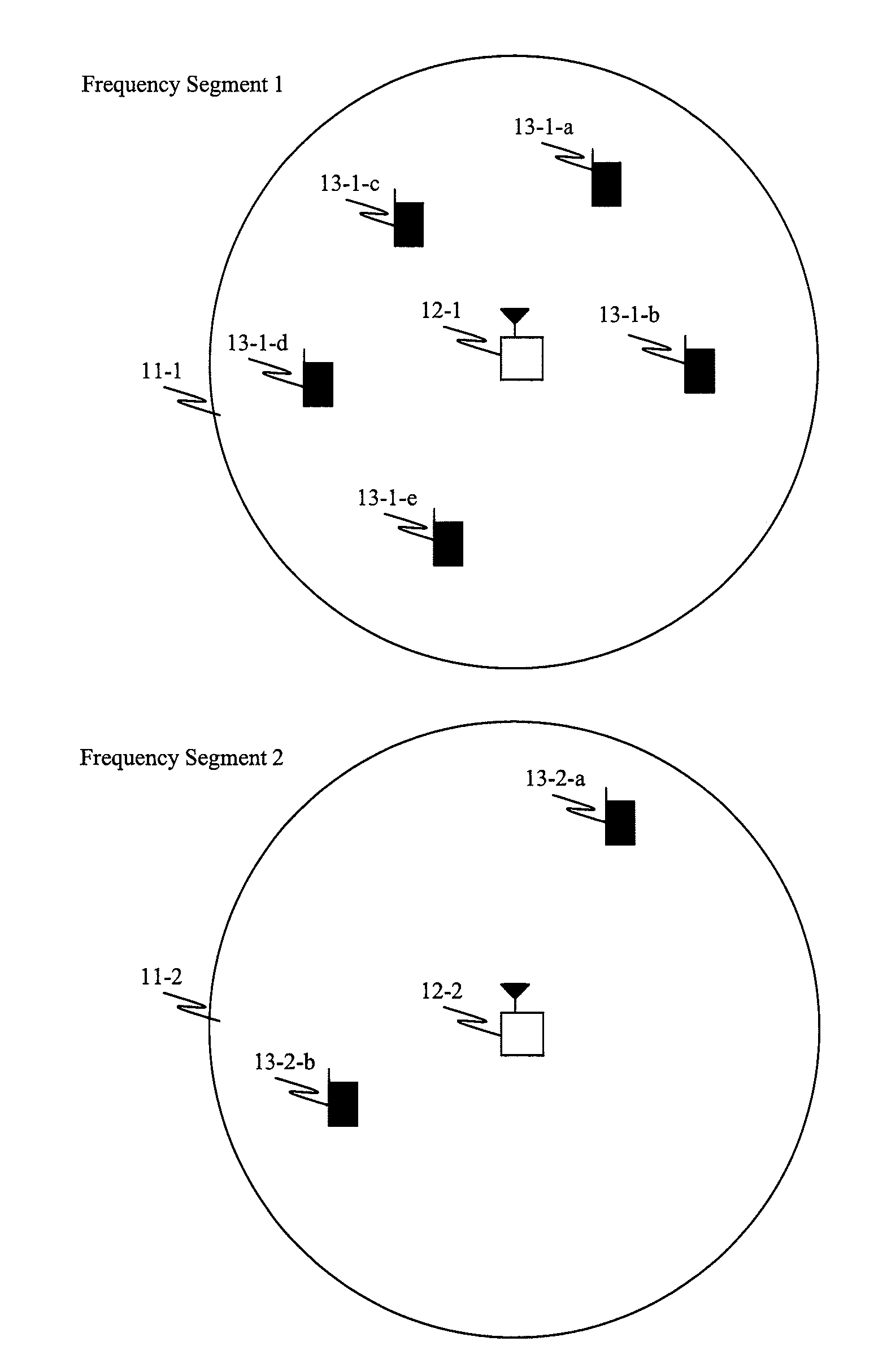
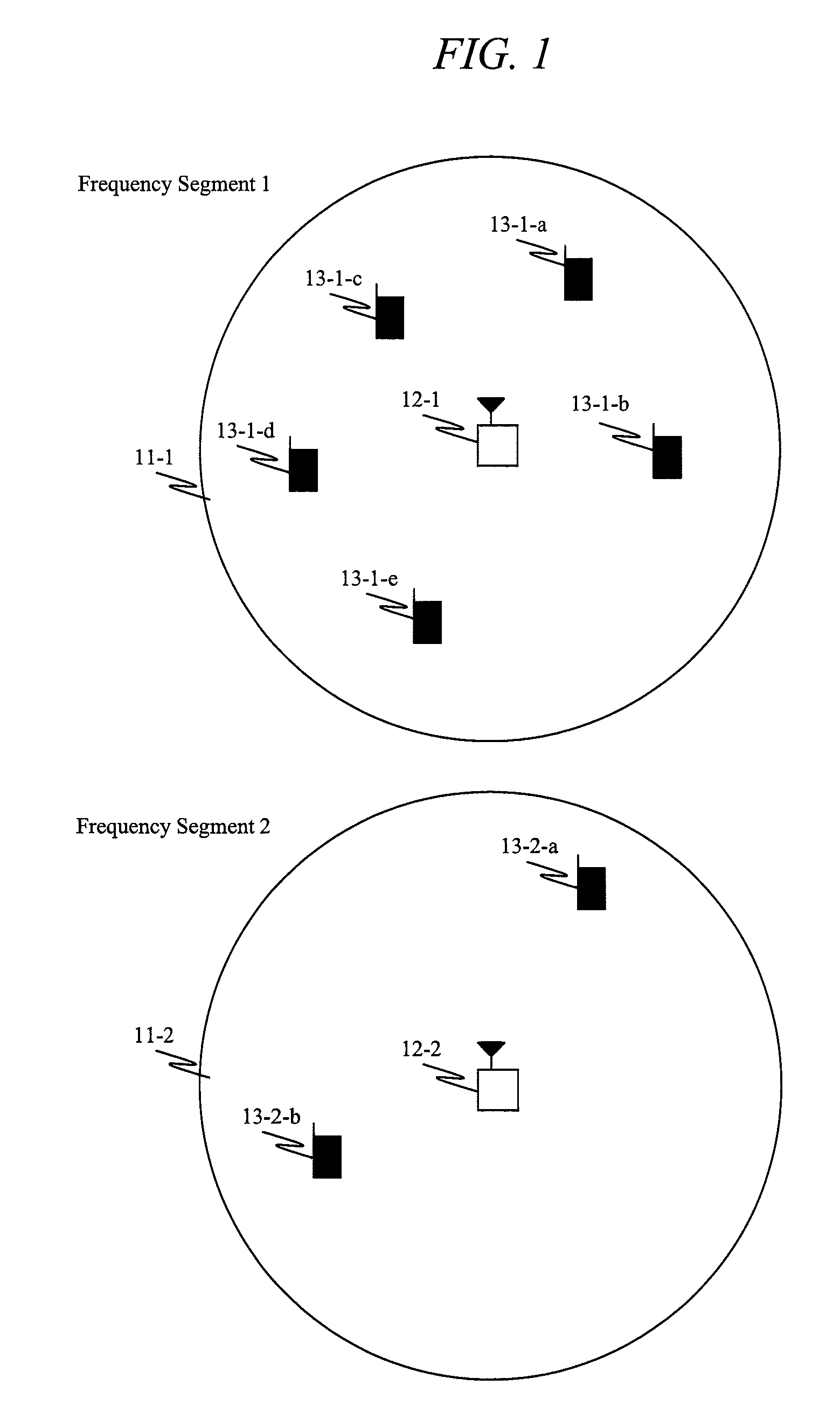
  • Figure 1
    Figure 1
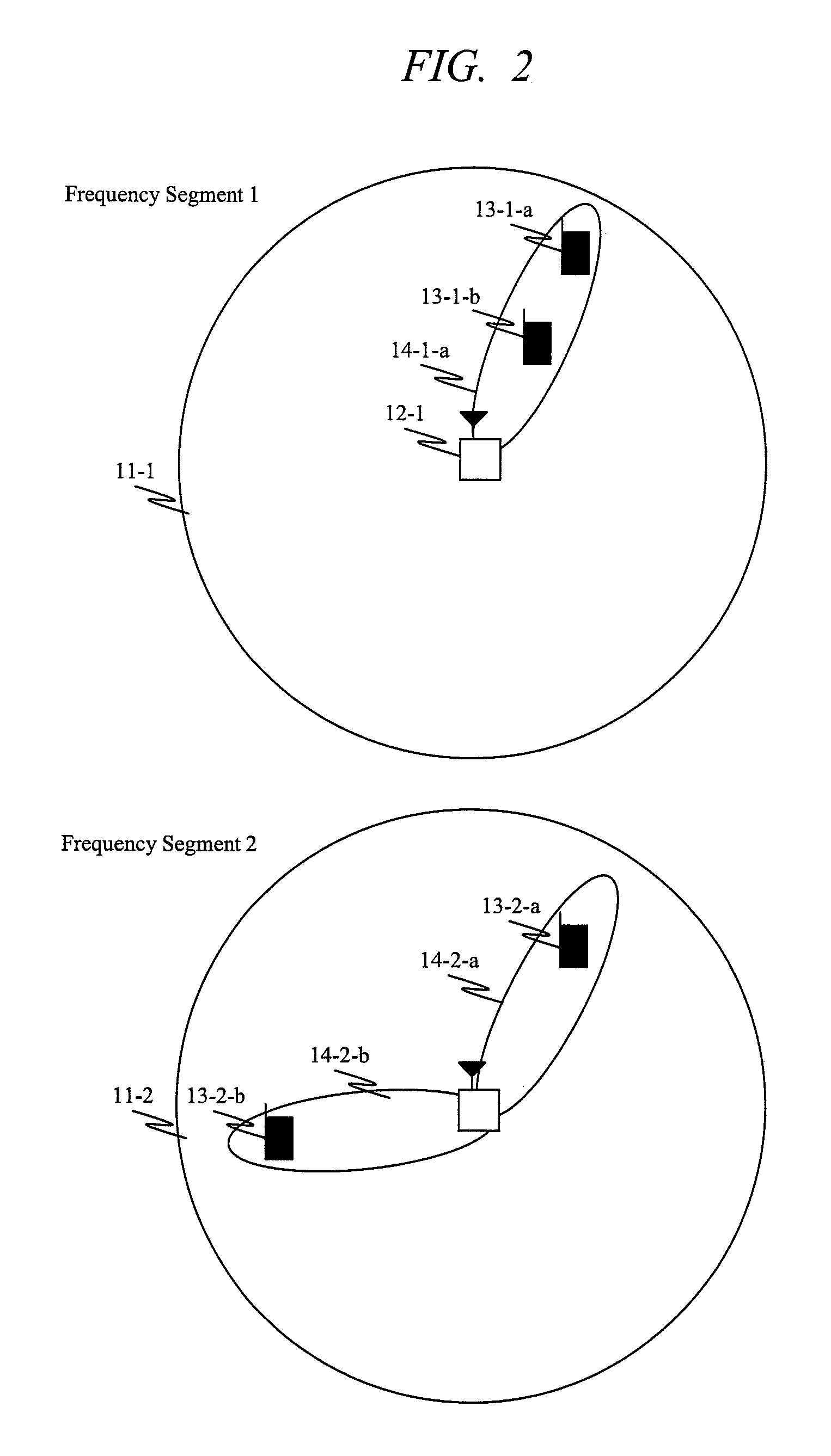
  • Figure 2
    Figure 2
  • Figure 3
    Figure 3
Patent Text Reader

Abstract

A first problem is to reduce an enormous uplink throughput of a base station that feedback information needs so as to improve an uplink throughput of useful user data. A second problem is to carry out a frequency segment assignment to guarantee a number of communication times and a communication quality to every terminal apparatus so as to increase a downlink throughput. The second problem is solved together. As means to give the number of communication times per each terminal apparatus, means to estimate an expected value of the number of communication times per each terminal apparatus, and means to assign the terminal apparatus per each frequency segment are arranged in the base station apparatus. To increase the communication quality, necessary means in each terminal apparatus are: means to measure statistics values of a communication capacity with regard to all the frequency segments; means to feed back the statistics values to the base station apparatus; means to calculate the occurrence probability of a high communication capacity based on the communication capacity statistics values per each frequency segment of all the terminal apparatuses; and means to assign the terminal apparatus per each frequency segment. To fuse the means to give the number of communication times and the means to give the communication quality, the means to assign the terminal apparatus per each frequency segment that the base station apparatus has assigns a frequency segment that has a little number of competitors sharing a same segment, and has high average and dispersion of the communication capacity to each terminal apparatus.
Need to check novelty before this filing date? Find Prior Art

Description

TECHNICAL FIELD

[0001] The present invention relates to a transmitting and receiving apparatus used in a broadband wireless communication system and a transmitting and receiving method.BACKGROUND ART

[0002] In recent years, in broadband wireless communication systems, OFDMA that assigns different terminal apparatuses to respective parts of the system band has been attracting attention. OFDMA is a multi dimensional access technology based on OFDM in which subcarriers perpendicular to each other are arranged on a frequency axis, and a segment in which a plurality of subcarriers are bundled up is set as a resource unit, and a base station apparatus assigns different segments to respective terminal apparatuses.

[0003] To increase the frequency usage efficiency of the wireless communication system using OFDMA, it is effective to compare the communication quality of every segment in each terminal apparatus so as to assign each segment to the terminal apparatus having a preferable quality. In th...

Examples

Embodiment Construction

[0055]In FIG. 5, a control method to carry out the present invention is shown.

[0056]A base station apparatus transmits a pilot signal per each slot (S1). While the terminal apparatus first carries out a cell search by use of the pilot and establishes a connection with the base station apparatus, herein, descriptions will be made on the supposition that the connection is already established.

[0057]The terminal apparatus, on receiving the pilot signal, measures an instantaneous value of a communication quality (SINR: Signal to Interference plus Noise Ratio) per each frequency segment and converts the same into a communication capacity by the expression of the Shannon's channel capacity (S2), and continues adding the instantaneous value of the communication capacity and the square value thereof per each segment over a plurality of slots and averages them at a specified cycle (period) and calculates statistics values (average and dispersion of the communication capacity) per each segment...