Process for treatment of produced water

a technology for producing water and processing equipment, applied in the direction of separation process, multi-stage water/sewage treatment, waste water treatment from quaries, etc., can solve the problems of significant cost and energy savings across the process, and achieve the effect of reducing the amount of produced water, and reducing the capacity

US20100294719A1Inactive Publication Date: 2010-11-25GENERAL ELECTRIC CO
9 Cites 18 Cited by

Patent Information

Authority / Receiving Office
US · United States
Patent Type
Applications(United States)
Current Assignee / Owner
Publication Date
2010-11-25
Estimated Expiration
Not applicable · inactive patent

Smart Images

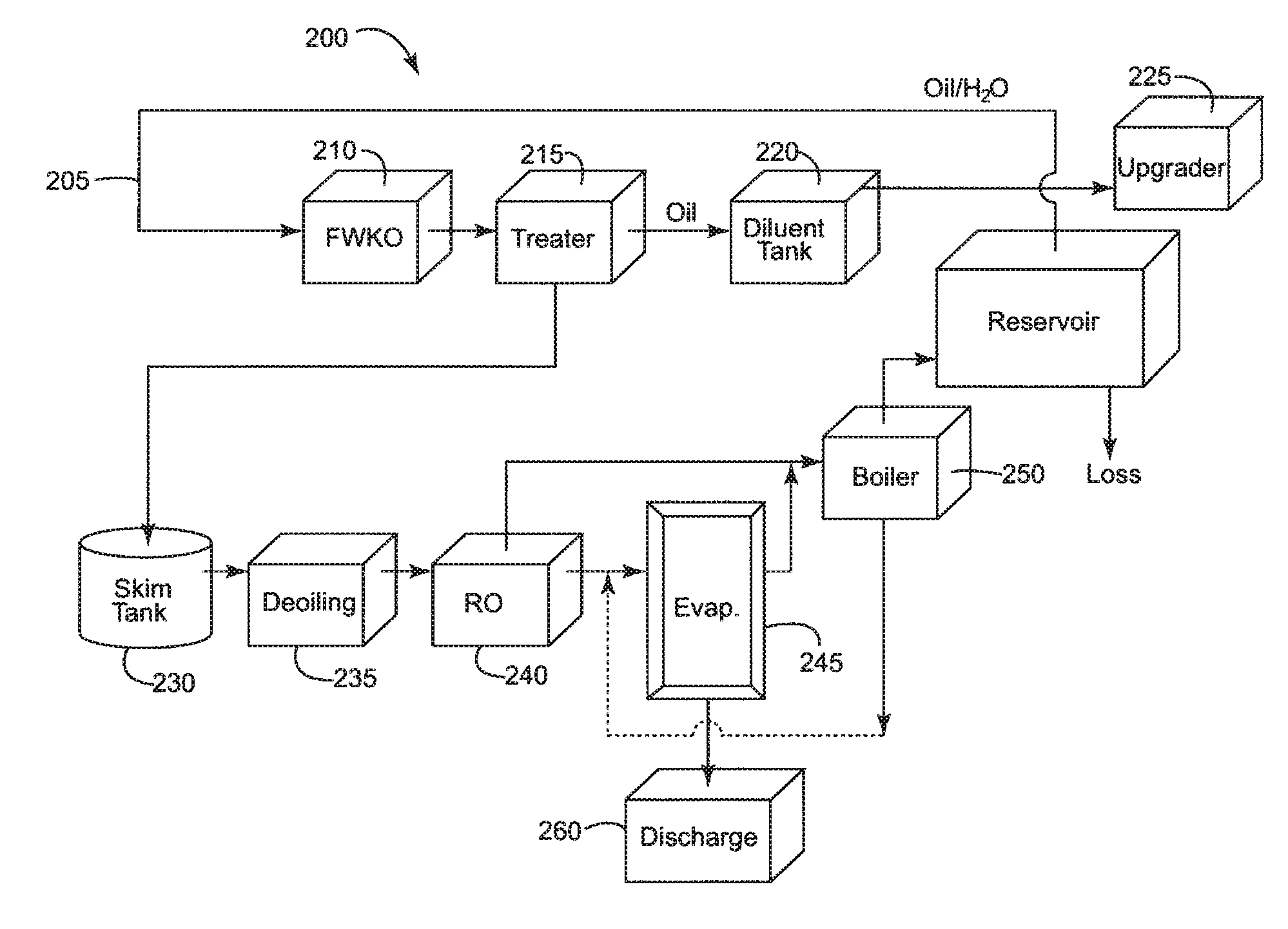
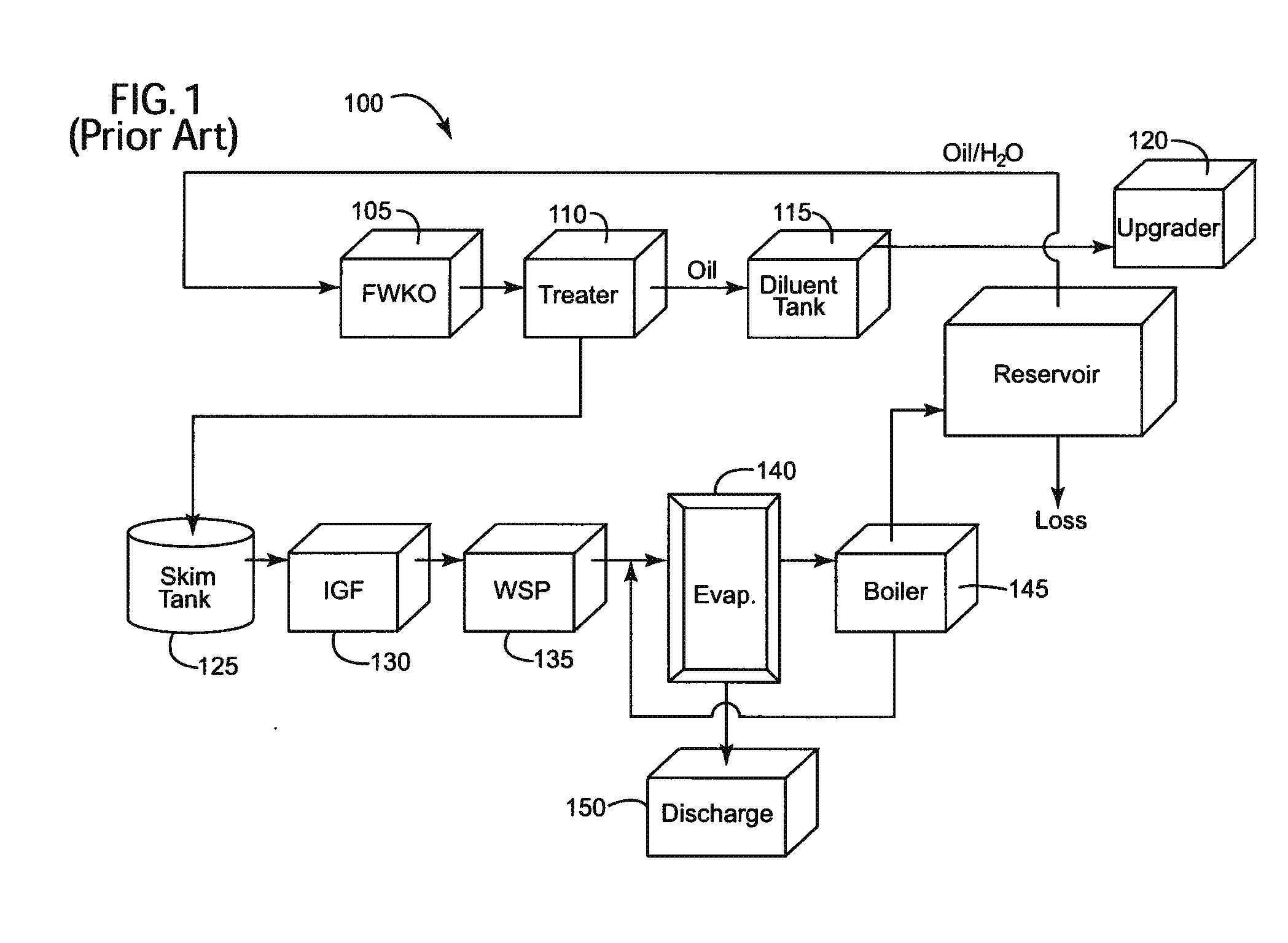
  • Figure 1
    Figure 1
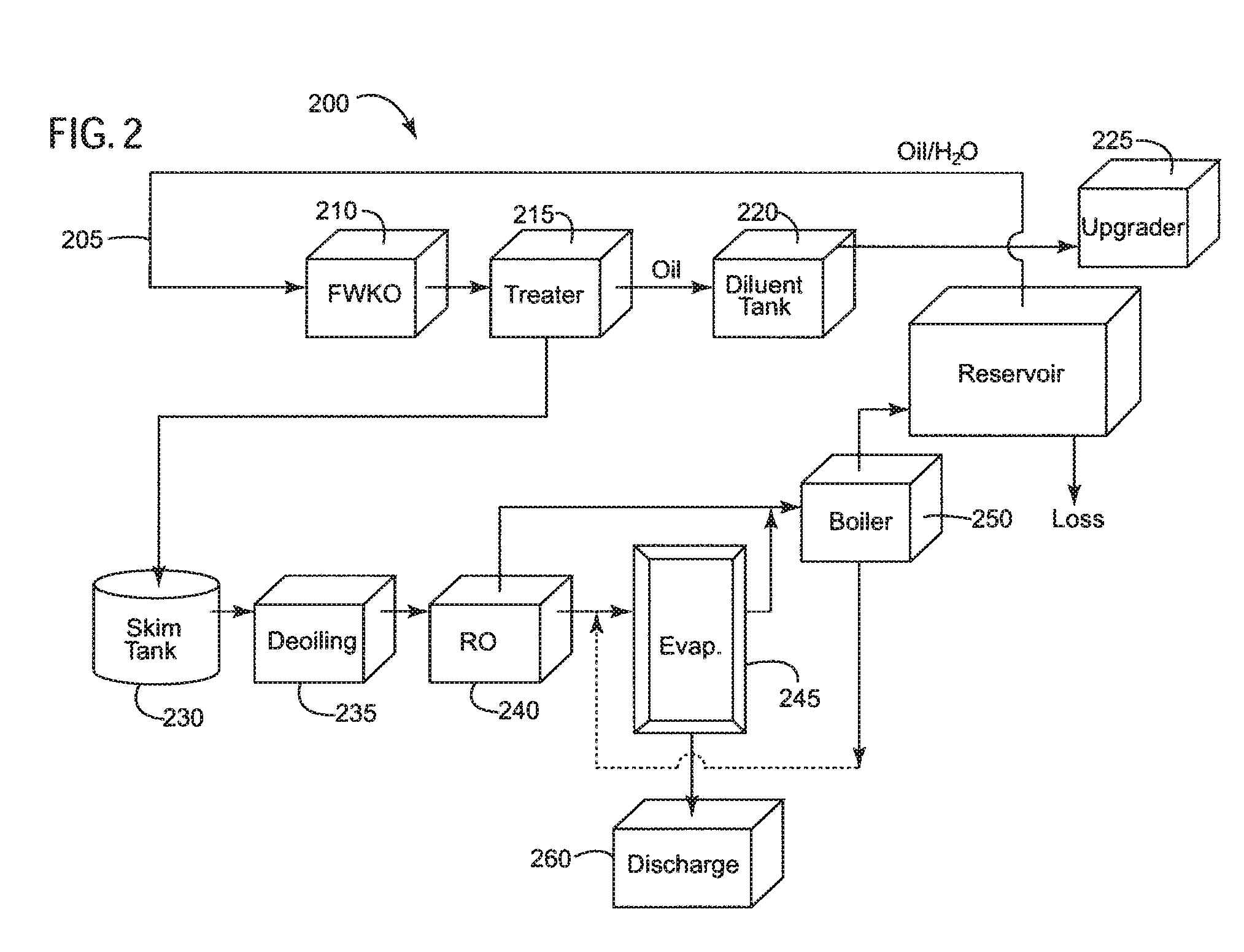
  • Figure 2
    Figure 2
  • Figure 3
    Figure 3
Patent Text Reader

Abstract

A process for treating produced water in heavy oil production comprises, providing an oil / water mixture gathered from an oil / water collection well, whereby oil from said oil / water mixture is separated to provide an oil product and a produced water product containing oil, dissolved gases and dissolved solutes. Said produced water product is then deoiled, and the deoiled water subsequently passes though a membrane system, resulting in permeate water and reject. The resulting permeate water is sent on to a boiler system for production of steam, and the reject is introduced into an evaporator to result in distillate water and blow down. Thereafter, the blow down may be charged into zero liquid discharge treatment; and the distillate water added to the membrane permeate.
Need to check novelty before this filing date? Find Prior Art

Description

FIELD OF THE INVENTION

[0001] This invention relates to a process for pre-concentrating produced water, particularly the water that is produced during bitumen recovery in tar or oil sands.BACKGROUND OF THE INVENTION

[0002] In certain geologic formations, such as those referred to as oil sands, or tar sands, steam is used to recover the heavy oil in these formations. Steam is injected into the heavy oil bearing formations, it heats the heavy oil, or bitumen, making it more viscous, and allowing for the oil and water mixture to be collected and pumped to the surface. Steam that condenses into water and mixes with the oil, and then subsequently separated from the oil, is called produced water. In new wells, the water to oil ratio is in the vicinity of 3:1. As wells age, the water to oil ratio changes, and can go as high as 7:1. In some cases, the oil and produced water are separated, the produced water is recycled for reuse to make steam for reinjection into the well formation.

[0003] Treati...

Examples

Embodiment Construction

[0018]The singular forms “a,”“an” and “the” include plural referents unless the context clearly dictates otherwise.

[0019]The modifier “about” used in connection with a quantity is inclusive of the stated value and has the meaning dictated by the context (e.g., includes the degree of error associated with measurement of the particular quantity).

[0020]“Optional” or “optionally” means that the subsequently described event or circumstance may or may not occur, or that the subsequently identified material may or may not be present, and that the description includes instances where the event or circumstance occurs or where the material is present, and instances where the event or circumstance does not occur or the material is not present.

[0021]A process is disclosed for treating produced water in heavy oil production that comprises, providing an oil / water mixture gathered from an oil / water collection well, whereby oil from said oil / water mixture is separated to provide an oil product and ...