
Device and method for measuring parts
a technology for parts and devices, applied in the direction of distance measurement, instruments, and reradiation, etc., can solve the problems of mode hop, apd can actually saturate, and problems such as problems such as problems such as problems such as problems such as apd saturation
- Summary
- Abstract
- Description
- Claims
- Application Information
AI Technical Summary
Benefits of technology
Problems solved by technology
Method used
Image

Examples
Embodiment Construction
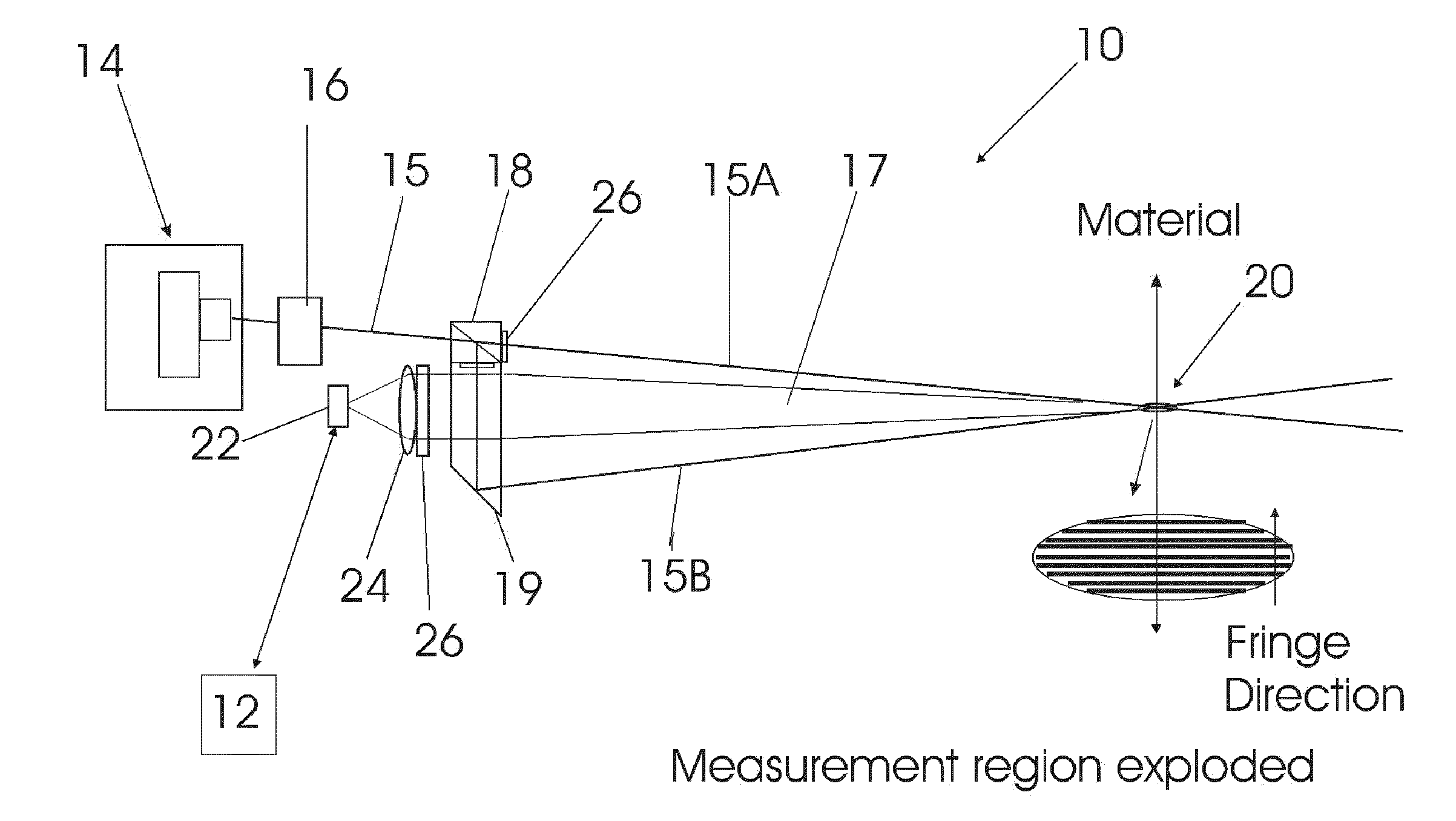
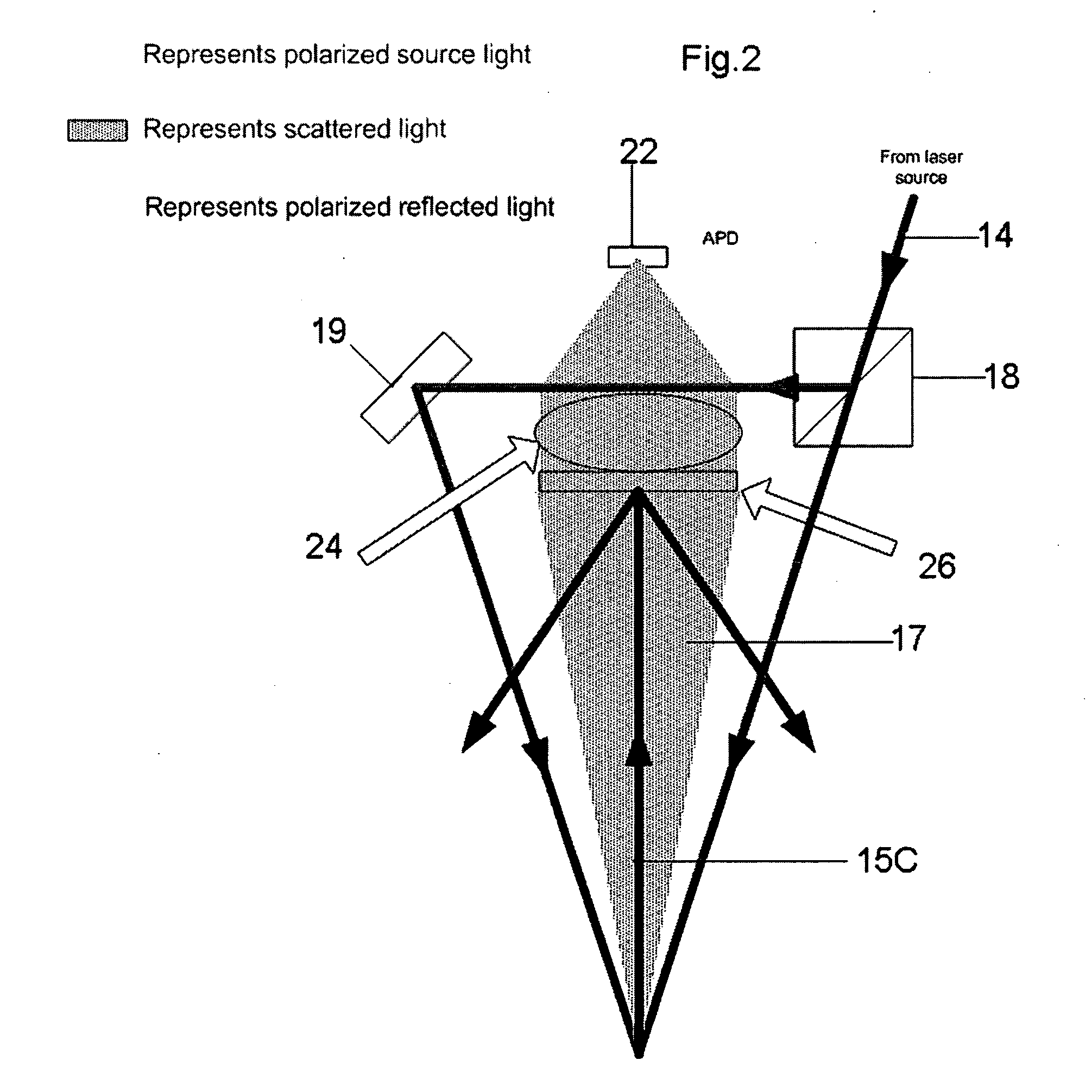
[0023]Referring now to the drawings, the device for measuring moving material of the instant invention is generally designated by the numeral 10. The device 10 can include a processor unit 12 having operating software, hardware and display readout, and operative key board associated therewith. A laser diode 14 can be employed for emitting a light beam 15 which can preferably be passed through an acusto-optical modulator 16 acousto-optic modulator (AOM), also called a Bragg cell, which uses the acousto-optic effect to diffract and shift the frequency of light using sound waves (usually at radio-frequency). The light beam 15 can then be passed through an optical beam splitter 18 to provide two light beams 15A, 15B having the same polarity. The light beams 15A and 15B exit the beam splitter 18 in a non parallel manner wherein the light beams 15A and 15B cross thereby creating an interference region 20 and generating a set of fringes. This can also be referred to as the measurement regi...
PUM
 Login to View More
 Abstract
Description
Claims
Application Information
 Login to View More