

Crankcase vent nozzle for internal combustion engine
a technology for internal combustion engines and vent nozzles, which is applied in the direction of combustion engines, combustion air/fuel air treatment, charge feed systems, etc., can solve the problems of pcv/ccv system significant additional cost, ice formation at the outlet of pcv/ccv, and the leakage of combustion gas between the cylinder and its piston rings into the engine crankcase, etc., to achieve the effect of reducing or preventing ice formation
- Summary
- Abstract
- Description
- Claims
- Application Information
AI Technical Summary
Benefits of technology
Problems solved by technology
Method used
Image

Examples
Embodiment Construction
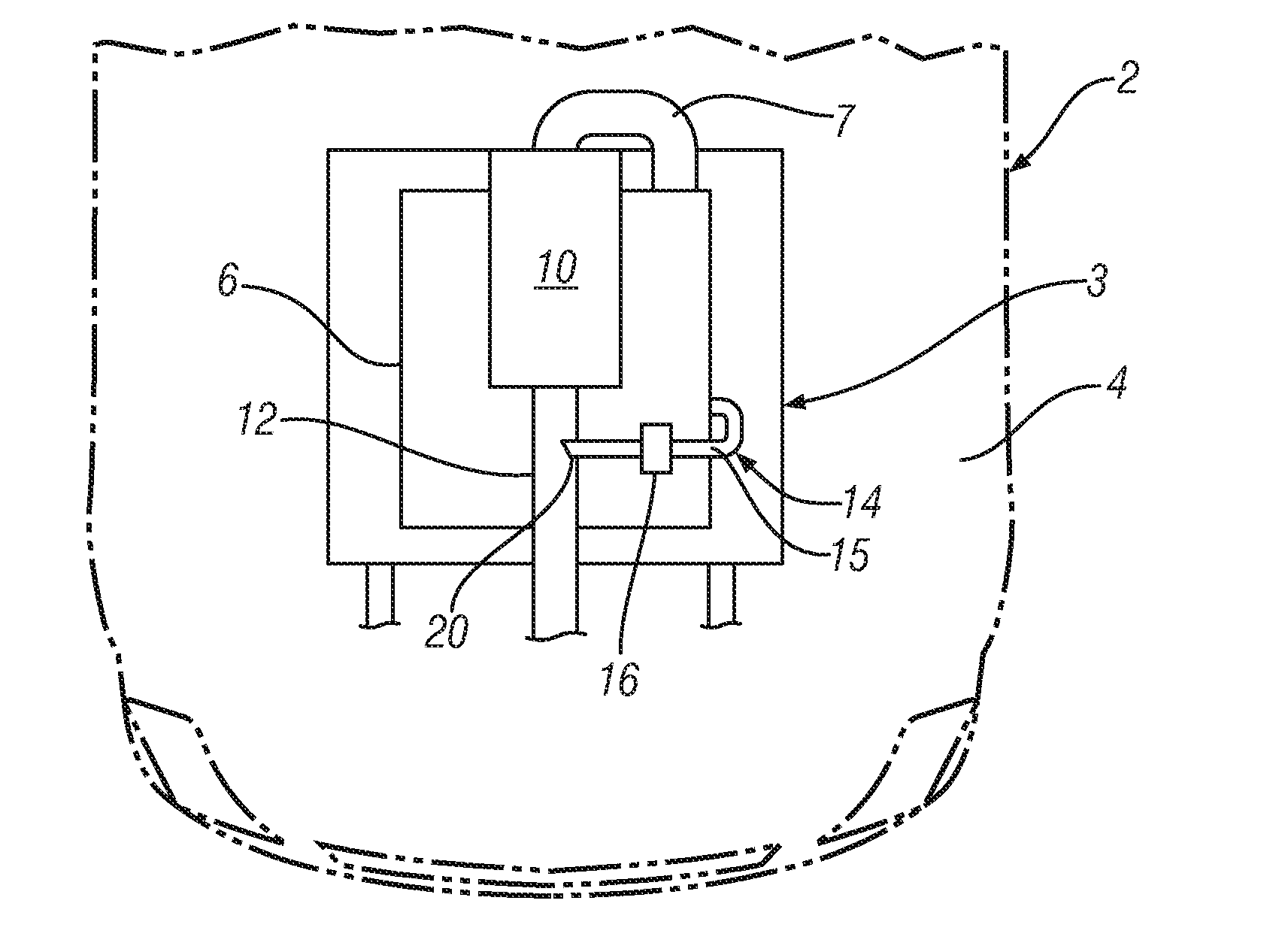
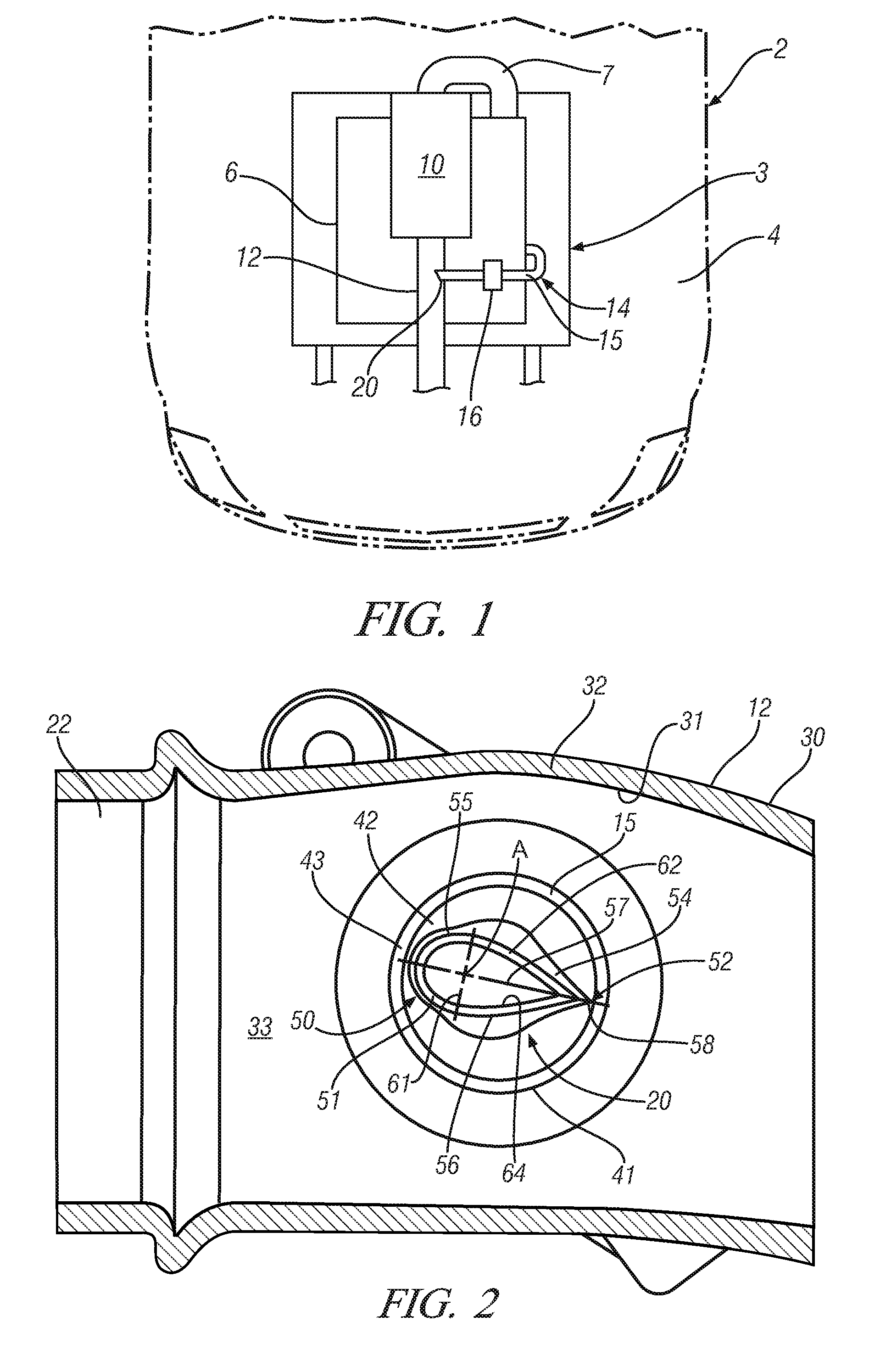
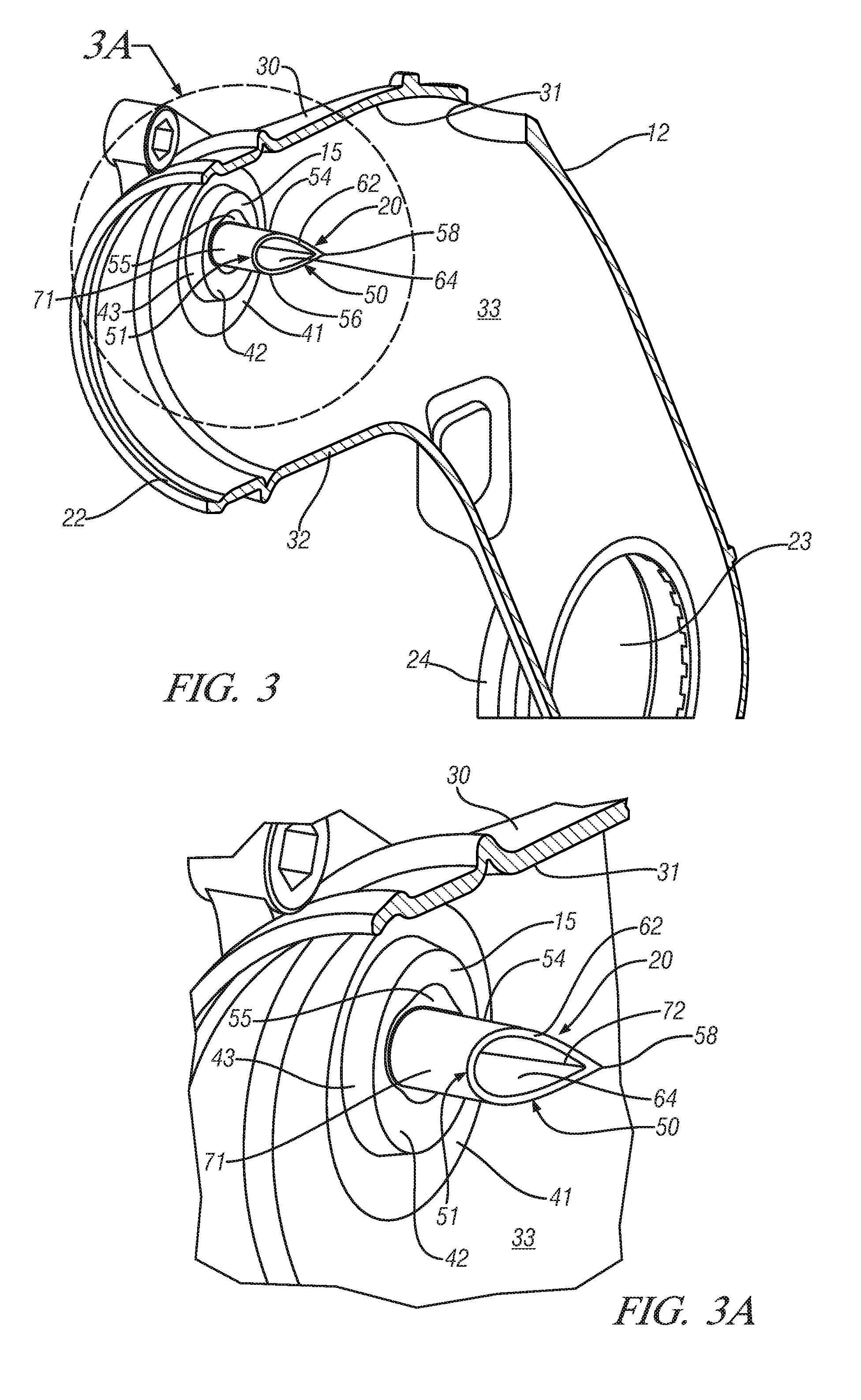
[0018]Referring now to the Figures, where the invention will be described with reference to specific embodiments, without limiting same, a functional diagram of a vehicle 2 having an internal combustion engine block assembly 3 located within an engine compartment 4 is shown in FIG. 1. An air intake manifold 6, having a gas intake plenum 7 is fluidly coupled to a turbocharger 10. Air intake manifold 6 generally includes a plurality of gas outlets (not shown) that are fluidly connected to engine block assembly 3. Specifically, an air intake system or air inlet adapter 12 feeds air gases into a turbocharger 10 where the gases are pressurized and flow from air intake manifold 6 to the engine block assembly 3. A crankcase ventilation (PCV / CCV) system 14 is used to ventilate the crankcase and recirculate blowby gas from an inlet tube 15 through a PCV / CCV valve 16 and out through a nozzle 20 to the turbocharger inlet adapter 12. As is known, the introduction of blowby gas to the inlet adap...
PUM
 Login to View More
 Abstract
Description
Claims
Application Information
 Login to View More