While industrial energy management systems currently exist in many forms, these energy management systems are limited in scope, are still fairly simple in nature and are not configured to determine the energy savings that might be obtained through a detailed analysis of energy production and usage costs in a particular plant configuration or situation.
Thus, even the industrial energy management systems in use today do not obtain the
energy cost savings that might be had in situations that can create use and / or sell energy in various forms, using various different types of plant equipment.
Load reduction or shedding is typically performed in response to a system disturbance (and the consequent possible additional disturbances resulting from a primary system disturbance) that results in a power generation deficiency condition.
Common system disturbances that can cause
load shedding include equipment faults, loss of power generation equipment, switching errors,
lightning strikes, etc.
However, energy management systems in the form of
load shedding systems are generally limited to turning off loads within the plant, and do not decide when or how to restart or reconnect loads within the plant.
However, as
electric power becomes a larger and larger portion of the cost of production within an industrial plant, it will be necessary to decide when to run the
plant production equipment and when to idle the
plant production equipment based on the economics of energy management.
The increasing cost of energy (including the costs associated with electric and
fossil fuel based energy generation) will make current production plants less competitive unless the industrial producers adapt.
This
decision process makes the manual load restoration process even slower, resulting in loss of production.
However, these power generation plants generally use only simple techniques to optimize the running of the power plant so as to provide the required power.
However, because the operators of these systems only use basic or simplistic rules of
thumb for altering the operation of the plant to save on energy costs, the operators quickly lose the ability to determine the best or most optimal methodology of running the plant equipment (including equipment that may create energy in various forms, use energy in various forms, convert energy from one form to another form, or store energy in various forms) so as to reduce the overall costs of energy within the plant.
This problem is exacerbated by the fact that the operators do not typically know the exact cost of running any particular piece or set of equipment at any particular time because the costs of the energy from the
power grid,
natural gas costs, etc. change regularly, and may change significantly even during a single day.
The operators of these systems, however, do not typically have enough knowledge or experience to be able to determine if it is more cost efficient to shed loads to reduce the consumption of energy at a plant, to maintain loads or to reconnect loads so as to run the plant at optimum loading for production purposes or to create more energy than is currently needed and to sell that energy to a
third party, such as to the
power grid.
Energy optimization is further complicated by the fact that the plant needs and the energy costs can change drastically over short periods of time and that forecasting energy costs is thus a necessary part of any
energy management system that attempts to minimize or otherwise optimize energy costs over time.
Because these factors are constantly fluctuating, plant operators quickly lose the ability to make the complicated and very involved calculations needed to determine the set of plant operational conditions that optimizes the costs / profits of the plant taking energy usage into account within the plant.
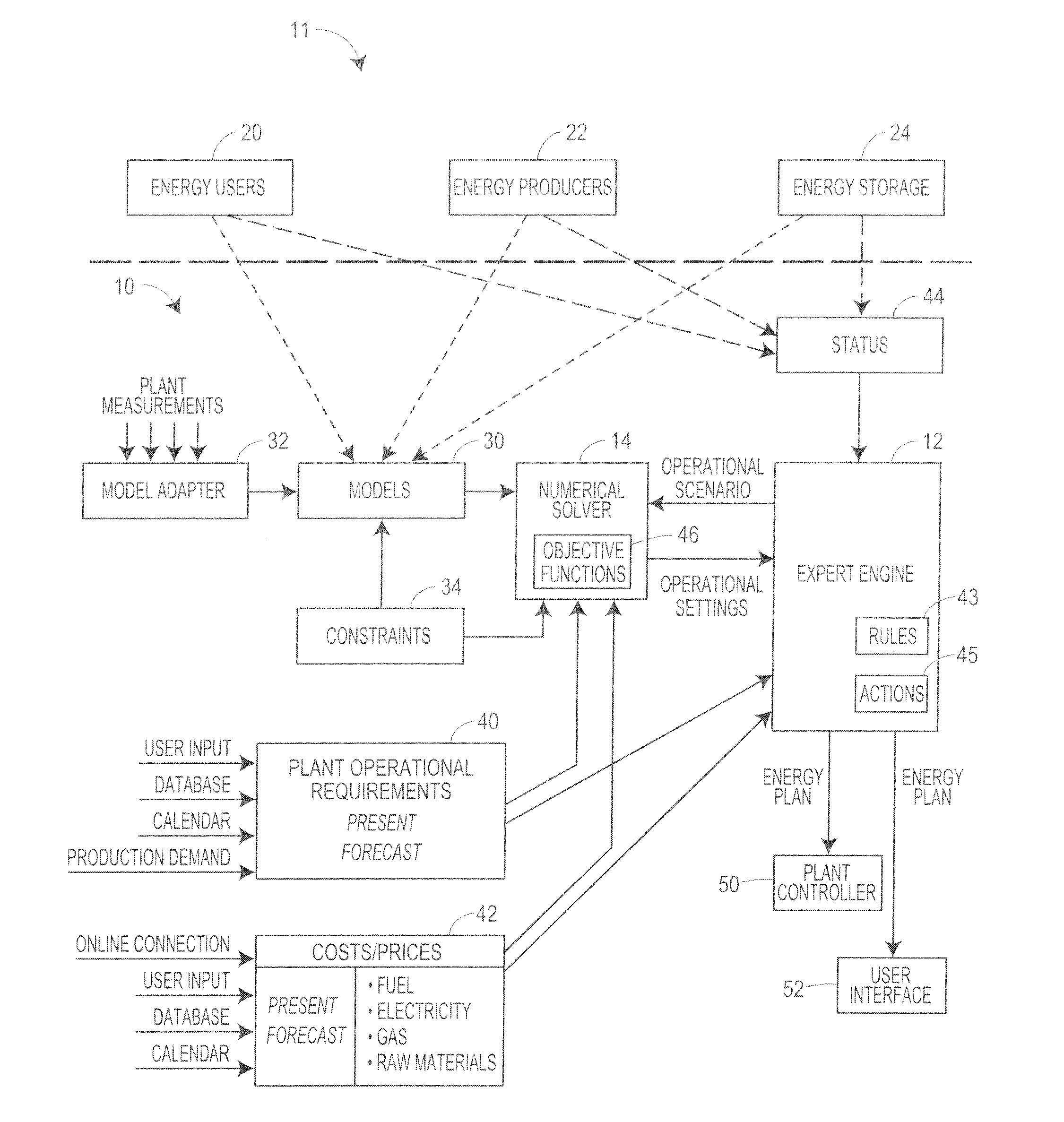
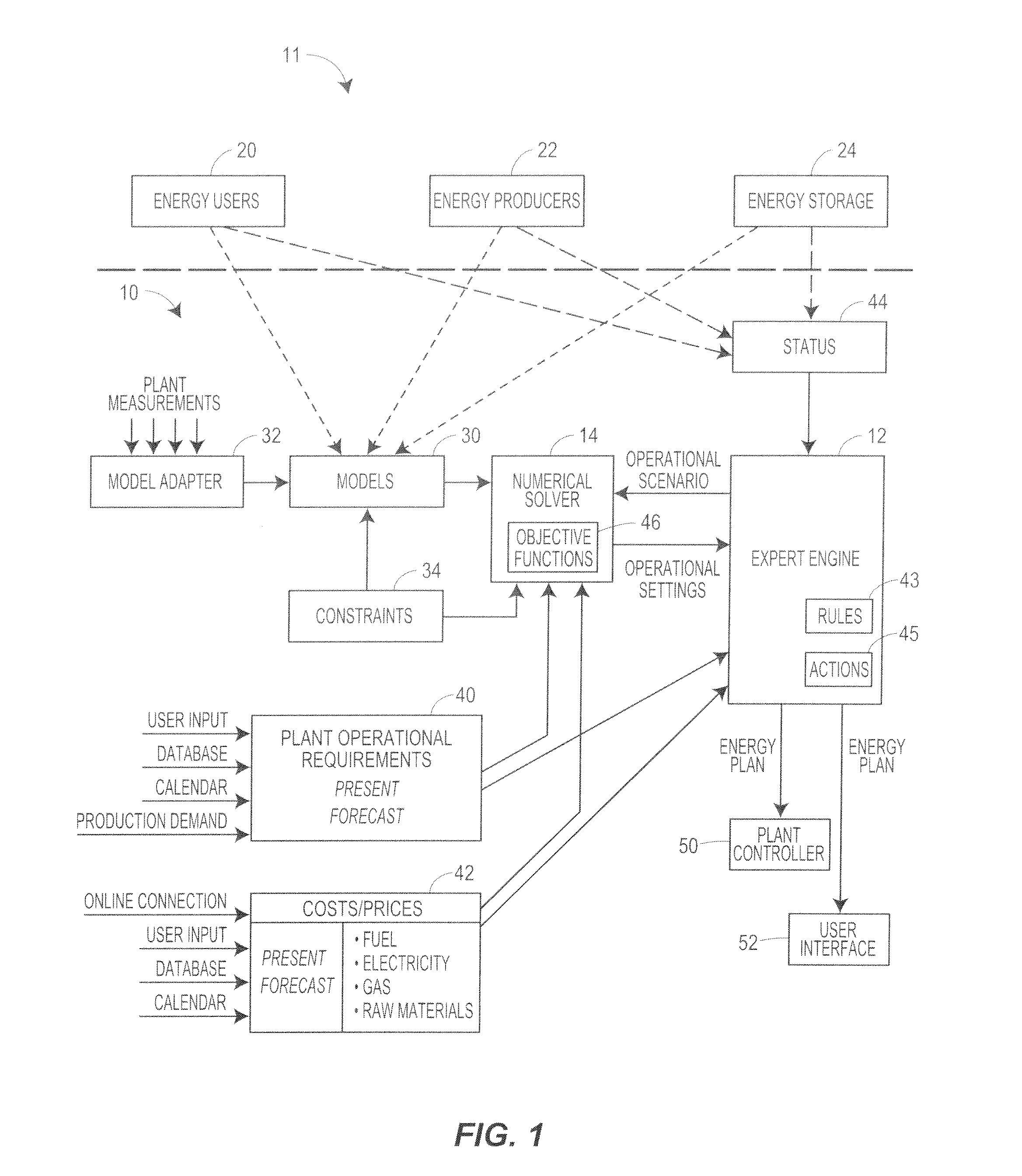
Thus, while plant operators can make gross changes to the operational parameters of a plant in an to attempt to reduce the energy costs of the plant, operators really cannot determine the best manner of running a plant over time to minimize energy costs using current energy managements systems, as it is almost impossible to manually calculate or determine the most optimal manner of running the plant at any particular time, much less over a time period extending into the future.


 Login to View More
  Login to View More