
Method for producing an acidified milk product
a technology of acidification and milk, applied in the field of acidification milk products, can solve the problems of thin mouth thickness of yoghurt, watery and thin, and achieve the effect of pleasant mouth feel and high gel stiffness
- Summary
- Abstract
- Description
- Claims
- Application Information
AI Technical Summary
Benefits of technology
Problems solved by technology
Method used
Image

Examples
example
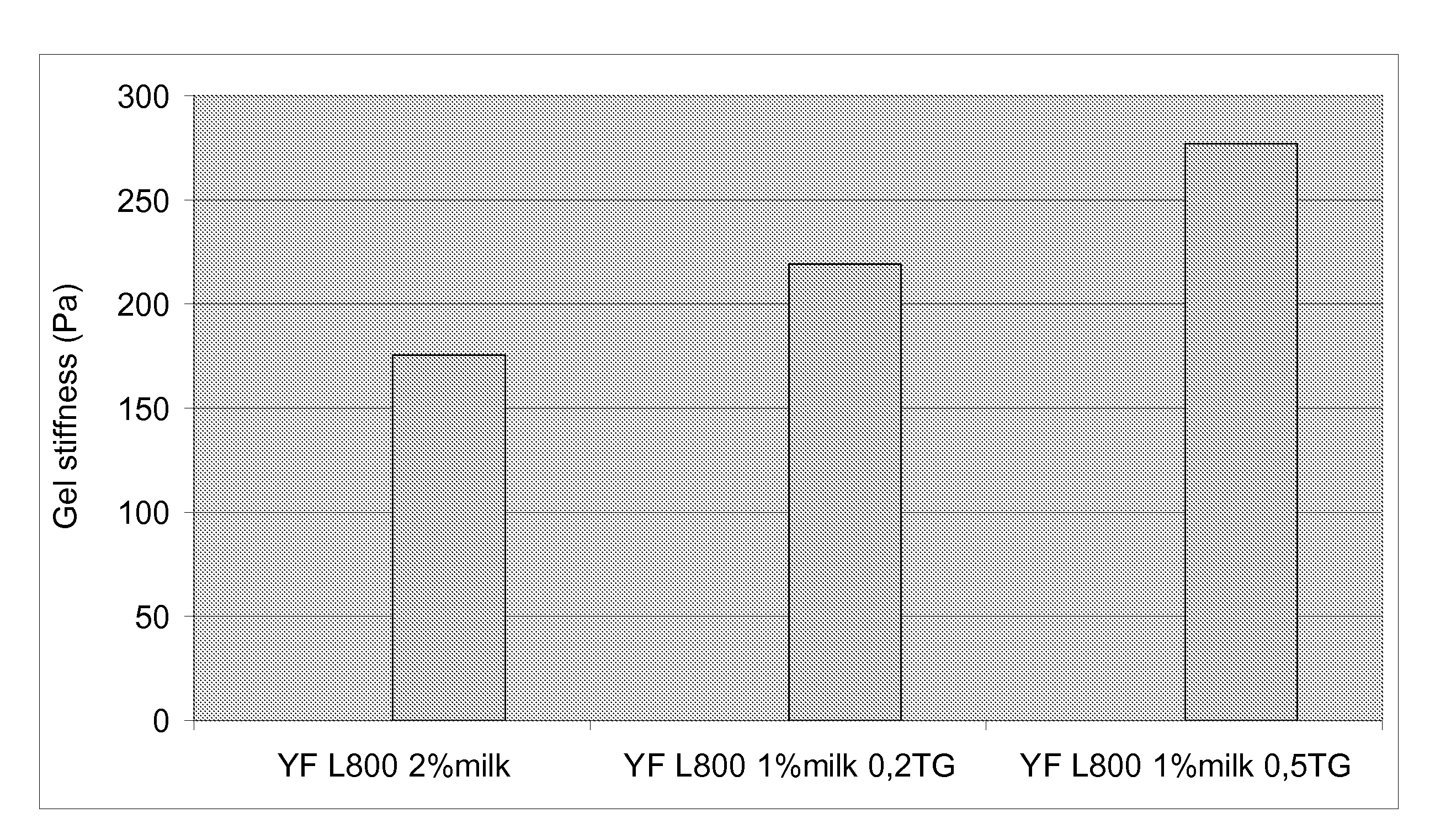
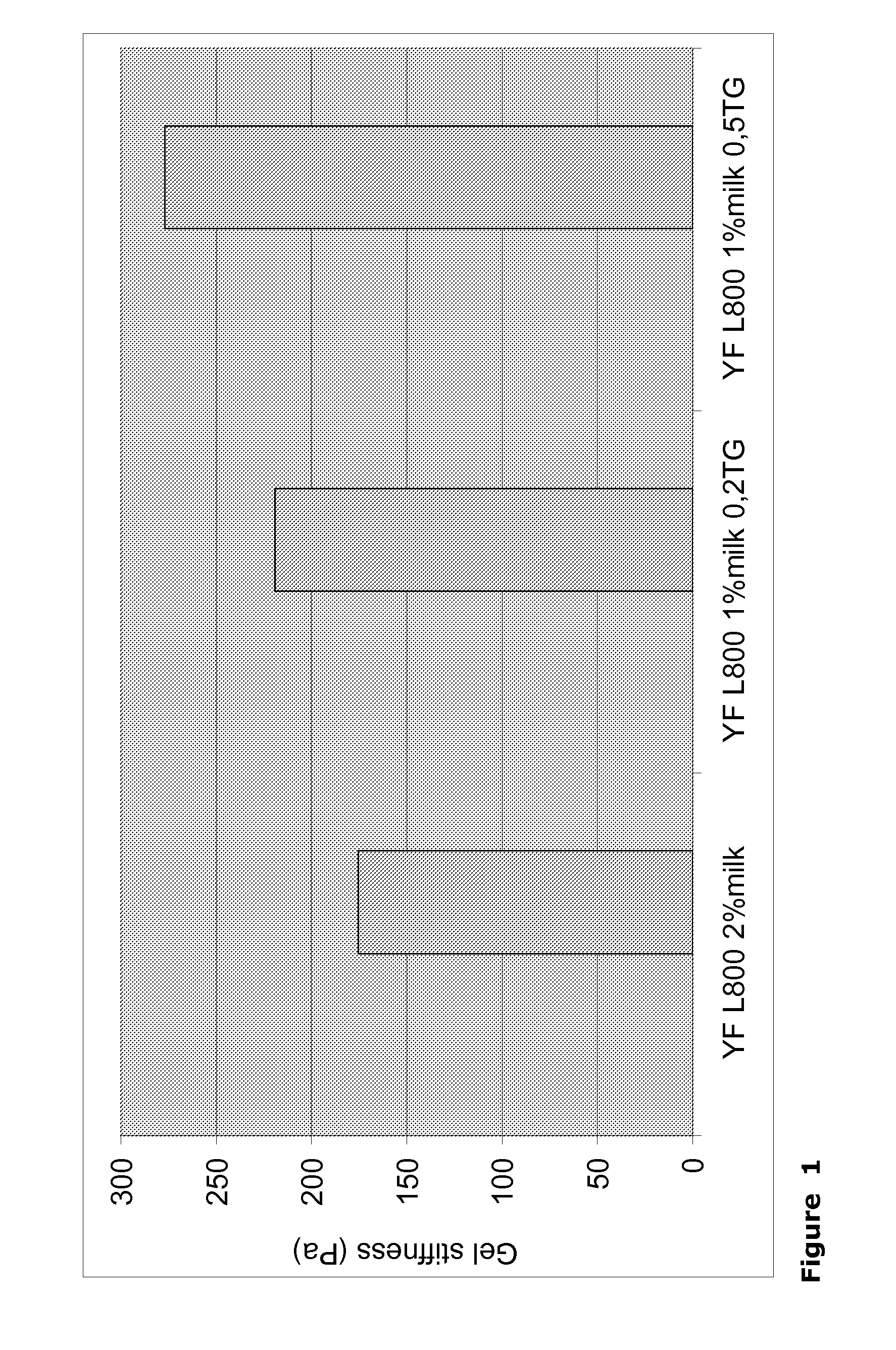
[0107]Yoghurt was made from 3×200 mL whole milk:
Sample 1: Whole milk added 2% of Skim milk powder (SMP)
Sample 2: Whole milk added 1% of SMP and 0.2 Units TGase per gram of substrate protein (U / g).
Sample 3: Whole milk added 1% of SMP and 0.5 U / g TGase.
[0108]In all cases fresh whole milk from Arla Foods (Arta Ekspress, “Sødmælk”) was used. The milk was added skim milk powder and allowed to hydrate overnight at 5 C. Then the milk was heat treated at 90 C for 20 min and cooled to the fermentation temperature of 43 C. After cooling to 43 C, the necessary amount of TGase (Ajinomoto Activa YG) was added to the milk. Hereafter the culture (YL-F800, Chr. Hansen A / S) was added and the milk was incubated at 43 C until reaching a pH of 4.7. Then the sample was cooled at 5 C and stored until measurement. One the next day the rheological properties of the yoghurt were measured using a StressTech rheometer. Measurements were done at 13 C. In one test the gel stiffness of the yoghurt was measured b...
PUM
 Login to View More
 Abstract
Description
Claims
Application Information
 Login to View More