

Use of tigecycline for treatment of cancer
a technology of tigecycline and cancer, applied in the direction of biocide, tumor/cancer cells, plant growth regulators, etc., can solve the problem of eradicating them completely
- Summary
- Abstract
- Description
- Claims
- Application Information
AI Technical Summary
Benefits of technology
Problems solved by technology
Method used
Image

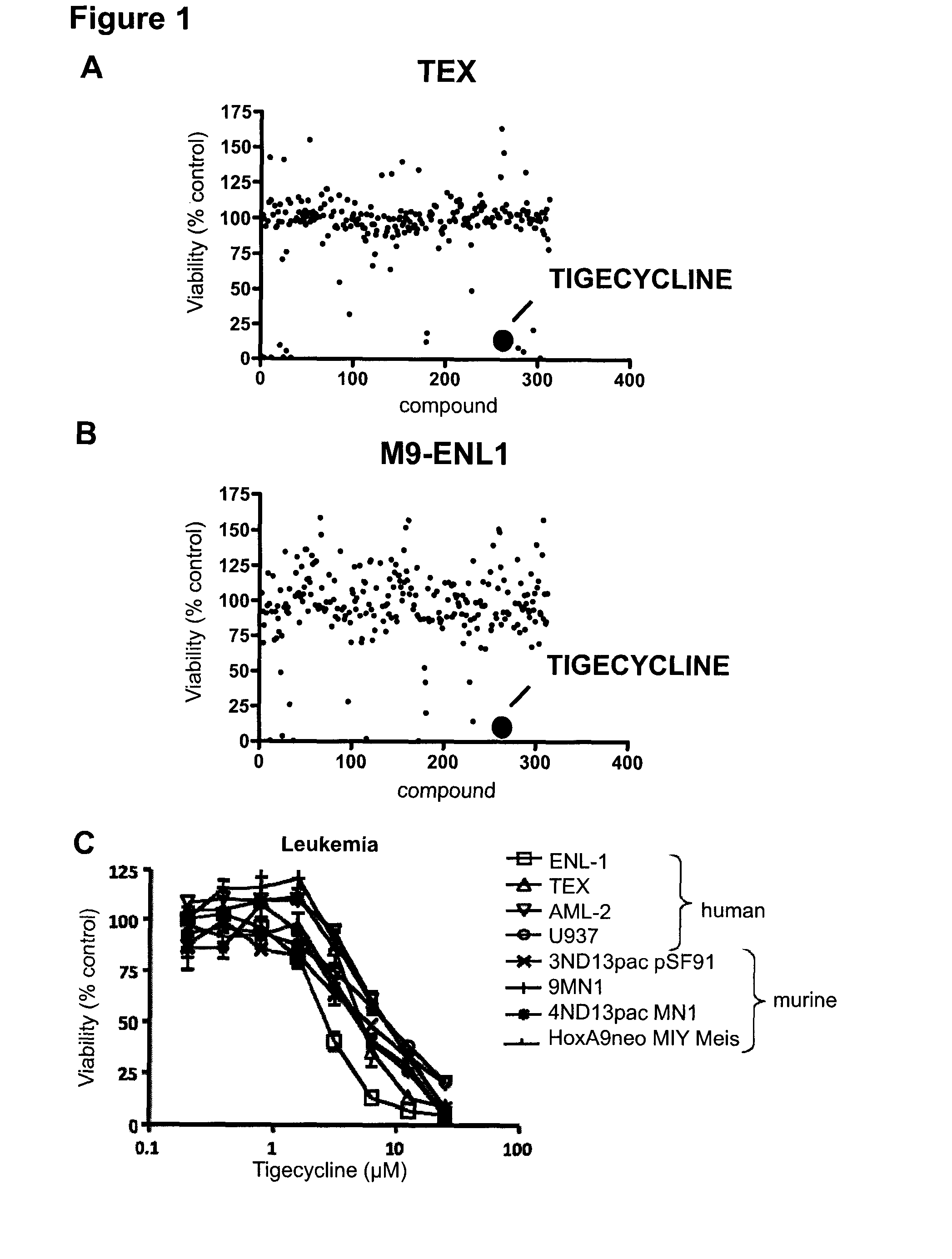
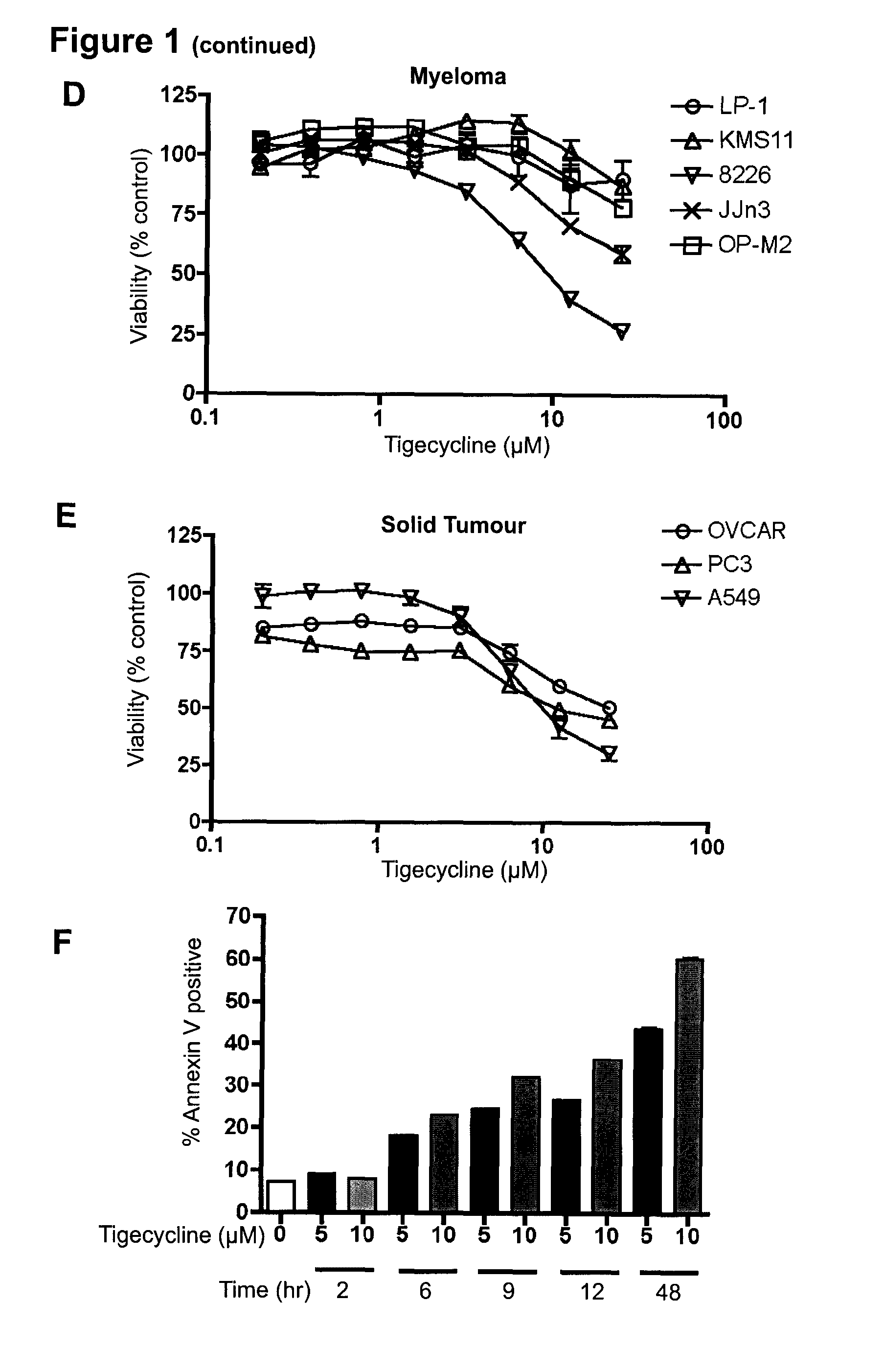
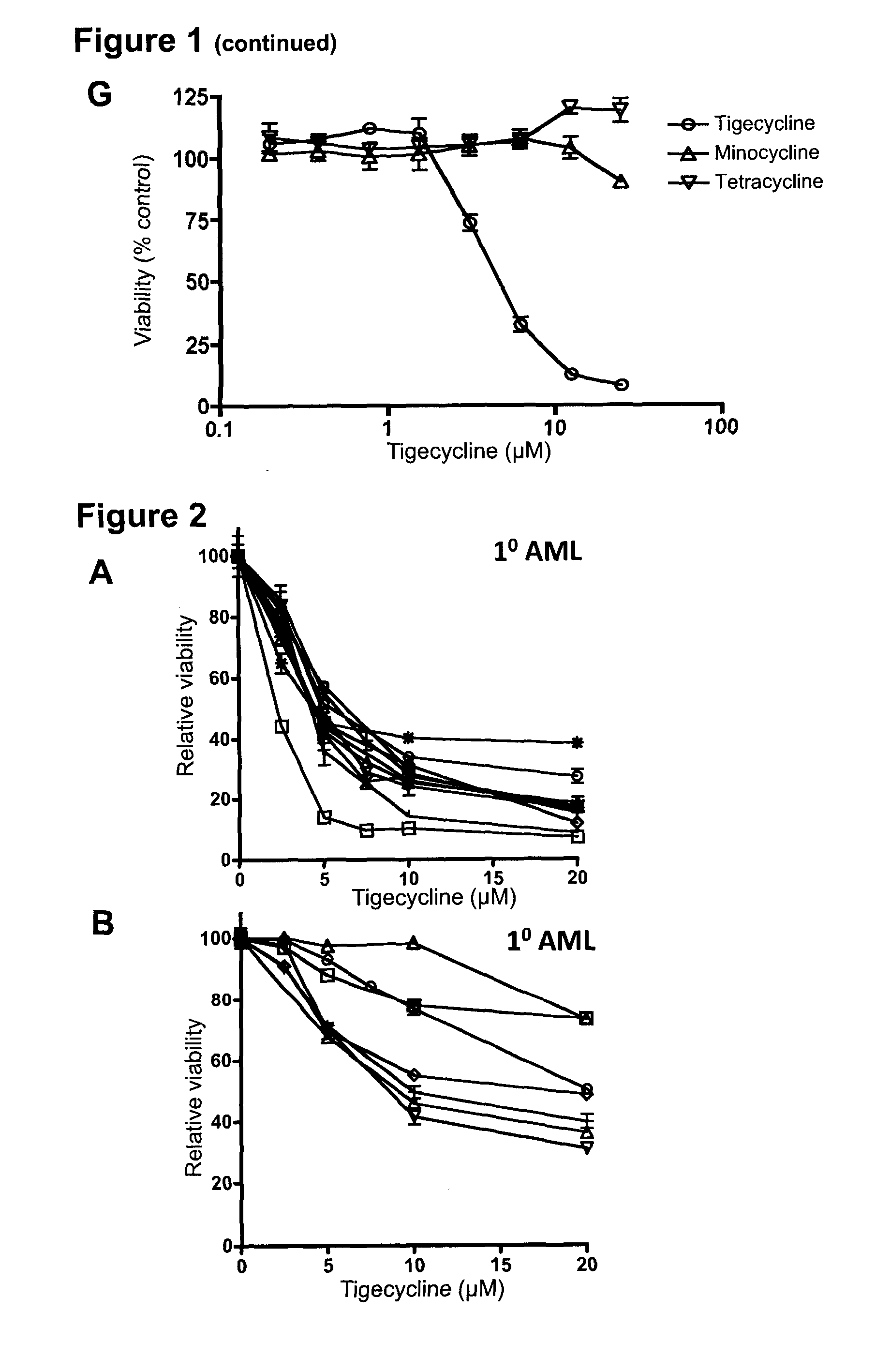
Examples
example 1
[0104]Drug Repositioning as a Strategy to Rapidly Advance Novel Therapeutic Agents into Clinical Trial
[0105]Drug repositioning is a strategy to rapidly advance new therapeutic options into clinical trial and has been shown to have clinical efficacy. The repositioning of thalidomide as a therapeutic agent for the treatment of myeloma and myelodysplasia is one of the best-known examples of this strategy, but there have been multiple other successes. For example, the broad spectrum antiviral ribavirin was found to suppress oncogenic transformation by disrupting the function and subcellular localization of the eukaryotic translation initiation factor eIF4E9,10. As such, ribavirin was recently evaluated in a phase I dose escalation study in patients with relapsed or refractory M4 / M5 acute myeloid leukemia (AML). In this study of 13 patients treated with ribavirin, there was 1 complete remission, and 2 partial remissions. Thus, ribavirin may be efficacious for the treatment of AML11. Like...
example 2
[0136]The mitochondrial characteristics of acute myeloid leukemia cells were assessed.
[0137]Mitochondrial DNA copy number was determined in mononuclear cells from the peripheral blood of primary AML and normal G-CSF mobilized donors. DNA was extracted from cells and real-time PCR was performed for mitochondrial ND1 relative to human globulin (HGB). ND1 / HGB ratio is shown relative to cells from one normal G-CSF mobilized donor (FIG. 5A).
[0138]Mitochondrial mass was also assessed. Mitochondrial mass was assessed in AML bulk blasts and CD45+ / CD34+ cells and compared to CD45+ / CD34+ cells from normal G-CSF mobilized individuals. Mitochondrial mass was measured by incubating cells with Mitotracker Green FM dye, and subsequent flow cytometry.
[0139]Briefly AML patient samples were treated with 5 and 10 uM of tigecycline for 48 hours. After treatment, cell viability was measured by Annexin V staining. In parallel, the same AML cells not treated with tigecycline were stained with Mitotracker ...
PUM
| Property | Measurement | Unit |
|---|---|---|
| body weight | aaaaa | aaaaa |
| body weight | aaaaa | aaaaa |
| body weight | aaaaa | aaaaa |
Abstract
Description
Claims
Application Information
 Login to View More