
Ultrasound transducer for selectively generating ultrasound waves and heat
- Summary
- Abstract
- Description
- Claims
- Application Information
AI Technical Summary
Benefits of technology
Problems solved by technology
Method used
Image

Examples
Embodiment Construction
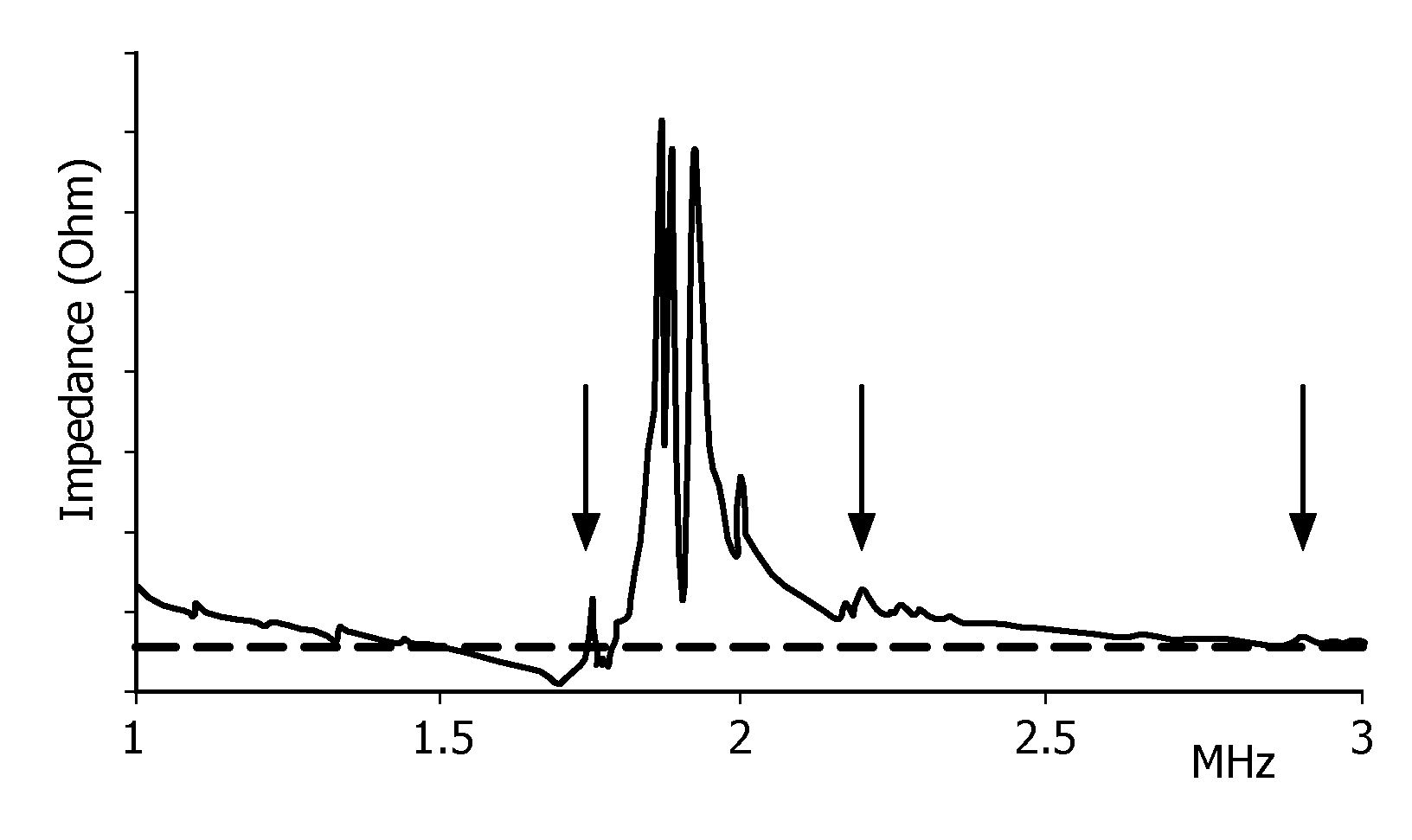
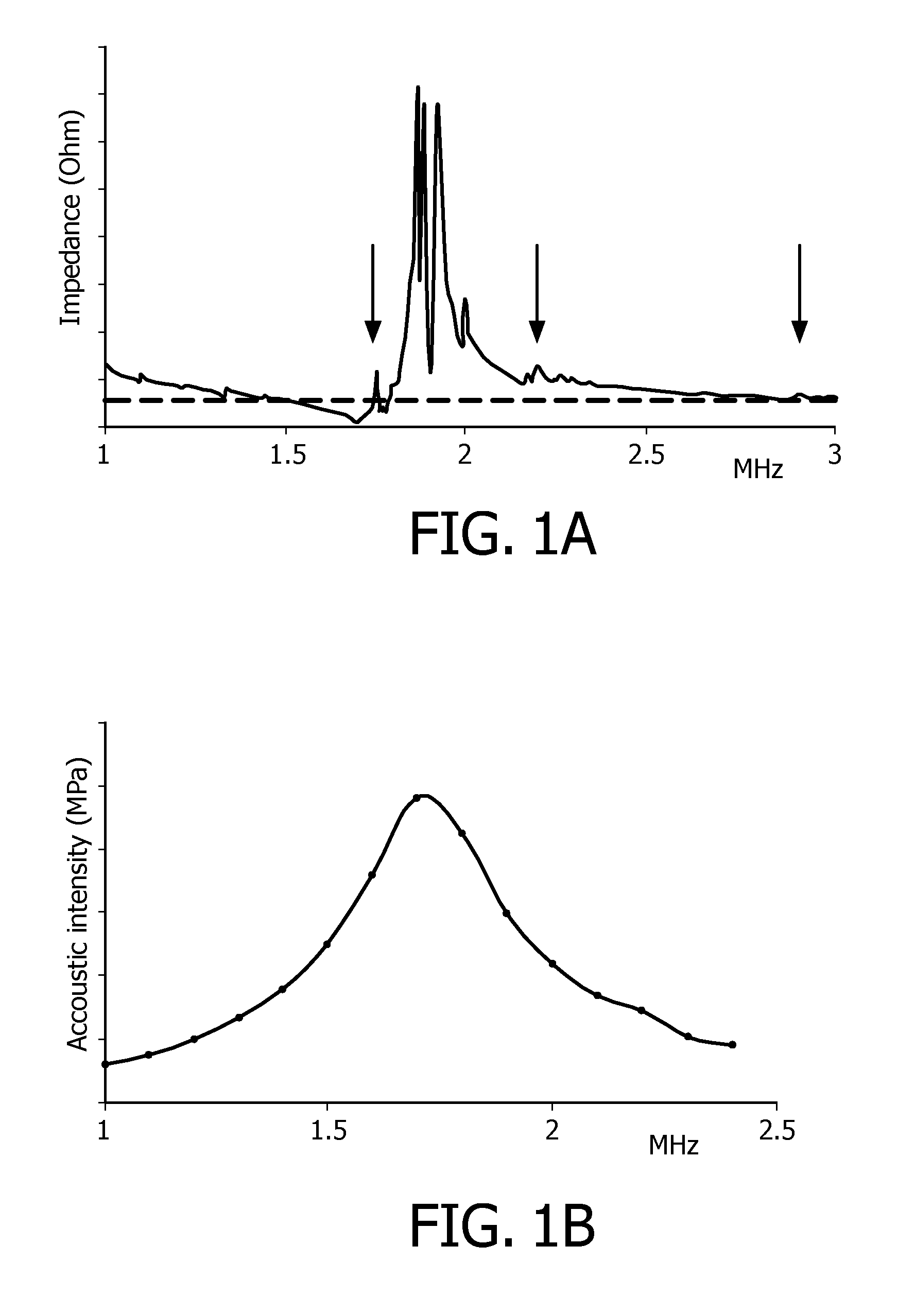
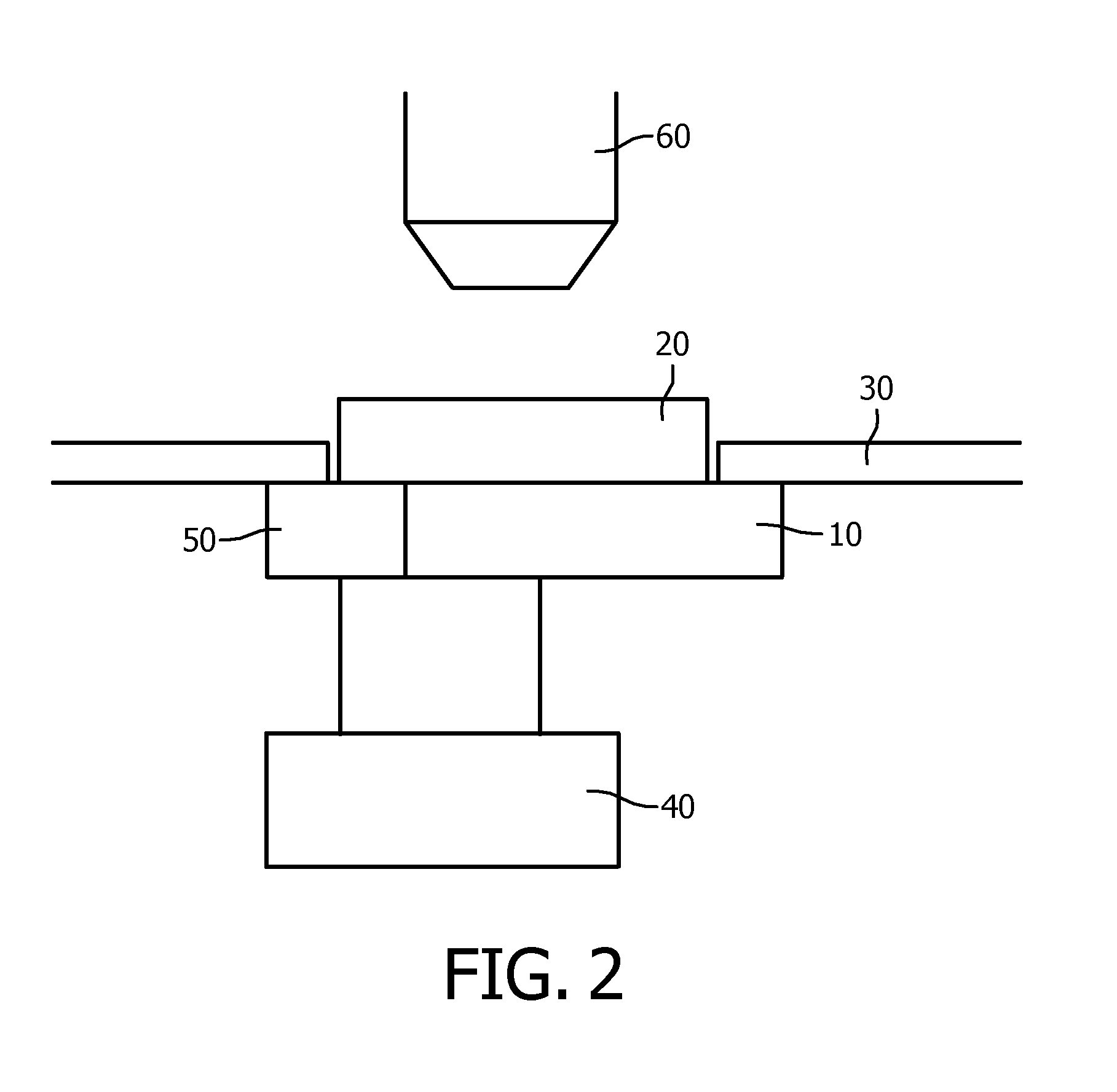
[0020]For enabling heating as well as treating with ultrasound, an ultrasound transducer is used that can be driven at at least two different frequencies. One of these frequencies should be adapted for the efficient generation of ultrasonic waves, whereas the other frequency should result in heating up the ultrasound transducer, almost without generation of ultrasonic waves. Various types of ultrasonic transducers may be employed, such as piezoelectric ultrasound transducers or capacitive micro-machined ultrasound transducers. Preferably, high intensity focused ultrasound transducers (HIFU-transducers) are employed that are able to focus the ultrasonic beam to a small focal region in a sample. It is also preferred to use resonance frequencies for driving the ultrasound transducer, in order to ensure a favorable transformation ratio of input electrical energy to output energy. However, in some cases, it may be preferable to use frequencies close to a resonance frequency, multitudes o...
PUM
 Login to View More
 Abstract
Description
Claims
Application Information
 Login to View More