
Mitigation of cutaneous injury with il-12
a technology of cutaneous injury and il-12, which is applied in the field of mitigation of cutaneous injury with il12, can solve the problems of complex healing process of cutaneous injury, morbidity and mortality, diabetes, etc., and achieve the effects of increasing wound healing, increasing wound healing, and increasing wound healing
- Summary
- Abstract
- Description
- Claims
- Application Information
AI Technical Summary
Benefits of technology
Problems solved by technology
Method used
Image

Examples
example 1
Topical Administration of rMuIL-12 to Full-Thickness Cutaneous Wounds
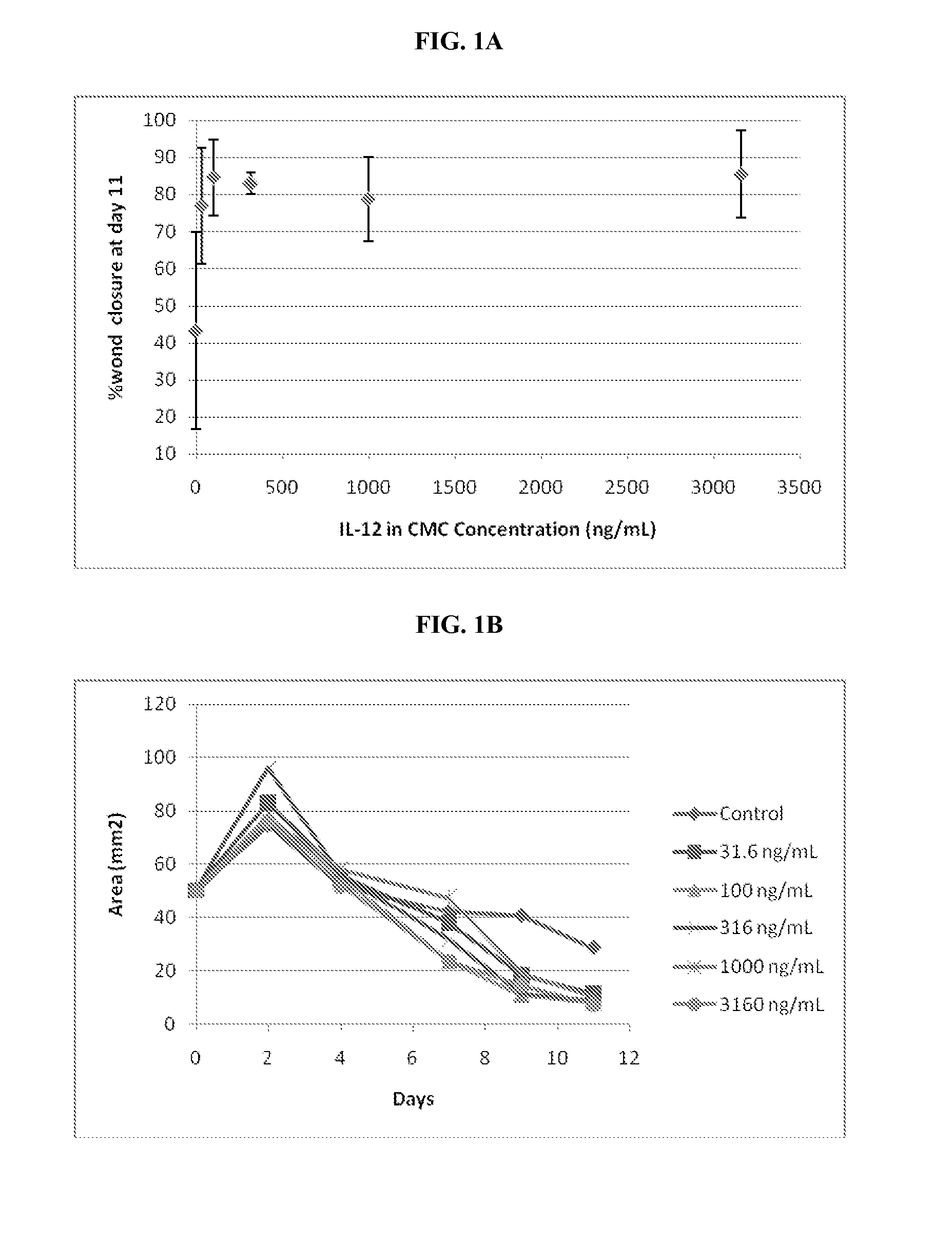
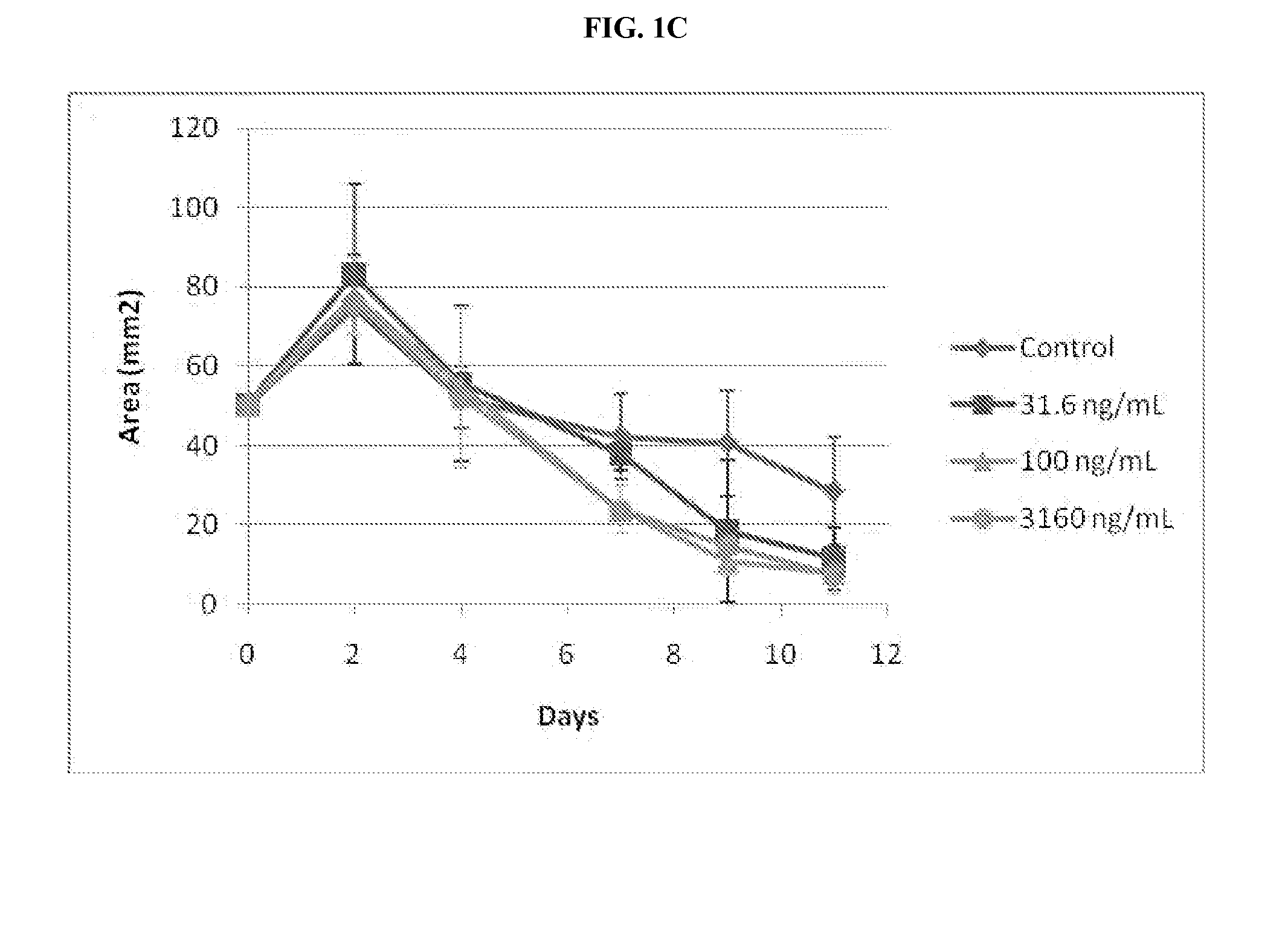
[0075]To study the effect of IL-12 on full-thickness skin wounds, mice with full thickness skin wounds were treated topically with different amounts of rMuIL-12. Full-thickness cutaneous injuries, which are equivalent to a third degree burn, are a challenging and commonly used model for the study of the mechanisms of wound healing, as well as the examination of potential treatments for accelerating or enhancing resolution of normal or diseased wounds.
Materials & Methods
[0076]18 mice were divided into six treatment groups of 3 animals each. The treatment groups are listed in Table 2 below.
TABLE 2Treatment Groups for Topical IL-12 AdministrationGroupTreatment1CMC (4%) Alone2CMC (4%) + 31.6 ng / mL rMuIL-123CMC (4%) + 100 ng / mL rMuIL-124CMC (4%) + 316 ng / mL rMuIL-125CMC (4%) + 1000 ng / mL rMuIL-126CMC (4%) + 3160 ng / mL rMuIL-12*CMC = carboxymethylcellulose
[0077]A circular 8.0 mm diameter wound was induced in anesthetized...
example 2
Expression of IL-12Rβ2 in Wounds of Irradiated Mice
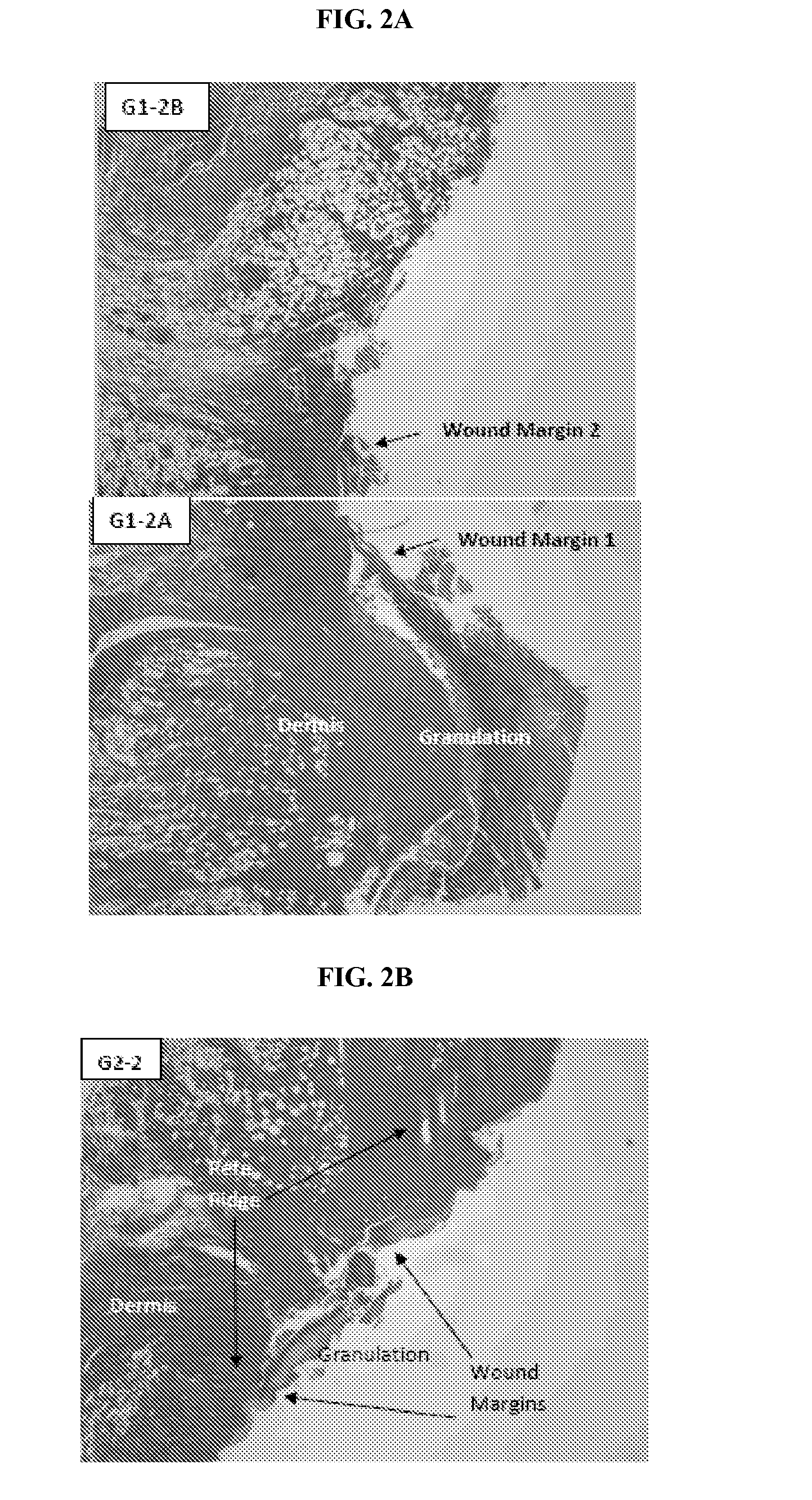
[0083]A study was undertaken to examine the level, distribution, and timing of expression of IL-12Rβ2 in full-thickness cutaneous injuries topically treated with vehicle alone or vehicle+rMuIL-12.
Materials and Methods
[0084]Thirty-six mice received 500 cGy of total body irradiation in a Gammacell® 40 irradiator. The mice were then anesthetized and given a circular 10.0 mm diameter wound using a biopsy punch. The mice were then split into two groups, with one group treated with 4% CMC alone, and the second group receiving 4% CMC+100 ng / mL of rMuIL-12. Wound treatment and measurement are as described in Example 1 (calculated area of wound=78.5 mm2, 10 mm diameter full-thickness wound, πr2).
[0085]Mice were then sacrificed and their wounds removed, sectioned in paraffin, and fixed in formalin at various time points following wound initiation and treatment with rMuIL-12. The fixed tissue was deparaffinized with xylene, hydrated in ethanol...
example 3
Mitigation of Skin Wounds in Irradiated Mice Using IL-12
[0090]A study was undertaken to examine the healing of full-thickness cutaneous injuries in irradiated mice that were topically treated with vehicle alone or vehicle+rMuIL-12.
Materials and Methods
[0091]Eighteen mice received 500 cGy of total body irradiation in a Gammacell® 40 irradiator, as described in Example 2. The mice were then anesthetized and given a circular 10.0 mm diameter wound using a biopsy punch. The mice were then divided into three treatment groups: Group 1 was treated with 4% CMC alone; Group 2 was treated with 4% CMC+100 ng / mL of rMuIL-12; and Group 3 was treated with 4% CMC+3160 ng / mL of rMuIL-12. Wounds were covered with Tegaderm as described in Example 1. Approximately 150 μl of CMC was delivered to each wound. This volume represents an approximate rMuIL-12 wound dosage of 15 ng (for 100 ng / mL concentration) or 474 ng (for 3160 ng / mL concentration). Wound measurement are as described in Example 1 (calculat...
PUM
| Property | Measurement | Unit |
|---|---|---|
| volume | aaaaa | aaaaa |
| weight | aaaaa | aaaaa |
| time | aaaaa | aaaaa |
Abstract
Description
Claims
Application Information
 Login to View More