Heat conduction device included crucible

a heat conduction device and crucible technology, applied in lighting and heating apparatus, furnace types, furnaces, etc., can solve the problems of not being able to transfer heat, the method is only effective for sublimation type materials, and the material decomposition on the top side is possibl

US20150037746A1Inactive Publication Date: 2015-02-05TCL CHINA STAR OPTOELECTRONICS TECH CO LTD
3 Cites 1 Cited by

Patent Information

Authority / Receiving Office
US · United States
Patent Type
Applications(United States)
Current Assignee / Owner
Publication Date
2015-02-05
Estimated Expiration
Not applicable · inactive patent

Smart Images

  • Figure 1
    Figure 1
  • Figure 2
    Figure 2
  • Figure 3
    Figure 3
Patent Text Reader

Abstract

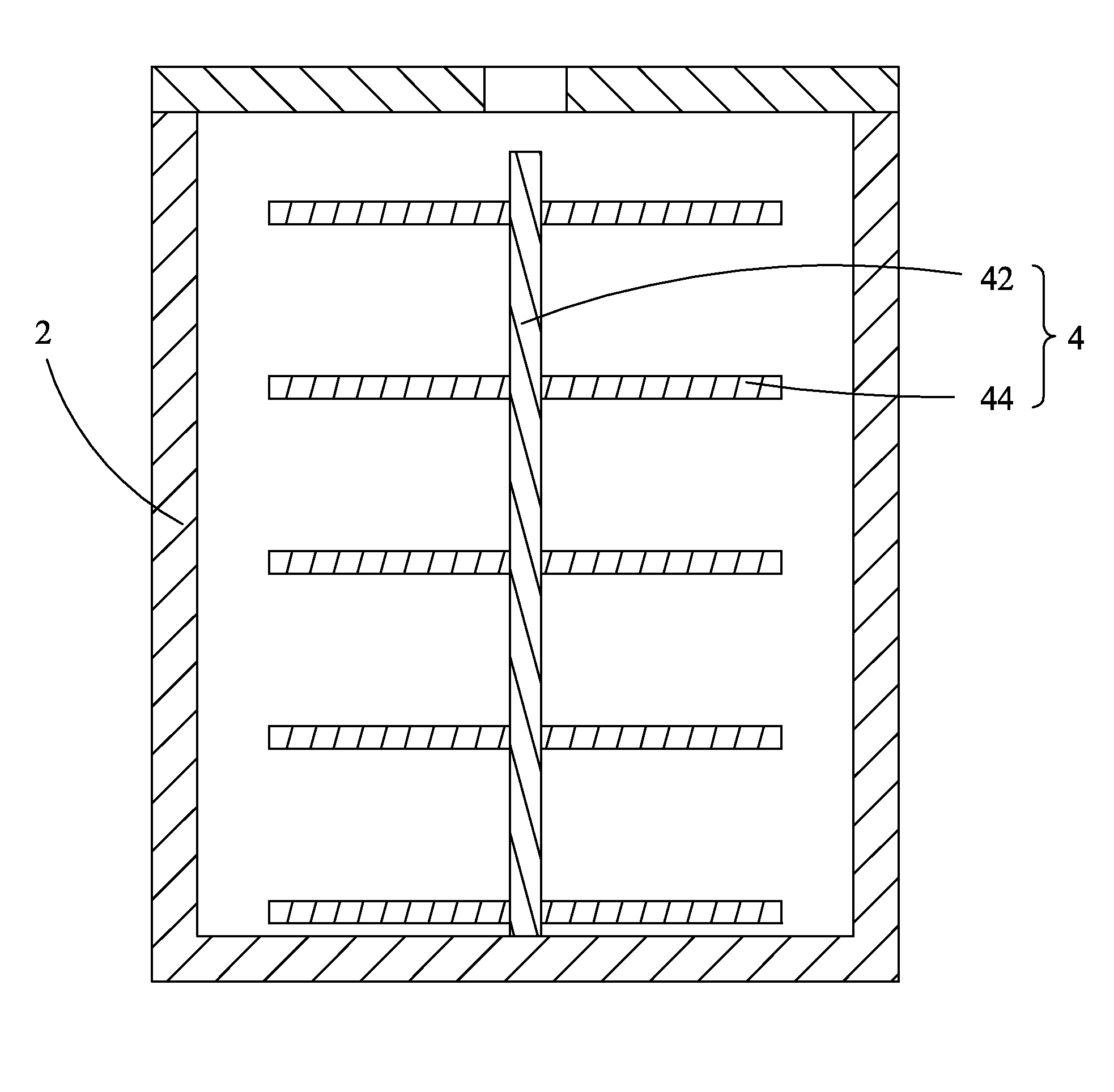
The present invention provides a heat conduction device included crucible, which includes: a crucible body and a heat conduction device arranged in the crucible body. The heat conduction device has a tree-like configuration, which includes a heat-dissipative trunk and multiple levels of heat dissipative branches mounted to the heat-dissipative trunk. Each level of the heat dissipative branches includes a plurality of branch units and the branch units are arranged to project out from an outer surface of the heat-dissipative trunk. The heat conduction device included crucible of the present invention uses the tree-like heat conduction device arranged in the crucible body to transfer heat in every direction within the crucible body so that during a vapor deposition operation, an organic material received in the crucible body can be heated uniformly thereby avoiding the phenomenon of partial decomposition of the organic material occurring in the prior art technique due to non-uniform heating of the organic material and thus effectively improving the vapor deposition efficiency and vapor deposition performance.
Need to check novelty before this filing date? Find Prior Art

Description

BACKGROUND OF THE INVENTION

[0001] 1. Field of the Invention

[0002] The present invention relates to the field of manufacture of display devices, and in particular to a heat conduction included crucible for vapor deposition performed with an organic material coater.

[0003] 2. The Related Arts

[0004] A flat panel display has a variety of advantages, such as thin device body, low power consumption, and being free of radiation, and is widely used. Flat panel displays that are currently available generally include liquid crystal displays (LCDs) and organic light emitting displays (OLEDs).

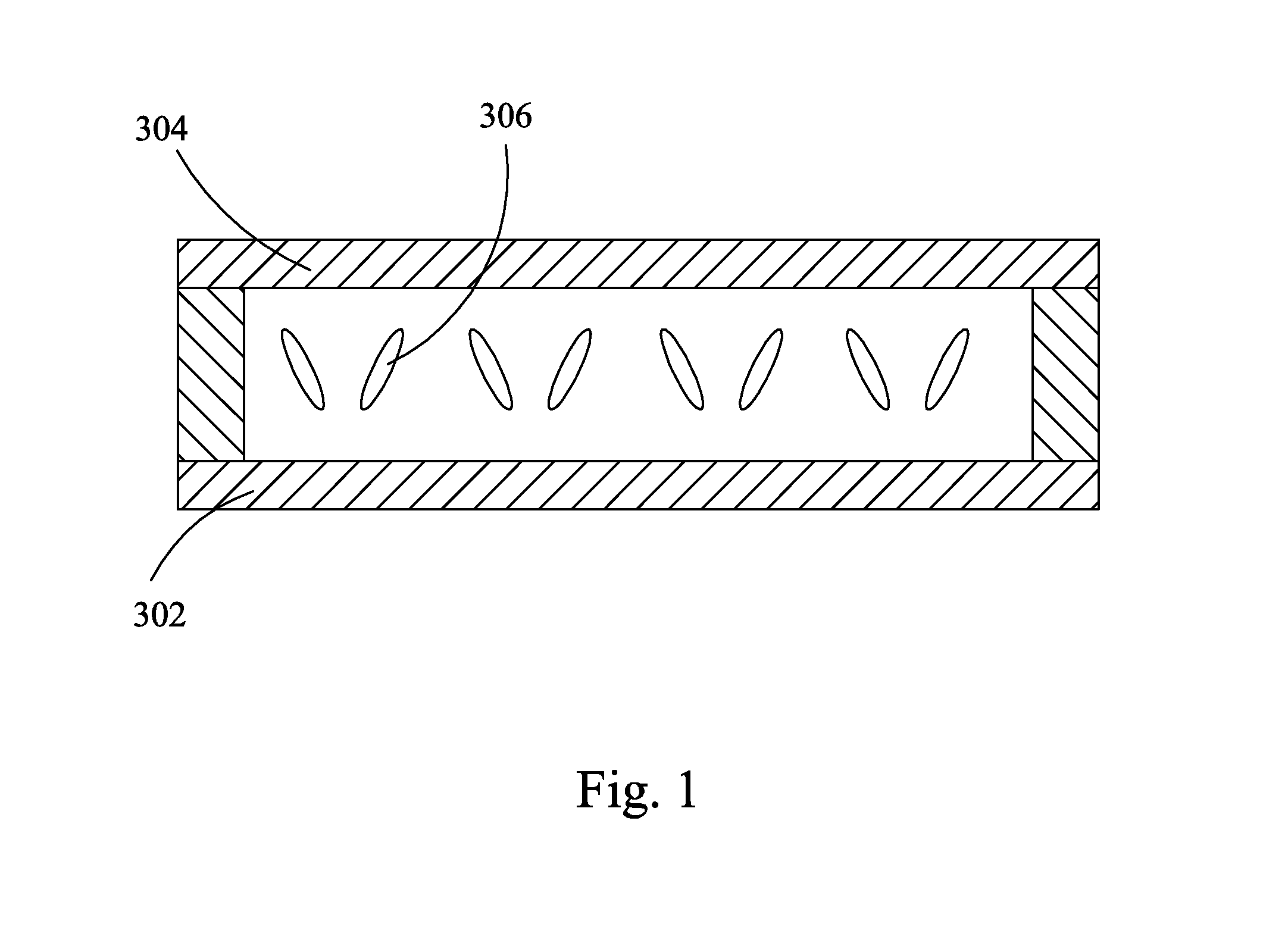
[0005] The LCDs that are currently available in the market are generally backlighting LCDs, which comprise an enclosure, a liquid crystal display panel arranged in the enclosure, and a backlight module arranged in the enclosure. The operation principle of the liquid crystal display panel is that liquid crystal molecules are arranged between two parallel glass substrates and a drive voltage is selectively applied...

Examples

second embodiment

[0047]Referring to FIG. 5, which is a schematic view showing the structure of the present invention, in the instant embodiment, two adjacent ones of the heat dissipative branches 44′ are respectively set at opposite sides of the heat-dissipative trunk 42. In other words, the heat dissipative branches 44′ are arranged to alternately mount to opposite sides of the heat-dissipative trunk 42. This can similarly achieve the same technical efficacy of the present invention.

third embodiment

[0048]Referring to FIG. 6, which is a schematic view showing the structure of the present invention, in the instant embodiment, the heat dissipative branches 44″ are set to extend from an outer surface of the heat-dissipative trunk 42 in an upward inclined manner. This can similarly achieve the same technical efficacy of the present invention.

fourth embodiment

[0049]Referring to FIG. 7, which is a schematic view showing the structure of the present invention, in the instant embodiment, the heat dissipative branches 44′″ are set to extend from an outer surface of the heat-dissipative trunk 42 in a downward inclined manner. This can similarly achieve the same technical efficacy of the present invention.