

Bismuth composite nanoparticle anodes, methods of making same, and uses thereof
a composite nanoparticle and composite anode technology, applied in the field can solve the problems of inferior electrochemical cyclability, internal short-circuit, and serious safety concerns, and achieve the effect of improving the cyclability of composite bismuth composite anodes
- Summary
- Abstract
- Description
- Claims
- Application Information
AI Technical Summary
Benefits of technology
Problems solved by technology
Method used
Image

Examples
example 1
[0086]This example provides a description of bismuth composite anodes and methods of making and using same.
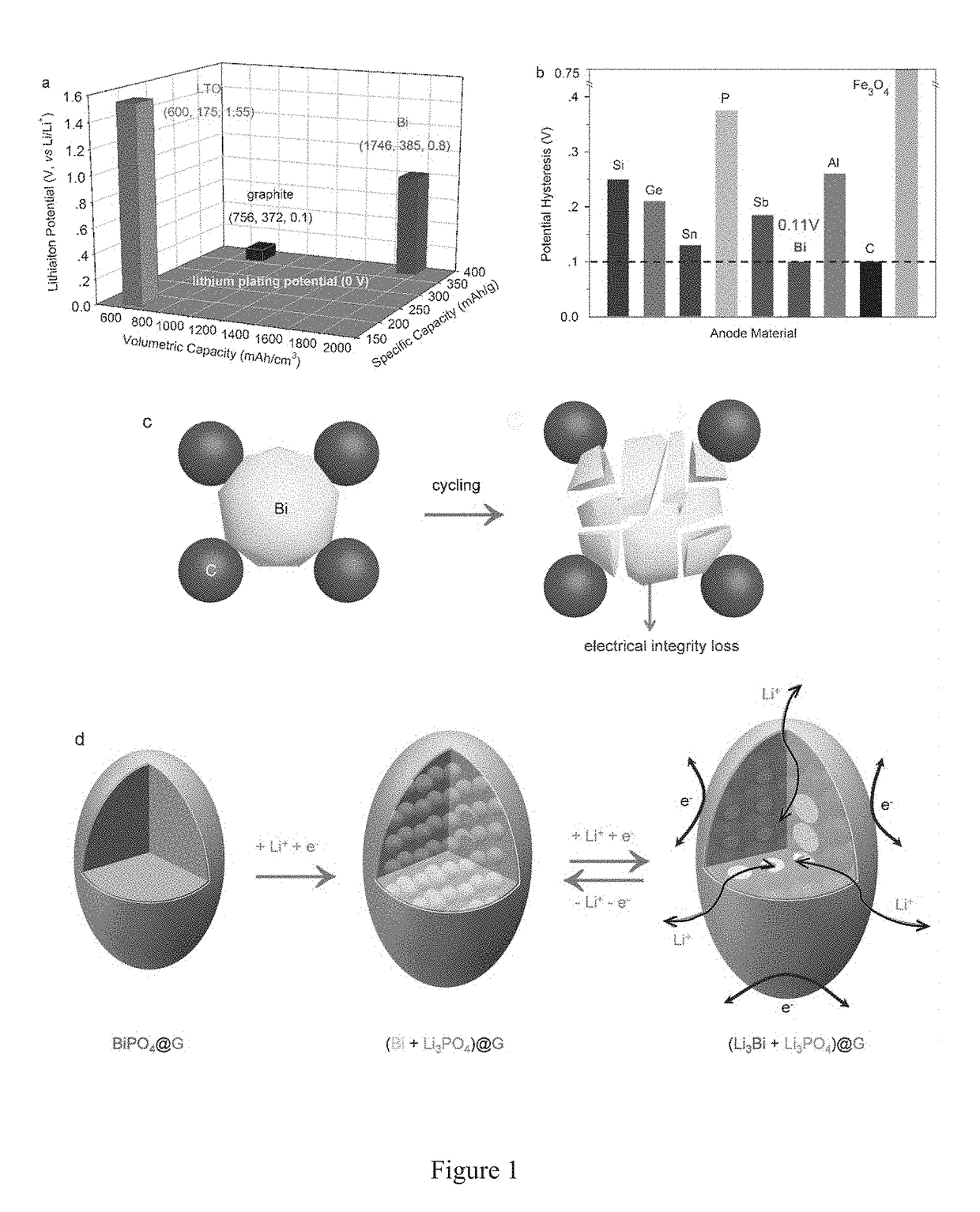
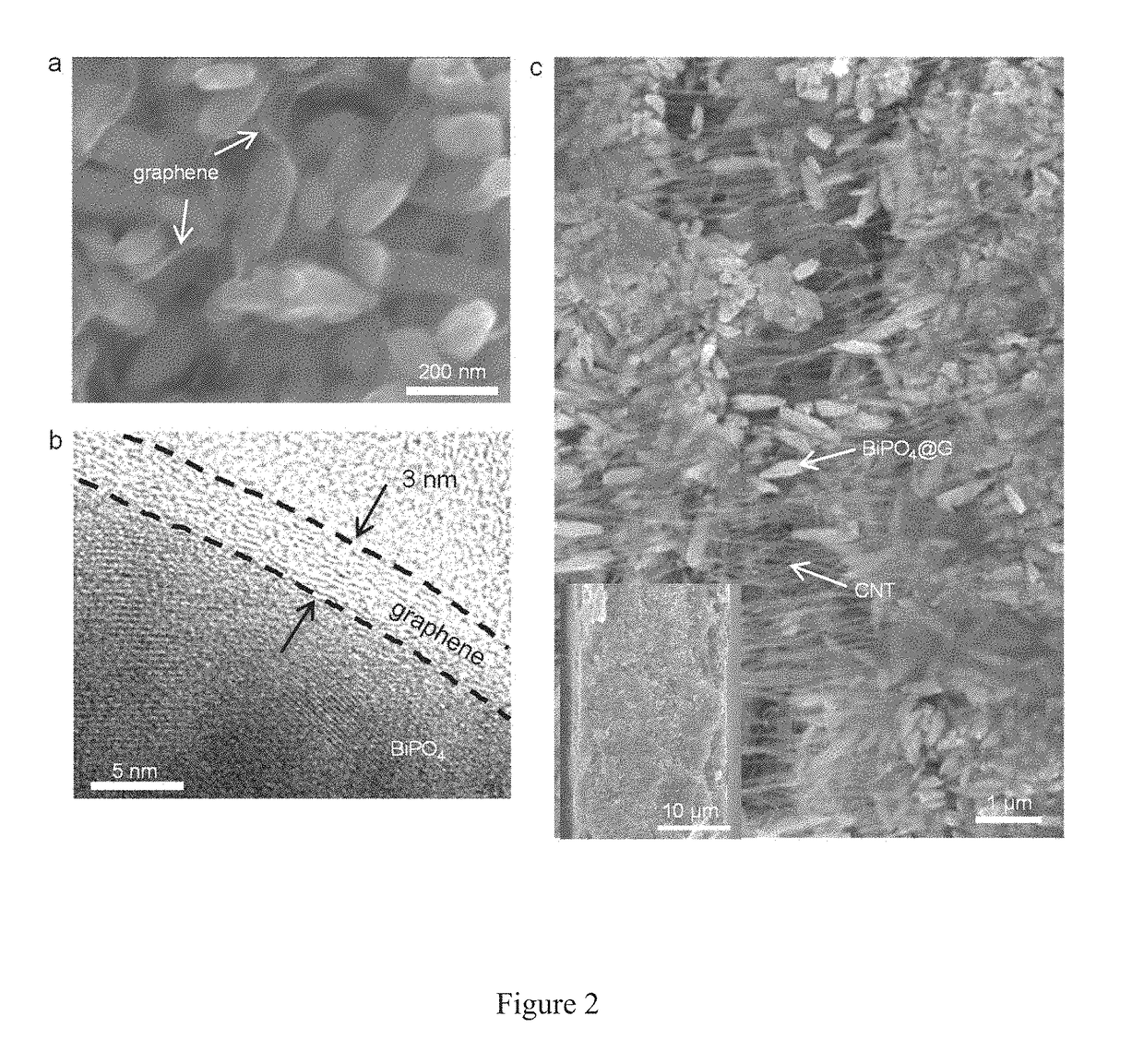
[0087]It was shown that the brittleness challenge of bismuth can be addressed using a solid-state γ-Li3PO4 matrix constructed in situ by electrochemical conversion of bismuth phosphate (BiPO4) (FIG. 1d). This Li3PO4 matrix possesses multiple functionalities. Firstly, it functions as a solid binder to keep the Bi grains to be physically interconnected and the structural integrity well maintained. Secondly, it serves as a buffer layer to accommodate the mechanical strain arising from the lithium insertion. Thirdly, γ-Li3PO4 has a relatively high Li+ conductivity of 4.5×10⁻⁵ S / m, and can provide Li+ diffusion pathways to allow the active Bi grains ionically interconnected. Fourthly, it isolates Bi from liquid electrolyte and thus reduces undesirable side reactions such as the formation of solid electrolyte interphase (SEI). Last but not least, Li3PO4 is electrochemically stable wi...
PUM
 Login to View More
 Abstract
Description
Claims
Application Information
 Login to View More