

Circulating coolant fluid in hybrid electrical propulsion systems
a technology of electrical propulsion system and coolant fluid, which is applied in the direction of lubricant mounting/connection, turbines, depending on power plant types, etc., can solve the problem that the engine is in effect oversized for the relatively low power required to produ
- Summary
- Abstract
- Description
- Claims
- Application Information
AI Technical Summary
Benefits of technology
Problems solved by technology
Method used
Image

Examples
Embodiment Construction
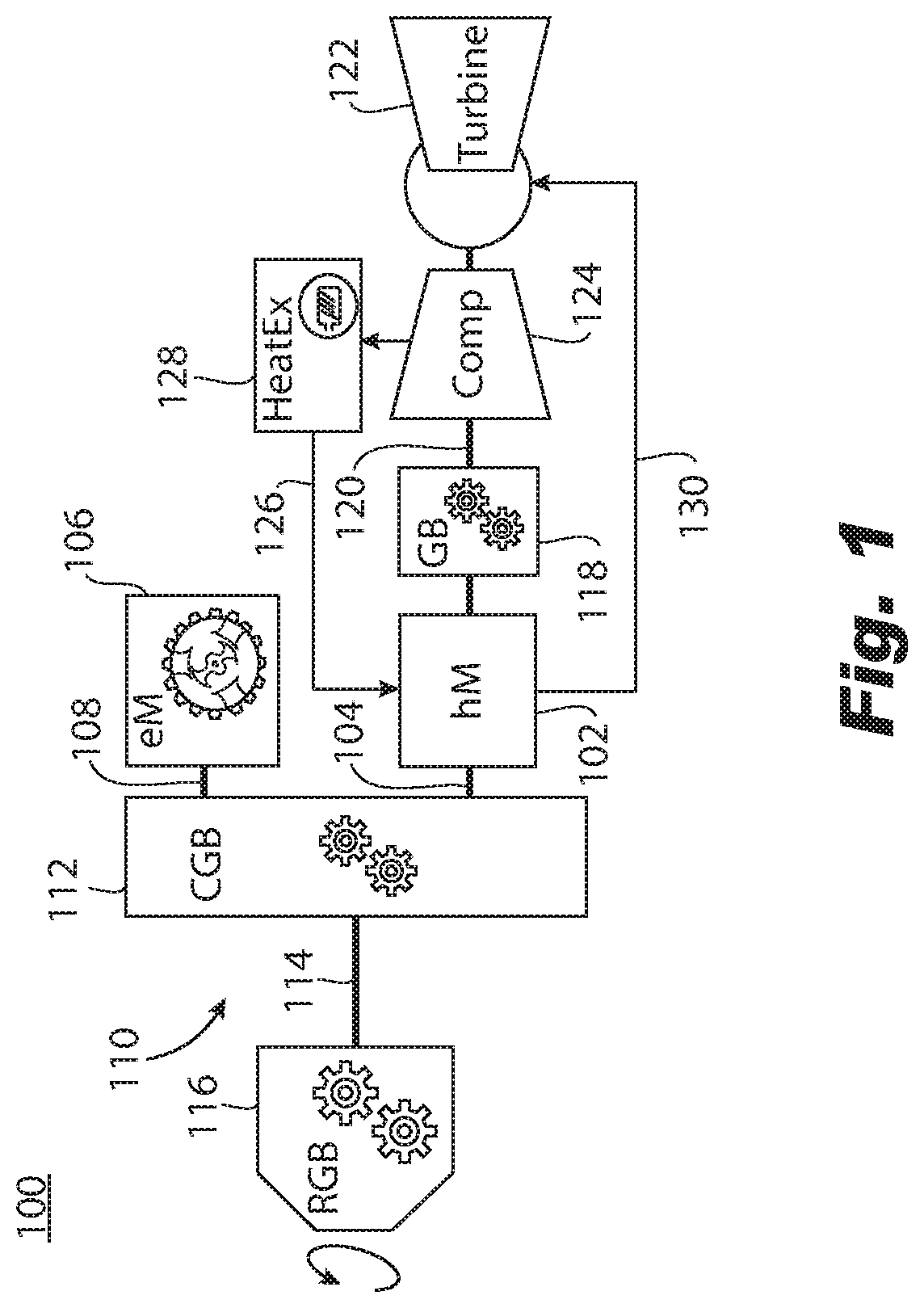
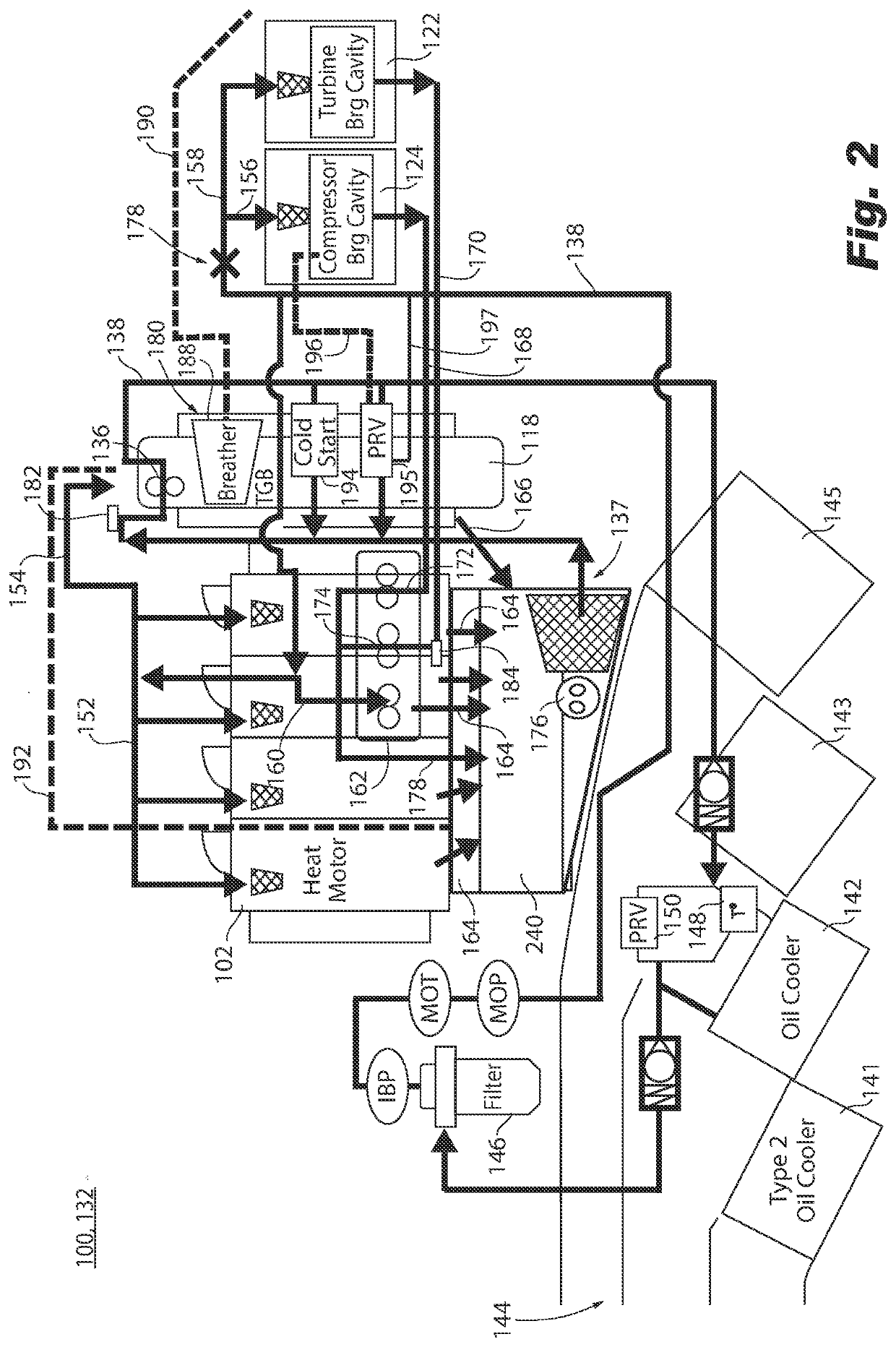
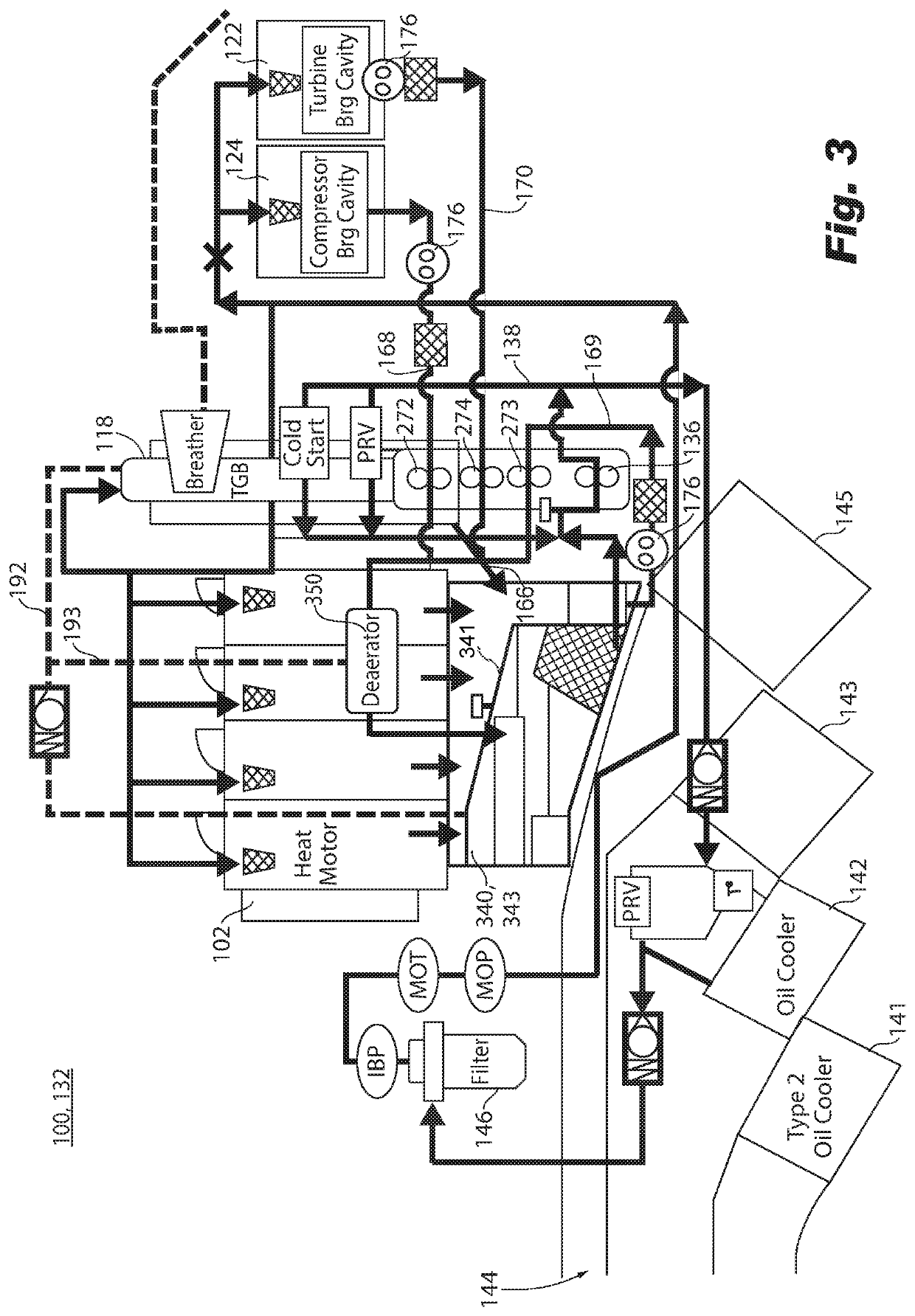
[0021]Reference will now be made to the drawings wherein like reference numerals identify similar structural features or aspects of the subject disclosure. For purposes of explanation and illustration, and not limitation, a partial view of an exemplary embodiment of the a hybrid propulsion system in accordance with the disclosure is shown in FIG. 1 and is designated generally by reference character 100. Other embodiments of systems in accordance with the disclosure, or aspects thereof, are provided in FIGS. 2-5, as will be described. The systems and methods described herein can be used to provide hybrid propulsion, e.g., for improving fuel efficiency in aircraft.
[0022]The hybrid propulsion system 100 includes a heat engine 102 configured to drive a heat engine shaft 104. An electric motor 106 is configured to drive a motor shaft 108. A transmission system 110 is configured to receive rotational input power from each of the heat engine shaft 104 and the motor shaft 108 and to convert...
PUM
 Login to View More
 Abstract
Description
Claims
Application Information
 Login to View More