
Soft robotic gripper with hybrid structure and grasping reliability
a hybrid structure and robotic gripper technology, applied in the field of soft robotic grippers with hybrid structure and grasping reliability, can solve the problems of lack of structural rigidity, remarkable drawbacks, design problems, etc., and achieve the effects of maintaining inherent compliance, small material deformation resistance, and robust structur
Patent Information
- Authority / Receiving Office
- US · United States
- Current Assignee / Owner
- Publication Date
- 2020-09-24
Smart Images
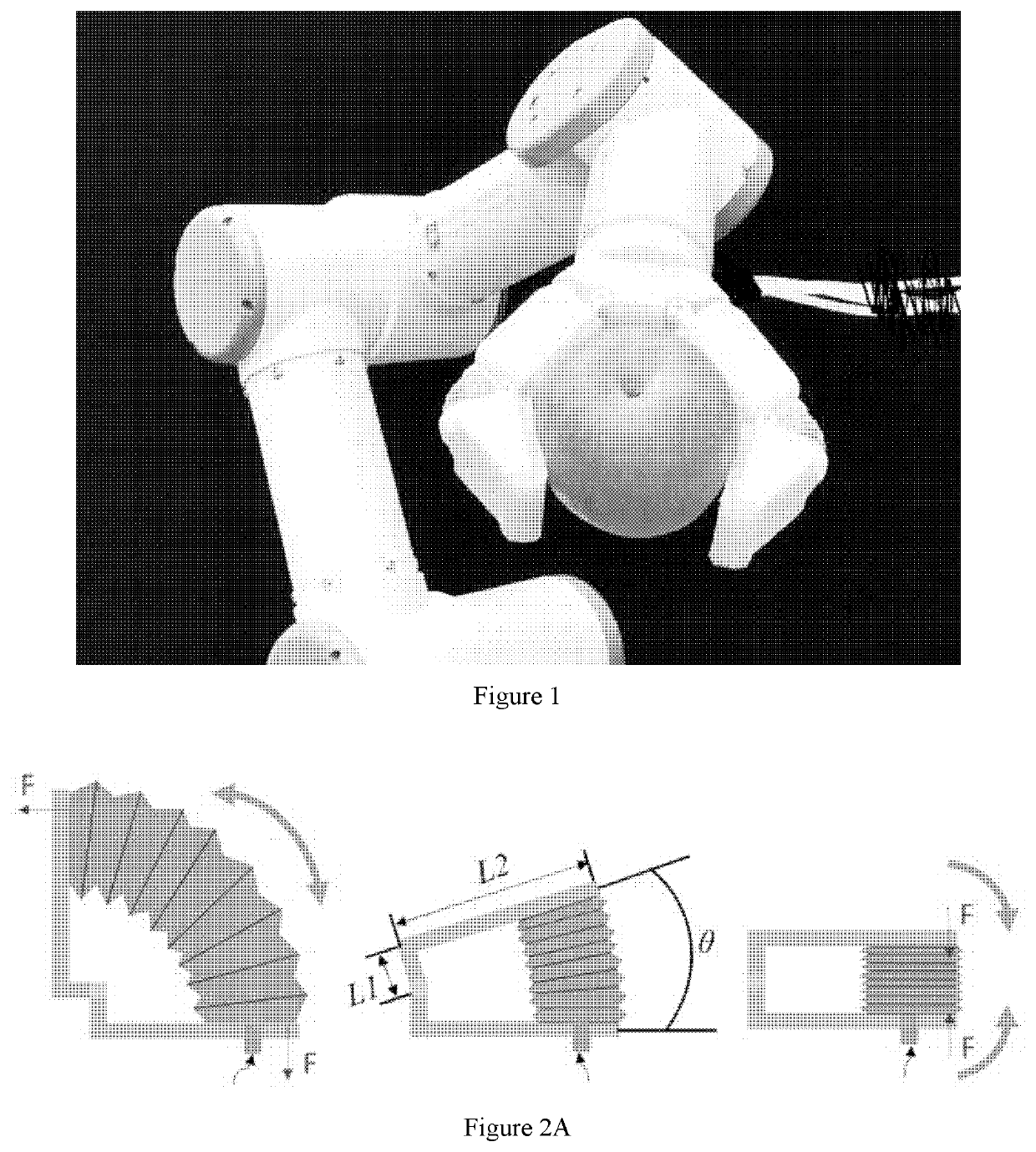
Figure 1 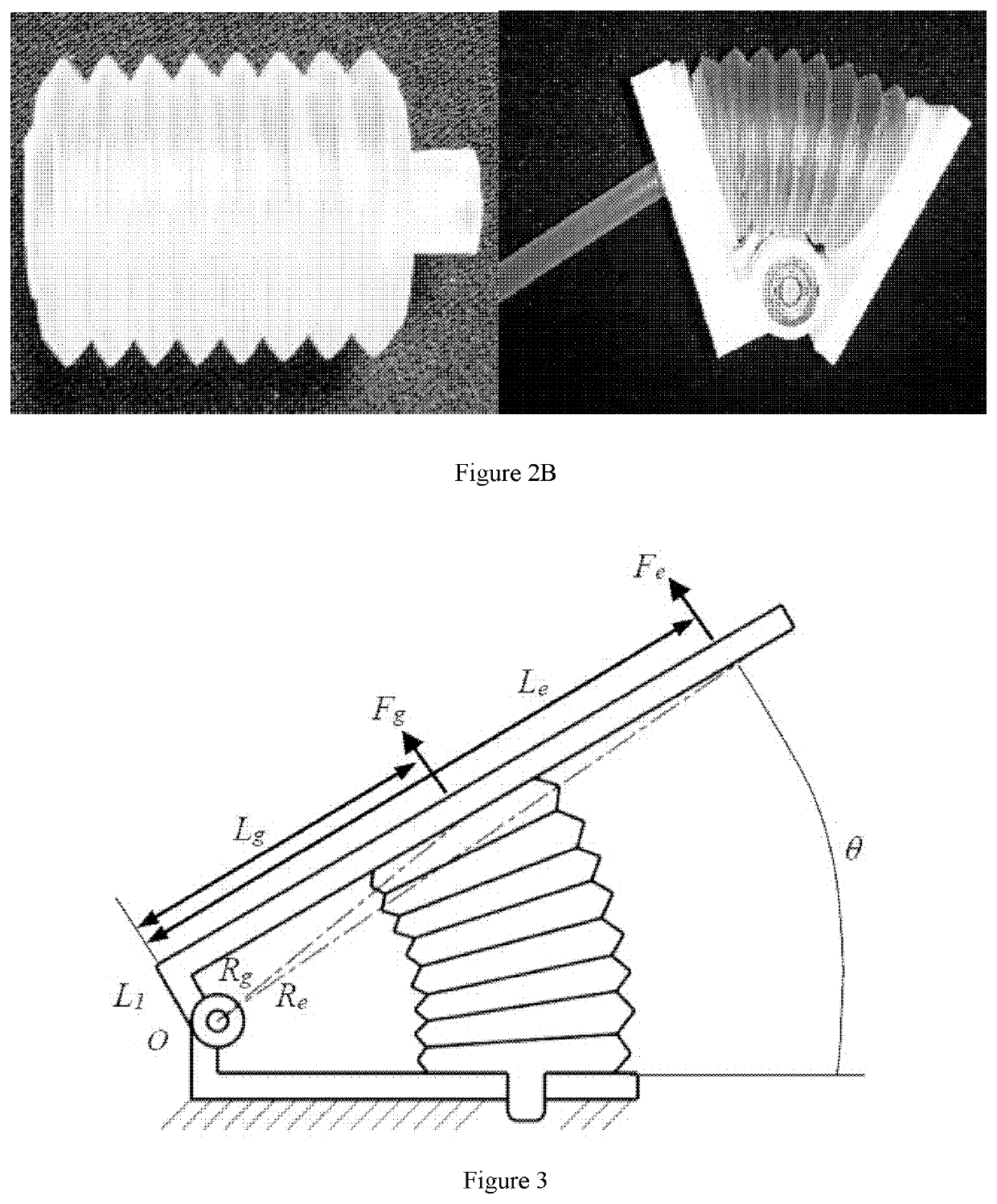
Figure 2 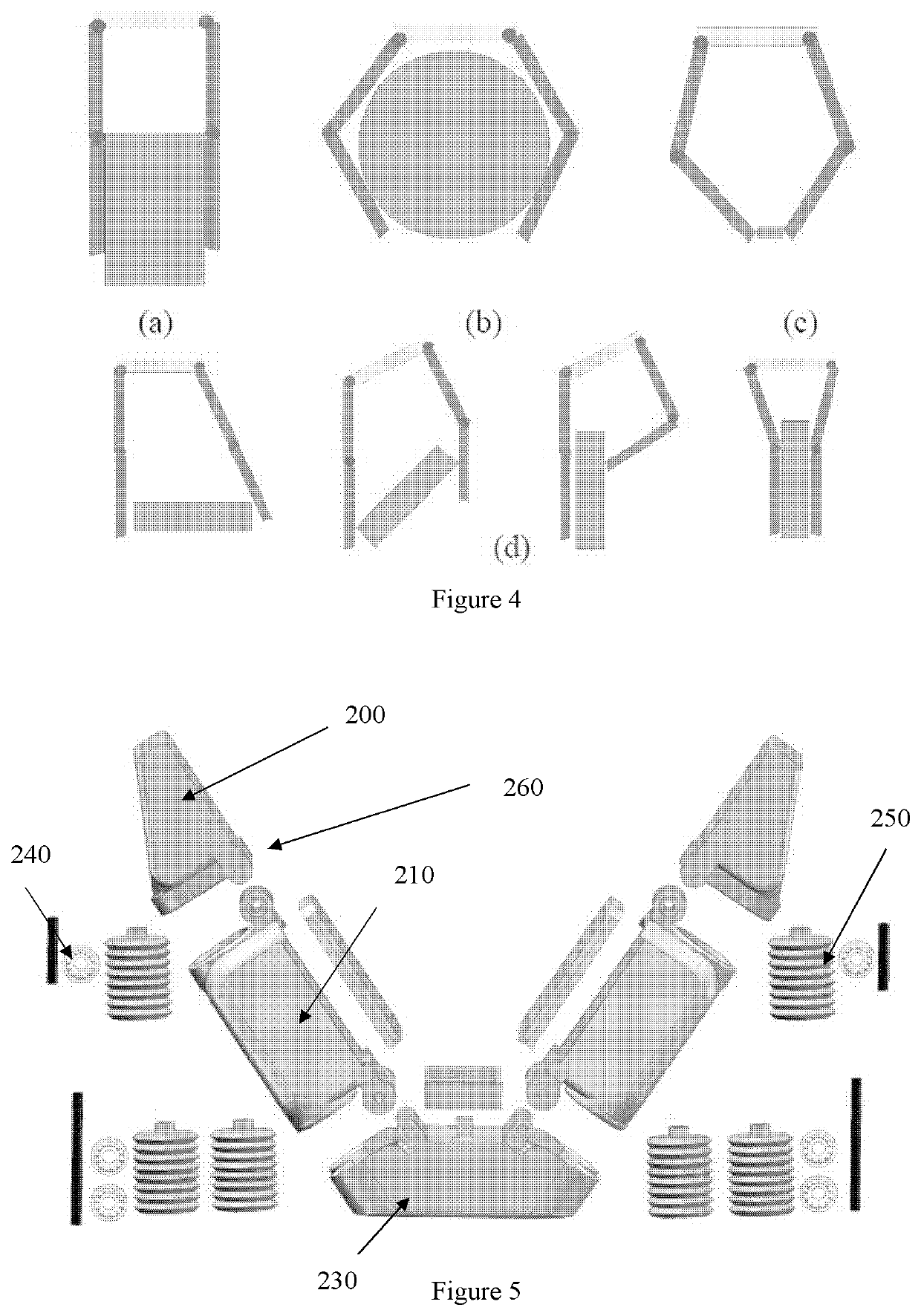
Figure 3
Abstract
Description
BACKGROUND
[0001] A robotic end effector is a crucial connection for robots interacting with the environment and human beings. With the development of robotic systems, robots have been more widely applied in daily life and routines. From experimental and industrial fields to versatile and human centered environments, the primary design concerns of robotic end effectors have shifted from industrial concerns (accuracy, strength, speed, etc.) to human centered criteria, such as weight, safety, adaptability, task-worthiness, and affordability.
[0002] Following the shift of design requirements, avenues such as underactuation and variable stiffness mechanisms have been utilized for compliant grasping. In recent years, another approach for human centered end effector design, has involved the development of a soft robot. The soft robot provides inherent compliance and adaptability for safe human robot interaction as service robots, rehabilitation robots, personal robots, etc. Furthermore, with ...
Examples
example 1
[0037]To fabricate a two-finger soft gripper, the design parameters as shown in Table II were chosen. The CAD assembly of the soft gripper comprising two fingers 260 is presented in FIG. 5. A smaller ratio of bellows 250 at the proximal joint to the distal joint, leads to better compliance of the gripper. Therefore, two pneumatic bellows 250 were set at the proximal joint between the base 230 and the proximal phalange 210. One bellows 250 was set at the distal joint between the proximal phalange 210 and the distal phalange 200, as seen in FIG. 5. Pins and bearings 240 were used for assembly. This configuration helps to provide different joint stiffness when applying the same pressure, which provides better compliance with the grasping target. To enhance contact friction, contact areas 220 of the gripper were casted with a layer of silicone wave surface skin using Dragon skin 10. The prototype gripper was mainly fabricated by material deposition method, with a commercially available ...
example 2
[0039]The relationship between the joint bending angle and supplied pressure under no payload was measured. The results, as shown in FIG. 7A, demonstrate that the soft gripper can arrive at a large working range with a low supplied pressure within 40 kPa.
example 3
[0040]The high energy transfer ratio of the mechanism was measured. The results, as shown in FIG. 7B demonstrates that the soft gripper can achieve 30N output force within an applied 1 Bar of input pressure, which is close to the theoretical maximum output force with minimum energy loss.