Apparatus and method for chronically monitoring heart sounds for deriving estimated blood pressure

US6869404B2Active Publication Date: 2005-03-22MEDTRONIC INC
10 Cites 164 Cited by

Patent Information

Authority / Receiving Office
US · United States
Current Assignee / Owner
Publication Date
2005-03-22

Smart Images

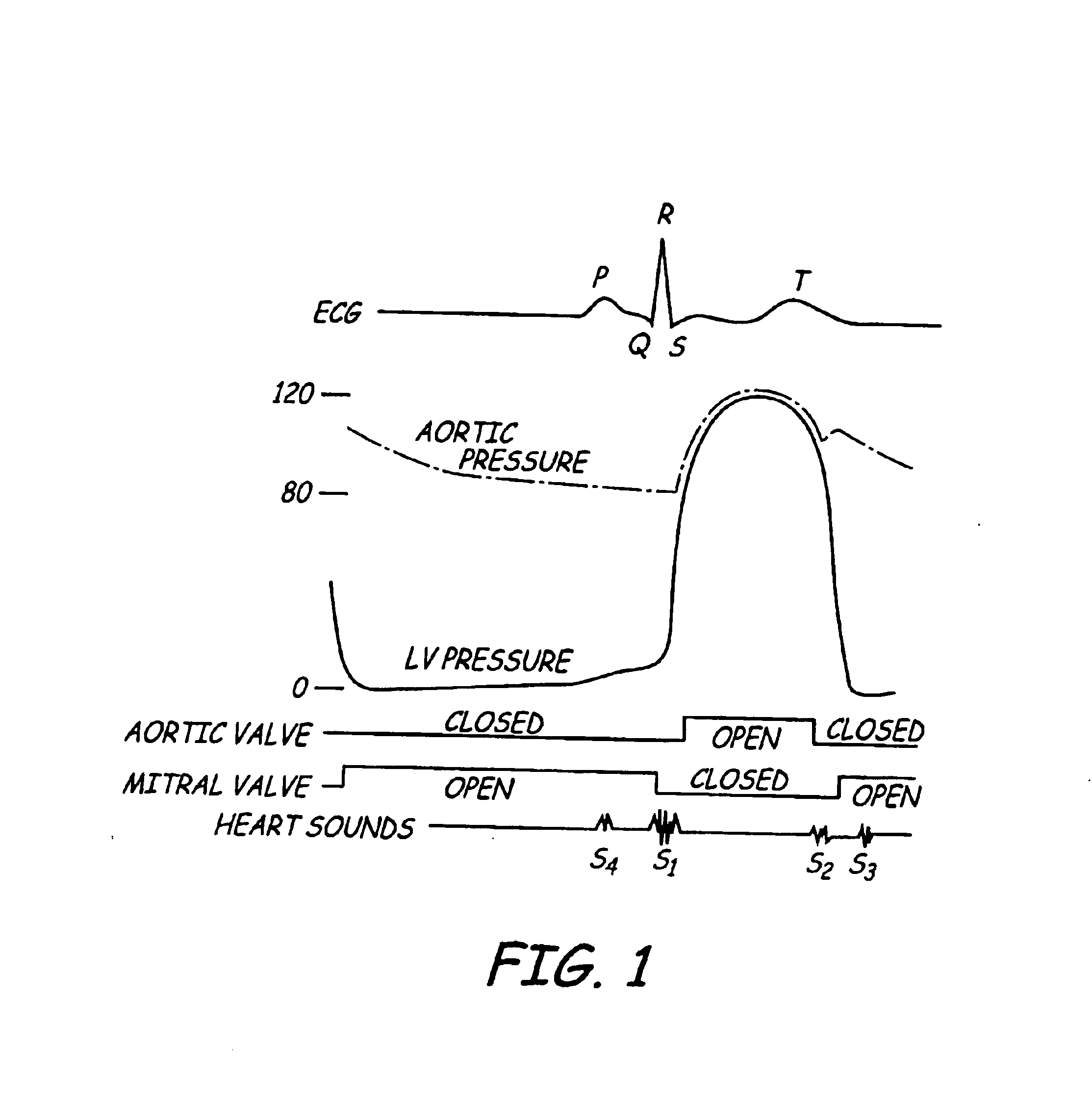
  • Figure 1
    Figure 1
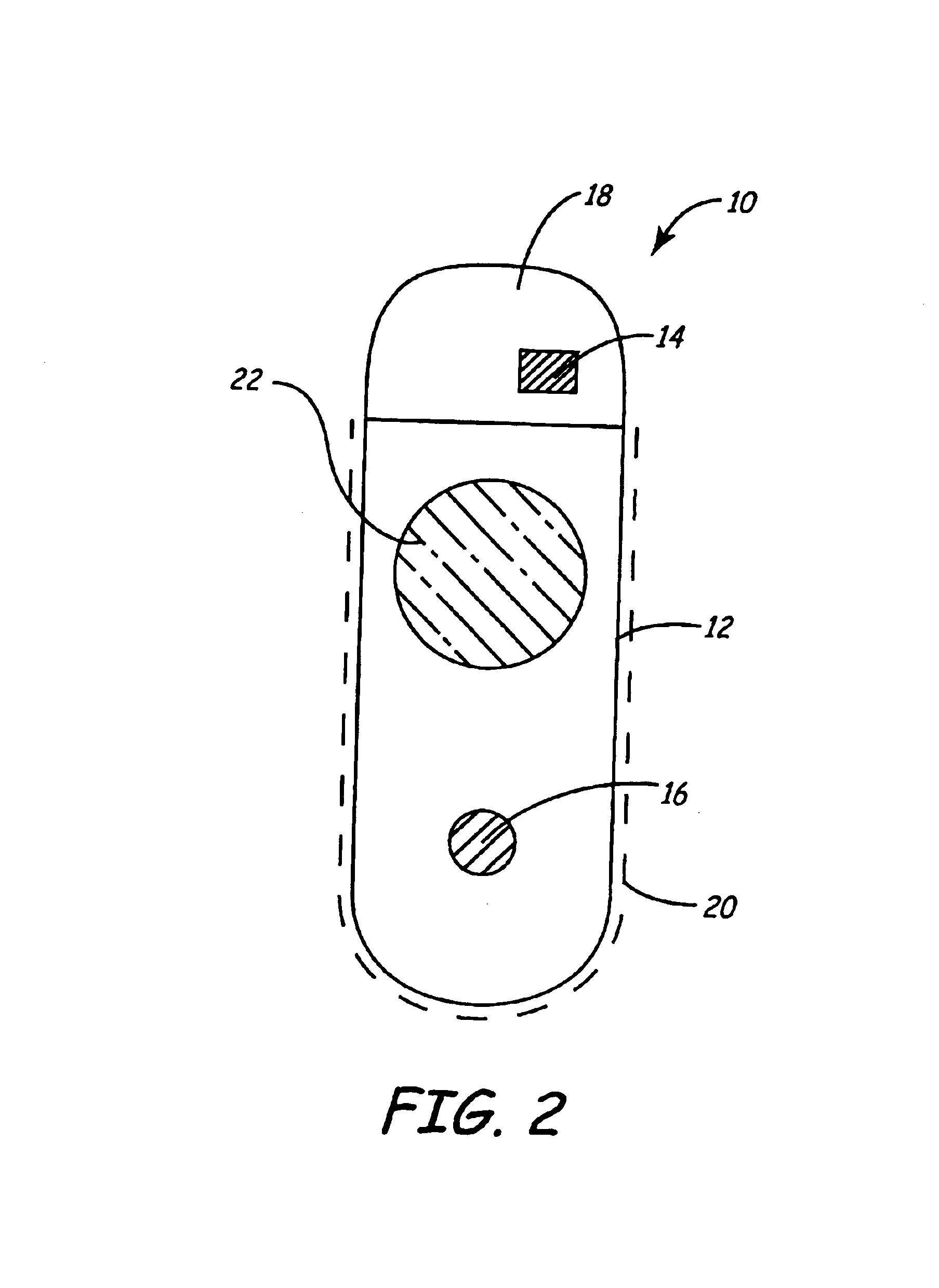
  • Figure 2
    Figure 2
  • Figure 3
    Figure 3
Patent Text Reader

Abstract

A minimally invasive, implantable heart sound and ECG monitor and associated method for deriving blood pressure from heart sound data. The device is equipped with an acoustical sensor for detecting first and second heart sounds which are sampled and stored during sensing windows following R-wave and T-wave detections, respectively. ECG and heart sound data are stored in a continuous, looping memory, and segments of data are stored in long-term memory upon an automatic or manual data storage triggering event. Estimated blood pressure is calculated based on custom spectral analysis and processing of the first and second heart sounds. A calibration method includes measuring a patient's blood pressure using a standard clinical method and performing regression analysis on multiple spectral variables to identify a set of best fit weighted equations for predicting blood pressure. Concurrent ECG and estimated blood pressure may be displayed for review by a physician.
Need to check novelty before this filing date? Find Prior Art

Description

FIELD OF THE INVENTIONThe present invention relates to implantable medical devices and, in particular, to a minimally invasive implantable device for monitoring a patient's blood pressure by recording heart sounds and deriving an estimated blood pressure based on custom heart sound spectral analysis and processing.BACKGROUND OF THE INVENTIONBlood pressure monitoring is a fundamental diagnostic tool for a wide array of cardiovascular and other pathologic conditions. Systolic and diastolic blood pressure may be measured indirectly and non-invasively using a standard cuff method. However, direct monitoring of blood pressure is sometimes desired for diagnosing or tracking a disease state using relatively invasive measurement methods that use an indwelling blood pressure catheter. An indwelling catheter, however, may only remain implanted for relatively acute periods of time to prevent infection or other associated complications. Chronic monitoring of blood pressure could be extremely va...

Examples

Embodiment Construction

FIG. 2 is a plan view of an implantable device 10 for monitoring and storing ECG and heart sound data according to the present invention. The size and shape of device 10 may be provided as generally disclosed in commonly assigned U.S. Pat. No. 5,987,352, issued to Klein, incorporated herein by reference in its entirety. Device 10 is preferably implanted subcutaneously in the general thoracic region. Placement of device 10 near the sternum in the left pectoral region may generally provide good heart sound detection, however, optimal device placement may vary between individuals. An optimal implant site for receiving heart sound signals may be determined on an individual basis prior to implantation of device 10 by performing an examination with a stethoscope. Optimal recording sites for heart sounds in phonocardiography are reviewed in, “Blood pressure and Sound,” Chapter 7 in Medical Instrumentation: Application and Design, Second Edition, ed. John G. Webster, Houghton Mifflin Compan...