Check patentability & draft patents in minutes with Patsnap Eureka AI!

Oxygen fire and blast fragment barriers

Inactive Publication Date: 2005-03-29
AIR LIQUIDE PROCESS & CONSTRUCTION INC
View PDF13 Cites 21 Cited by
  • Summary
  • Abstract
  • Description
  • Claims
  • Application Information

AI Technical Summary

Benefits of technology

Optionally the safety barrier further comprises at least one oxygen fire resistant panel spaced from the impact panel a distance in excess of the maximum allowable deflection of the impact panel Suitably the oxygen fire resistant panel is one tested for burn-through resistance by holding a test material outside a predetermined position for testing resistance of the material to burn-through, igniting to constant burn an exothermi

Problems solved by technology

Air separation plants operate at high pressures and have potentially hazardous equipment that should be considered for enclosure by barriers.
Of particular concern are barriers where oxygen services are involved.
A blast can collapse a barrier if the barrier is not engineered to withstand the blast in the context of its surroundings.
However, there are many existing indoor centrifugal oxygen compressors installed with barrier enclosures constructed of structural steel and undefined or untested insulation.
These are of questionable strength and may not be in compliance with CGA G4-4.6; they have a questionable capacity to impede imparted fragments from a compressor failure.
Engineering solutions for an existing plant may be limited by the arrangement of the installed compressor and piping systems for which an upgraded barrier is to be erected.
While fragment barriers intended for new construction can have building steel and concrete engineered to take any transferred blast fragment load, the same is not true of existing buildings; in them the building steel and concrete may not have the capacity to take the high transferred loads.
In addition to constraints from existing building structure, use of reinforced concrete as an upgrade barrier material is often not feasible because of density and congestion of oxygen system installations, including compressors, compressor gas coolers and interstage piping, piping to and from a compressors including recycle piping, oil piping and other lubricant lines or service lines for rotating equipment, etc.
While concrete can do this, to a point, the oxygen handling industry has had trouble in certifying other materials as able to withstand the heat of an oxygen fire.
Many industry standards exist, but none represent the conditions of an oxygen flash fire where metal is a fuel and metal splatter burns through materials.

Method used

the structure of the environmentally friendly knitted fabric provided by the present invention; figure 2 Flow chart of the yarn wrapping machine for environmentally friendly knitted fabrics and storage devices; image 3 Is the parameter map of the yarn covering machine
View more

Image

Smart Image Click on the blue labels to locate them in the text.
Viewing Examples
Smart Image
  • Oxygen fire and blast fragment barriers
  • Oxygen fire and blast fragment barriers
  • Oxygen fire and blast fragment barriers

Examples

Experimental program
Comparison scheme
Effect test

example

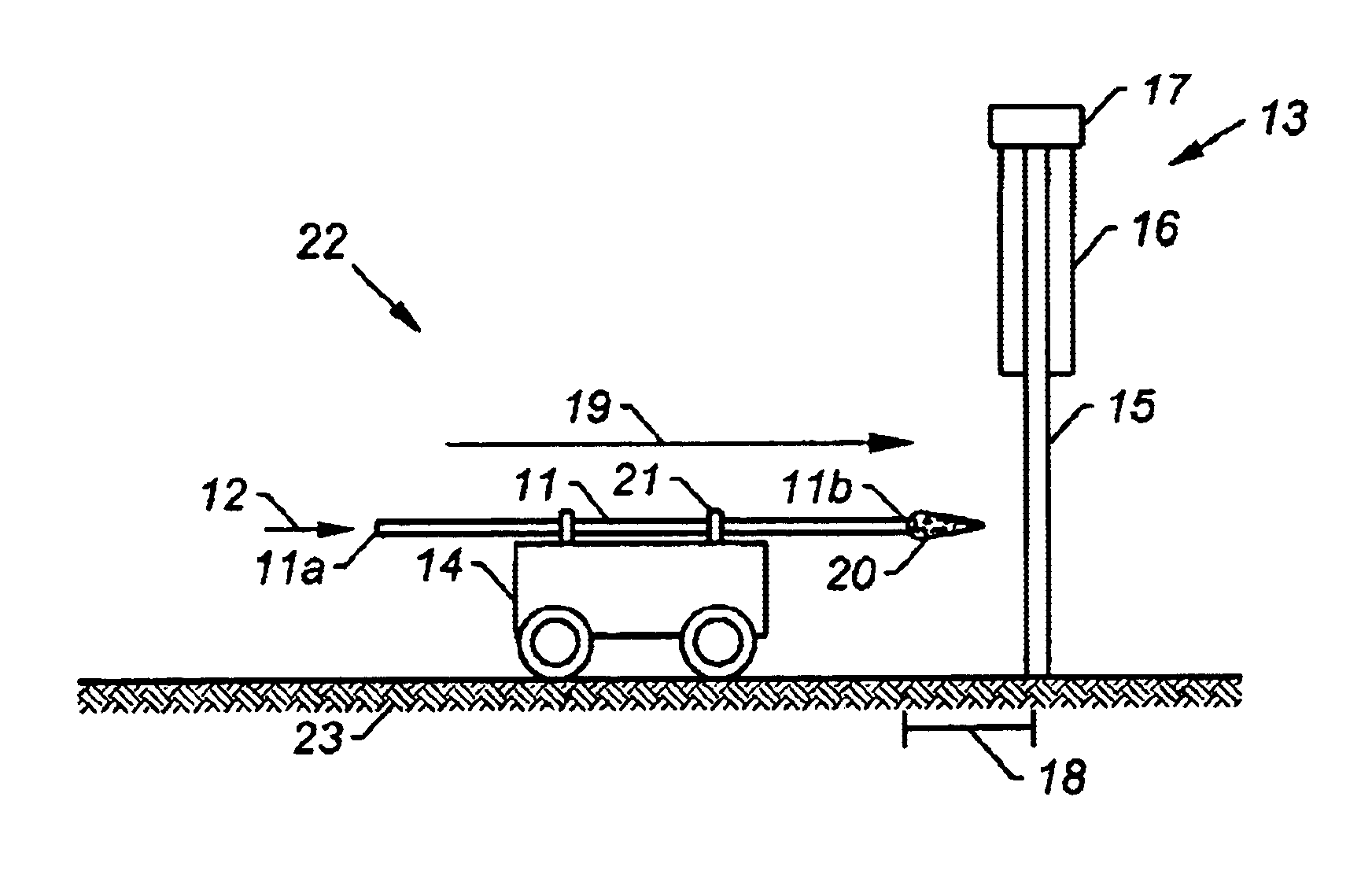
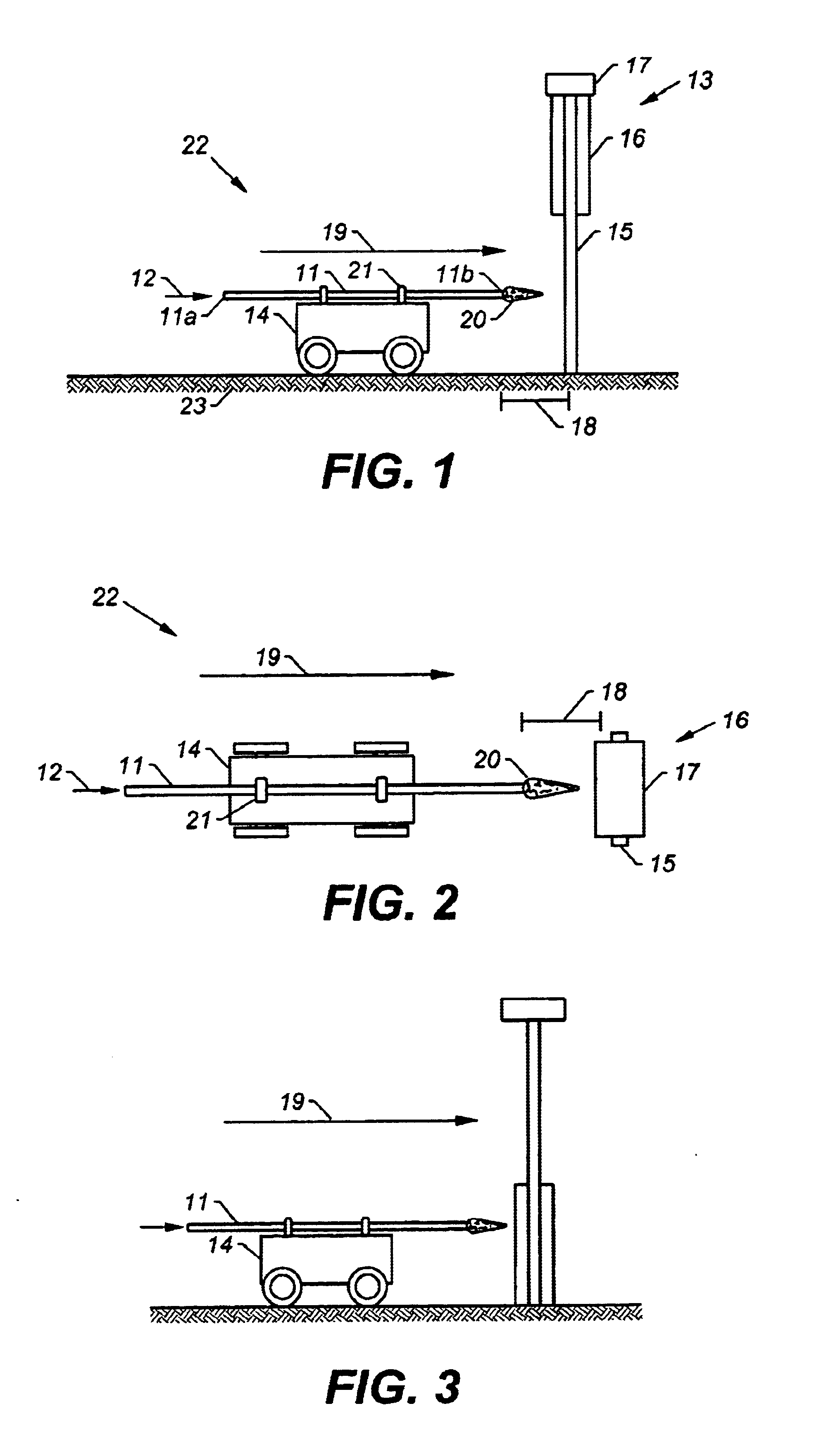
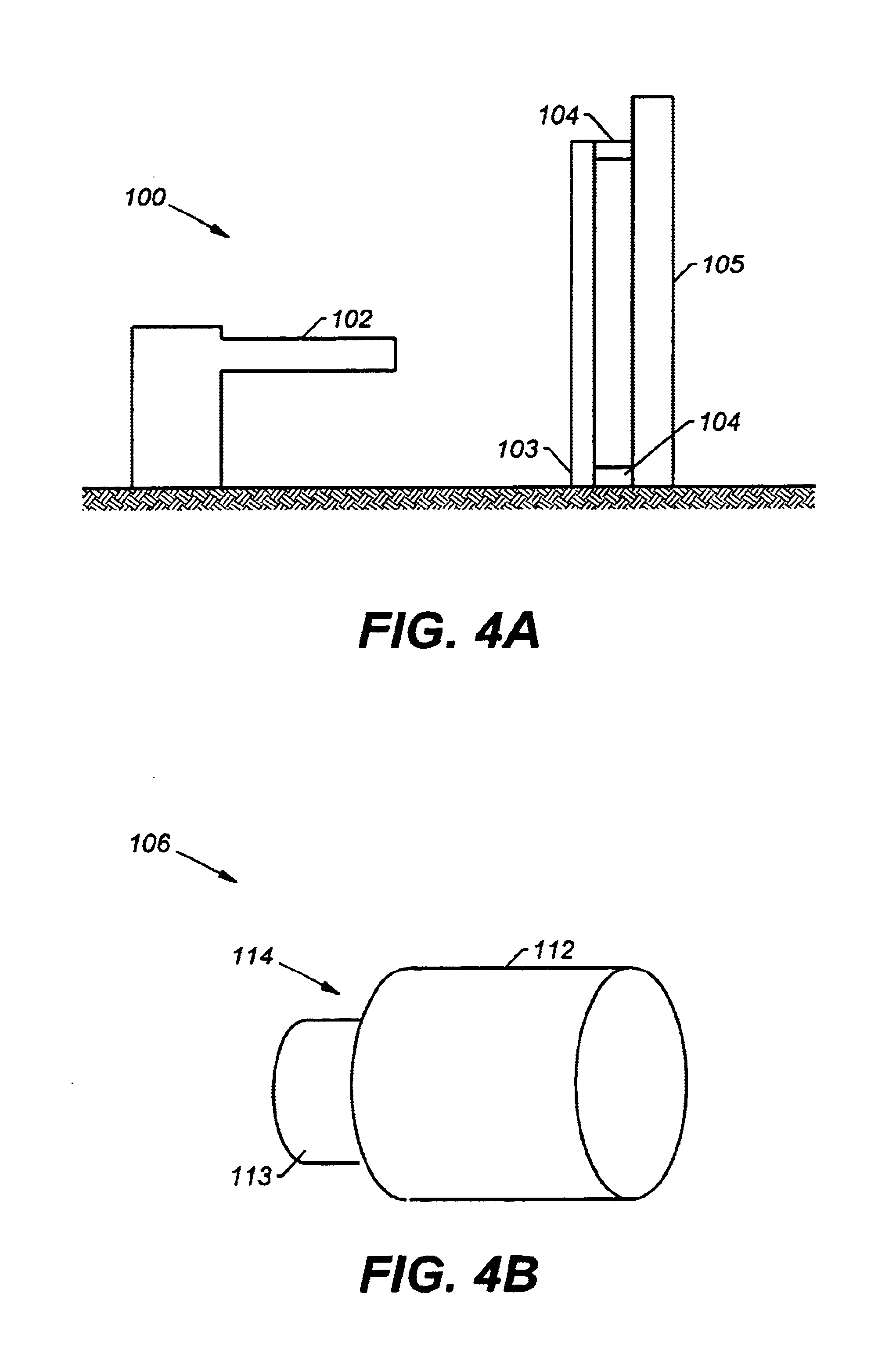
The following sets forth an example using the explanations and equations set forth above to illustrate the calculation methodology of this invention for designing a safety barrier for resisting an impact fragment of the one specified in the testing, namely one weighing 30 kg and traveling at 50 m / sec.

example problem

Design of Barrier to Resist Impact by Specified Fragment

DescriptionSymbolValueUnitsFragment Input ValuesFragment weightmf66lbsFragment impact velocityvf164ft / secRequired Panel Inputs(Inputs for a 2″× 6″× 10 gage bridge deck panel)Effective panel widthbp18inTotal structural andwp14.1lbs / ft2fire panel weightPanel lengthL96inMaterial static yield stressFys50.0kips / in2Material ultimate strengthFus70.0kips / in2Elastic modulusE29000.0kips / in2Section modulus over effectiveS3.1 bp / 24in3panel width (bp)(Note: Panel properties givenover 2 ft width)Moment of inertia overI3.1 bp / 24ineffective panel width (bp)Cross sectional area overA4.7 bp / 24ineffective panel width (bp)Material thicknesst0.135inDiameter of bolts attachingd0.875inpanel to columnBolt edge distanceLe2.6inBolt ultimate shear strengthVb36kipNumber of bolts overNb2full panel widthDynamic Increase FactorDIFY1.19for yield strength forhigh strain rate effects (c)Yield strength Increase FactorSIFY1.10for average vs.minimum material prope...

the structure of the environmentally friendly knitted fabric provided by the present invention; figure 2 Flow chart of the yarn wrapping machine for environmentally friendly knitted fabrics and storage devices; image 3 Is the parameter map of the yarn covering machine
Login to View More

PUM

No PUM Login to View More

Abstract

A blast fragment and oxygen fire safety barrier comprising a corrugated impact panel connected to and spanning a pair of columns designed by directly impacting the barrier with a fragment of specified weight at a specified velocity to obtain test values for use in determining whether the barrier is capable of absorbing impact kinetic energy (KE) without exceeding predetermined maximum allowable ductability and maximum allowable deflection to span ratios, and dissipating strain energy at such maximum allowable deflection, and whether connectors have sufficient shear strength considering the lesser of maximum dynamic shear capacity of said column and a maximum dynamic shear force based on measured peak reaction during direct fragment impact on the column, includes an oxygen fire resistant panel on the non-blast side of the impact panel spaced from said impact panel a distance in excess of the maximum allowable deflection of said impact panel.

Description

FIELD OF THE INVENTIONThis invention relates to oxygen fire and oxygen fire / fragment barriers useful in air separation plants.BACKGROUNDAir separation plants operate at high pressures and have potentially hazardous equipment that should be considered for enclosure by barriers. The primary purpose of a safety barrier is to prevent injury to personnel. A secondary purpose is to prevent or lessen damage to adjacent equipment. Of particular concern are barriers where oxygen services are involved. Oxygen flash fires and / or blowouts are much different in temperature, intensity and fuel from a 48 hour petroleum refinery or petrochemical plant fire. In refinery or petrochemical fires, the fuel is hydrocarbons exhausting through metal such as pipes and tanks, and temperatures can reach as high as 1800° F. In an oxygen fire, the fuel is metal itself. These fires burn at extremely high temperatures of 5500° F. and higher.The Industrial Gas Council (“IGC”) of the European Industrial Gas Associa...

Claims

the structure of the environmentally friendly knitted fabric provided by the present invention; figure 2 Flow chart of the yarn wrapping machine for environmentally friendly knitted fabrics and storage devices; image 3 Is the parameter map of the yarn covering machine
Login to View More

Application Information

Patent Timeline
no application Login to View More
IPC IPC(8): E04H9/10E04H9/04
CPCE04H9/10
Inventor DUNLEAVY, KIMOSWALD, CHARLES J.
Owner AIR LIQUIDE PROCESS & CONSTRUCTION INC
Features
  • R&D
  • Intellectual Property
  • Life Sciences
  • Materials
  • Tech Scout
Why Patsnap Eureka
  • Unparalleled Data Quality
  • Higher Quality Content
  • 60% Fewer Hallucinations
Social media
Patsnap Eureka Blog
Learn More