

Method and apparatus for noninvasive intraductal fluid diagnostic screen
a non-invasive, intra-uterine fluid technology, applied in the field of non-invasive intra-uterine fluid diagnostic screen, can solve the problems of difficult detection of difficulty in identifying malignant and benign breast cancer
- Summary
- Abstract
- Description
- Claims
- Application Information
AI Technical Summary
Benefits of technology
Problems solved by technology
Method used
Image

Examples
Embodiment Construction
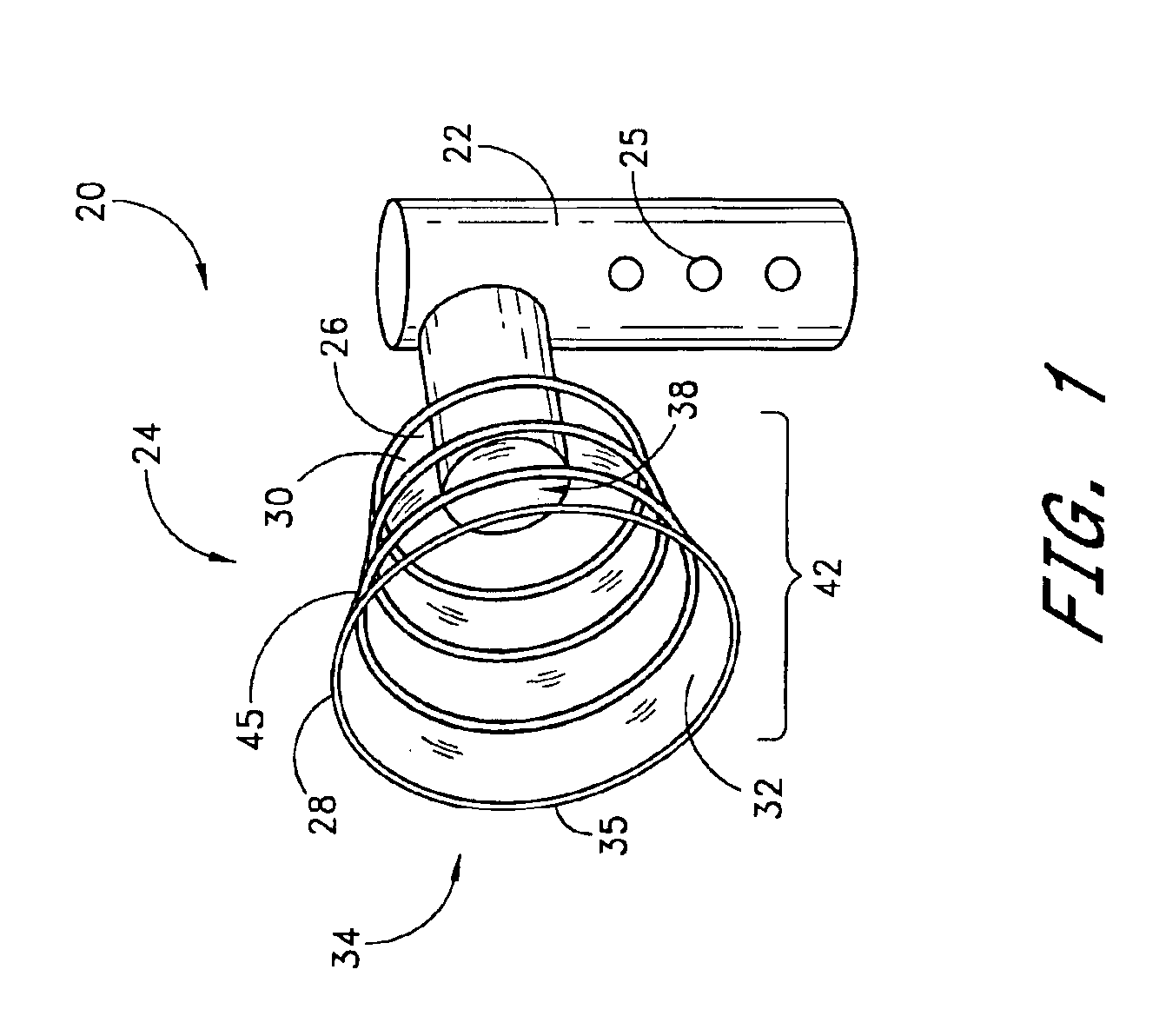
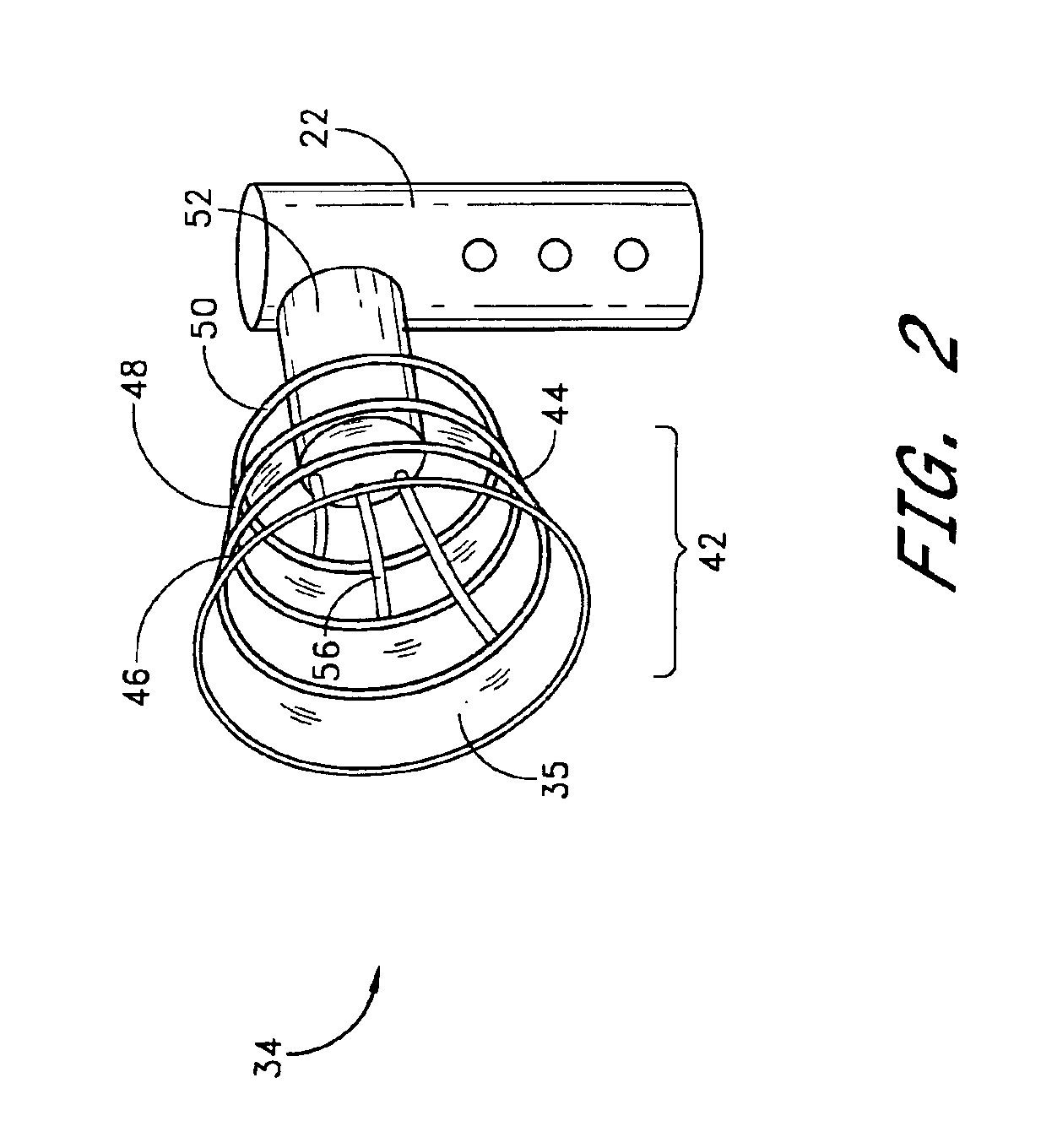
Referring to FIG. 1, there is illustrated a schematic representation of a portable, self-contained intraductal fluid aspiration device 20 in accordance with one aspect of the present invention. The aspiration device 20 includes a housing 22, for containing various controls and functional components of the device 20. One or more controls and / or indicators 25 may be provided on the housing, for controlling various aspects of the device such as suction, compression, and other features (e.g., heat, ultrasound) which may be included depending upon the intended functionality of the aspiration device 20. The housing 22 may be formed by extrusion, injection molding or other well known techniques from a suitable biocompatible material such as high density polyethylene, nylon, polyethylene terephthalate, or others well known in the art. The housing is preferably formed in an ergonomic configuration, to comfortably facilitate grasping in one hand during use.
The housing 22 is provided with a pa...
PUM
 Login to View More
 Abstract
Description
Claims
Application Information
 Login to View More