Aircraft thickness/camber control device for low sonic boom

a technology of camber control and aircraft, which is applied in the direction of canard-type aircraft, airflow influencers, transportation and packaging, etc., can solve the problems of sonic boom creating a major practical risk of commercial supersonic aviation, unable to easily flow around the plane, and unable to meet the needs of aircra

US7070146B2Inactive Publication Date: 2006-07-04SUPERSONIC AEROSPACE INT
11 Cites 11 Cited by

Patent Information

Authority / Receiving Office
US · United States
Patent Type
Patents(United States)
Current Assignee / Owner
Publication Date
2006-07-04
Estimated Expiration
Not applicable · inactive patent

Smart Images

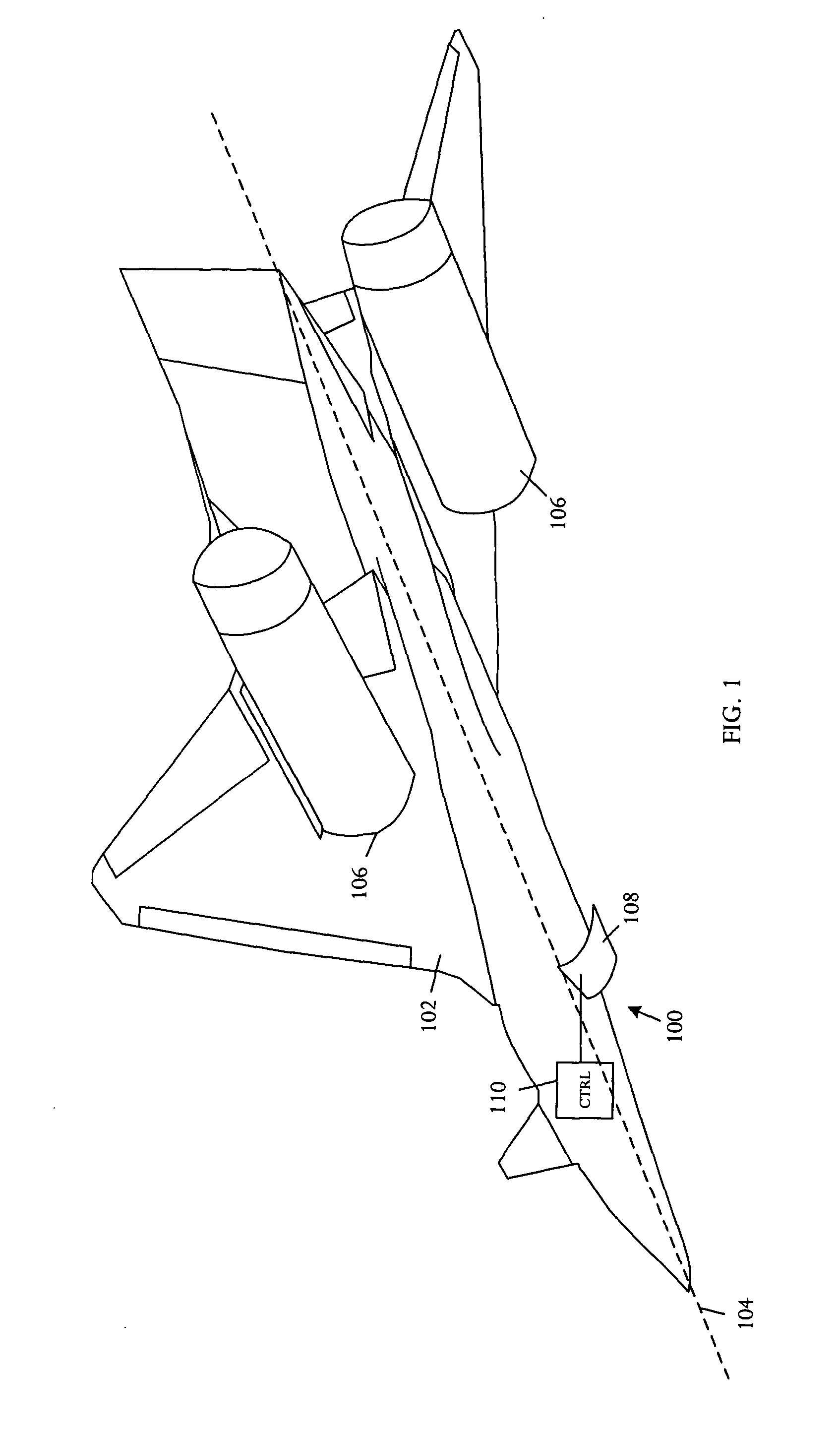
  • Figure 1
    Figure 1
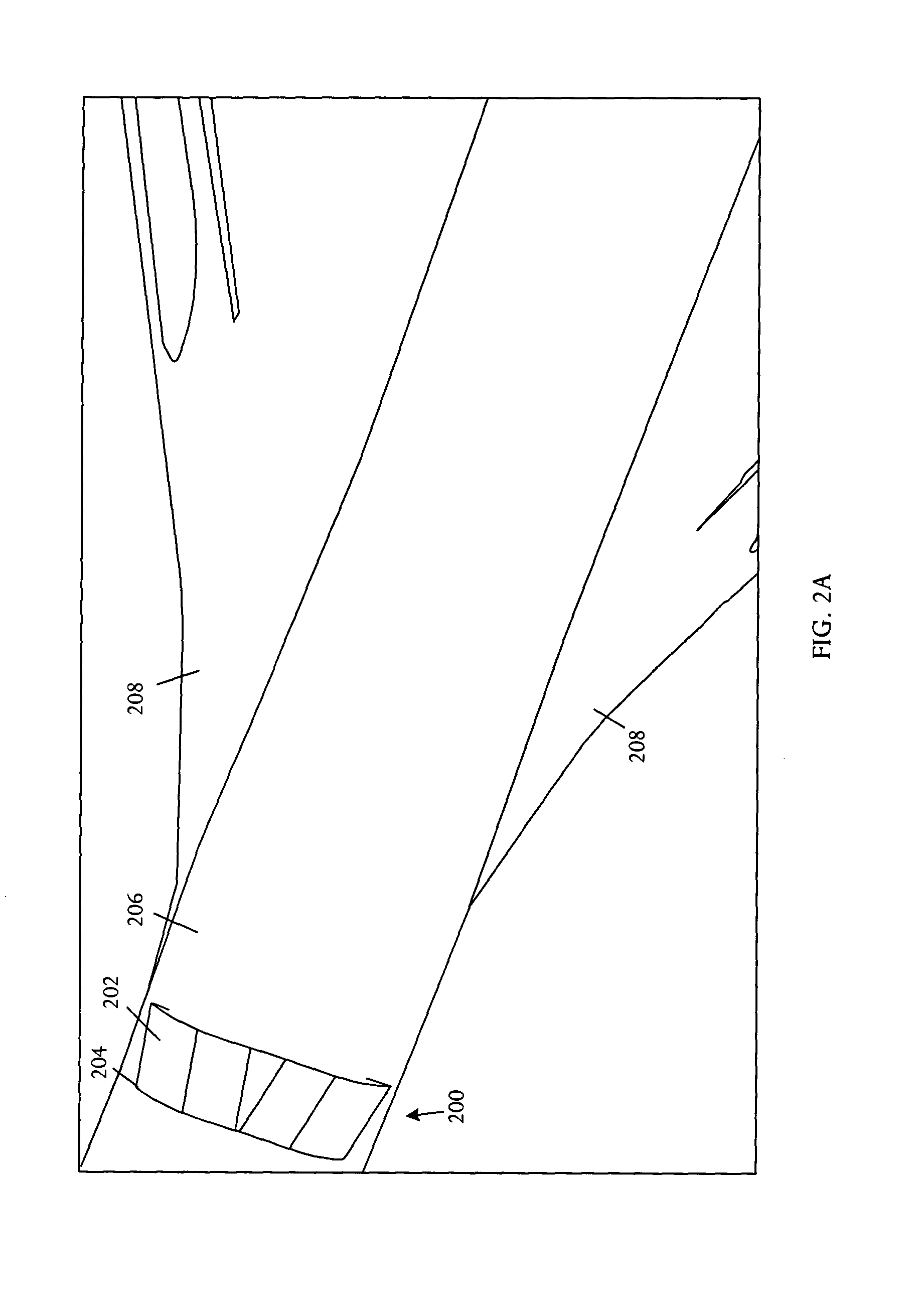
  • Figure 2
    Figure 2
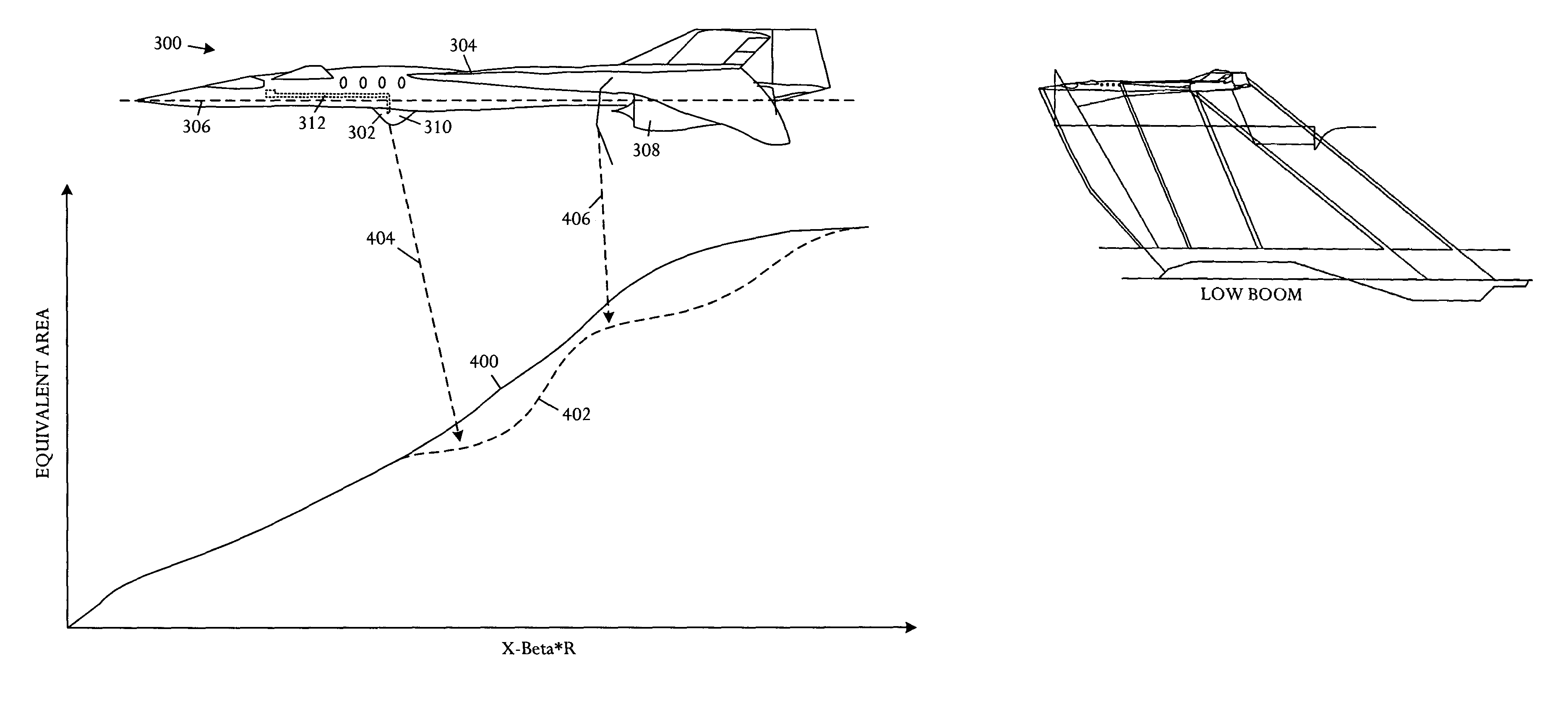
  • Figure 3
    Figure 3
Patent Text Reader

Abstract

An aircraft thickness / camber control device mounts to the lower surface of a airfoil configuration, for example on a fuselage, and extends along a longitudinal axis. The device, when deployed, generates expansions ahead of compressions generated by off-design conditions, inlet spillage for example, and enables maintenance of a low boom signature. The device, when positioned at appropriate locations, may also be used as a drag reduction device. The thickness / camber control device comprises a structural member capable of coupling to the airfoil at a position forward of the concentrated source of added compression and a control element. The control element is coupled to the structural member and controls the structural member to adjust thickness / camber of the configuration to cancel the far-field effect of the extra compression or concentrated pressure source.
Need to check novelty before this filing date? Find Prior Art

Description

BACKGROUND OF THE INVENTION

[0001] Air travelers have long sought the convenience and efficiency of widespread supersonic commercial aviation only to be denied by technological, economic, and political roadblocks. With operations spanning over a quarter of a century, the Concorde remains the only commercial aircraft that travels at supersonic speeds but struggles with technological obsolescence. Fuel consumption and maintenance requirements of the Concorde strain commercial feasibility in today's competitive environment. Possibly overshadowing other technological and economic shortcomings is the Concorde's thunderous sonic boom that is capable of shattering windows in buildings under the flight path, a burden that restricts the Concorde to routes over oceans.

[0002] The sonic boom creates a major practical risk of commercial supersonic aviation so long as commercial supersonic aircraft are prohibited from flying over populated land masses.

[0003] A sonic boom occurs due to pressure waves ...

Examples

Embodiment Construction

[0022]Referring to FIG. 1, a schematic pictorial and block diagram illustrates an example of an aircraft thickness / camber control device 100 extending along a longitudinal axis 104 forward and aft and that has a concentrated source of compression 106 for example that results from inlet shock or spillage. The thickness / camber control device 100 comprises a structural member 108 that mounts on the bottom of the outer mold line at a position forward of the concentrated source of compression 106 and a control element 110. The control element 110 is connected to the structural member 108 and controls the structural member 108 to adjust thickness / camber of the airfoil 102 and generates expansions that cancel the far-field effect created by the concentrated source of compression 106.

[0023]Typically, the largest concentrated source of compression 106 in an aircraft is a nacelle. An airfoil is generally designed for most aerodynamically-efficient performance at a particular Mach number or ra...