
Test method and architecture for circuits having inputs
- Summary
- Abstract
- Description
- Claims
- Application Information
AI Technical Summary
Benefits of technology
Problems solved by technology
Method used
Image

Examples
Embodiment Construction
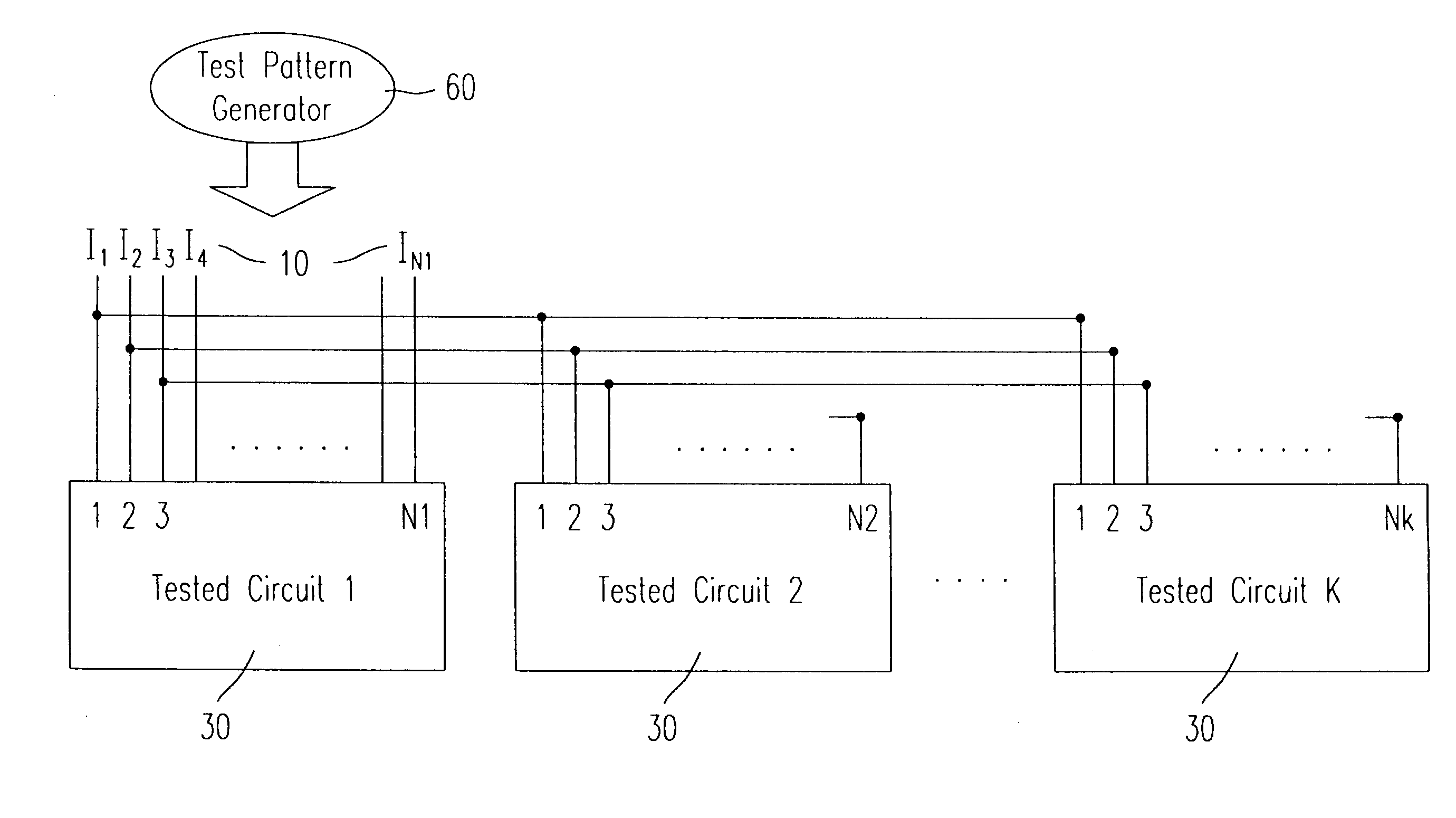
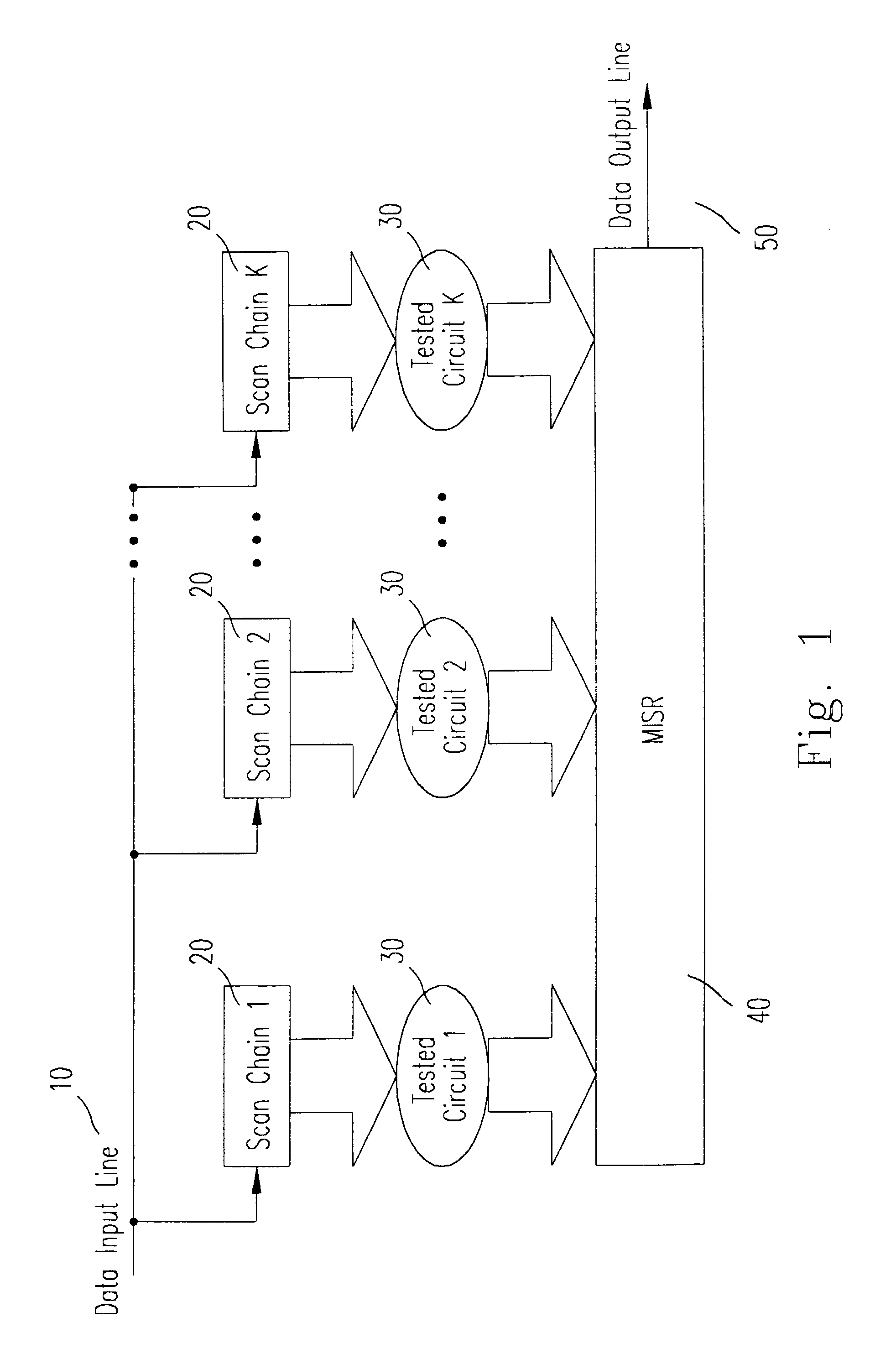
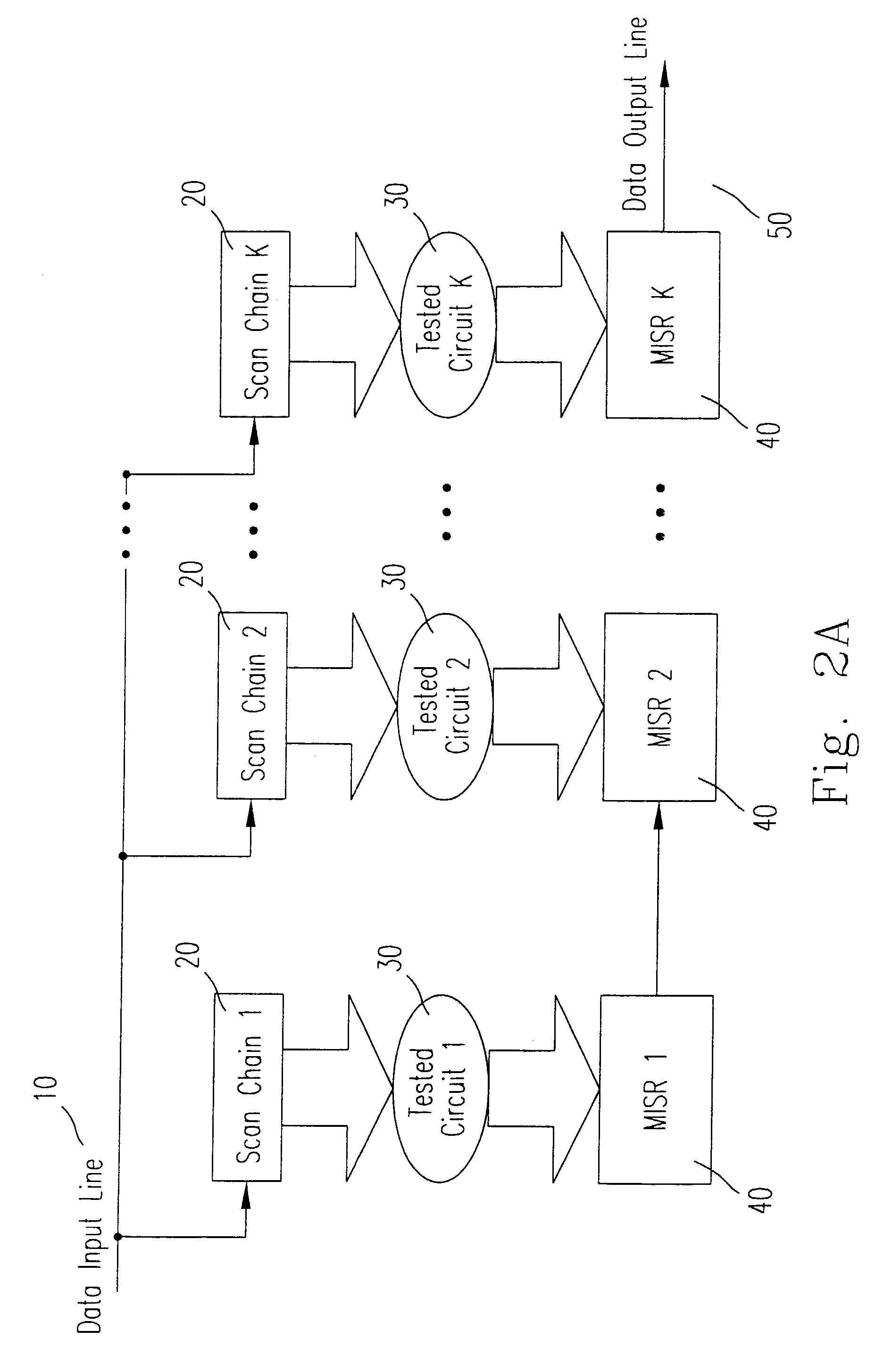
[0055]The present invention is based on the recognition that upon proceeding the automatic test pattern generation (ATPG), a replacing test pattern optimally taking advantages of compatibilities of required test patterns of respective circuits without a lowered fault coverage is obtained. This differs from the conventional test pattern compression technique in that the former compression technique is directed to handle a single tested circuit whereas the present invention aims to deal with a plurality of tested circuits obtaining test data through a single data line. In order to better interpret the present invention, we use two tested circuits 1 and 2.
[0056]In the beginning of proceeding the automatic test pattern generation, a random test pattern is used to detect the fault until a certain fault coverage is reached. After most of faults are detected by the random test pattern, a deterministic test pattern is specially provided to deal with the rest detectable faults. If test patte...
PUM
 Login to View More
 Abstract
Description
Claims
Application Information
 Login to View More