
Pointing device for digital camera display
a technology of pointing device and digital camera, applied in the field of digital cameras, can solve the problems of difficult use of interface controls, awkward use of location or icon design, and inability to design locations or icons, etc., and achieve the effect of improving the user interface of digital cameras, increasing the ease of use and functionality of digital cameras, and fast, accurately and robustly permitting
- Summary
- Abstract
- Description
- Claims
- Application Information
AI Technical Summary
Benefits of technology
Problems solved by technology
Method used
Image

Examples
Embodiment Construction
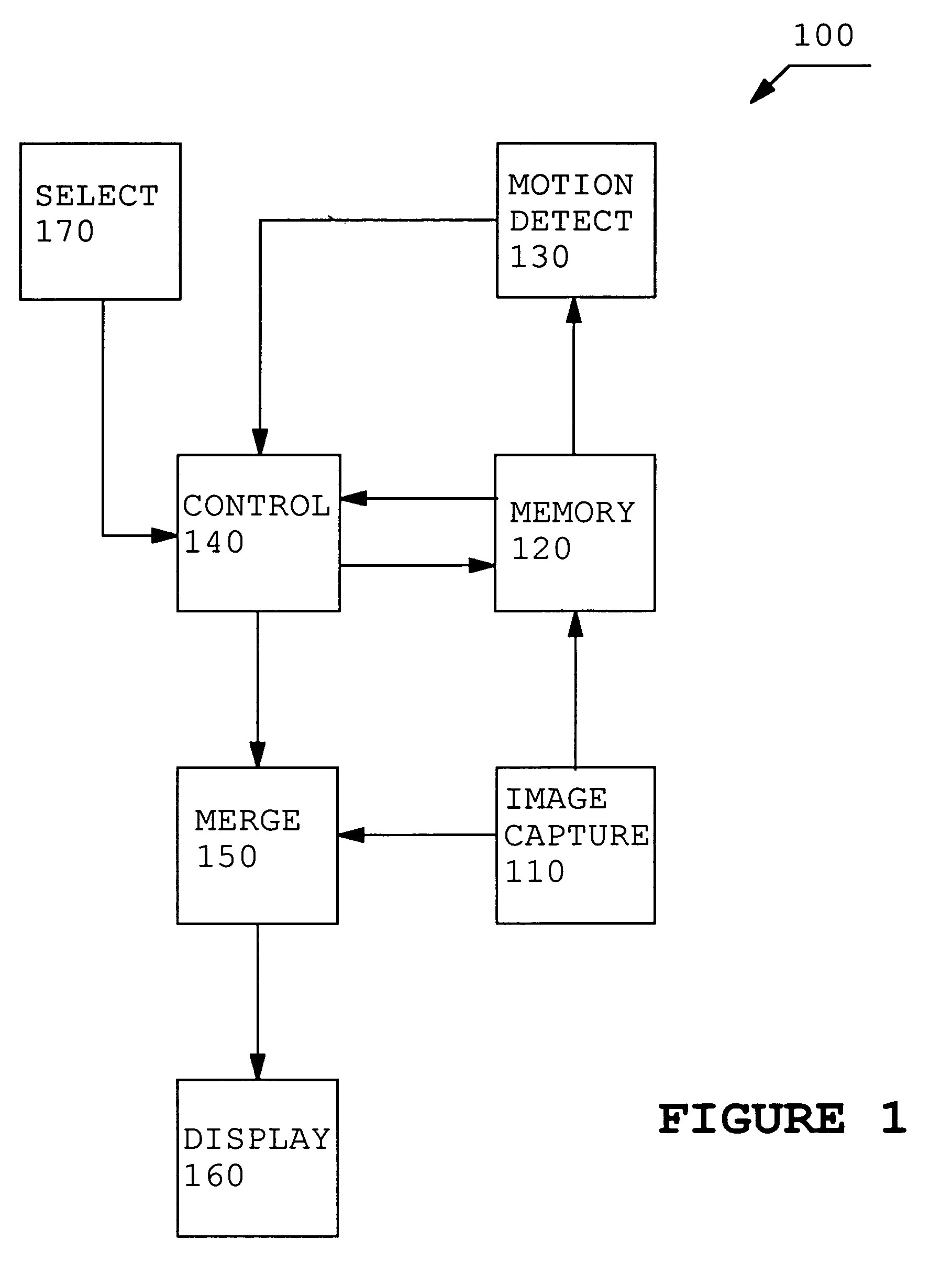
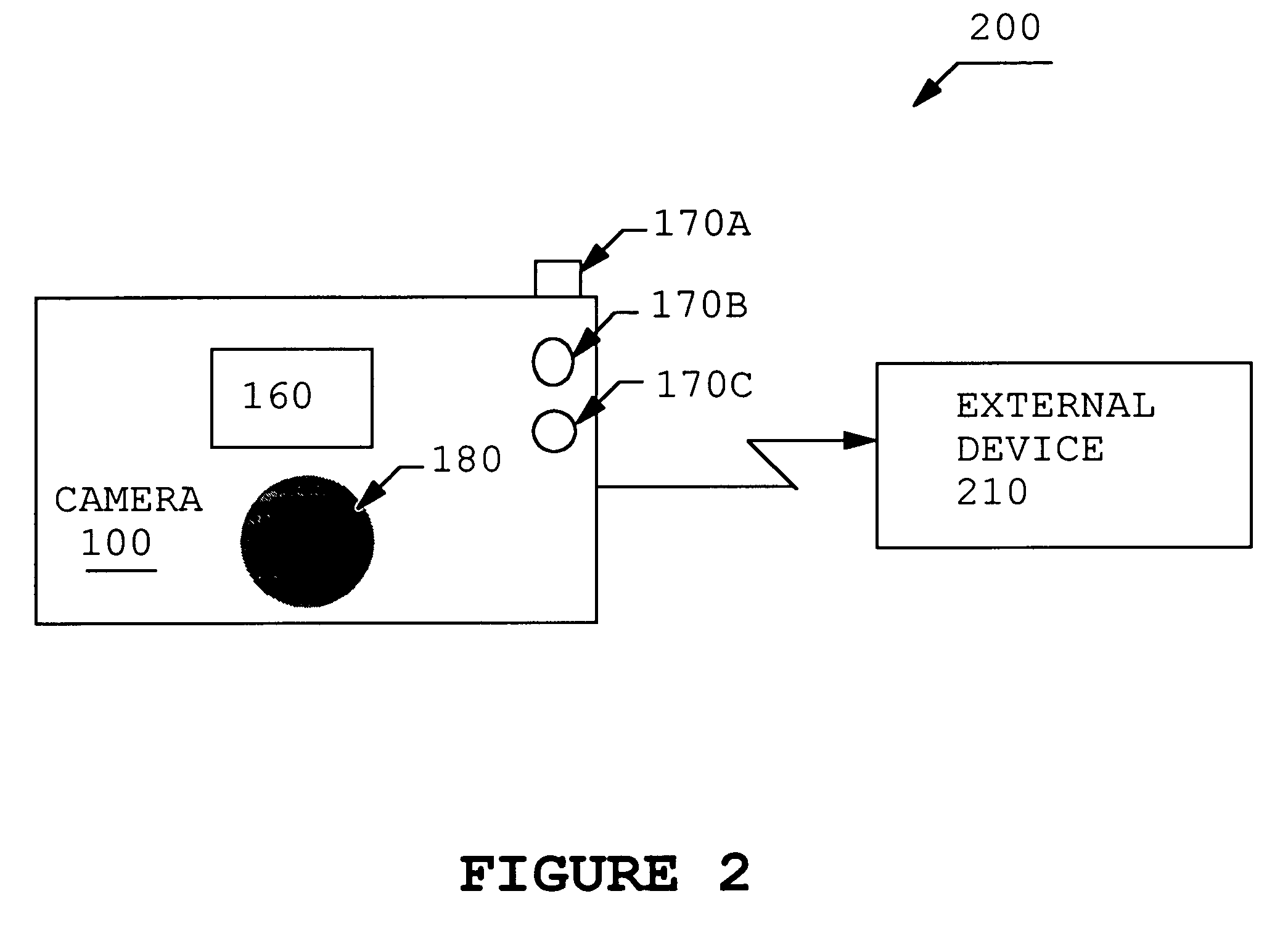
[0022]Embodiments of the invention are discussed below with reference to FIGS. 1–10b. Those skilled in the art will readily appreciate that the detailed description given herein with respect to these figures is for explanatory purposes, however, because the invention extends beyond these limited embodiments.
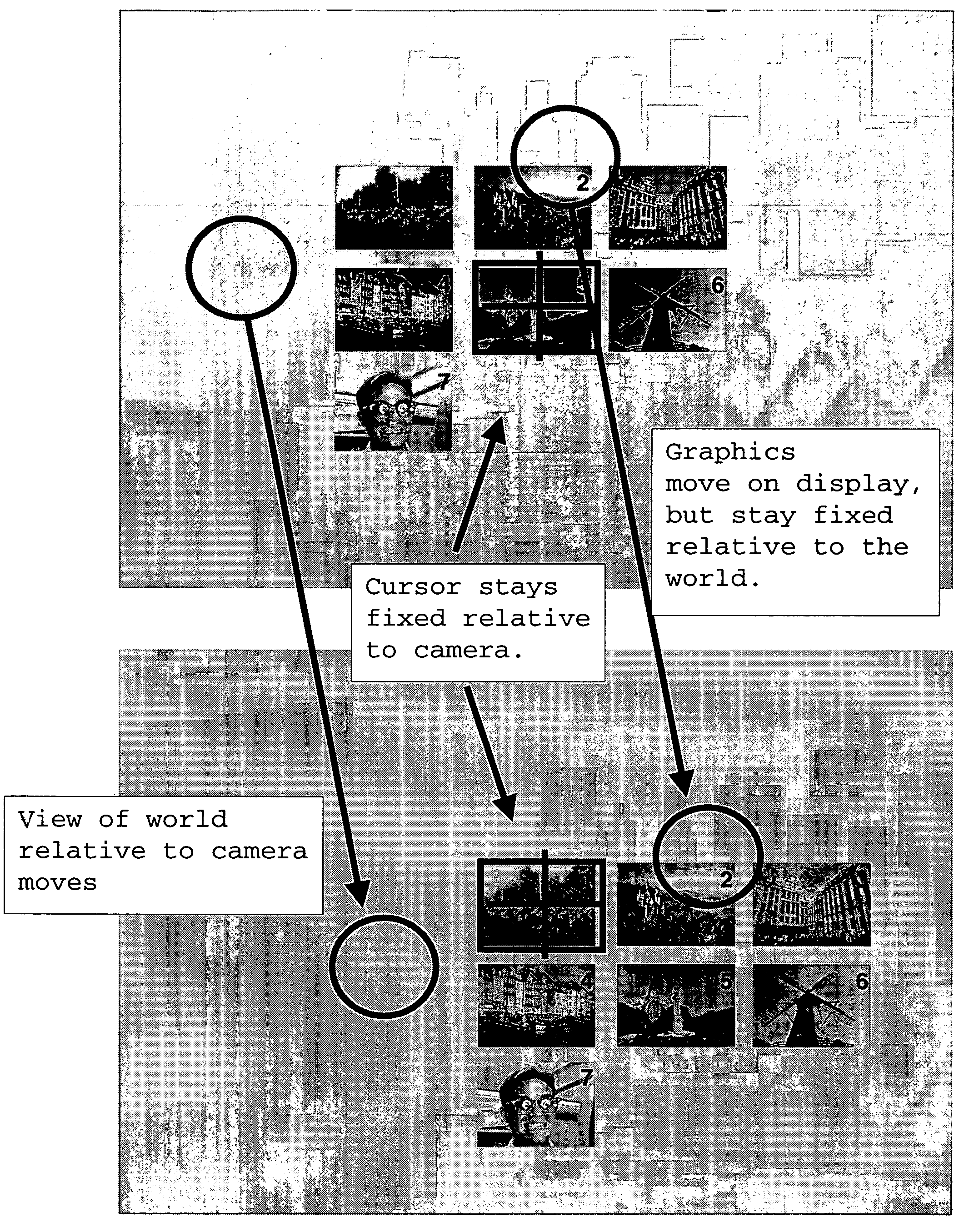
[0023]The invention described here allows a digital camera to be used as a pointing device such as a mouse or trackball. The motion of the camera is detected, and the motion of the camera is used to position graphic elements on the camera's own display. The camera's motion can be detected with sensors, such as gyroscopes, or the camera itself can be used as a motion sensor. One application of this involves using the camera as a computer mouse, or like a gun-sight, to select images from a sheet of low-resolution (“thumbnail”) images. The motion of the camera is tracked, and the user aims at the desired image from a sheet of thumbnail images. This application is illustrated in grea...
PUM
 Login to View More
 Abstract
Description
Claims
Application Information
 Login to View More