Brushing too hard—Over time, brushing too hard or using a hard-bristled toothbrush may cause excessive wear of your enamel and / or
cementum, causing
dentin to become exposed.Gum
disease—Inflamed and sore gums may cause sensitivity due to loss of supporting tissues and the resulting
exposure of root surfaces.Gum recession—Movement of the gums away from the tooth due to
periodontal disease will
expose root surfaces.Cracked teeth—Chipped or
broken teeth may fill with
bacteria and plaque resulting in decay and pain.
Grinding your teeth—
Grinding or clenching your teeth may wear down the enamel and
expose underlying
dentin.Advanced carious lesions close to pulp tissue which is the nerve of the tooth.Plaque—The presence of plaque on the root surfaces can cause sensitivity.
If too little force is applied, ineffective cleaning results.
If excessive force is used, injury to the surface of the gums surrounding the teeth, as well as excessive
erosion of the enamel,
dentin, and root on the teeth, can result.
This affects the balance of the toothbrush and the user's grip, which can cause variations in brushing force once the training device is removed.
Thus, it produces an unnatural instrument.
Additionally, the holders are bulky in comparison to the toothbrush
handle itself and require the user to adjust their grip to accommodate the larger holder size.
However, since desensitizing agents only provide temporary relief of painful or sensitive teeth, desensitizing agents applied by the dentist will quickly wear off, leaving the patient with sensitive teeth shortly following the dental visit and long before the next scheduled visit.
On the other hand, although a person can use desensitizing
toothpaste on a regular basis as part of his or her daily
oral hygiene, the time in which a person typically brushes does not provide enough
contact time in order to provide the same level of
pain relief that is afforded by desensitizing treatments applied by a dentist.
A person will typically
brush for only one minute or less, which is generally an insufficient amount of time for a desensitizing agent to permeate into the pores and / or fissures within a person's teeth in a high enough concentration in order to desensitize the teeth.
Nor are toothpastes able to provide a high enough concentration of desensitizing agent since toothpastes by necessity must include abrasives for cleaning the teeth, surfactants,
fluoride, fillers and other agents.
Tooth sensitivity can get worse as the patient becomes older unless it is treated in an early stage.
Providing a solution to this ailment is difficult because patients usually do not follow instructions or do not understand them.
They may also become negligent during brushing of their teeth, and continue to
brush their teeth in an incorrect manner.
There is also
confusion on the part of the patients as to what products to use for this condition.
Patients also do not know that they must apply
fluoride in a concentrated solution after they finish brushing.
The available tooth brushes and methods are not mechanized and present several problems.



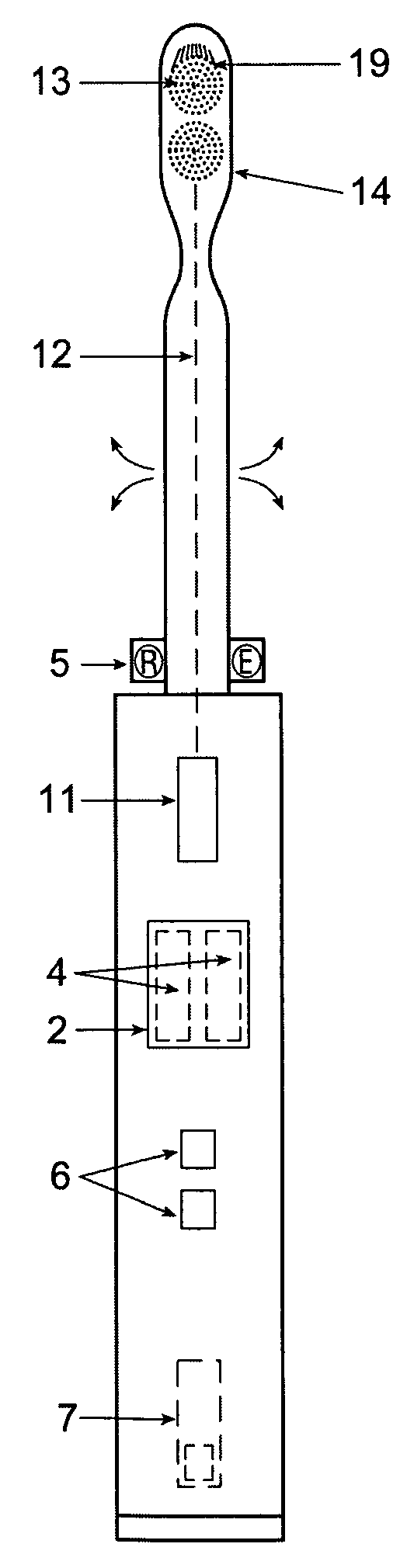
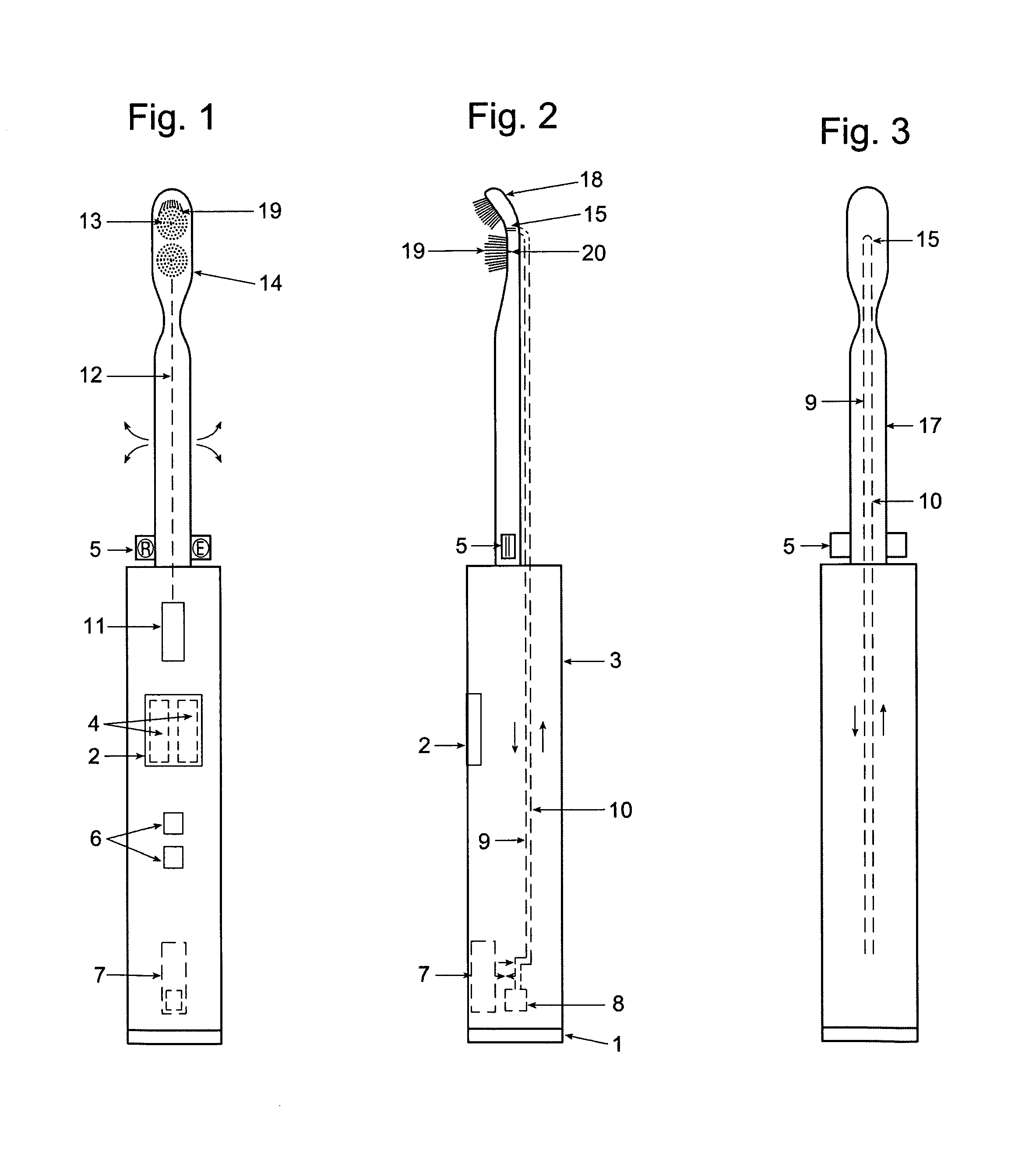
 Login to View More
  Login to View More