
Co-production of hydrogen and electricity in a high temperature electrochemical system
a high-temperature electrochemical and fuel cell technology, applied in the field of electrochemical systems, can solve the problems of low hydrogen production efficiency, low economic and environmental benefits of solar energy storage, and low hydrogen production efficiency of solar energy storage plants,
- Summary
- Abstract
- Description
- Claims
- Application Information
AI Technical Summary
Benefits of technology
Problems solved by technology
Method used
Image

Examples
third preferred embodiment
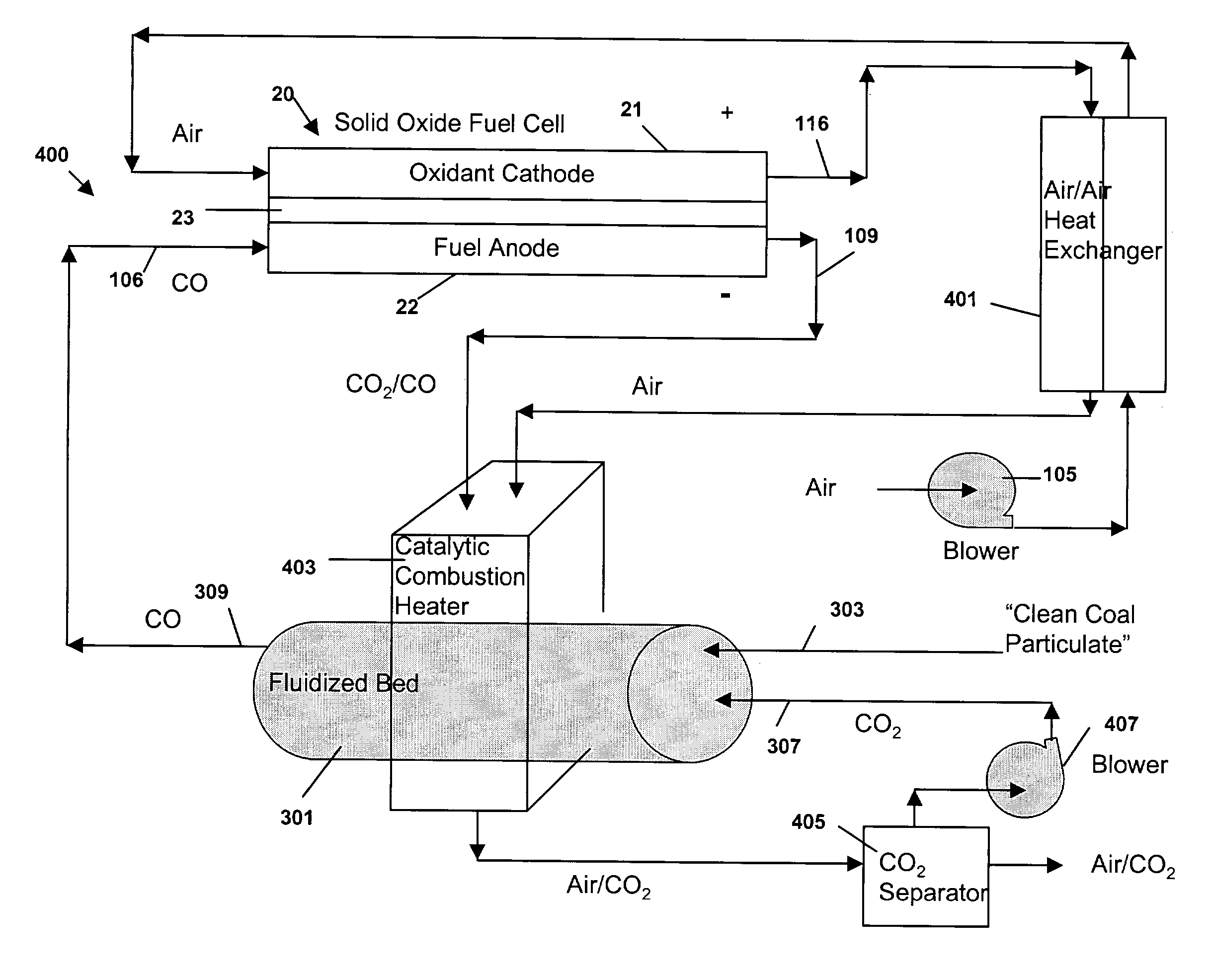
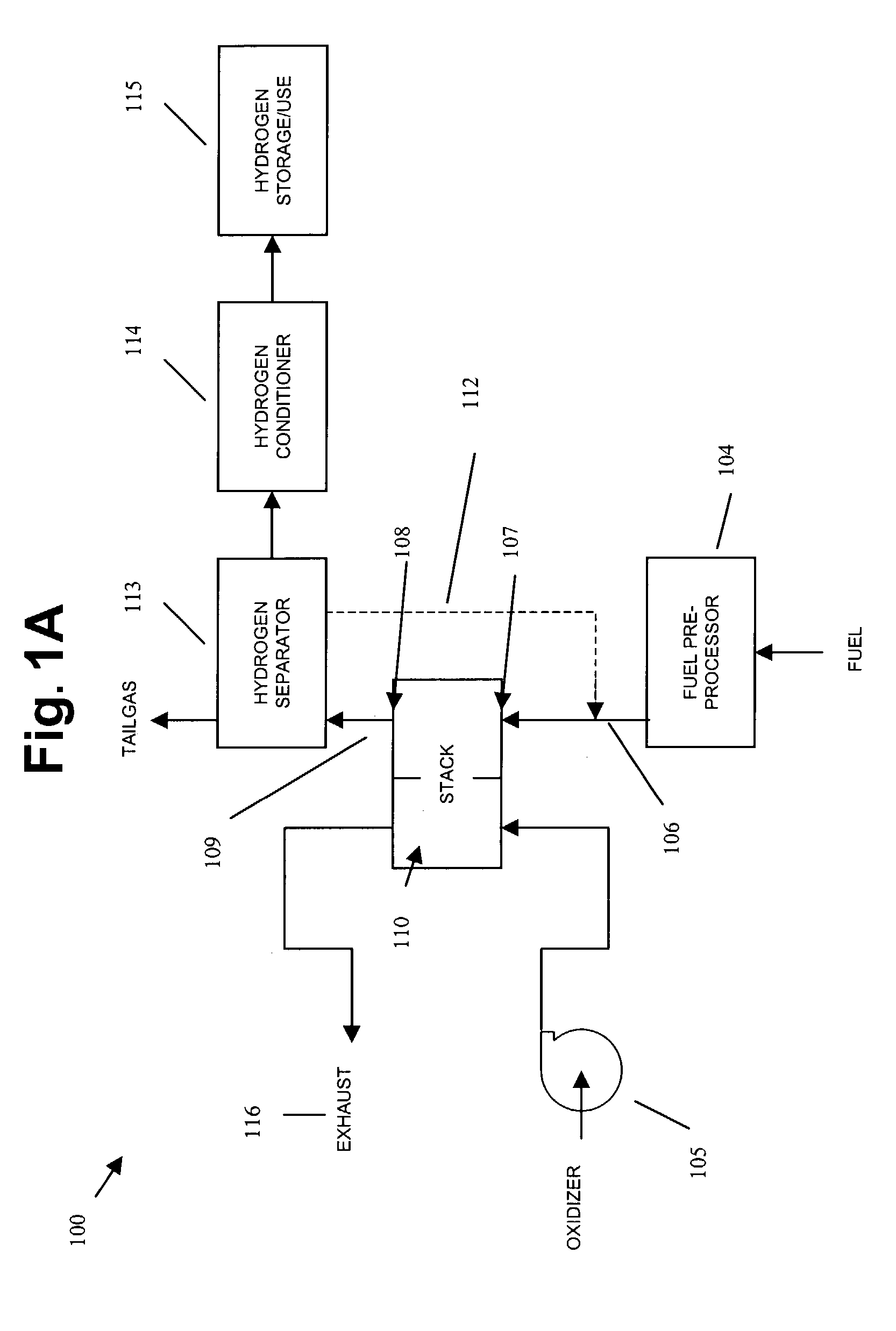
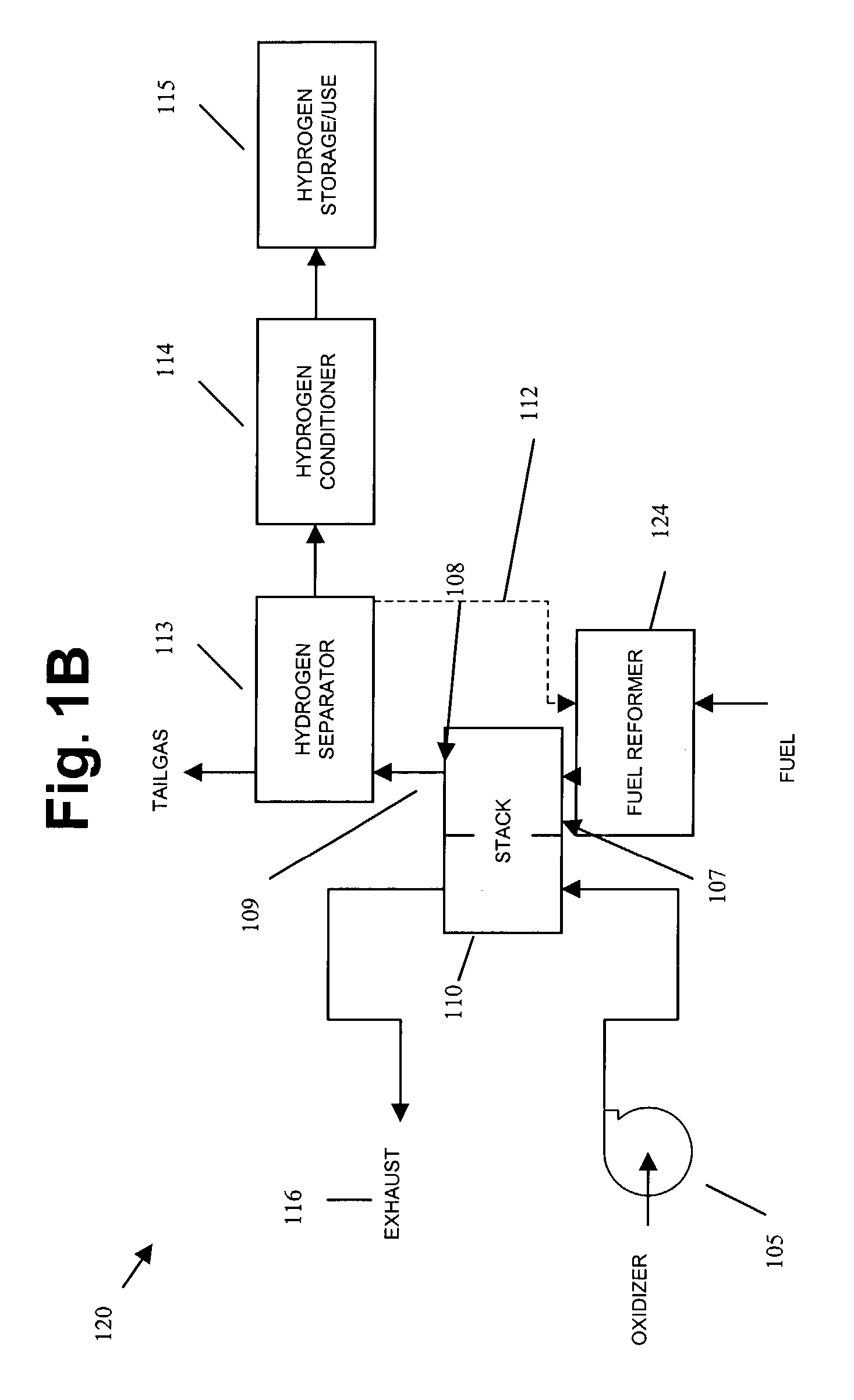
[0089]While the preferred embodiments described above have been described as using a hydrocarbon and / or hydrogen fuel, other non-hydrocarbon carbon containing fuels may be used instead. For example, carbon monoxide, or other carbon bearing gases may be used as fuel for a solid oxide fuel cell. These non-hydrocarbon carbon containing fuel gases may optionally be mixed with hydrogen, water vapor, hydrocarbon gases and / or other gases. Thus, in another preferred embodiment of the present invention, a non-hydrocarbon carbon containing fuel is used to operate the solid oxide fuel cell. The non-hydrocarbon carbon containing fuel may be used to operate the fuel cell with or without additional hydrocarbon and hydrogen containing gases, such as methane, natural gas, hydrogen and water vapor. In this embodiment, the fuel cell may be used with or without the hydrogen separator 113 and subsystem 115 described in the previous embodiments. The non-hydrocarbon carbon containing fuel preferably comp...
PUM
| Property | Measurement | Unit |
|---|---|---|
| temperature | aaaaa | aaaaa |
| chemical energy | aaaaa | aaaaa |
| electrical energy | aaaaa | aaaaa |
Abstract
Description
Claims
Application Information
 Login to View More