Apparatus and method for two-component bioelectrical impedance ratio measuring and monitoring

a bioelectric impedance and ratio technology, applied in the field of measuring and monitoring patient body fluid levels, can solve the problems of pulmonary edema, insufficient blood circulation of the heart, pressure in the pulmonary artery, etc., to reduce and/or eliminate the negative impact of motion artifacts, and assess the efficacy of treatment regimens.

US7596411B1Inactive Publication Date: 2009-09-29PACESETTER INC
12 Cites 2 Cited by

Patent Information

Authority / Receiving Office
US · United States
Patent Type
Patents(United States)
Current Assignee / Owner
Publication Date
2009-09-29
Estimated Expiration
Not applicable · inactive patent

Smart Images

  • Figure 1
    Figure 1
  • Figure 2
    Figure 2
  • Figure 3
    Figure 3
Patent Text Reader

Abstract

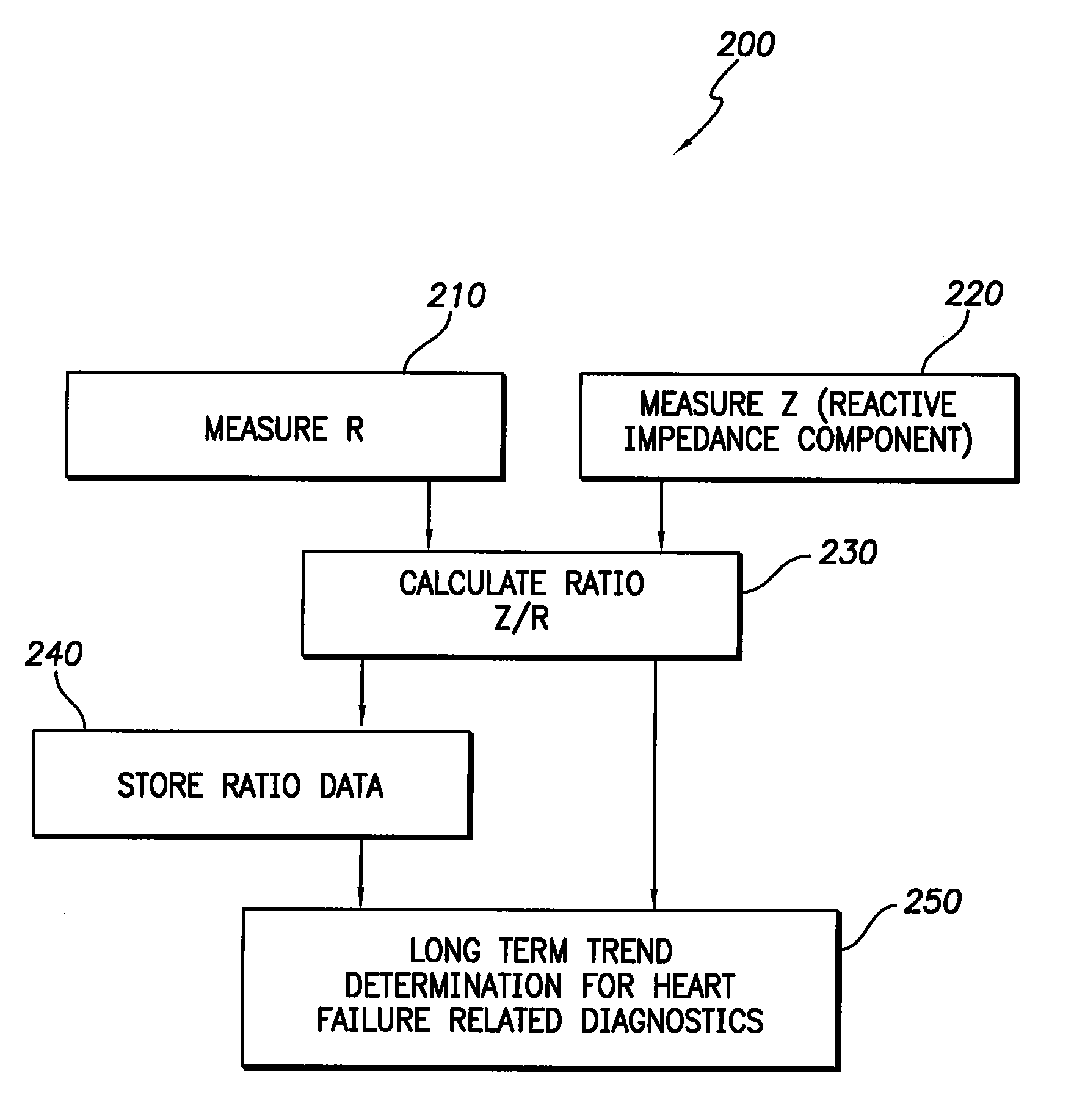
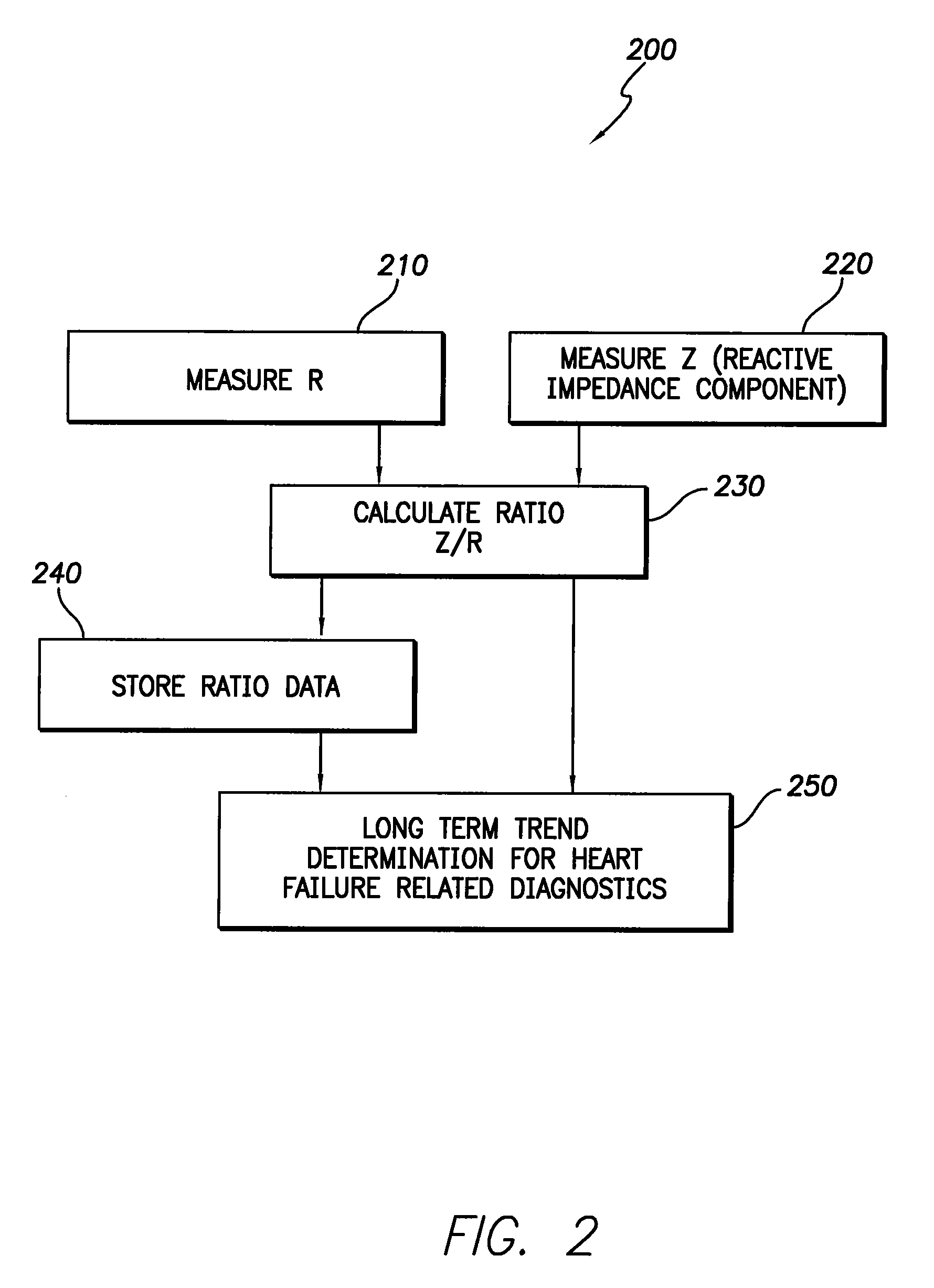
An implantable cardiac stimulation and rhythm management device includes an impedance measuring circuit which determines a patient's intra-thoracic impedance and the resistance and reactance components of the impedance. The device includes a microcontroller which calculates a ratio (Z / R) which equals the reactance (Z) divided by the resistance (R). The microcontroller is configured to use the calculated ratios to establish a baseline intra-thoracic fluid level, an upper bound relative to the baseline, and a lower bound relative to the baseline, and to monitor the Z / R ratio relative to the baseline and upper and lower bounds. When the Z / R ratios are outside of the established bounds, operating parameters of the stimulation and rhythm management may be altered by the microcontroller.
Need to check novelty before this filing date? Find Prior Art

Description

BACKGROUND OF THE INVENTION

[0001] 1. Field of the Invention

[0002] The present invention relates to the field of measuring and monitoring patient body fluid levels and more particularly to measuring and long-term monitoring of body fluid accumulation with bioelectrical impedance.

[0003] 2. Description of the Related Art

[0004] Pulmonary edema is a condition that results in intra-thoracic fluid accumulation, particularly accumulating within the lungs. Pulmonary edema results when the normal exchange of oxygen and carbon dioxide is disrupted by increased pressure within the blood vessels of the lungs, forcing fluid into the alveoli. Alveoli that are filled with fluid are thereby prevented from absorbing oxygen, resulting in pulmonary edema.

[0005] In most instances, heart problems are the cause of pulmonary edema, a condition often referred to as congestive heart failure (CHF). CHF is a condition in which the heart does not adequately maintain circulation of blood. CHF is characterized by an i...

Examples

Embodiment Construction

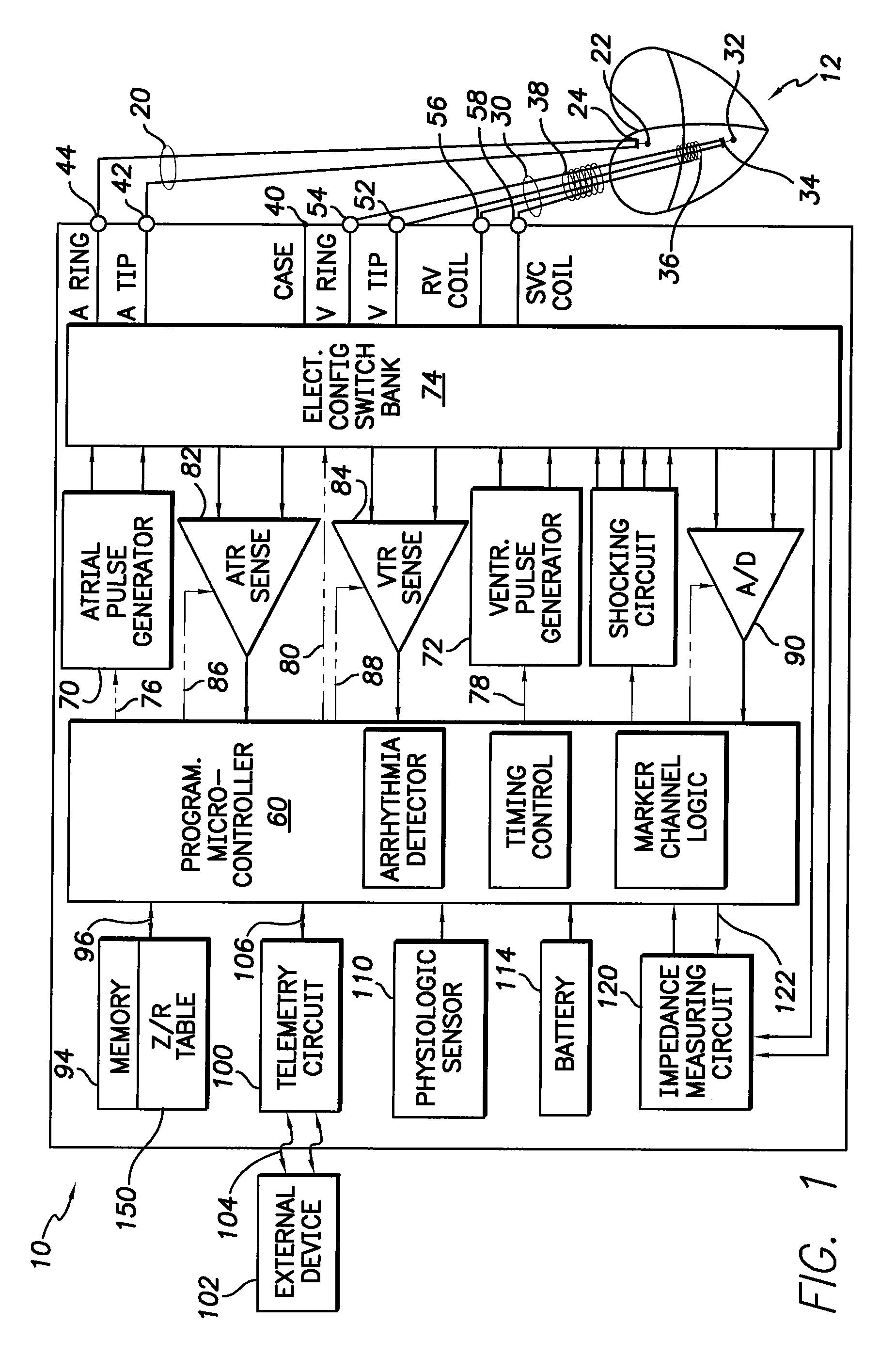
[0032]The following description includes the best mode presently contemplated for carrying out the invention. This description is not to be taken in a limiting sense, but is made merely for the purpose of describing the general principles of the invention. The scope of the invention should be determined with reference to the claims.

[0033]The present invention provides a method and apparatus for assessing and monitoring impedance for the purpose of assessing and monitoring fluid accumulation levels of the human thoracic cavity and / or lungs and for automatically adjusting the implantable ICD stimulation in response to long-term impedance measurements.

[0034]To better understand the invention, it will first be helpful to have an understanding of the basic functions performed by exemplary implantable stimulation devices with which the invention may be used, e.g., an ICD with dual chamber coils (see FIG. 1) and / or a dual-chamber pacemaker (which is a subset of that shown in FIG. 1). While...