
Film with alignment film and optical device
a film and alignment technology, applied in the field of film with alignment film and optical device, can solve the problems of inability to align liquid crystals therein, and achieve the effects of excellent adhesion, excellent re-workability, and high enduran
- Summary
- Abstract
- Description
- Claims
- Application Information
AI Technical Summary
Benefits of technology
Problems solved by technology
Method used
Image

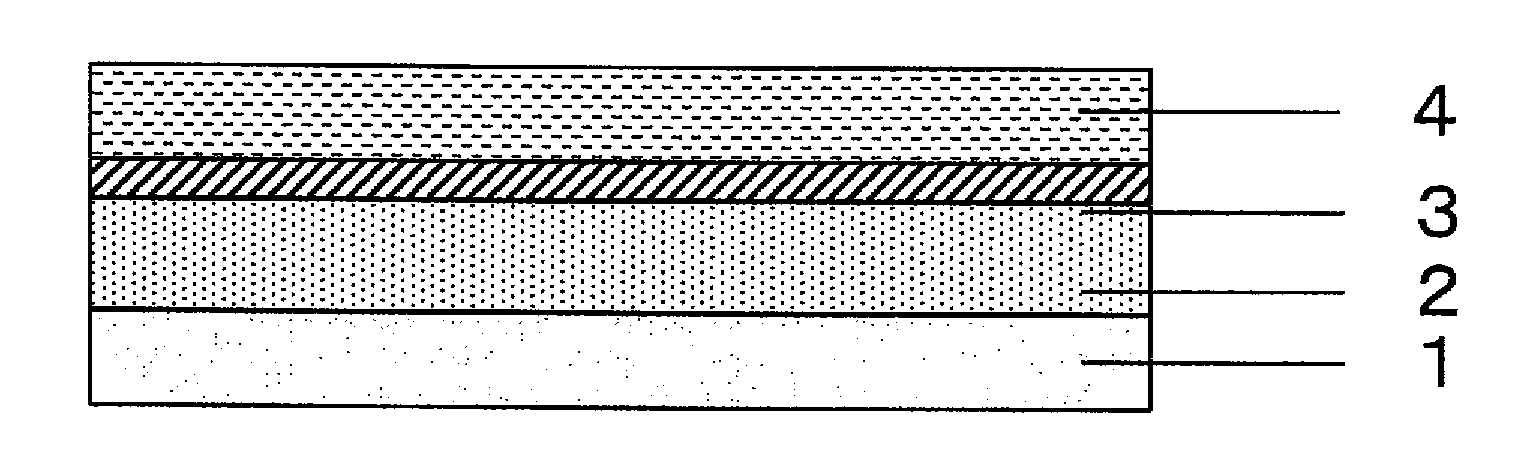
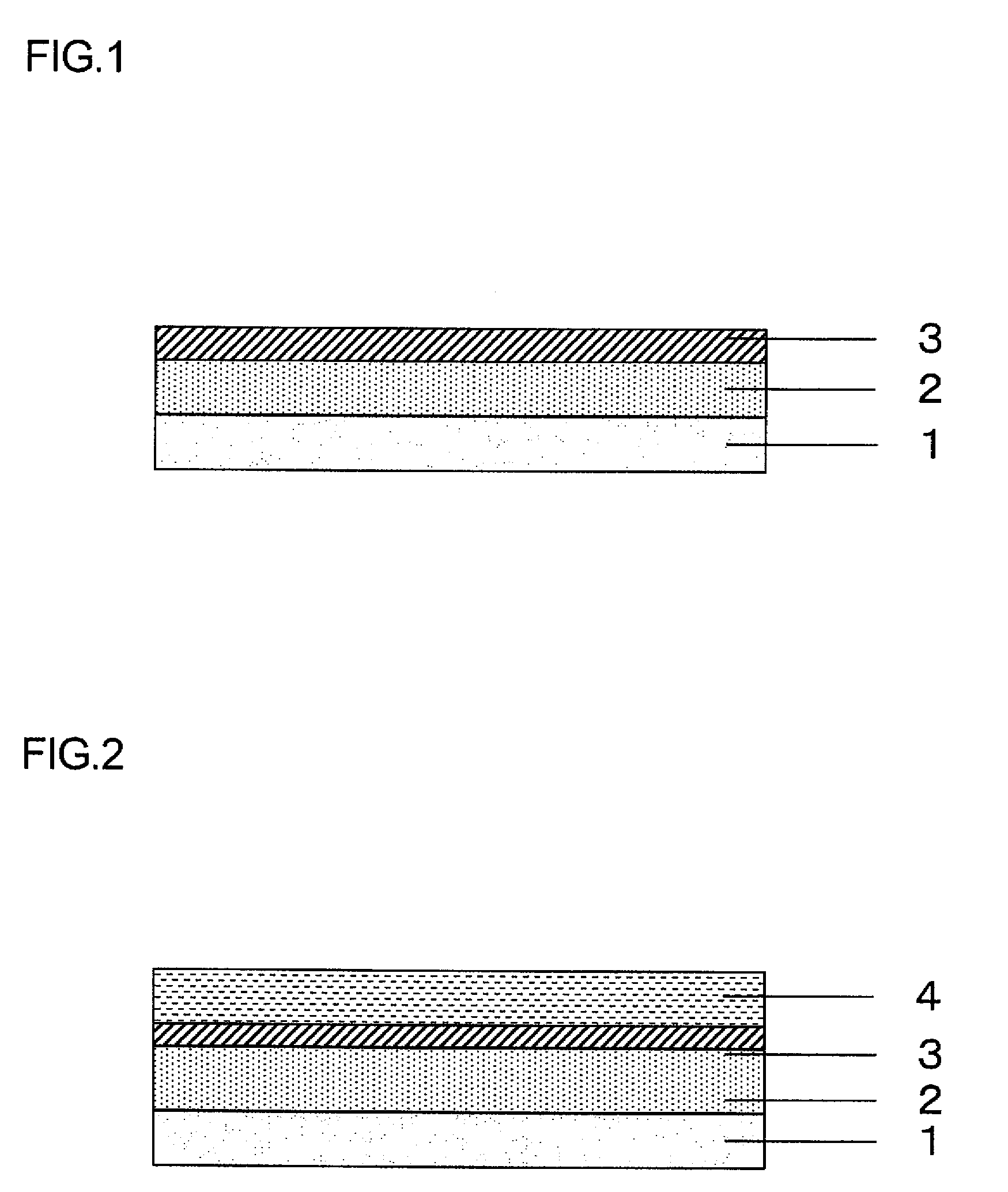
Examples
example 1
1. Production of Film with Alignment Film
[0097](Formation of Photocurable Resin Layer)
[0098]A solution composed of 50 parts by mass of pentaerythritol tri-acrylate (PET-30, manufactured by Nippon Kayaku Co, Ltd.), 5 parts by mass of a photo-cleaving type photopolymerization initiator (1-hydroxy-cyclohexyl-phenyl-ketone: IRGACURE 184, manufactured by Ciba Specialty Chemicals), and 45 parts by mass of mixed solvents wherein toluene: MEK (methyl ethyl ketone) were mixed at a ratio by mass of 1 / 1 was coated onto a triacetylcellulose film by bar coating, and the resultant was dried at 60° C. for 5 minutes. A UV radiating device was used to radiate ultraviolet rays of 300 mJ / cm2 energy thereto in the atmosphere of nitrogen to form a photocurable resin layer of 7 μm film thickness.
[0099](Formation of Alignment Film)
[0100]A solution of a photo-alignment polymer having a cinnamoyl group was coated onto the above-mentioned photocurable resin layer to give a dry film thickness of 100 nm, and t...
PUM
| Property | Measurement | Unit |
|---|---|---|
| optical transparency | aaaaa | aaaaa |
| thickness | aaaaa | aaaaa |
| thickness | aaaaa | aaaaa |
Abstract
Description
Claims
Application Information
 Login to View More