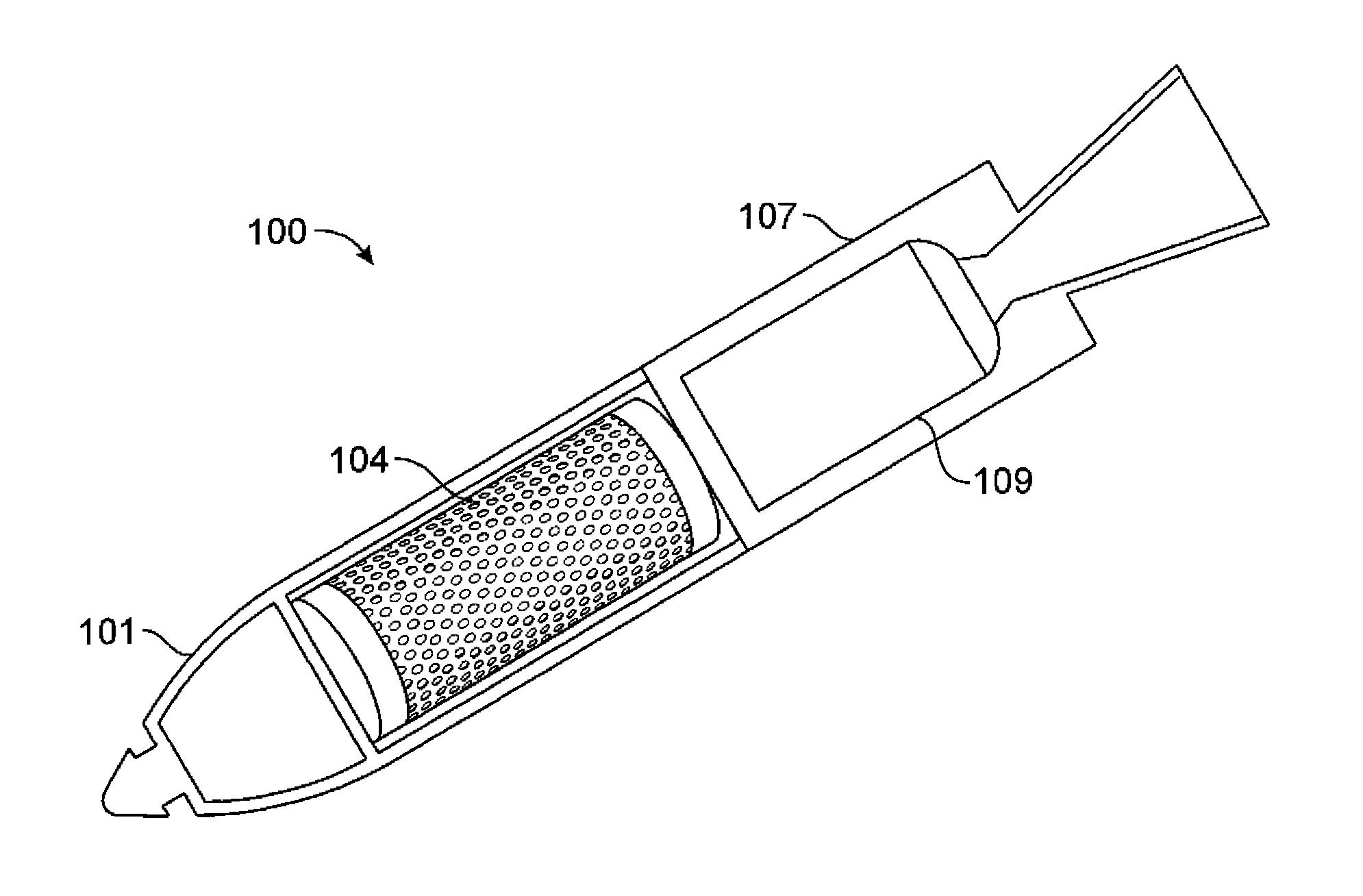
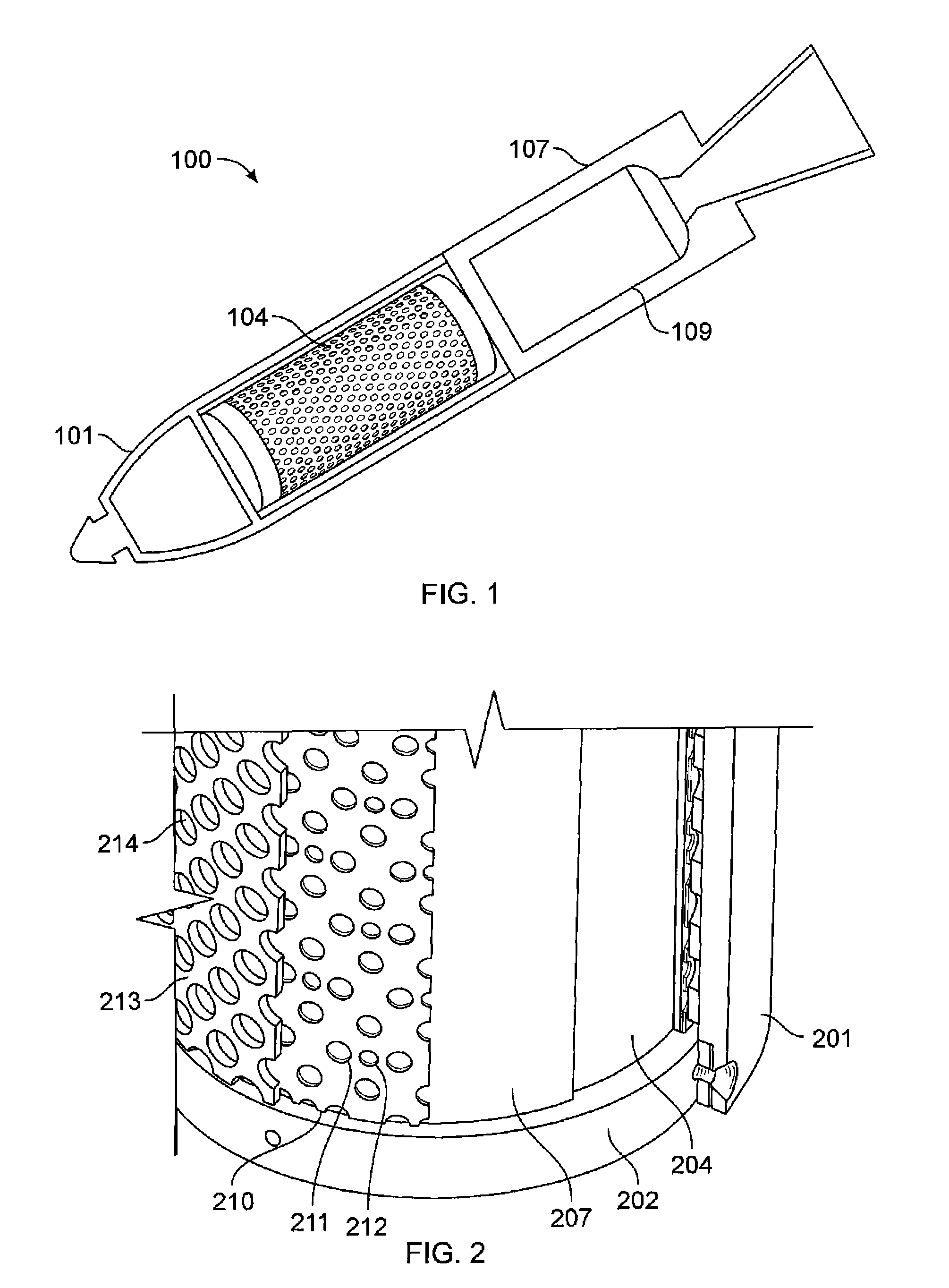
[0007]The dynamically configurable controlled fragmentation insert mechanism of this invention includes an
assembly of three or more sleeves that fit inside the shell casing. The innermost sleeve contains the
explosive material and eliminates voids that could adversely affect performance or even initiate premature
detonation during launch. The
explosive material comprises, for example, LX-14, OCTOL, hand packed C-4, or any other
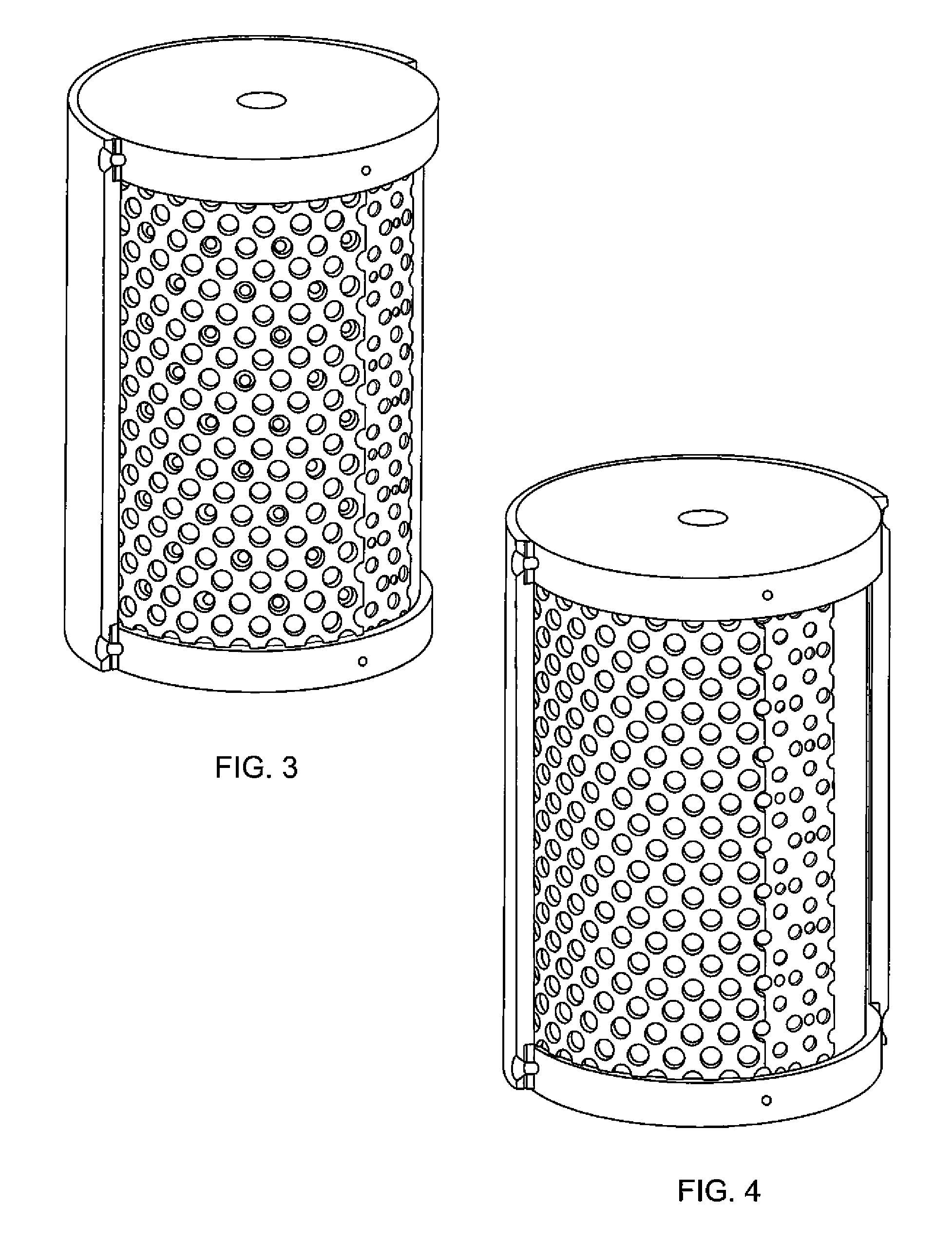
solid explosive that might be machined, cast, or hand-packed to fit snugly within the inside of the innermost sleeve. The dynamically selectable hole pattern is made up of two or more additional sleeves, each perforated with a unique pattern of holes. Each sleeve is designed to fit inside the next. The individual sleeves can move independently of one another and a simple pinning mechanism holds the parts in place for a selected configuration. The warfighter can realign the insert sleeves by manipulating the
fuze assembly to create different geometric patterns of holes, each designed to engage a different target set with optimally sized fragments. The insert pattern of holes creates individual geometric shapes that focus the explosive energy released upon
detonation to generate multiple high-velocity jets. The jets
cut into the steel shell casing in the predefined areas that correlate to the through-holes in the aligned patterned sleeves. This solution makes efficient use of the
high velocity radial expansion of the shell initiated upon
detonation. The selectable pattern of insert sleeve holes focuses the explosive energy and forces the shell body to break up in a predictable fashion. Realigning the insert sleeves changes the through-hole pattern to produce different fragment sizes and
mass distributions. The aligned through-holes focus the explosive energy at specific points on the inside of the shell casing and the blocked holes limit the expansion, allowing warhead designers to precisely control the fragment geometry. To defeat light armored vehicles or other materiel targets, the warfighter can deploy the warhead without changing the default mechanical offset of the insert sleeve hole pattern to produce larger fragments with greater penetrating power, or to engage enemy troops, the warfighter can easily “dial in” the hole pattern through the
fuze assembly to otherwise configure a much larger number of smaller, lighter fragments. Now, the warfighter can instantaneously configure one warhead in the field to engage
multiple target types. The invention functions by focusing the explosive energy released upon detonation into a series of
high velocity jets, much like the action of shaped charges. The jets
cut into the shell body breaking it into smaller pieces. The alignment of the patterned sleeves, the number of sleeves, the pattern / frequency and size of the holes, and the geometry of the holes can be modified to produce different combinations of large and small sized fragments. The sleeve can be made out of a variety of low-cost, easily machined materials including metals and plastics. This new patterned hole insert sleeve assembly addresses the downfalls of the existing fragmentation enhancement methods in the following ways:
[0009]2. Manufacturers can mass produce the simple patterned hole insert sleeves for low cost using
casting,
stamping, or rolling methods and inexpensive materials including metals and plastics. The basic patterned hole fragmentation design calls for fabricators to manufacture just three simple insert sleeves with easily mass produced tolerances compared to other fragmentation insert designs that require a multitude of intricate machined parts with high tolerance specifications. To produce the patterned hole fragmentation inserts, makers can simply punch holes in sheet
metal and then roll the sheets up into sleeves.


 Login to View More
  Login to View More