
Histidyl-tRNA synthetases for treating autoimmune and inflammatory diseases
- Summary
- Abstract
- Description
- Claims
- Application Information
AI Technical Summary
Benefits of technology
Problems solved by technology
Method used
Image

Examples
example 1
Production of His-Tagged Resokine (HRS(1-60))
Codon Optimization and Gene Synthesis
[0715]DNA encoding Resokine (HRS(1-60)) was codon-optimized for E. coli expression using the algorithm developed by DNA2.0 (Menlo Park, Calif.). The gene was synthesized with a C-terminal 6×His tag and subcloned into pJexpress411 vector where the T7 promoter was used to drive the transcription and the kanamycin resistance was used for antibiotic selection. The codon-optimized DNA sequence is as follows:
[0716]
(SEQ ID NO: 40)ATGGCAGAACGTGCGGCATTGGAAGAATTGGTTAAACTGCAAGGTGAACGTGTTCGTGGTCTGAAGCAGCAGAAGGCTAGCGCGGAGCTGATCGAAGAAGAGGTGGCCAAACTGCTGAAGCTGAAGGCGCAGCTGGGCCCGGACGAGAGCAAACAAAAGTTCGTCCTGAAAACCCCGAAACACCACCATCACCATCAC
[0717]The translated protein sequence is as follows:
[0718]
(SEQ ID NO: 41)MAERAALEELVKLQGERVRGLKQQKASAELIEEEVAKLLKLKAQLGPDESKQKFVLKTPKHHHHHH
[0719]Expression Strain.
[0720]BL21(DE3) competent cells (Novagen, cat. no. 69450) were transformed with the codon-optimized expression construct. Brief...
example 2
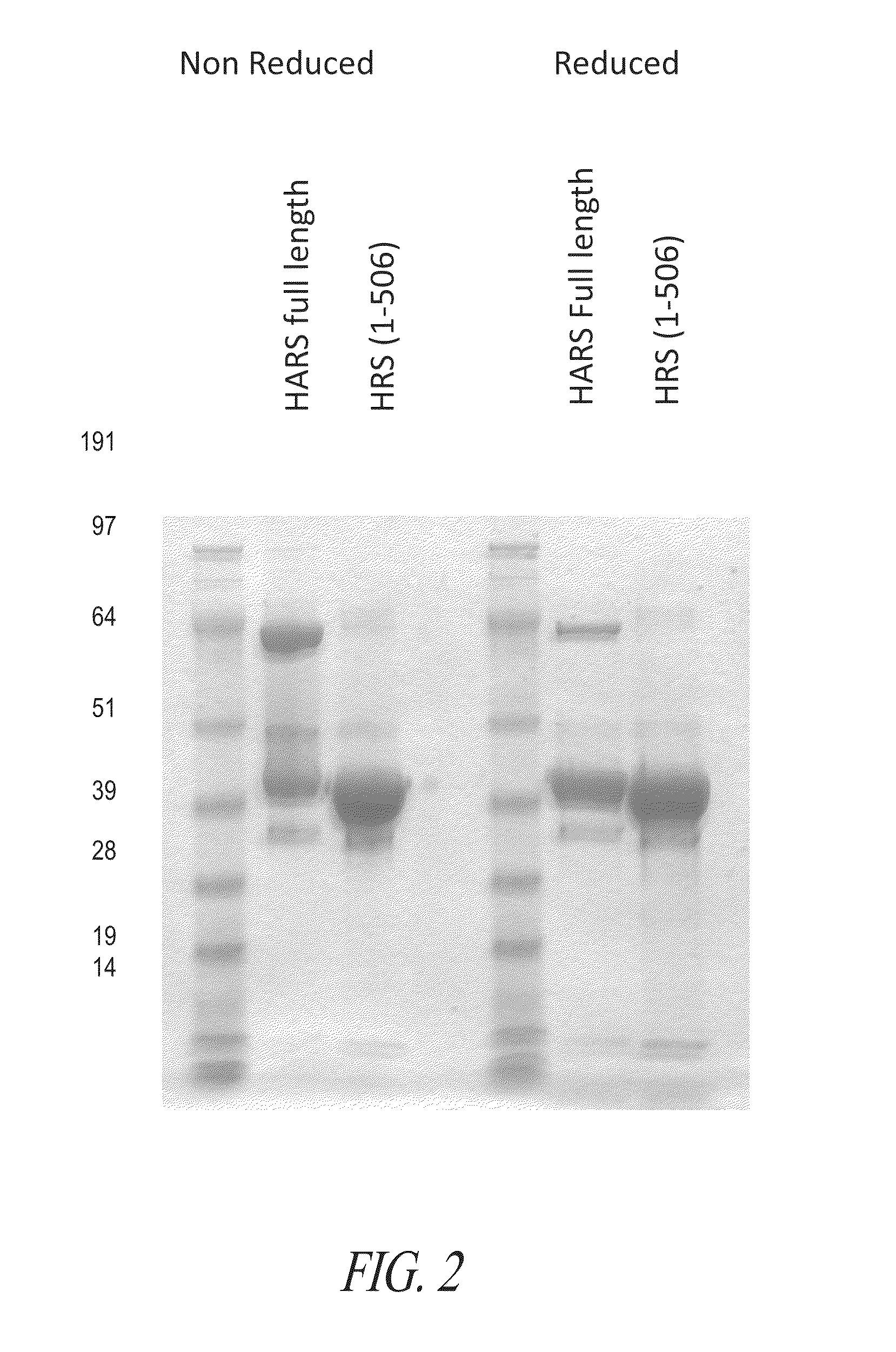
Production of His Tagged Full-Length Histidyl-TRNA Synthetase (HRS)
[0729]Codon Optimization and Gene Synthesis.
[0730]The full-length HisRS gene was codon-optimized for E. coli expression and sub-cloned into pET21a vector where the T7 promoter was used to drive the transcription. In addition, a 5-amino acid linker and 6×His tag were attached to the C-terminus
[0731]The DNA sequence is as follows:
[0732]
(SEQ ID NO: 42)ATGGCGGAACGTGCCGCACTGGAAGAATTGGTTAAATTACAGGGAGAACGCGTACGTGGTCTTAAACAACAAAAAGCCTCTGCGGAATTGATTGAAGAAGAAGTTGCCAAATTACTGAAACTGAAAGCTCAACTTGGACCCGATGAAAGTAAACAAAAATTTGTGTTGAAAACGCCCAAAGGAACCCGTGATTATAGTCCACGTCAAATGGCCGTTCGTGAAAAAGTGTTCGACGTTATTATTCGCTGTTTTAAACGTCACGGTGCTGAAGTAATCGATACCCCCGTATTTGAATTGAAAGAGACTCTGATGGGCAAATATGGTGAAGATTCTAAACTGATTTATGATTTGAAAGACCAAGGAGGTGAACTGCTGAGCCTGCGCTACGACTTAACTGTGCCTTTTGCCCGTTACTTAGCCATGAATAAaTTaACCAACATCAAACGTTACCATATTGCAAAAGTATATCGCCGCGACAACCCTGCAATGACTCGTGGACGCTATCGCGAATTCTATCAGTGTGATTTTGATATTGCCGGAAATTTCGACCCGATGATCCCGGATGCCGAGTGTTTGAAA...
example 3
Evaluation of Resokine (HRS(1-60)) as an Anti-Inflammatory Agent
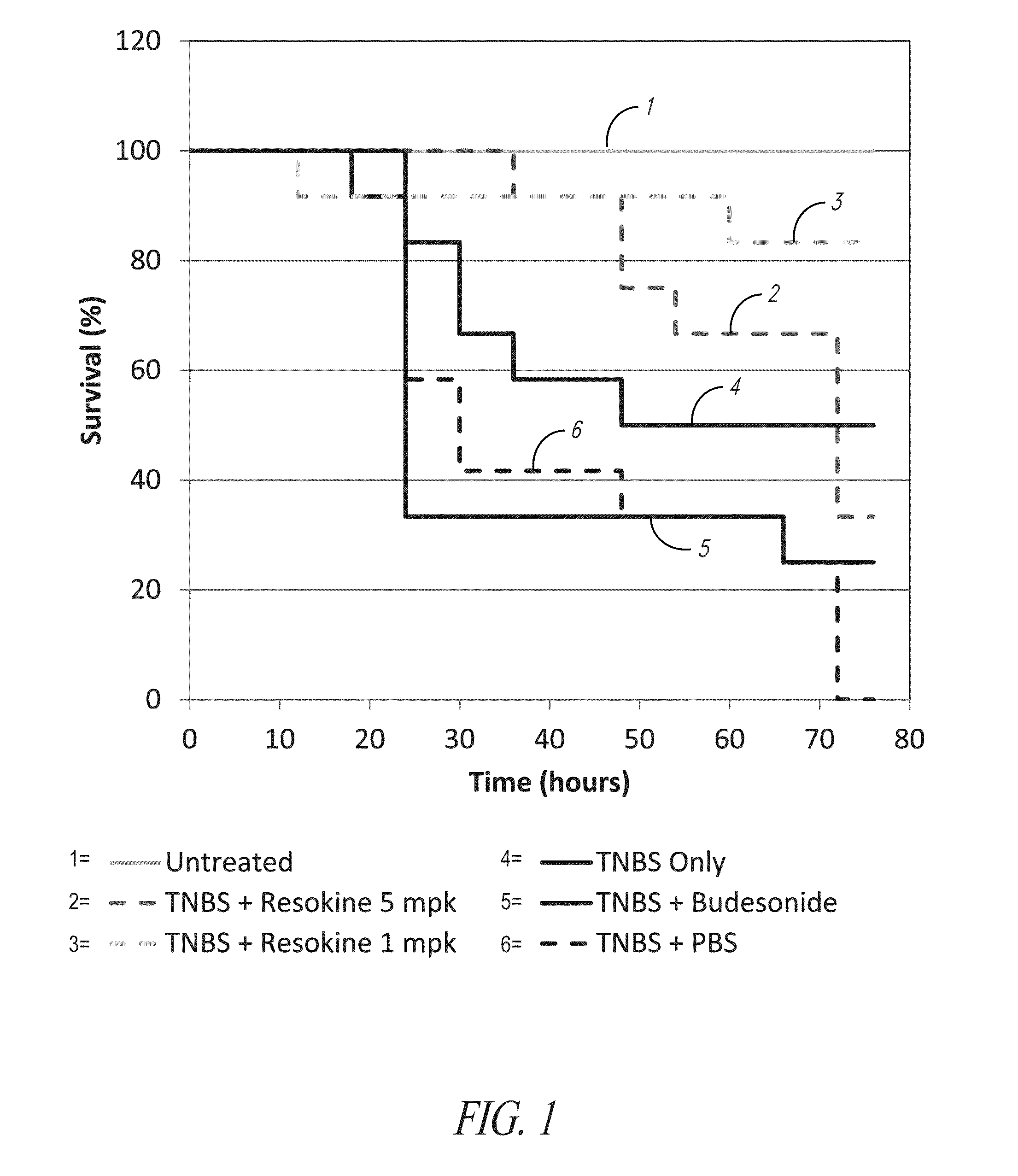
[0745]To evaluate the potential anti-inflammatory property of HRS derived polypeptides, an N-terminal, naturally-occurring splice variant comprising amino acids 1-60 of HRS (Resokine) was tested in a TNBS induced model of colitis (Epistem, Ltd, UK).
[0746]The most common forms of inflammatory bowel disease (IBD), Crohn's disease and ulcerative colitis, are chronic and progressive inflammatory disorders of the digestive tract. Crohn's disease usually affects both ileum and colon while ulcerative colitis usually affects only the innermost lining of the colon and rectum. The symptoms for Crohn's disease and ulcerative colitis are generally similar with abdominal pain and diarrhea. In moderate to severe ulcerative colitis, bloody stool is often observed. There is currently no cure for IBD. Drugs and biologics are commonly used to treat symptoms, induce remission and prevent relapse. Anti-inflammatory drugs such as sulfasalaz...
PUM
| Property | Measurement | Unit |
|---|---|---|
| Temperature | aaaaa | aaaaa |
| Temperature | aaaaa | aaaaa |
| Temperature | aaaaa | aaaaa |
Abstract
Description
Claims
Application Information
 Login to View More