
Mutated ACVR1 for diagnosis and treatment of Fibrodyplasia Ossificans Progressiva (FOP)
a fibrodyplasia and ossificans technology, applied in the field of mutated activin a type i receptor proteins, can solve the problems of premature death, dysfunction of articulation, and severe consequences
- Summary
- Abstract
- Description
- Claims
- Application Information
AI Technical Summary
Benefits of technology
Problems solved by technology
Method used
Image

Examples
example 1
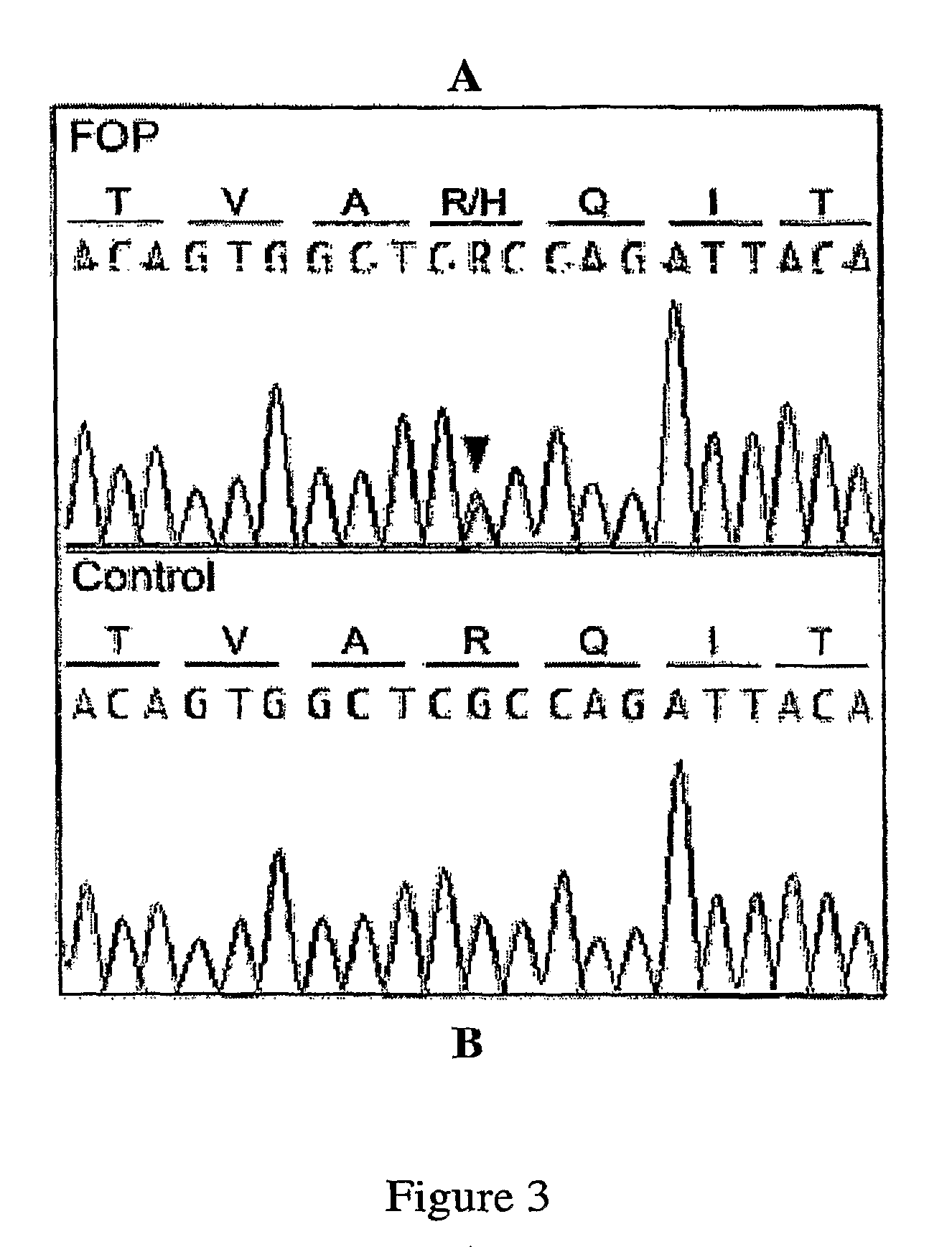
A Mutation in the BMP Type I Receptor ACVR1 Causes Inherited and Sporadic Fibrodysplasia Ossificans Progressiva
Materials and Methods
Subjects and Clinical Evaluation
[0148]Blood samples were obtained following informed consent from individuals and / or their parents in accordance with a protocol approved by the Institutional Review Board of the University of Pennsylvania School of Medicine.
Linkage Studies
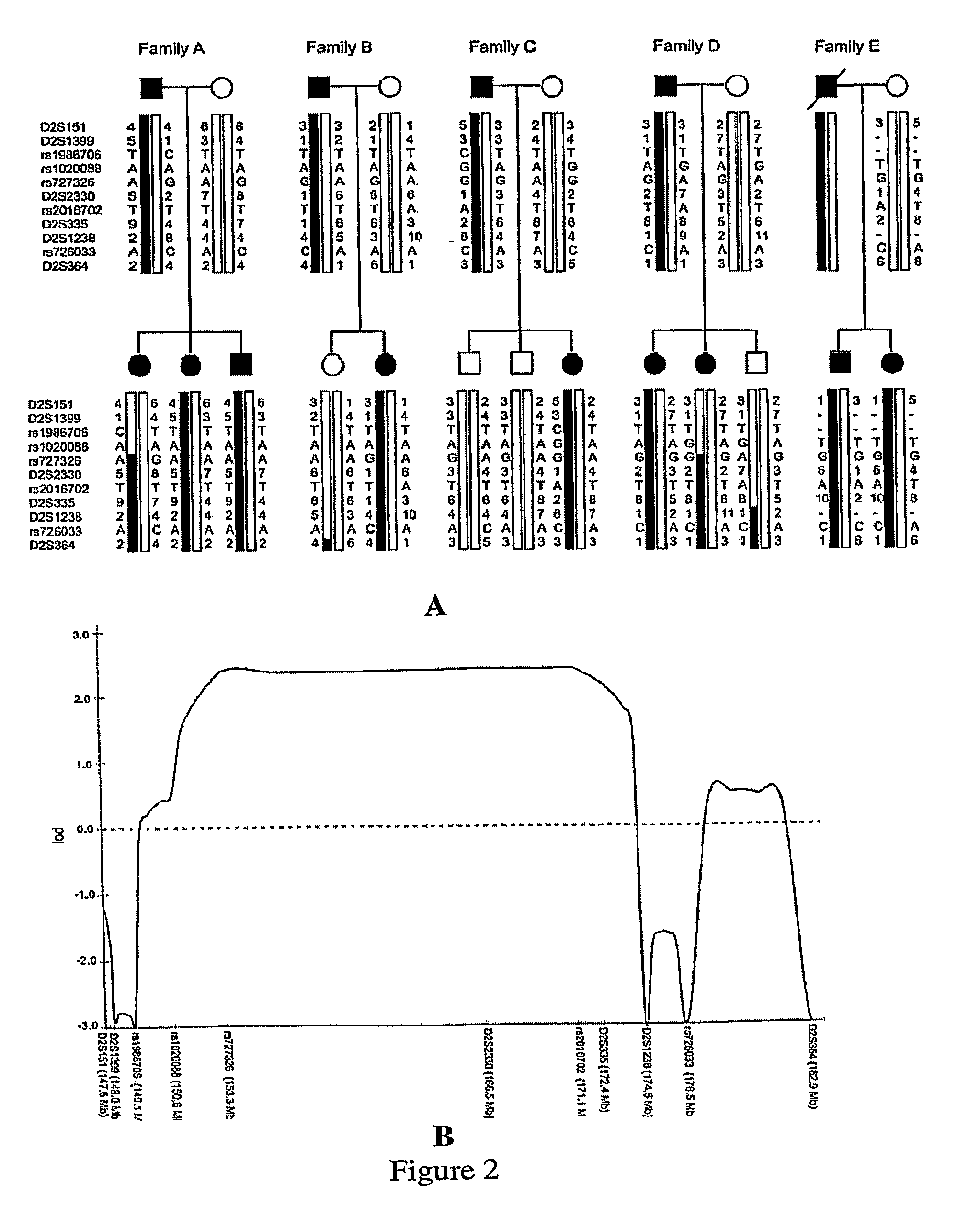
[0149]Genomic DNA was isolated directly from blood samples, buccal swabs, or from lymphoblast cell lines (LCLs) using QIAamp DNA Blood reagents (Qiagen) and standard protocols. EBV-transformed LCLs were established by standard protocols. Some samples were whole genome-amplified using Repli-G reagents (Molecular Staging Inc.) and standard protocols. Genome wide linkage analysis was carried out through the University of Utah School of Medicine Genomics Core Facility using an ABI 3130xl Genetic Analyzer and scoring with ABI GeneMapper v.3. All families were genotyped using 400 microsatelli...
PUM
| Property | Measurement | Unit |
|---|---|---|
| photoluminescent | aaaaa | aaaaa |
| CT | aaaaa | aaaaa |
| relative distances | aaaaa | aaaaa |
Abstract
Description
Claims
Application Information
 Login to View More