
Transport stream packet header compression
a technology of transport stream and packet header, applied in data switching networks, multiplex communication, selective content distribution, etc., can solve the problems of untransmitted synchronization byte, unnecessarily reducing the efficiency of the digital broadcast network, and inability to employ adaptive techniques, etc., to achieve the effect of reducing the length of the packet header
- Summary
- Abstract
- Description
- Claims
- Application Information
AI Technical Summary
Benefits of technology
Problems solved by technology
Method used
Image

Examples
Embodiment Construction
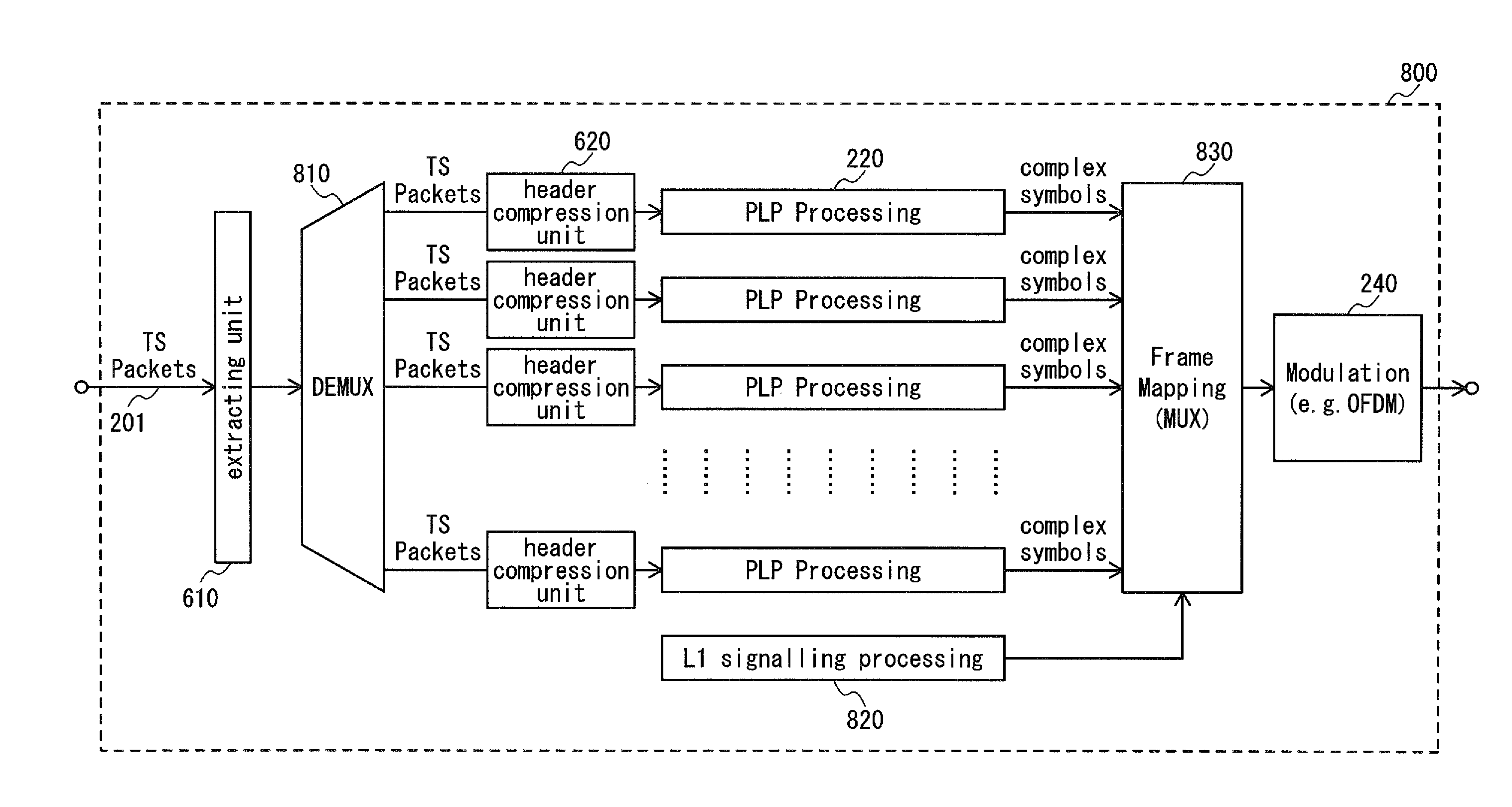
[0065]The present invention enables the compression of the transport stream packet header in order to increase the transmission efficiency in a digital broadcast network.
[0066]The method / apparatus of the present invention can be applied to MPEG transport stream packets transmitted over a broadcast network. The method / apparatus can reduce the size of a transport stream packet by up to two bytes. This is achieved by replacing and / or removing some fields in the transport stream packet header. The compression is lossless (reversible) and is performed on the transmitter side. Correspondingly, on the receiver side, the original packet headers can be restored using signaling information transmitted alongside the actual data.
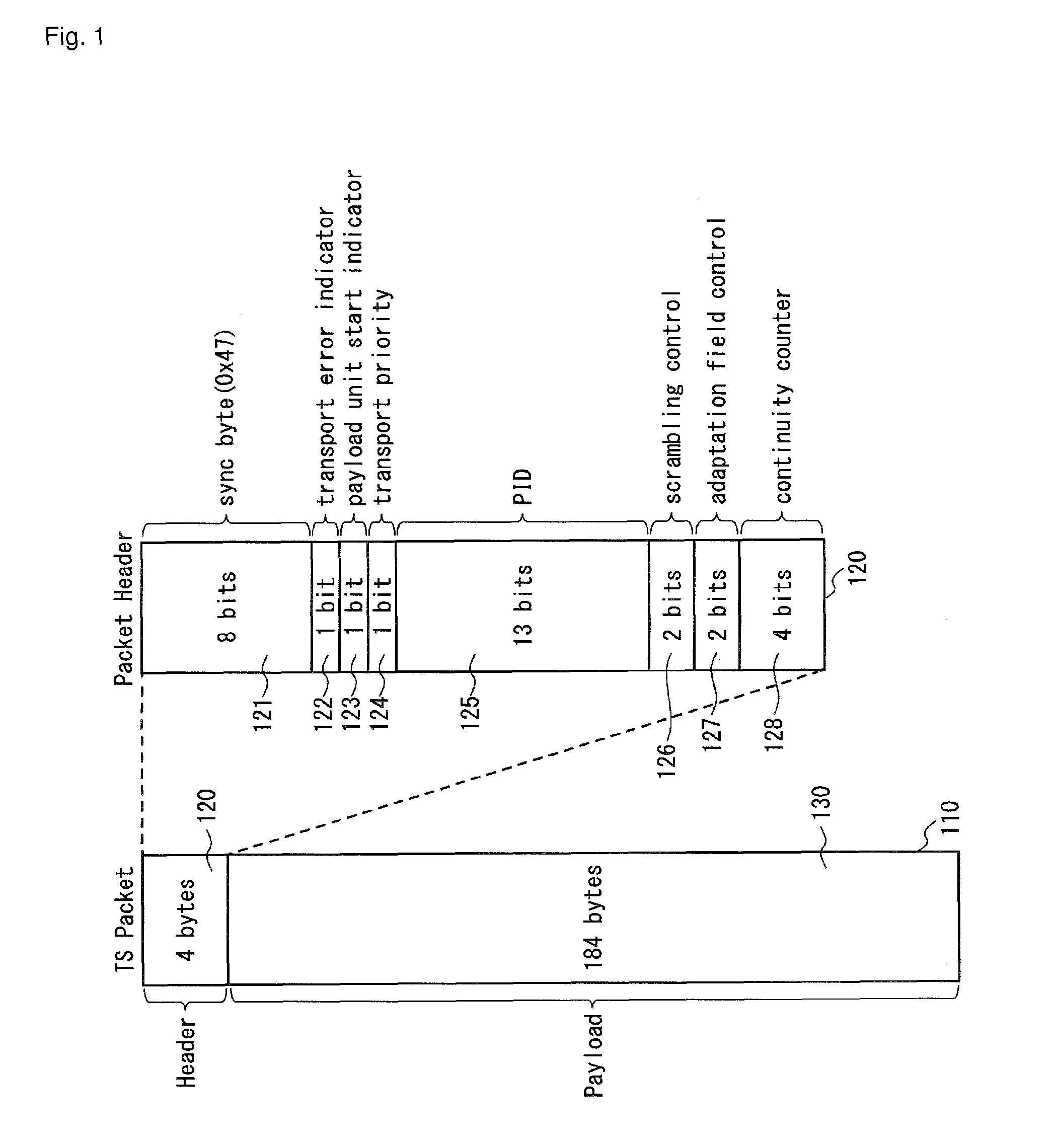
[0067]As shown in FIG. 1, the longest field of a transport stream packet header 120 is the 13-bit packet identifier PID 125. The PID field indicates the source of the data carried by said transport stream packet. In the context of digital broadcasting, the source of the...
PUM
 Login to View More
 Abstract
Description
Claims
Application Information
 Login to View More