

Laccase inducer and use thereof for improving microbial laccase production ability
A technology of inducers and microorganisms, which is applied in the biological field to achieve the effect of significant laccase induction effect and the effect of improving the ability of laccase production
- Summary
- Abstract
- Description
- Claims
- Application Information
AI Technical Summary
Problems solved by technology
Method used
Image

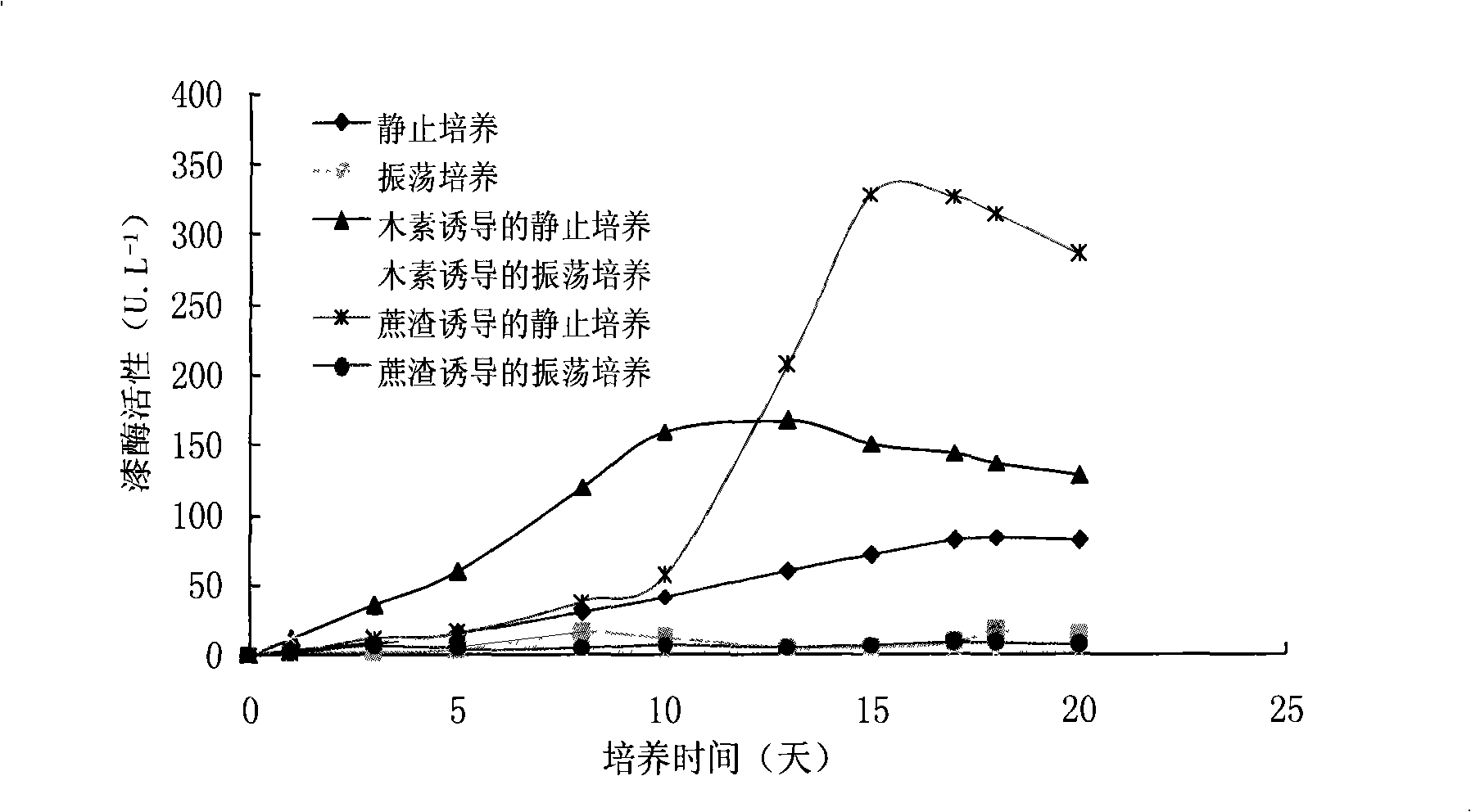
Examples
Embodiment 1
[0032] 1. Strains
[0033] Edible fungus XG8 strain: purchased from Kunming Edible Fungi Research Institute, Kunming City, Yunnan Province.
[0034] 2. Media, inducers and culture conditions
[0035] 2.1 Medium
[0036] Medium composition: MgSO 4 ·7H 2 O, 0.5g, NaCl 0.5g, KH 2 PO 4 1.0g, NH 4 SO 4 1.0g, 1.0g yeast powder, 15g glucose, add water to 1 liter, adjust pH to 5-6. This medium is mainly used for preserving strains and as a basic medium in induction experiments.
[0037] 2.2 Inducers
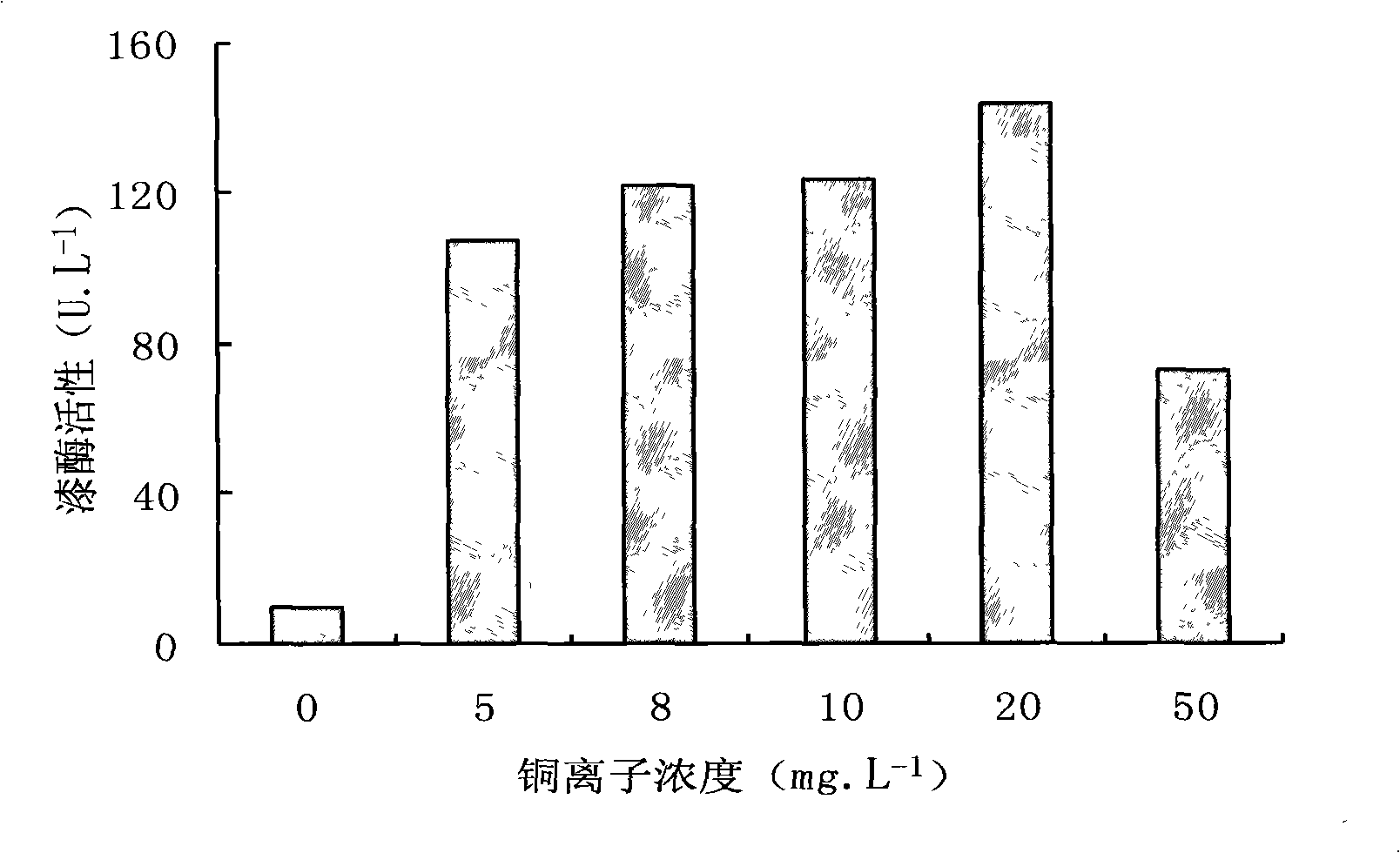
[0038] CuSO 4 Solution: prepare 1g.L -1 CuSO 4 The original solution was sterilized at 115°C for 20 minutes. In the induction test, after the mycelium was cultured for four days, 1g.L of -1 CuSO 4 solution, so that CuSO in the culture medium 4 The final concentration is 5mg.L -1 , 8mg.L -1 , 10mg.L -1 , 20mg.L -1 , 50mg.L -1 .
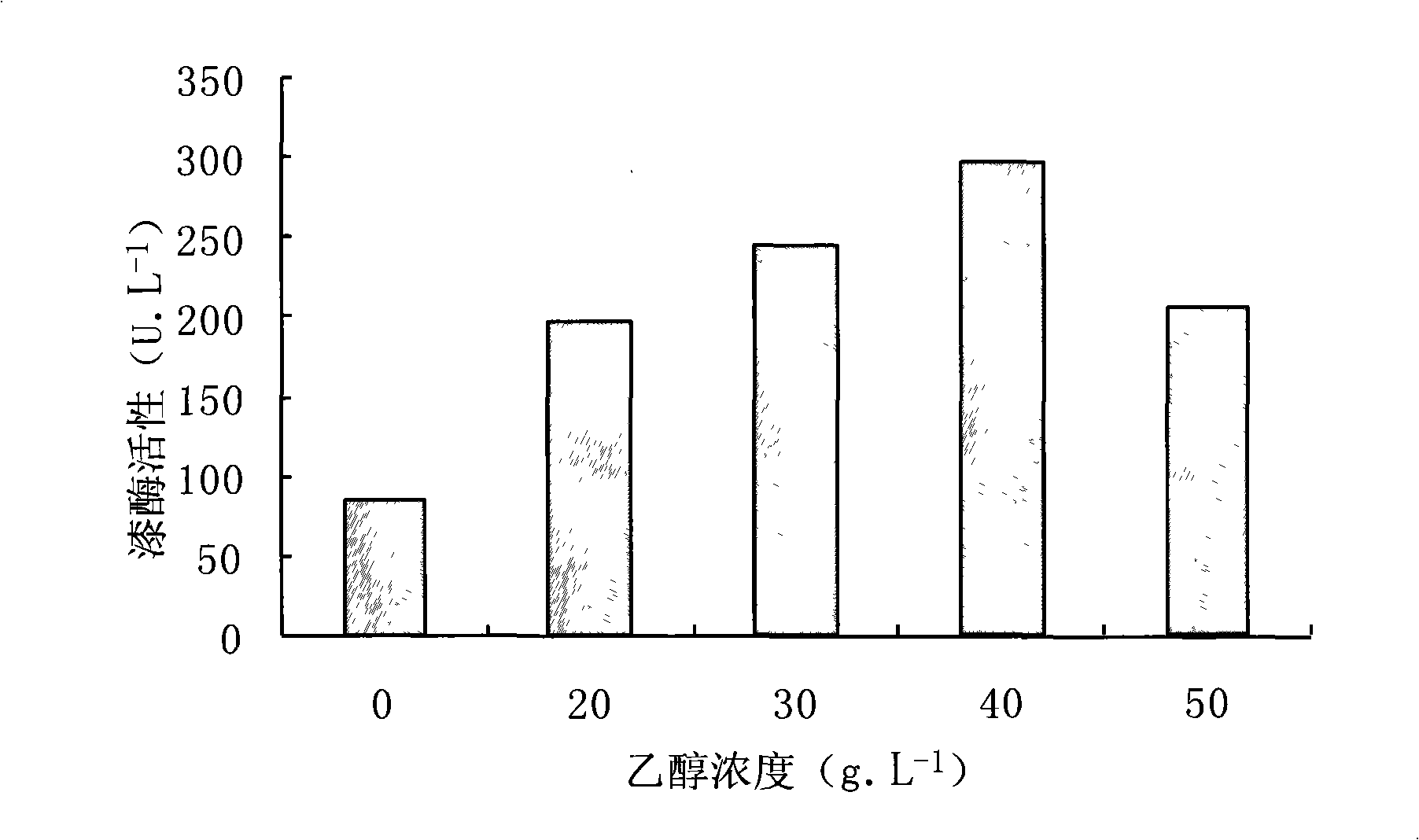
[0039] Ethanol solution: Anhydrous ethanol is sterilized by filtering through a 0.2 μm filter membrane. In the induction test, after the...
PUM
 Login to View More
 Abstract
Description
Claims
Application Information
 Login to View More